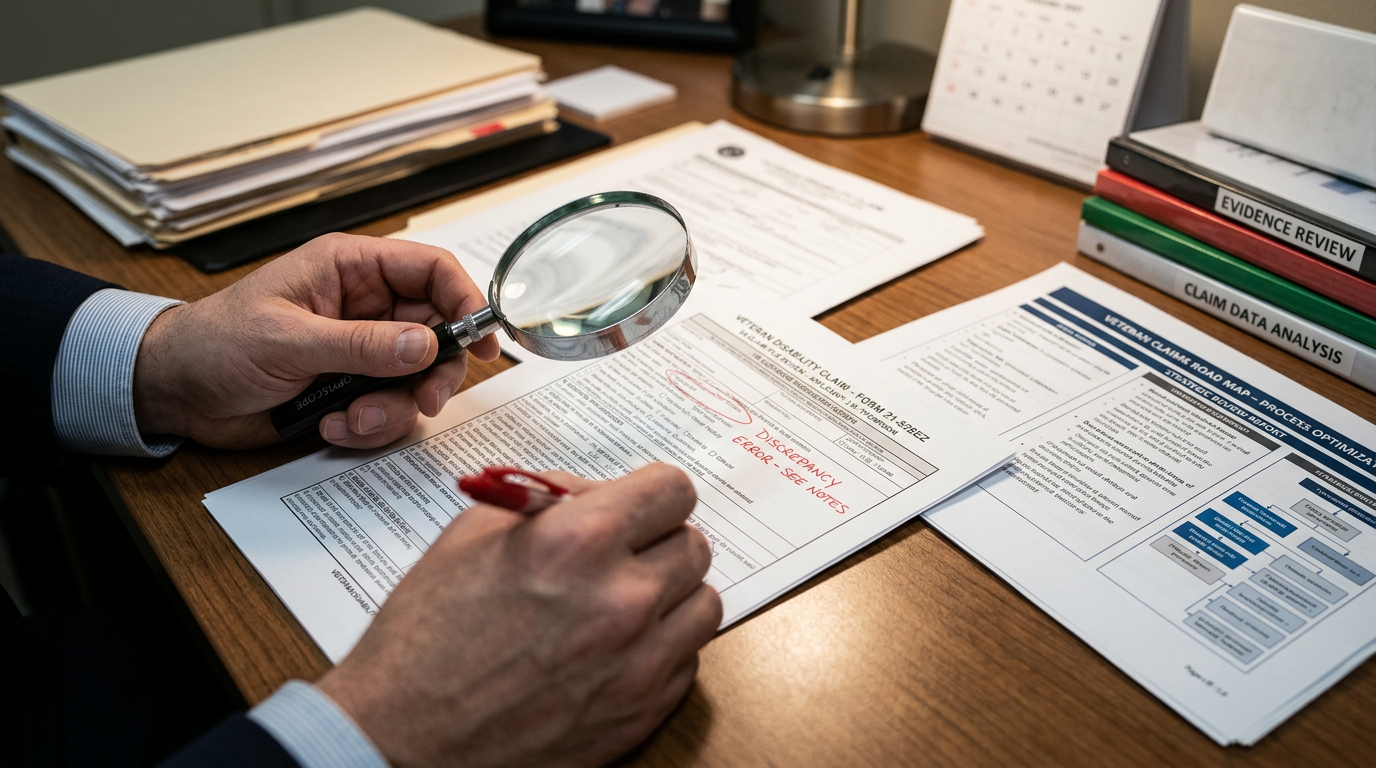

Nobody Told You
What You Earned
When you got out, nobody threw you a party. Nobody handed you a package. Nobody told you where to report or what you were entitled to. The VA does not advertise your benefits, and the government is not going to call. That silence was not an accident, the system is adversarial from the day you separate. I know, because I lived it.
I'm Albert L. Thombs Jr., a disabled veteran and VA-Accredited Claims Agent #45147, CEO of The VA Disability Advocate, LLC in Las Vegas, NV. I hired the DAV, the American Legion, private attorneys, got denied anyway, and wasted over a decade before I learned the hard truth: service connection is the key that unlocks everything for you and your family, and you have to go get it. No win, no fee on 20% or 30% representation. $750 flat Mission 5 Brief. 20+ years of claims experience. Governed by 38 CFR §14.636.
- Reference:
- 38 CFR §14.636 · Agent #45147
- Disposition:
- Denied or under-rated veterans, appeals and rating fights
- Retention:
- No Win, No Fee on 20% or 30% Representation · $750 Flat Mission 5 Brief
Accuracy Safeguard: Every rating estimate, back-pay figure, and eligibility reference on this page is general education based on how the VA applies its regulations. Your exact outcome depends on the specific facts, records, and evidence in your individual file. Nothing here is legal advice, and reading this page does not create a client relationship. For a case-specific analysis, request an accredited records review with Agent #45147.
Every Uniform · Every Era · Every Branch


By The Numbers
Every figure below comes from the VA's own regulations and rate tables. This is how the system decides what you get paid. Nobody hands you this at separation, so it lives here.

The Benefit-of-the-Doubt Line
A nexus opinion only has to say your condition is “at least as likely as not” connected to service, 50% probability. Anything above that must be resolved in your favor under 38 CFR §3.102.
The Rounding Rule
Combined ratings are rounded to the nearest 10 under 38 CFR §4.25. A 76% combined total becomes 80%. One more granted condition can move you a whole bracket.
The TDIU Thresholds
Schedular TDIU under 38 CFR §4.16(a) needs one condition at 60%, or a 70% combined total with one condition at 40%. Below that, §4.16(b) allows extraschedular referral.
The 70%-to-TDIU Gap, Per Year
At 2026 rates, 70% pays $1,808.45 a month for a veteran alone, and TDIU pays at the 100% rate of $3,938.58, about $25,500 more per year, tax-free. Your exact amount depends on dependents.
The Filing Window That Protects Back Pay
A Supplemental Claim or Higher-Level Review filed within one year of the decision preserves your original effective date under 38 CFR §3.2500. Miss it and the back-pay clock restarts. Processing time is separate: Supplemental Claims typically take 4 to 6 months, Higher-Level Reviews 4 to 5 months.
The Representation Fee
Accredited agent fees are governed by 38 CFR §14.636. Standard Direct-Pay is 20% of past-due benefits, paid by the VA directly. High-Complexity is 30%, billed to you after your retro arrives. No win, no fee on representation, and never from your ongoing monthly check. The Mission 5 Brief is a separate $750 flat fee.
| Figure | What It Means | Governing Rule |
|---|---|---|
| 50% | The “at least as likely as not” nexus standard, the tie-goes-to-the-veteran line | 38 CFR §3.102 |
| 10% | Ratings round to the nearest 10, a 76% combined total becomes 80% | 38 CFR §4.25 |
| 60% / 70% | TDIU thresholds: one condition at 60%, or 70% combined with one at 40% | 38 CFR §4.16(a) |
| ~$26,000/year | The gap between 70% ($1,808.45/mo) and TDIU at the 100% rate ($3,938.58/mo), tax-free | 38 CFR §4.16 |
| 1 year | The deadline to file a Supplemental Claim or Higher-Level Review to preserve your original effective date | 38 CFR §3.2500 |
| 20% / 30% | Standard Direct-Pay is 20% of past-due benefits, paid by the VA directly. High-Complexity is 30%, billed after your retro arrives | 38 CFR §14.636 |
| $0 | What you owe on representation if we do not win | 38 CFR §14.636 |
Accuracy Safeguard: Dollar figures above are estimates based on published VA compensation rates for a veteran with no dependents and change annually. Your exact entitlement depends on your rating, dependent status, and the VA's decision on your individual file. These figures are general education, not legal advice, and do not create a client relationship. For a case-specific analysis, request an accredited records review with Albert Thombs, VA-Accredited Claims Agent #45147.
The Denial Loop:
Why Veterans Stay Stuck

Most veterans who come to us have been stuck in this loop for years. File. Wait. Get a Compensation and Pension (C&P) exam where a rushed examiner spends 20 minutes deciding a condition that took 20 years to develop. Then the denial hits, or a rating so low it is an insult to what you actually live with every day. Sound familiar? I did the same thing for over a decade before I figured it out.
Here is the hard truth nobody wants to say: the system is working against you, but veterans, we work against ourselves too. The veteran who does not see a doctor, does not write a real personal statement, does not respond to the NPRC letter, that veteran is their own worst enemy. The VA's duty to assist (38 CFR §3.159) exists on paper, but enforcing it takes someone who knows what “adequate” legally means AND a veteran who shows up ready to do the work. Both halves are required.
The old strategy of throwing the same evidence at the VA over and over until you finally win does not work anymore. You need facts. You need medical proof. You need a real, detailed, honest story. And you need someone who can read a rating decision line by line and find the specific regulation that was misapplied, the C&P exam defect that tanked your rating, and the appeal lane that reopens the case. That is what this firm does.
The loop breaks when you stop doing the same thing and start doing the right thing.
You submit highly detailed personal statements.
You attend every VA and private appointment.
A rushed examiner controls your entire rating.
You gather buddy letters and evidence, then file an appeal and remand, and it starts again.
90%The Ceiling
Hear the Process in the VA's Own Words
Two official VA explainers: how disability compensation works, and what actually happens at a C&P exam. Watch them before your next exam, then hold every decision you receive up against what the VA says it is supposed to do. Where the two do not match is where the appeal lives.
The system is adversarial. But you are not helpless. Your claim is your responsibility, and the fight starts with you.

Your Evidence Is Not the Problem.
The Problem Is What the VA Did With It.
You filed. You documented. You showed up. And you still got denied or lowballed. That is not a paperwork problem. The gap between what you earned and what you are being paid exists because two people in the process are outside your control, and nobody tells you that before you walk into the exam room.
The C&P Examiner. Often a poorly educated doctor who does not have the knowledge or history of how conditions disproportionately affect veterans compared to the general population. For many of them it is just a score, just money. They will tell a veteran to their face, “I don't understand why you weren't rated for this a long time ago,” and they will never put it in writing. Say it plainly: your examiner is not your advocate. They are disingenuous unless they put it in writing for you, because unless it is on that DBQ, it is just talk. Albert has heard veterans come back from the best exam of their life and get a terrible result. He has seen veterans who thought the exam went badly and win their case. Do not read the room. Read the result.
The Rater. May need to decide 10 to 15 claims in a single day, at 12 to 15 minutes per claim. Even a strong case can get a surface-level review from a rater who is overwhelmed and overworked. The VA carries the burden of explaining its decision under the Veterans Appeals Improvement and Modernization Act of 2017 (VAIMA), which requires rating decisions to include identification of issues adjudicated, a summary of evidence considered, applicable laws and regulations, favorable findings, and in the case of a denial, the specific elements not satisfied. When a rater at 12 minutes per decision skips that standard, that is an appealable error.
What we do: we tear your file apart and find the specific regulation that was misapplied, the exam defect that tanked your rating, and the appeal lane that reopens the case. Not more paperwork. A targeted argument built on what the VA got wrong. There is a layer behind the curtain you cannot see on your own, and that is where we work.
Every Pathway, Every Angle
Each option below is a distinct legal lane governed by its own regulation. We do not throw everything at the wall and hope. We pick the right one for your file, and we tell you why.




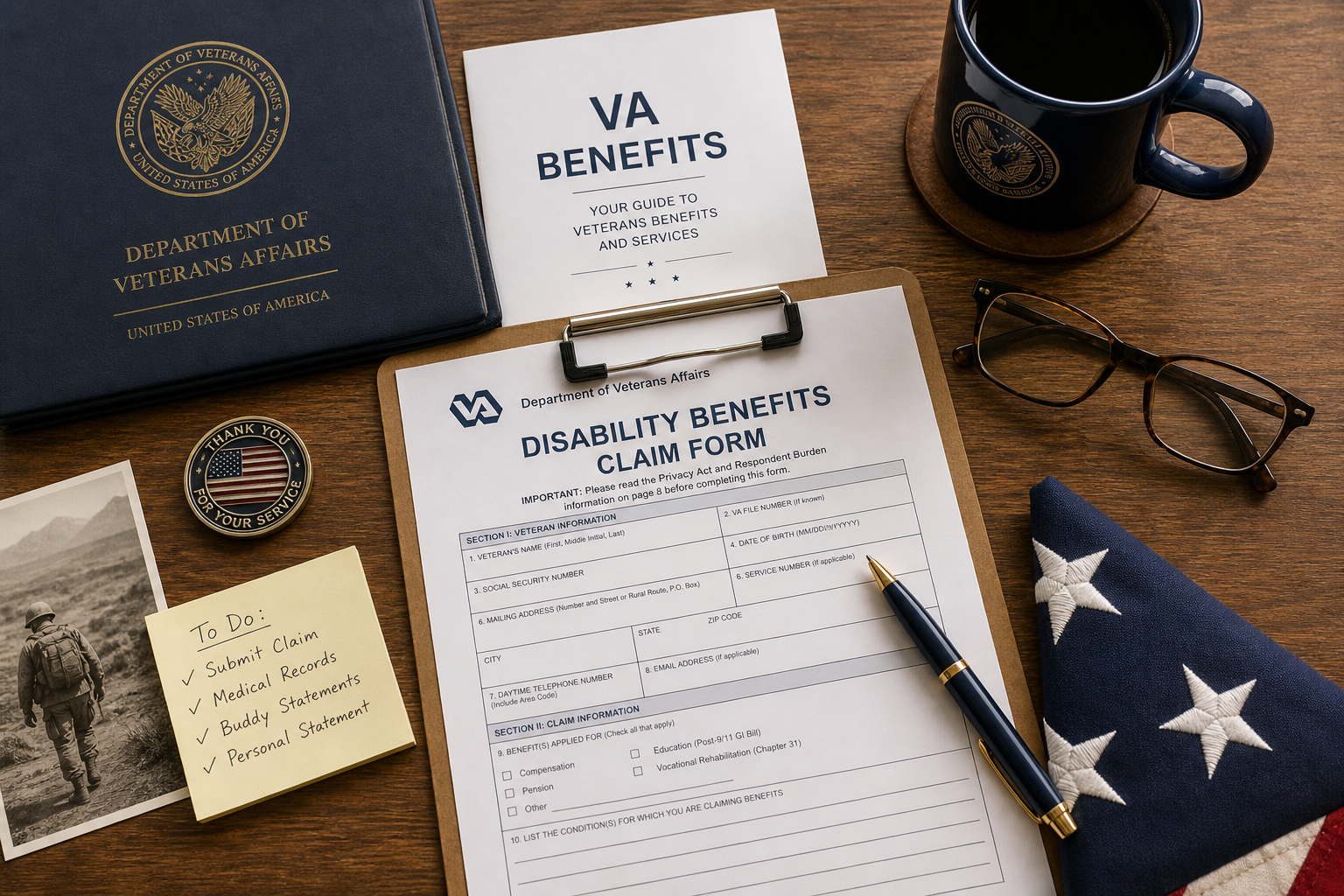














Real Veterans. Real Claims. Real Outcomes.
The veterans this practice represents span every era, every branch, and every condition the VA rates. Vietnam-era veterans fighting decades-old Agent Orange denials. Post-9/11 veterans buried under burn-pit rejections. Women veterans whose MST claims were dismissed without a proper exam. Gulf War veterans told their symptoms are unexplained and therefore uncompensable. Korea-era veterans whose service records were in the 1973 NPRC fire and who have been fighting thin-record denials ever since. Every file on this desk belongs to a real person who served and was told no by a system that owes them yes. That is the only client this firm takes.
 Veteran Representation
 Veteran Representation
 Veteran Representation
Effective Date Review: Back Pay Recovery
38 CFR §3.400The effective date is the date from which your VA compensation begins, and from which your back pay is calculated. Moving an effective date back by even one year can mean $10,000 to $50,000 or more in additional back pay depending on your rating.
We specifically hunt for:

How Effective Dates Are Set
Original claims
The date VA receives the claim or the date entitlement arose, whichever is later (38 CFR §3.400(b))
Supplemental Claims (within 1 year)
Filed within one year of the decision, the claim is continuously pursued, so a grant keeps the effective date tied to your original claim (38 CFR §3.2500(h)).
Informal claims (before March 24, 2015)
Under the old rules, a letter showing intent to claim benefits could count as an informal claim. In older files, we look for one VA never decided. Since March 24, 2015, only an Intent to File holds a date (38 CFR §3.155).
CUE motions
Can reach back to the original effective date of the erroneous decision, potentially decades earlier (38 CFR §3.105(a))
Intent to File, VA Form 21-0966
Locks the date from the day it is filed, protects back pay during evidence development (38 CFR §3.155(b))
Nehmer / Agent Orange
Special rules for Agent Orange conditions, can reach back to 1985 or the date of diagnosis (Nehmer v. U.S. Veterans Admin.)
Our Team
We are not a call center. We are not a YouTube coaching program charging you $500 for a template letter. We are a VA-accredited claims agent backed by a team of disability advocates who go directly into your VA claims file. Most of us are veterans. We have walked the same claims, the same denials, the same frustration you are feeling right now.
Albert does not hand your file to a junior coordinator and disappear. He personally reviews every case the firm accepts and signs every filing. That is not a marketing line. It is a federal requirement: under 38 CFR §14.629, the accredited agent is legally accountable for every submission that carries their number.

Albert L. Thombs Jr.
CEO / VA-Accredited Claims Agent #45147
U.S. Army veteran
Federally accredited under 38 CFR §14.629 with 20+ years in the claims industry. Personally reviews every case the firm accepts and signs every filing.
Rufus Pittman
Disability Advocate
U.S. Army, Retired
Works veteran claim files and evidence development under Agent #45147.
Alyssa Valkanas
Disability Advocate
U.S. Army veteran
Works veteran claim files, intake, and evidence development under Agent #45147.
Vangie Thombs
CFO & Administrator
Runs firm operations, fee agreements, and billing. Tagalog speaking.
Toni Crawley
Disability Advocate
Works veteran claim files and evidence development under Agent #45147.
Shawnda Fischer
Disability Advocate
Works veteran claim files and evidence development under Agent #45147.
Vickie Mohn
Disability Advocate
Works veteran claim files and evidence development under Agent #45147.
Michael Watkins
Disability Advocate
Works veteran claim files and evidence development under Agent #45147.
Every filing this firm submits is prepared and signed under VA-Accredited Claims Agent #45147. Advocates and coordinators work the file; the accredited agent is legally accountable for it.
Latest from the Advocate
Albert writes these posts himself, from 20+ years of filed claims, denied exams, and Board hearings. No ghostwriter, no template, no SEO filler. If it is on this blog it is because it came up in a real case and a veteran needed to understand it. Read one post and you will know exactly how this firm thinks before you ever pick up the phone. New posts publish weekly.
 Back Pay & Effective Dates
How VA Back Pay and Effective Dates Really Work
Most VA back pay fights are really effective-date fights. Here’s how the rules work, where veterans lose money, and how to estimate what you may be owed.
Read more Getting Started
Women Veterans, the PACT Act, and Claims the VA Misses
Women veterans are still under-rated, under-diagnosed, and too often dismissed by the VA. Here’s how to fight for PACT Act presumptives and female-specific conditions the system overlooks.
Read more Getting Started
Toxic Exposure Claims by Era Under the PACT Act
Burn pits, Agent Orange, Gulf War illness, and Camp Lejeune claims each follow different VA rules. I’ll map the presumptive path, TERA, and how to prove exposure when your records are thin.
Read moreFrequently Asked Questions
Straight answers. No runaround. Tap any question. If yours is not here, use the Ask the Advocate chat or call us directly. These are the questions veterans ask at my table every week: what it costs, how long it takes, what the VA actually needs from you, and what happens when the answer is no. Read the ones that match your situation before you call, so the time we spend together goes to your file and not to the basics.
What does it cost to work with The VA Disability Advocate?
Representation is on contingency: 20% of past-due benefits on Standard Direct-Pay (the VA pays us directly) or 30% on High-Complexity (billed to you after your retro arrives), governed by 38 CFR §14.636. If we do not win, you do not pay a representation fee. The Mission 5 Brief is a separate service at a $750 flat fee. We do not bill by the hour and we do not charge for phone calls, emails, or the number of times we talk. Our fee comes out of the past-due benefits recovered, not your ongoing monthly compensation. We cannot charge for initial/first-time claims.
Who do you help?
We focus on veterans the VA has already denied or under-rated. We handle appeals, rating fights, CUE motions, effective date disputes, and toxic exposure claims, not first-time initial claims. You must have served honorably and not be currently under contract with another VSO, attorney, or agent.
What is the difference between a VA-accredited claims agent and a VSO?
A VSO (Veterans Service Organization) representative, such as those from the DAV, VFW, or American Legion, provides free assistance and can file claims on your behalf. They are valuable for straightforward claims. A VA-accredited claims agent like Albert (#45147) is federally accredited by the Department of Veterans Affairs to represent claimants in VA benefits matters, legally authorized to charge a contingency fee and who specializes in complex appeals, denials, and rating increases. The key difference is that an accredited agent can go directly into your claims file, challenge inadequate exams, argue legal error, and take a case to the Board of Veterans' Appeals with the full authority of an accredited representative. Accreditation is federal authorization to represent claimants, it does not make him a federal employee or officer.
Do I need a lawyer?
Not necessarily. Inside VA, up through the Board of Veterans' Appeals, an accredited claims agent has the same authority as an accredited attorney. The Court of Appeals for Veterans Claims has its own admission rules, separate from VA accreditation. If your case needs to go to court, I will tell you plainly and make sure you are connected to the right representation.
How long does the process take?
It depends on the lane. A Supplemental Claim can resolve in 4 to 6 months. A Higher-Level Review typically takes 4 to 5 months. A Board Appeal, Direct Review currently averages 12 to 18 months. A Board Appeal with Hearing can take 2 to 4 years. These are general estimates based on current VA processing times, which change. We choose the lane based on what your file actually needs, not what is fastest.
What is the Mission 5 Intelligence Brief?
It is our flat-fee forensic file review product ($750). You receive a 7-section written report within 7 days plus a 45-minute strategy call with an accredited agent. It gives you a complete picture of your claim's strengths, weaknesses, evidence gaps, and next steps. This is a standalone forensic report, not a representation agreement, you can use it yourself, take it to a VSO, or bring it back to us for full representation.
What is a supplemental claim?
A supplemental claim (38 CFR §3.2501) allows you to submit new and relevant evidence after a denial. It is often the fastest path to reversing a wrong decision. The key requirement is that the evidence must be "new" (not previously considered) and "relevant" (tends to prove or disprove a matter at issue).
What is a Higher-Level Review?
An HLR (38 CFR §3.2601) asks a senior VA adjudicator to re-examine your existing evidence. No new evidence can be submitted, but it is effective when the evidence was there and the decision got it wrong, such as failing to apply the benefit of the doubt or ignoring favorable evidence.
What is CUE?
Clear and Unmistakable Error (CUE) under 38 CFR §3.105(a) is when the VA made an undebatable error in a prior final decision, the kind of error that, had it not been made, would have manifestly changed the outcome. Proving CUE can unlock retroactive benefits going back years or even decades to the original claim date.
What if my denial is years old?
Old denials are not necessarily dead. CUE motions can attack final decisions from any year if the error meets the legal standard. The PACT Act reopened many pre-2022 denials for toxic exposure conditions. And an Intent to File (38 CFR §3.155) filed today starts a new clock. We audit old files specifically for these opportunities.
What is secondary service connection?
Under 38 CFR §3.310, a condition caused by or aggravated by an already service-connected disability can also be service-connected and rated. The VA frequently misses these connections. Common examples include sleep apnea secondary to PTSD, radiculopathy secondary to a spine condition, and erectile dysfunction secondary to medication for a service-connected condition.
How does the PACT Act affect my claim?
The PACT Act (Public Law 117-168, signed August 10, 2022) expanded presumptive conditions for toxic-exposed veterans, including burn pit/airborne hazard exposure, Agent Orange, Gulf War illness, and radiation. If you were exposed during covered service, you may now be eligible for benefits previously denied without needing a nexus letter.
What is a DBQ?
A Disability Benefits Questionnaire (DBQ) is a standardized VA form completed by a physician that documents a specific condition in the format the VA's rating system requires. A private DBQ from your own physician, or from a contracted medical provider, can be the single most powerful piece of new evidence in a Supplemental Claim. We identify when a DBQ is needed and what it must say to meet the legal standard.
What do I need to get started?
Three things. First, be in active medical treatment for your conditions, current records are the ammunition. Second, locate your most recent VA Decision Letter, this is the legal baseline. Third, contact us. If you cannot locate your decision letter, we can help you obtain it once you are on file.
Do I need to sign anything to get started?
We review your situation first and tell you honestly whether we can help. If we move forward, you sign VA Form 21-22a, which authorizes us to represent you before the VA. This is the standard federal form for accredited agent representation.
What is TDIU?
Total Disability Based on Individual Unemployability (TDIU) under 38 CFR §4.16 pays you at the 100% rate even if your combined rating is below 100%, if your service-connected conditions prevent you from maintaining substantially gainful employment. There are two pathways: schedular TDIU (§4.16(a)) if you meet the rating thresholds, and extraschedular TDIU (§4.16(b)) if you do not.
Can I file for conditions I did not know were service-connected?
Yes. Many veterans do not know that a condition they developed years after service is legally connectable to their military service. Secondary conditions, toxic exposure presumptives, and conditions with long latency periods are all claimable. We specifically look for these in every file review.
What is VA accreditation and why does it matter?
VA accreditation (our number is #45147) means we are officially recognized by the VA to represent veterans in their claims. An accredited agent can access your claims file directly, file appeals, challenge inadequate exams, argue legal error, and represent you before the Board of Veterans' Appeals. This is a critical anti-scam signal, only work with accredited representatives.
How is back pay calculated, and how far back can it go?
Back pay (retroactive benefits) is the difference between what the VA paid you and what it should have paid you, from your effective date forward. Under 38 CFR §3.400 the effective date is normally the date the VA received your claim, but it can reach much further back through an unadjudicated earlier claim, an Intent to File, a CUE motion, or a Nehmer-class Agent Orange readjudication. Correcting an effective date can be worth more than a rating increase, and it is one of the first things we audit in every file.
What is Special Monthly Compensation (SMC)?
SMC is compensation paid above the standard 100% rate for specific severe circumstances, loss or loss of use of a limb, blindness, deafness, the need for regular aid and attendance, or being housebound. The levels run from SMC-K through SMC-T under 38 CFR §3.350. SMC-S (housebound) and SMC-L (aid and attendance) are the two most frequently missed. The VA is supposed to award SMC automatically when the evidence supports it, and routinely does not.

VA-Accredited Claims Agent #45147
Accreditation is not a marketing badge, it is a federal license. Under 38 CFR §14.629, only individuals who pass the VA's background check, character review, and competency exam are authorized to prepare, present, and prosecute claims. It carries legal accountability.
Verify any agent's status in the VA's Office of General Counsel accreditation database. Do not take anyone's word for it, including ours. Check it yourself in under a minute.
Verify My Accreditation Yourself
- 1. Open the VA Office of General Counsel accreditation search.
- 2. Choose Attorney/Claims Agent and search Last name: Thombs.
- 3. Confirm Albert L. Thombs Jr., Claims Agent #45147, status Active.
What to Expect From Us, and What We Expect From You
This is a partnership, and you have a job in it. When you take your case seriously, we can take it as far as the evidence allows. Here is the honest deal on both sides so there are no surprises once we start.

What You Get From Us
A forensic review of your C-file, rating decision, and C&P exam, not just a re-filing of the same paperwork.
Honest answers, including “no.” If a VSO can handle your case for free, or your file is not ready, we will say so.
Contingency representation under 38 CFR §14.636. No fee up front, and no fee at all unless we recover back pay.
Direct access to Albert Thombs, VA-Accredited Claims Agent #45147, not a call-center script. Main: 702-992-4883. Direct: 702-209-5722.
What We Expect From You
Be in active medical treatment for every condition you claim. The VA rates what is documented, not what you tough out in silence.
Tell the truth, all of it. Honest, complete disclosure, even the hard parts, is what lets us build a real case.
Respond when we reach out. When the VA or the NPRC sends a letter, or we ask for a document, answer it promptly.
Show up for your C&P exam and describe your worst days honestly. Do not minimize your symptoms to be polite.
Stay engaged. Do not hire us, dump a pile of records, ghost us for four to six months, then call and ask for a status update. The veterans who win are the ones who stay in their own fight.
We work WITH you, not FOR you while you disappear. The veterans who win are the ones who stay in their own fight, keep their treatment current, and pick up the phone. Do your part, and we will do ours all the way to the decision.
This website is for informational purposes only and does not constitute legal advice. The VA Disability Advocate, LLC complies with HIPAA. SMS consent and phone numbers will not be shared with third parties for marketing purposes. To opt out of SMS, text STOP to 702-209-5722. Data collected through this site is used solely to facilitate communication and is not sold. Full Privacy Policy.