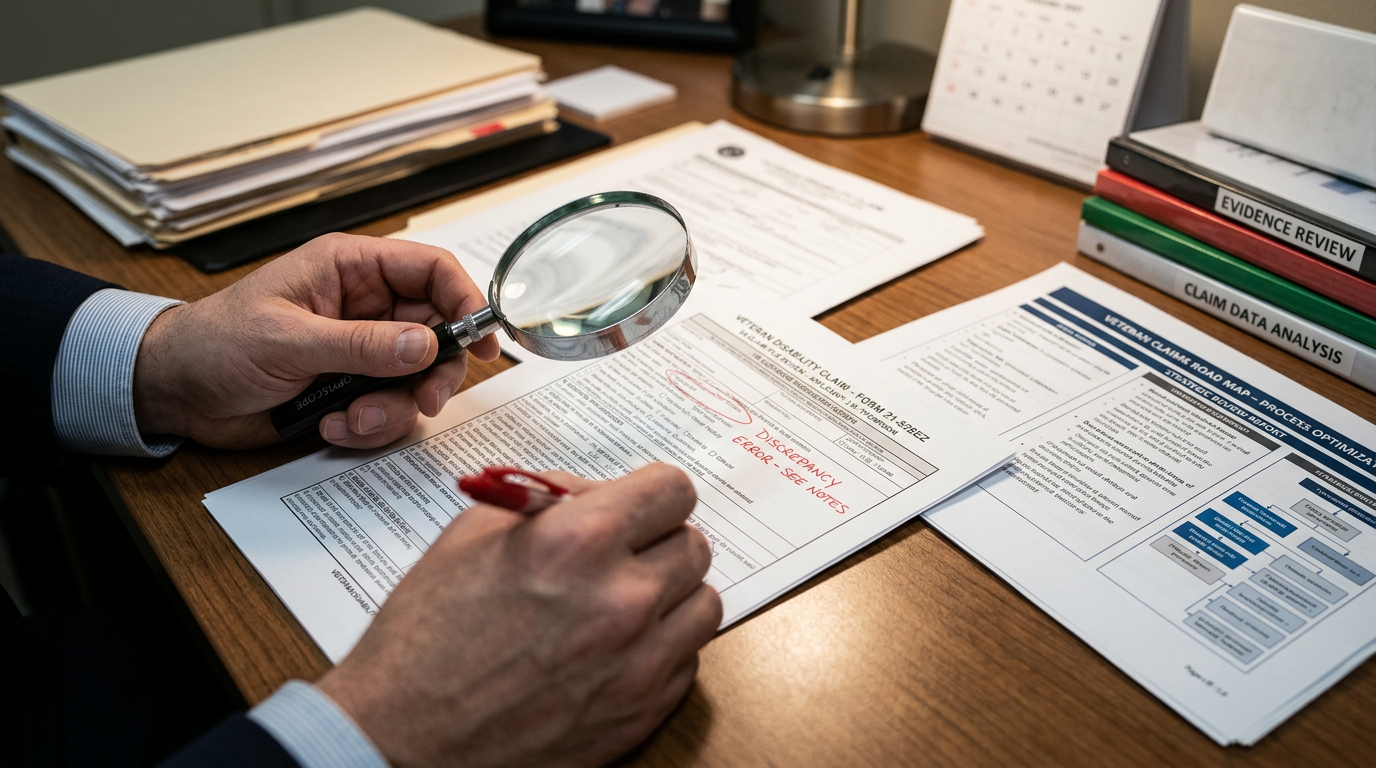
Mental Health · 38 CFR §4.130
Mental Health Claims
PTSD, MST, anxiety, depression, how they are rated under 38 CFR §4.130 and what it takes to win
All mental health conditions, PTSD, generalized anxiety disorder, major depressive disorder, and MST-related conditions, are rated under one formula at 38 CFR §4.130, on how severely the condition impairs your ability to work and function, not on the diagnosis itself. This is where the VA fails veterans most often, because the exam is a conversation and the criteria are subjective. On this page I lay out the rating schedule, the service-connection rules for PTSD and MST, the secondary pathways, and where the VA gets it wrong.
How the VA Rates Mental Health Conditions
All mental health conditions, PTSD, generalized anxiety disorder, major depressive disorder, MST-related conditions, and others, are rated under the same General Rating Formula for Mental Disorders at 38 CFR §4.130. The rating is based on the level of occupational and social impairment, not the diagnosis itself.
This means the VA is asking one question: how severely does your mental health condition interfere with your ability to work, maintain relationships, and function in daily life? The answer determines your rating percentage.
The Rating Schedule, Spelled Out
Diagnosed but symptoms are not severe enough to interfere with occupational and social functioning or to require continuous medication.
Occupational and social impairment due to mild or transient symptoms that decrease work efficiency only during periods of significant stress.
Occupational and social impairment with occasional decrease in work efficiency and intermittent periods of inability to perform occupational tasks.
Occupational and social impairment with reduced reliability and productivity due to such symptoms as: flattened affect, circumstantial speech, panic attacks more than once a week, difficulty understanding complex commands.
Occupational and social impairment with deficiencies in most areas such as work, school, family relations, judgment, thinking, or mood.
Total occupational and social impairment due to such symptoms as: gross impairment in thought processes, persistent danger of hurting self or others, inability to perform activities of daily living.
Service Connection for PTSD, 38 CFR §3.304(f)
PTSD service connection requires three elements: a current PTSD diagnosis conforming to DSM-5, a verified in-service stressor, and a nexus linking the PTSD to the stressor. The verification standard depends on the type of stressor:
Combat stressors
If consistent with the circumstances of service, the veteran's lay testimony alone is sufficient, no corroboration needed (38 CFR §3.304(f)(2)).
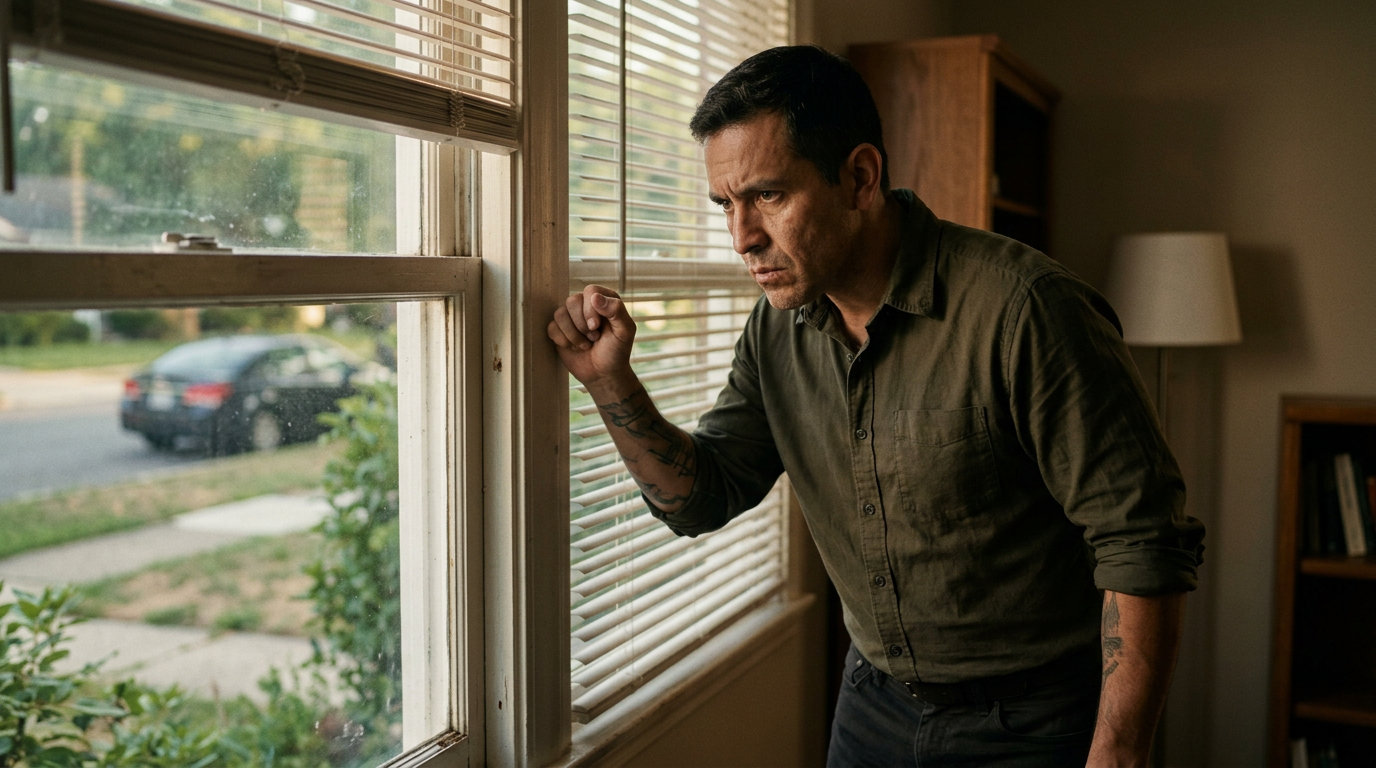
Fear of hostile military activity
A VA or VA-contracted psychiatrist confirms the stressor is related to fear of hostile activity, no additional corroboration (§3.304(f)(3)).

Military Sexual Trauma
Relaxed evidence standard. Behavioral markers in the record can serve as corroboration even without a formal report (§3.304(f)(5)).

Non-combat, non-MST stressors
Requires corroborating evidence such as service records, buddy statements, or contemporaneous reports.
Secondary Mental Health Claims, 38 CFR §3.310
Mental health conditions frequently develop secondary to chronic pain, traumatic brain injury, or other service-connected physical disabilities. Under 38 CFR §3.310, a condition caused or aggravated by a service-connected disability is itself service-connected.
Common secondary mental health claims include: depression secondary to chronic pain, anxiety secondary to tinnitus, sleep disorders secondary to PTSD, and substance use disorders secondary to PTSD or chronic pain. A nexus letter from a qualified mental health professional is critical for these claims.

Getting Treated Is Not the Same as Getting Rated: VA Mental Health Care and Vet Centers
Everything above is about the claim. This part is about the care, and I want you to hear me clearly: you do not need a rating, a claim, or a diagnosis on file to get mental health help from the VA. Any veteran enrolled in VA health care can be treated for PTSD, depression, anxiety, grief, insomnia, anger, and substance use, in a clinic, by telehealth, or in a residential program when it gets that bad. If things are bad today, VA medical centers offer same-day help for urgent mental health needs. You do not have to wait for an appointment.
Then there are the Vet Centers, and most veterans have never set foot in one. Under 38 U.S.C. §1712A, Vet Centers are community counseling offices that the law requires to be situated apart from VA hospitals. They provide free readjustment counseling to veterans and service members who served in a combat theater or an area of hostilities, people who gave emergency medical, mental health, or mortuary care to combat casualties, drone crews in combat operations, disaster and national emergency responders, and Coast Guard drug interdiction crews. Their family members can be seen too, and families of a veteran or service member who died by suicide can get counseling to cope with that loss. No rating is required.
Here is the trap: Vet Center counseling records are kept separate from your VA medical record. That is exactly why veterans feel safe talking there, and it is also why those notes do not automatically reach the claims processor. I have watched veterans spend two years in weekly Vet Center counseling, file for PTSD, and get rated off a single C&P exam because the VA never saw a page of that treatment. The VA does not go looking for it.
Your part: if you are in Vet Center counseling and you are filing or appealing a mental health claim, you decide whether those records go in. If you want them in, sign a release, request a copy or a treatment summary from your counselor, and submit it yourself. If you want them kept private, that is your right too. Either way, do not assume the VA already has them.

Four Doors to Mental Health Care Veterans Walk Past
A lot of veterans never ask for help because they assume they do not qualify. Bad paper, no rating, never reported the assault, not enrolled. Some of those beliefs are wrong, and the law says so.
Here is the trap: veterans with an other than honorable discharge often never walk in because they believe the VA is closed to them. For mental health care, that is frequently not true. Under 38 U.S.C. §1720I, a former service member with a discharge that is not honorable, but is not dishonorable and not by court-martial, who served more than 100 cumulative days and either deployed to a combat or contingency area or experienced military sexual trauma, can get a mental health assessment and the mental health care it calls for.
Your part: find the card below that fits you or someone you love, and use it. Reaching out is not weakness. It is the first move in taking your life back.

MST Care: No Report, No Proof, No Rating Required
Under 38 U.S.C. §1720D, the VA provides counseling and care, including care for physical health effects, for conditions resulting from military sexual trauma, regardless of duty status or line of duty determination. You do not need to have reported it in service, you do not need documents proving it happened, and you do not need a disability rating. A VA health care professional decides you need the care, and you get it. Every VA medical center has an MST coordinator; ask for that person by title.

Your Family Can Be Seen, Too
Under §1712A, Vet Center counseling reaches spouses, children, parents, and others living with an eligible veteran or service member, to help the household readjust after deployment. When a veteran or service member dies by suicide, the family can get counseling to cope with that loss. A wife who is carrying the weight at home is often the first one to notice the veteran is struggling. She can walk in on her own behalf.

Treatment Records Are Claim Evidence
A mental health rating under 38 CFR §4.130 is built on how your symptoms affect your work and your relationships, and consistent treatment notes are the best proof of that over time. Steady treatment at a VA clinic shows up in the VA record. Vet Center or private counseling does not, until you submit it. Before a C&P exam or an appeal, gather every treatment record you want considered and get it into the file. Do not let the examiner see you for 30 minutes and ignore two years of history.

In Crisis? Help Is Free, Confidential, and Immediate
If things are bad right now, the Veterans Crisis Line is free, confidential, and answered around the clock, by phone, text, or online chat, and you do not need to be enrolled in VA care or have a rating to use it. VA medical centers also offer same-day urgent mental health care. If you or someone you love is in immediate danger, call emergency services or go to the nearest emergency room. None of that touches your claim, and none of it is held against you.
Drinking to Survive What Service Did to You Is Not Misconduct When the Law Traces It Back
I am going to talk about something most veterans will not say out loud in my office until the third or fourth conversation: the drinking, the pills, the things you used to get through the night. Alcohol to sleep after the nightmares. Pain medication that started as a prescription for a service-connected back and turned into something you could not put down. I have heard it from Marines, from nurses, from MST survivors, and from men who never told their wives. It is one of the most predictable things trauma and chronic pain do to a person, and it is one of the most misunderstood parts of VA law.
Start with the statute, because the VA will. Under 38 U.S.C. §1110 and §1131, no compensation is paid for a disability that is the result of the veteran's own willful misconduct or abuse of alcohol or drugs. The regulation at 38 CFR §3.301 spells it out: drinking to enjoy the intoxicating effect, and drug use that becomes progressive and frequent to the point of addiction, are treated as willful misconduct, and a disease or injury that comes from that abuse is not in the line of duty. Read alone, that sounds like a closed door.
It is not, and the Federal Circuit said so. In Allen v. Principi, 237 F.3d 1368 (Fed. Cir. 2001), the court held that §1110 does not bar compensation for an alcohol or drug abuse disability that arises secondarily from a service-connected disability, and it does not bar using that disability as evidence of how severe the service-connected condition really is. The bar reaches primary abuse, the drinking that started on its own. It does not reach drinking that PTSD, depression, MST, or service-connected pain drove you into. That is secondary service connection under 38 CFR §3.310, and the court required clear medical evidence that the service-connected condition caused it.
Here is the trap: the exam. I have read C&P reports where the examiner wrote that the veteran's isolation, irritability, and lost jobs were due to alcohol use and not the PTSD, and then rated the PTSD low. That split is often not medically possible, and the law knows it. In Mittleider v. West, 11 Vet. App. 181 (1998), the Court held that when the effects of a service-connected condition cannot be separated from a non-service-connected one, the reasonable-doubt rule requires the VA to attribute all of those symptoms to the service-connected condition. And if the drinking itself is secondary under Allen, the examiner's split falls apart entirely.
Your part: tell the truth about it. To your provider, to the examiner, and to me. Hiding the drinking does not protect your claim, it shrinks it, because the examiner rates the version of you that walked in sober and composed for one hour. Get the substance use diagnosed, get it written into your treatment notes in connection with the condition that drove it, and let the record show the whole picture.

Four Rules That Decide a Substance Use Claim
Once you understand that secondary substance use is compensable, the claim lives or dies on four things. None of them is complicated. Every one of them gets missed.
Here is the trap: veterans wait to file until they are sober, as if the claim requires recovery first. It does not. An active substance use disorder is a documentable condition, and treatment in progress is evidence. Waiting only pushes the effective date back.
Your part: read the four cards below and check your own file against each one before you file, or before the next exam.

The Order of Causation Is the Whole Case
Under Allen v. Principi, the substance use must flow from the service-connected condition, never the other way. PTSD that led to alcohol dependence can be service-connected. Drinking that started on its own and later caused depression is the reverse, and it runs into §3.301. That means the primary condition must be service-connected already or claimed at the same time, and you need a medical opinion that explains how it drove the substance use, at the at least as likely as not level under 38 U.S.C. §5107(b). A one-line opinion will not carry it. Ask the provider to walk through the timeline: the stressor or injury, the symptoms, then the self-medication.

How It Is Rated: One Picture, Not Two Checks
Do not expect a second, separate percentage for the drinking on top of your PTSD. Mental disorders are rated under the General Rating Formula at 38 CFR §4.130, and the anti-pyramiding rule in §4.14 bars paying twice for the same symptoms. In practice, a secondary substance use disorder is folded into one mental health evaluation, and that is exactly why it matters: the lost jobs, the isolation, the conflict at home, and the neglected responsibilities that come with it are part of the impairment the rating has to reflect. Under Mittleider, if those effects cannot be separated, they count toward the service-connected rating.

What the Substance Did to Your Body Can Follow the Same Chain
Years of drinking or pain medication leave damage behind: the liver, the pancreas, the nerves, the stomach. On a primary basis, §3.301 bars those conditions. But when the substance use itself is secondary to a service-connected condition, the physical damage it caused can be argued as secondary too, under §3.310 and the reasoning of Allen, with clear medical evidence tying each link. The same chain matters for families: a death from liver disease driven by service-connected PTSD can support a DIC claim when the medical evidence connects it. Make sure your physician writes down what caused the organ damage, not just that it exists.

Treatment Is Available Now, and Those Records Need Your Signature
Under 38 U.S.C. §1720A, the VA provides treatment and rehabilitation for alcohol and drug dependence, and you do not need a rating or a pending claim to get it: detox, residential programs, outpatient counseling, medication-assisted treatment, and peer support. A relapse is part of recovery, not a disqualification. Here is the catch: substance use treatment records carry extra confidentiality protection under 38 U.S.C. §7332, and they often require your specific written authorization before they are released. If you want that treatment to support your claim, authorize it or get copies and submit them yourself. Do not assume the rater has seen it.
You Cannot Sleep, and the VA Thinks It Already Paid You for That
Almost every veteran I talk to with PTSD, depression, or chronic pain has the same night. You lie down, your mind starts running, you check the doors, you finally drift off around three, and a nightmare puts you back on your feet an hour later. Some of you wake up gasping and your spouse tells you that you stopped breathing. Sleep is where service follows you home, and it is one of the most misunderstood parts of a mental health claim.
Here is how the VA looks at it. Chronic sleep impairment is written right into the General Rating Formula for Mental Disorders at 38 CFR §4.130; it appears in the 30 percent level, and the higher levels assume it. That means the insomnia and nightmares that come with your PTSD are, in the VA's eyes, already part of your mental health rating. The anti-pyramiding rule at §4.14 bars paying twice for the same symptom.
But that is not the end of the story. Under Esteban v. Brown, 6 Vet. App. 259 (1994), a veteran can receive separate ratings when the conditions have distinct, non-overlapping manifestations. Obstructive sleep apnea is the clearest example: it is an airway problem, rated under the respiratory schedule at §4.97, Diagnostic Code 6847, not under §4.130. It is not a PTSD symptom. It is its own disability, and it can be service-connected secondary to your PTSD, your depression, or your service-connected pain under 38 CFR §3.310.
Here is the trap: veterans stop at the PTSD rating because someone told them sleep problems are 'already covered.' The insomnia may be. The sleep apnea is not, and neither is the weight, the medication, or the breathing problem that caused it. On the other side, I see claims filed for 'insomnia secondary to PTSD' as a stand-alone condition that are denied as pyramiding, and the veteran never learns why.
Your part: describe your nights in your own words to your provider and at your exam: how long it takes to fall asleep, how many times you wake, the nightmares, the daytime exhaustion, the near misses behind the wheel. That evidence supports your mental health rating. And if anyone has ever told you that you snore, stop breathing, or wake up choking, ask for a sleep study.

Four Things That Decide a Sleep Claim
A sleep claim done right can move your combined rating in a way few secondary claims can. Done wrong, it is denied, or it adds nothing. These four rules separate the two.
Here is the trap: veterans read online that 50 percent apnea plus 70 percent PTSD equals 85. VA math does not add. Under the combined ratings table at 38 CFR §4.25, 70 and 50 combine to 85, which rounds to 90. The number still moves, just not the way the internet says.
Your part: read the four cards and check your own file against each one.

Insomnia Usually Lives Inside Your Mental Health Rating
Insomnia and nightmares that are symptoms of PTSD or depression are rated as part of the single §4.130 evaluation, and a second rating for the same symptoms is pyramiding under §4.14. Do not let that discourage you; use it. Your sleep is evidence of severity for the mental health rating, and it counts toward the next level. Where a veteran has no mental health rating and a provider diagnoses an insomnia disorder caused by service-connected pain, that disorder can be claimed secondary under §3.310 and is rated under the same mental disorders formula. Any source telling you insomnia is rated under a neurological code is wrong.
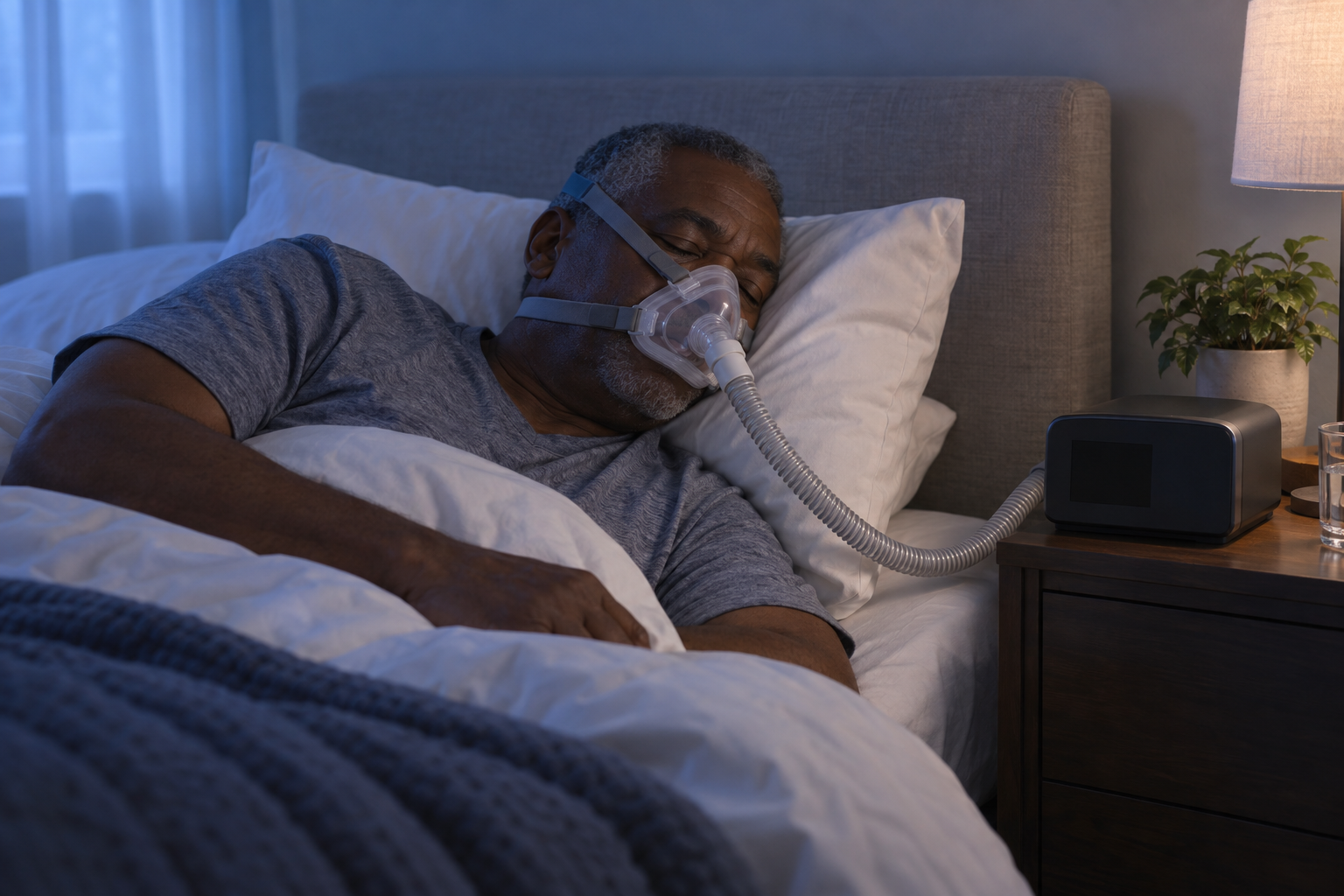
Sleep Apnea Has Its Own Ladder Under Diagnostic Code 6847
Under §4.97, DC 6847: 0 percent when the sleep disorder breathing is documented but causes no symptoms; 30 percent for persistent daytime hypersomnolence; 50 percent when it requires a breathing assistance device such as a CPAP; and 100 percent for chronic respiratory failure with carbon dioxide retention or cor pulmonale, or when it requires a tracheostomy. Because it is a separate body system, it combines with your mental health rating instead of being absorbed by it. If you were prescribed a CPAP, that prescription is the heart of the 50 percent claim. Keep using it, because your compliance data is evidence too.

The Weight Chain Has a Specific Legal Test
The most common pathway I see is medication or inactivity, then weight gain, then sleep apnea. The VA General Counsel addressed this in VAOPGCPREC 1-2017: obesity is not itself a disability, but it can be an intermediate step. The opinion has to show that the service-connected condition or its medication caused the weight gain, that the weight gain was a substantial factor in causing the apnea, and that the apnea would not have occurred without it. A nexus letter that skips any of those links gets denied. Make sure your provider walks through the medication, the dates, the weight, and the diagnosis, at the at least as likely as not level under 38 U.S.C. §5107(b).
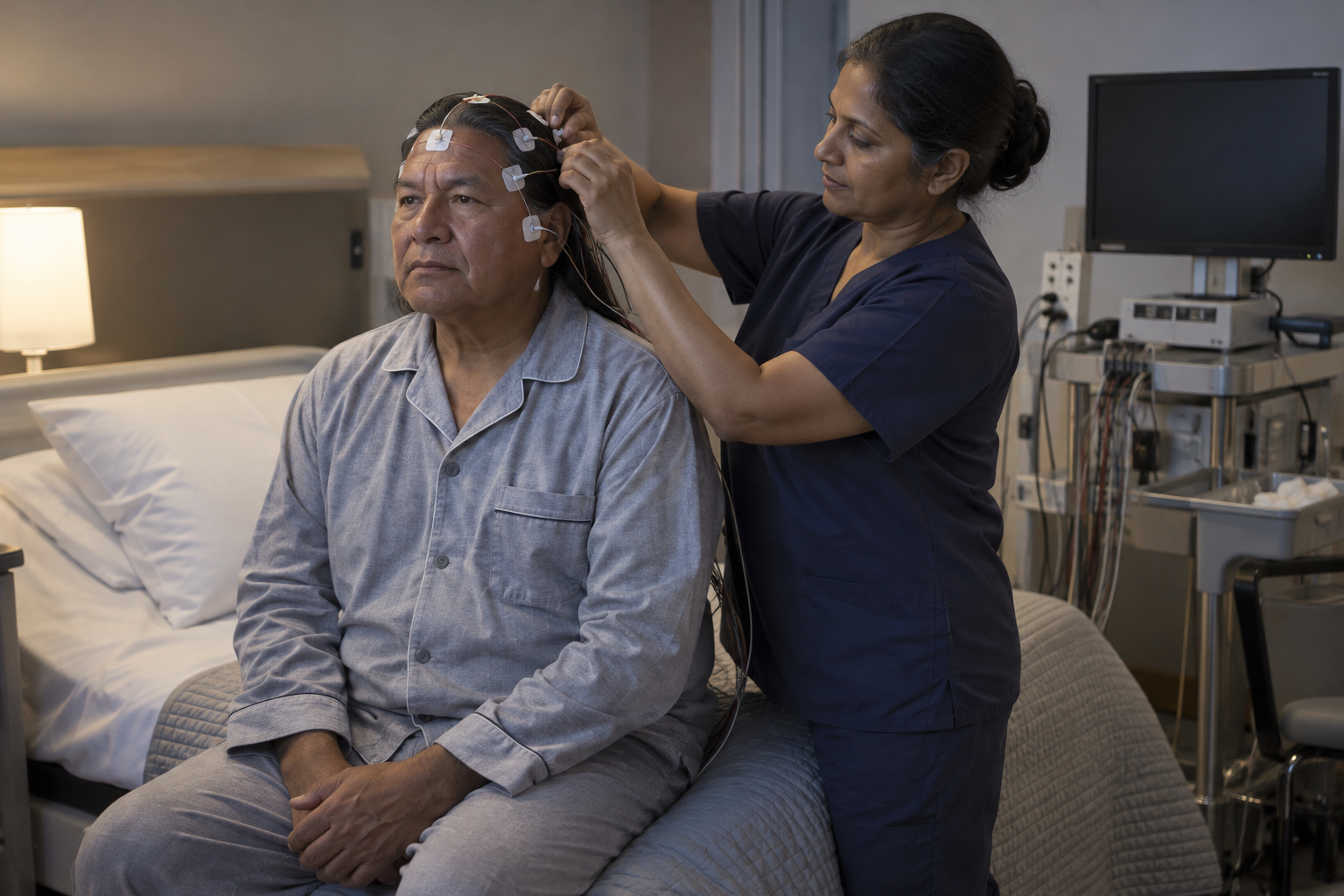
No Sleep Study, No Apnea Claim
The VA expects a sleep study, usually polysomnography in a lab or an approved home test, to confirm obstructive sleep apnea. Without it, there is no diagnosis to rate. Ask your VA or private provider for one, and get a copy of the results. Then build the record around it: your treatment notes, the CPAP prescription, a statement from your spouse or partner on VA Form 21-10210 describing the snoring, the pauses, the gasping, and how you function during the day. The VA also offers cognitive behavioral therapy for insomnia and full CPAP equipment to enrolled veterans, with or without a claim.
Where the VA Gets This Wrong

Rating based on the diagnosis rather than the level of functional impairment, 38 CFR §4.130 rates occupational and social impairment, not the name of the condition

C&P examiners conducting 15-minute mental health interviews for conditions that require 60–90 minutes of structured clinical assessment, these exams are facially inadequate
Ignoring behavioral markers for MST under §3.304(f)(5), transfer requests, performance drops, substance abuse onset, and relationship breakdowns ARE corroborating evidence even without a police report
Applying the anti-pyramiding rule (§4.14) too broadly, refusing to rate secondary conditions with distinct, non-overlapping symptoms separately from the primary mental health diagnosis
Requiring a specific stressor event for non-combat PTSD when the veteran's service records are consistent with fear of hostile military activity under §3.304(f)(3), no additional corroboration is needed in that case

Underrating because the veteran "appeared calm" or "was well-groomed" at the exam, a veteran managing through the hour of an exam says nothing about their functional capacity the other 23 hours

Failing to consider aggravation under §3.310(b), a pre-existing mental health condition permanently worsened by a service-connected physical disability is compensable to the degree of aggravation
Half the Denied MST Claims, Processed Wrong
If your PTSD claim based on military sexual trauma was denied, read this before you accept that answer. In VA OIG Report No. 17-05248-241 (August 2018), the Inspector General reviewed MST-related PTSD claims denied from April through September 2017 and estimated that about 1,300 of the 2,700 were improperly processed. That is roughly half. The most common failures were not requesting a medical exam or opinion when the evidence was enough to require one, not asking for private treatment records, skipping required outreach to the veteran, and denying on medical opinions that were contradictory or insufficient.
The VA promised fixes. Three years later, VA OIG Report No. 20-00041-163 (August 2021) found that improvements were still needed, that the earlier recommendations had not been effectively carried out, and it issued four new recommendations on correcting errors and holding the process accountable.
Here is how I use that. Under 38 CFR §3.304(f)(5), the VA cannot deny an MST claim without first telling you about the kinds of evidence from outside your service records that can corroborate the assault. I check the file for that notice. I check whether an exam was ordered once markers were in the record, because 38 U.S.C. §5103A and 38 CFR §3.159(c)(4) put that duty on the VA. If either is missing, that is a duty-to-assist error, and your denial may be one of the ones the OIG was describing. Your part is to tell me about the changes after the assault, the transfer requests, the drop in evaluations, the drinking, the relationships that ended. Those are evidence, not excuses.
What the Courts Have Said About Mental Health Ratings

The rating formula at 38 CFR §4.130 reads like a checklist, and too many raters use it like one. The courts have said it is not. In Mauerhan v. Principi, 16 Vet. App. 436 (2002), the Court held that the symptoms listed at each level are examples, not an exhaustive list. You do not have to have every symptom in the 70 percent paragraph to be rated at 70 percent. In Vazquez-Claudio v. Shinseki, 713 F.3d 112 (Fed. Cir. 2013), the Federal Circuit held that the question is whether you have those symptoms or others of similar severity, frequency, and duration, and whether they cause the level of occupational and social impairment that rating describes.
Then there is the scope of your claim. In Clemons v. Shinseki, 23 Vet. App. 1 (2009), the Court held that a veteran who files for one mental condition is claiming whatever mental disability is reasonably encompassed by the symptoms described and the information in the record. You are not a psychiatrist, and the VA cannot deny you because you wrote "PTSD" when the examiner diagnosed depression or anxiety.
Here is how I put that to work. If a rater denied the next level because one listed symptom was missing, that is a Mauerhan and Vazquez-Claudio problem. If the VA denied PTSD and never looked at the depression sitting in your treatment notes, that is a Clemons problem. Your part is to describe your symptoms in plain words, how often they hit, and what they cost you at work and at home. Let me worry about which box the law puts them in.
The Advocate's Take
Mental health claims are where the VA system fails veterans most often. The symptoms are invisible. There is no X-ray for nightmares, no blood test for the rage that makes you leave a grocery store with half a cart. The C&P exam is a conversation, not a measurement, and the rating criteria are written in words like "occasional," "reduced reliability," and "deficiencies in most areas." That subjectivity cuts against you every time you understate what is happening. I have sat across from veterans who told me they were "fine" while their spouse quietly shook her head in the next chair. I have been there. The military trained us to push through, and that habit follows us right into the exam room.
Here is how the VA looks at it. Every mental health condition, PTSD, depression, anxiety, bipolar disorder, is rated under the General Rating Formula for Mental Disorders at 38 CFR §4.130. The VA is not rating your diagnosis. It is rating occupational and social impairment: how your symptoms affect your ability to work, keep relationships, manage your money, handle stress, and get through a normal week. The levels run 0, 10, 30, 50, 70 and 100 percent, and the difference between 30% and 70% is not a feeling, it is documented evidence of how often and how badly your symptoms disrupt your life. For PTSD, service connection also requires a stressor under 38 CFR §3.304(f). Combat, fear of hostile military activity, and MST each have their own rules, and for MST the VA must consider markers such as behavior changes, requests for transfer, performance drops, and changes in relationships, not just a police report that most survivors never filed.
What you need to bring. First, a current diagnosis from a qualified provider. Second, the in-service event, stressor, or onset, in as much detail as you can stand to give: dates, unit, location, what happened. Third, a nexus, a medical opinion that your condition is at least as likely as not related to service. Fourth, and this is where most claims are won or lost, lay statements. A buddy statement on VA Form 21-10210 from someone who served with you, and a statement from your spouse, parent, or close friend describing who you were before and who you are now. They see what the examiner never sees: the 2 a.m. walks around the house, the missed family dinners, the job you lost because you could not take one more supervisor in your face.
Walk through it with me. Step one: get into treatment and stay in it, VA, Vet Center, or private, because treatment records are the backbone of a mental health rating. Step two: before the C&P exam, write down your worst days for the last 30 days, panic attacks, sleep, anger, isolation, thoughts of self-harm, and bring that list. Step three: at the exam, describe your worst days, not your best ones, and describe how often. "I have panic attacks" is weak. "I have panic attacks three to four times a week and I left two jobs because of them" is evidence. Step four: after the exam, request the completed DBQ. I review every DBQ for adequacy. If the examiner wrote "appeared calm and well-groomed" and rated you on one hour of good behavior, that exam can be challenged under the Duty to Assist at 38 CFR §3.159, and when the evidence is evenly balanced, 38 CFR §3.102 says the tie goes to you.
The pitfalls I see over and over: minimizing symptoms out of pride, skipping treatment and then expecting a high rating, letting the C&P exam be the only medical evidence in the file, and never connecting the dots to secondaries. Sleep apnea, hypertension, erectile dysfunction, and GI conditions can all be secondary to service-connected PTSD or depression under 38 CFR §3.310. And if your mental health condition keeps you from holding substantially gainful employment, TDIU belongs in the conversation.
Your part: tell the truth, the whole ugly truth, to your providers and to the examiner. Stay in treatment. Get your people to write their statements. I review the evidence, I challenge the inadequate exams, and when the rating does not match the impairment, I fight it. We work WITH you, not FOR you. You carry your story. I carry the law.
A mental health rating turns on how your symptoms affect your work and your life, not on how composed you look for one hour in an exam room. Watch the VA's own PTSD explainer below. Then ask yourself whether the decision in your file reflects what the VA itself says this condition does to a veteran.
What a Mental Health C&P Exam Looks For
These official VA videos show what a psychological claim exam measures and how the process works, so you know the questions that actually decide the rating.
VA Claim Exams: Psychological
Your VA Claim Exam: What to Expect
Every Level the VA Can Assign You
These percentages come straight out of the rating schedule that governs mental health claims, Diagnostic Code 9201–9440. Read them slowly. If your current rating does not match what your records actually show, that gap is exactly what an appeal exists to correct.
0%
Diagnosed but symptoms are not severe enough to interfere with occupational and social functioning or to require continuous medication.
10%
Occupational and social impairment due to mild or transient symptoms that decrease work efficiency only during periods of significant stress.
30%
Occupational and social impairment with occasional decrease in work efficiency and intermittent periods of inability to perform occupational tasks.
50%
Occupational and social impairment with reduced reliability and productivity due to such symptoms as: flattened affect, circumstantial speech, panic attacks more than once a week, difficul…
70%
Occupational and social impairment with deficiencies in most areas such as work, school, family relations, judgment, thinking, or mood.
100%
Total occupational and social impairment due to such symptoms as: gross impairment in thought processes, persistent danger of hurting self or others, inability to perform activities of dai…
Building a Mental Health Claims Claim That Wins
Every claim stands on three legs. Knock one out and the claim falls over, no matter how bad your symptoms are. Before you file, look at your file and find all three. If one is missing, that is the piece to build first. The VA will not build it for you, and filing without it usually just buys you a denial letter and lost time.
 01
01A current diagnosis
A doctor has to say you have it, now, in writing. Not "reports symptoms of", a diagnosis. Without this leg, nothing else in the file matters.
 02
02A link to your service
An event, an injury, an exposure, or an already service-connected condition. Service records, unit records, buddy statements, and your own account all count as evidence.
 03
03A nexus that ties the two together
A medical opinion stating it is at least as likely as not that your service caused or aggravated the condition. That phrase is a legal standard: 50 percent or better. It is the leg most denials break.
Document the problem before you file
• Keep a dated symptom log for at least 30 days. Frequency, severity, and what it stopped you from doing.
• Get statements from people who see it, a spouse, a coworker, a battle buddy. Lay evidence is legal evidence.
• Pull your private treatment records. The VA only has to help; it does not have to go find everything.
• Write down what you have stopped doing. Lost work, lost sleep, lost activities. That is what impairment looks like on paper.
Your Rights in This Process
Most veterans walk into this system without knowing the rules the VA itself has to follow. That is how claims get denied for missing evidence the VA was supposed to help you find, and how exams get done by the wrong clinician. These six rights are written into federal regulation. Know them before you file, and make the VA honor every one of them when it decides your claim.

It costs nothing to file
Filing a VA claim is free. Accredited representatives may only charge for work on an appeal after an initial decision, and those fees are capped by 38 CFR §14.636.

The VA has a Duty to Assist you
Under 38 CFR §3.159 the VA must help you get the evidence it needs, and it must tell you what is missing before it denies you for missing it.

You can ask for a different examiner
You may request a trauma-informed clinician, or a clinician of a specific gender, for a C&P examination. Ask before the exam is scheduled.

You can claim every condition you have
There is no limit and no penalty. Primary conditions, secondary conditions, and conditions made worse by service all get filed.

You can appeal and be re-evaluated
A denial is not the end. You may submit new evidence, request a higher-level review, appeal to the Board, and ask for re-evaluation when your condition worsens.

You must be considered for TDIU
If your service-connected conditions keep you from holding substantially gainful employment, you may be paid at the 100 percent rate without a 100 percent rating.
The Nine Questions Every Veteran Should Be Able to Answer
This is the standard I hold every page on this site to. Before you file anything on a mental health claim, you should be able to answer these nine questions. If you cannot answer them yet, you are not ready, and that is exactly what my review is for. This is education first, representation second.

What is this?
A mental health claim seeks service connection or a higher rating for conditions like PTSD, depression, or anxiety tied to service. These are rated on occupational and social impairment.

What must the VA decide?
Whether your condition is service-connected and, for rating, how much it impairs your work and daily life under the General Rating Formula for Mental Disorders.

What must the evidence prove?
A current diagnosis, an in-service stressor or event, and a link between them, plus evidence of how the symptoms impair work and relationships. For PTSD, the stressor rules matter.

What is the VA responsible for?
Obtaining your records, providing an adequate psychological examination, and rating the actual impairment, not just counting symptoms.

What are you responsible for?
Engaging in treatment, attending the exam, and describing honestly how the condition affects your job, your family, and your daily functioning.

What can go wrong?
A rushed exam that undercounts impairment, an unverified stressor, or a rating that ignores how the condition actually disrupts your life. Mental health claims are frequently under-rated.

What you should not do
Do not minimize your symptoms to appear strong, and do not skip treatment. The record of care is often the strongest proof of severity.

What I review as your accredited agent
I confirm the stressor and nexus are documented, check the exam against the rating formula, and make sure the true occupational and social impact is on the record.

What happens next
The VA issues a decision. Because these conditions change over time, I also watch for worsening, TDIU where the impairment prevents work, and future-exam risk.
Representation Means Telling You the Truth
Do Not File Yet If…
Before you take action on a mental health claim, check whether any of these apply. Filing at the wrong time can weaken your claim, waste a deadline, or put you on a longer path than necessary. I would rather tell you to wait than watch you lose an effective date or hand the VA a thin file it can deny in a week. A denial is not the end, but it costs you months. Read each item below honestly. If one fits your situation, call us first and we will tell you what to fix before anything gets filed.



Frequently Asked Questions
Mental health claims bring the most personal questions I get, and veterans often wait years to ask them. PTSD, depression, anxiety, and MST claims each have their own rules about what the VA needs to see. The answers below cover the ones I hear most. Your part is to get your symptoms into your treatment records in your own words, as they really are on your worst days.
Can I file for PTSD without a combat stressor?
What is the difference between PTSD and anxiety/depression for VA purposes?
What evidence do I need for an MST claim?
Can I get a separate rating for anxiety AND PTSD?
What if my mental health condition developed after service?

When You Are Ready to File
Talk to an accredited representative before you file. It costs nothing to ask, and the order you file in changes what the VA is allowed to award you. Albert L. Thombs Jr. is VA-Accredited Claims Agent #45147. A short conversation now can save you a year spent waiting in the wrong review lane.
Your part starts at the kitchen table. Pull your DD-214, your rating decision if you have one, and the names of every doctor who treats you today. Under 38 CFR 3.159 the VA has to help you gather records, but it can only chase the records you tell it about. Leave a doctor off the 21-4142 and that treatment may never reach your file.

The stressor statement
This is the VA statement for the in-service stressor behind a PTSD claim, including personal assault and MST. Under §3.304(f) the VA can look to markers outside your service records. Write what happened, when, and where, as best you can.
Get the stressor statement on VA.govThe application itself
This opens the mental health claim. You do not need the perfect diagnosis label. Claim the condition by its symptoms and the VA must consider every mental health diagnosis the record supports under Clemons.
File the claim on VA.govThe people who saw the change
Your spouse, your kids, your friends. They saw you before and after. Their statements show the occupational and social impairment that §4.130 is built around.
Get the lay statement form on VA.govKeep Reading
One page never tells the whole story of a claim. The VA rates every condition on its own evidence, its own exam and its own diagnostic code, and the pieces connect in ways most veterans never see until a decision letter lands. These are the pages that pick up where this one stops. Read them before you file, not after a denial, because the cheapest fix in this process is the mistake you never make.
PTSD Claims
The stressor rules, the DSM-5 diagnosis, and how PTSD is rated under §4.130.
Read more
MST / Personal Assault
The relaxed evidence standard under §3.304(f)(5) and the markers that corroborate MST.
Read more
Anxiety & Depression
Rated on the same formula as PTSD, service-connected by nexus opinion.
Read more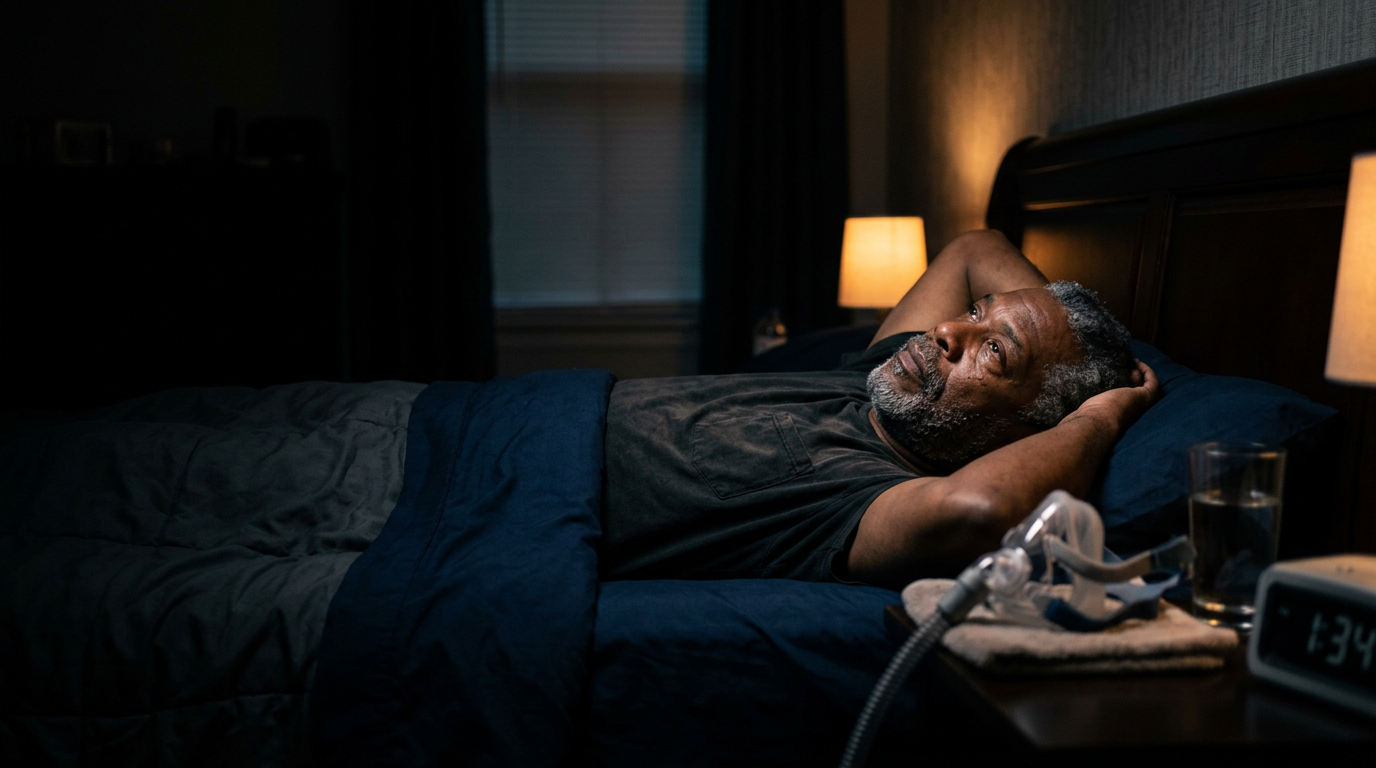
PTSD & Sleep Apnea (Secondary)
One of the most common and most winnable secondary chains under §3.310.
Read more