
Pension
Non-Service-Connected Pension
A needs-based benefit for wartime veterans with limited income
VA pension is a needs-based benefit for low-income wartime veterans who are permanently disabled or over 65, separate from service-connected compensation. Pension counts income and net worth, and unreimbursed medical expenses can lower the income the VA counts. Many veterans are denied because they leave those expenses off. Your part is to list every source of household income and every out-of-pocket medical cost, with receipts ready if the VA asks.
A Different Benefit Entirely
Non-service-connected pension is needs-based, not tied to a service-connected injury. It supports wartime-era veterans who have limited income and net worth and who are permanently and totally disabled, over 65, in a nursing home, or receiving Social Security disability. The disability need not be related to service in any way, that is the entire point of the program.
You cannot receive pension and service-connected compensation at the same time; the VA pays the greater of the two. But pension exists precisely for the veteran whose disabling conditions came after service, or who never had a compensable rating at all.

Qualifying Wartime Periods (§3.2)

World War II, December 7, 1941 through December 31, 1946

Korean conflict, June 27, 1950 through January 31, 1955

Vietnam era, February 28, 1961 (for those who served in Vietnam) or August 5, 1964, through May 7, 1975

Persian Gulf War, August 2, 1990 through a date yet to be set by law

You must have served at least one day during a war period, not necessarily in combat, and not necessarily overseas
How Income and Net Worth Are Actually Counted
The VA compares your countable income against the Maximum Annual Pension Rate (MAPR) for your household size and benefit level, and pays the difference. Countable income is not the same as gross income. Under §3.272, unreimbursed medical expenses, insurance premiums, prescriptions, in-home care, assisted living, nursing home costs, that exceed 5 percent of the MAPR are deducted from countable income.
That deduction is what makes the program work for older veterans. A veteran whose gross income looks too high on paper can qualify once ongoing care costs are subtracted. Documenting every recurring medical expense is not paperwork, it is the claim.
Net worth combines assets and annual income against a single limit that the VA adjusts each year. Since 2018 there has also been a 36-month look-back under §3.274 for asset transfers made to qualify, with a penalty period for covered transfers. Giving assets away shortly before applying can disqualify you.

Enhanced With Aid & Attendance or Housebound
Pension can be increased with the Aid and Attendance or Housebound allowances for veterans who need daily help or are confined to home. Because those higher MAPR levels raise the income ceiling at the same time they raise the payment, a veteran in assisted living who was over the limit for basic pension can be under the limit for aid-and-attendance pension. For older veterans with modest means and mounting care needs, this combination is a lifeline that almost no one tells them about.
Surviving spouses of wartime veterans have their own parallel program, Survivors Pension, with the same aid-and-attendance enhancement available.

The Advocate’s Take
You do not need a service-connected injury to qualify for VA pension. You need wartime service and real financial need. That is it. I meet veterans every month who never applied because they thought pension was only for the wounded. It is not.
Here is how the VA looks at it. Pension is needs-based. You must have served during a recognized wartime period, generally with at least 90 days of active duty and one day during wartime, and with a discharge other than dishonorable. You must be 65 or older, or permanently and totally disabled, or in a nursing home, or receiving Social Security disability. Then the VA measures your countable income and your net worth against limits it adjusts every year. Under 38 CFR 3.272, unreimbursed medical expenses above a set threshold come off your income before the VA counts it. And there is a three-year look-back on assets you gave away to qualify.
What I need from you: your DD-214, your income sources for the household, your bank and asset statements, and every medical cost you pay out of pocket. That means Medicare premiums, supplemental insurance, prescriptions, in-home care, assisted living, even mileage to appointments. Those numbers are where pension claims are won or lost.
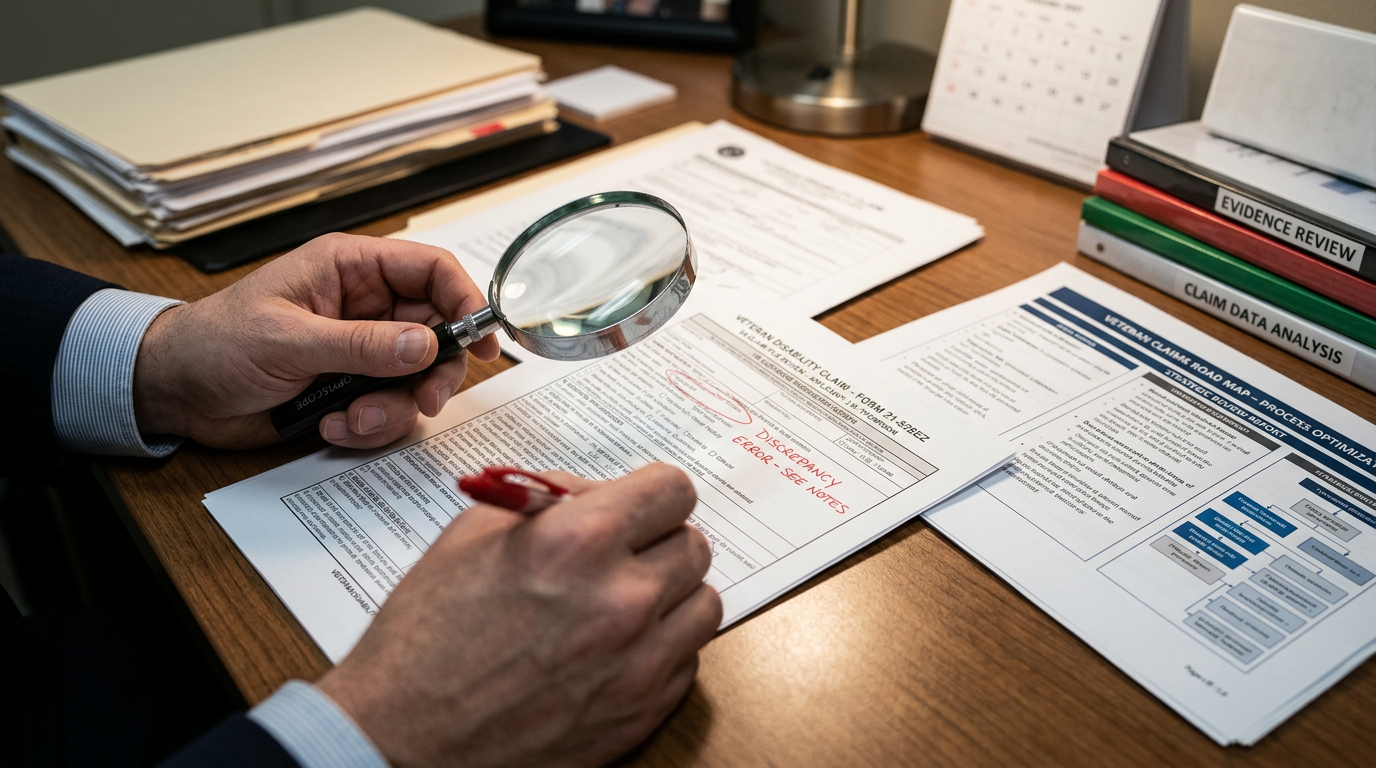
Walk through it with me. We confirm your wartime service. We total your income and subtract your medical costs. We check net worth against the current limit. Then we file VA Form 21P-527EZ, and if you need help with daily living or are confined at home, we add Aid and Attendance or Housebound to raise the rate. If you have a service-connected rating too, we compare and make sure you receive whichever pays more.
The pitfalls: disqualifying yourself on gross income, forgetting medical costs, moving assets right before applying, and missing the yearly changes in what the VA counts. A pension award is also not set in stone, income changes must be reported, or you will be asked to pay money back.
Your part: gather every receipt for medical costs and be honest about your assets. We work WITH you, not FOR you. You served during wartime, and if the money is tight, this benefit was written for you.
Pension is a needs-based benefit, and the VA still looks hard at your medical condition, your income, and your net worth before it pays a dollar. The disability side of that claim is documented through exams and medical records. Watch the official VA videos below so you understand how the VA evaluates your condition before you file.
Straight From the Source
The rating behind this benefit is set at your claim exam. Watch these official VA walkthroughs to understand what that exam involves and how to prepare.
The official overview of the VA claim exam process, what happens, who conducts it, and why it matters for your rating.
What the VA's own guidance covers, what to bring, how to report your symptoms honestly, and the mistakes that cost veterans rating levels.
Why Scammers Hunt Veterans, and the One Law That Exposes Most of Them
I will say this plainly: if you are a veteran over 50 with a rating, a pension, or savings, someone is already working on a pitch for you. It is nothing personal and it is not a sign you did anything wrong. Scammers go where the steady money is, and a monthly VA deposit looks like steady money to them. They also count on something every veteran carries, which is trust in anyone who says they are helping a fellow vet.
Here is the law that takes most of their power away. Under 38 U.S.C. §5901 and 38 CFR §14.629, only a VA-accredited attorney, claims agent, or Veterans Service Organization representative may help you prepare, present, or prosecute a VA claim. Under 38 U.S.C. §5904 and 38 CFR §14.636(c), even an accredited representative cannot charge you a fee until the VA has issued its initial decision on the claim. Filing your first claim is free help by law. When a fee is allowed later, the agreement must be in writing, signed by both of you, and filed with the VA.
Here is the trap: the "consultant" who promises a guaranteed rating, a faster decision, or a medical opinion that "always works," and wants a signed contract for a percentage of your back pay or a flat fee up front. Nobody can guarantee a VA rating. A person who is not accredited cannot legally represent you, and an accredited one cannot bill you for your first filing. Either way, that contract is the warning.
Your part: before you sign anything with anyone about a VA claim, ask for their accreditation, ask in writing what they charge and when, and if the answer is "a fee now for your first claim," stand up and walk out.

Pension Poaching, Fake VA Calls, and the Four Moves That Shut Them Down
The schemes that hurt veterans most go after the benefit itself. One is pension poaching, where a seller offers to "buy" your future pension or VA payments for a lump sum, or to move your savings into an annuity or trust so you will "qualify" for pension. The other is the fake government call, a voice claiming to be the VA or Social Security who says your benefits are frozen unless you pay or verify your full Social Security number right now.
Here is the trap: urgency. Pay today, act right now, do not tell your family. Real agencies do not work that way. The VA does not call to demand a gift card, a wire transfer, or a payment to keep your benefits. When the pressure starts, that pressure is the scam.
Your part: use the four moves below every single time money and your VA benefits come up in the same conversation.

Do Not Let Anyone Rearrange Your Assets for Pension
Pension has a 36-month look-back under 38 CFR §3.276. Assets you give away or move for less than fair market value inside that window, including into certain annuities and trusts, can trigger a penalty period of up to five years with no pension paid. The seller pockets a commission; you lose the benefit. The regulation does carve out transfers obtained through fraud or unfair business practices, but proving that after the fact is a fight you do not want. Talk to an accredited representative before you move a dollar.

Hang Up and Call the Real Number Yourself
If a caller says they are from the VA or Social Security, hang up. Do not call back the number they gave you or the one on your caller ID, both can be faked. Look up the agency number yourself on an official letter or the agency website and call that. Never give your full Social Security number, bank details, or a payment to someone who contacted you first. Saying "I need to check with my family" and hanging up is always allowed.

Check Accreditation Before You Hand Over a Single Paper
The VA Office of General Counsel keeps a public accreditation search on its website listing every accredited attorney, claims agent, and VSO representative. Search the person by name before you sign anything. If they are not on it, they cannot represent you on a VA claim. If they are on it and still want money for your first filing, that violates 38 CFR §14.636(c), and you can report them to the Office of General Counsel.

Report It, Then Tell Your Bank and Your Family
If you were targeted or lost money, it is not shameful and you are not alone. Call your bank first if any account details or money changed hands, so they can freeze or flag it. Report the scam to the Federal Trade Commission and to the VA, which runs its VSAFE fraud program for exactly this. Then tell your family. Scammers depend on secrecy, and one honest conversation at the kitchen table protects the next veteran too.
Where the VA Gets This Wrong
Denials that count gross income without applying the §3.272 medical-expense deduction, and net-worth denials that fail to account for how the limit is calculated. Both are correctable, and both are worth challenging rather than walking away from.
Building a Non-Service-Connected Pension Claim That Wins
Every claim stands on three legs. Knock one out and the claim falls over, no matter how bad your symptoms are. Before you file, look at your file and find all three. If one is missing, that is the piece to build first. The VA will not build it for you, and filing without it usually just buys you a denial letter and lost time.
 01
01A current diagnosis
A doctor has to say you have it, now, in writing. Not "reports symptoms of", a diagnosis. Without this leg, nothing else in the file matters.
 02
02A link to your service
An event, an injury, an exposure, or an already service-connected condition. Service records, unit records, buddy statements, and your own account all count as evidence.
 03
03A nexus that ties the two together
A medical opinion stating it is at least as likely as not that your service caused or aggravated the condition. That phrase is a legal standard: 50 percent or better. It is the leg most denials break.
Document the problem before you file
• Keep a dated symptom log for at least 30 days. Frequency, severity, and what it stopped you from doing.
• Get statements from people who see it, a spouse, a coworker, a battle buddy. Lay evidence is legal evidence.
• Pull your private treatment records. The VA only has to help; it does not have to go find everything.
• Write down what you have stopped doing. Lost work, lost sleep, lost activities. That is what impairment looks like on paper.
Your Rights in This Process
Most veterans walk into this system without knowing the rules the VA itself has to follow. That is how claims get denied for missing evidence the VA was supposed to help you find, and how exams get done by the wrong clinician. These six rights are written into federal regulation. Know them before you file, and make the VA honor every one of them when it decides your claim.

It costs nothing to file
Filing a VA claim is free. Accredited representatives may only charge for work on an appeal after an initial decision, and those fees are capped by 38 CFR §14.636.

The VA has a Duty to Assist you
Under 38 CFR §3.159 the VA must help you get the evidence it needs, and it must tell you what is missing before it denies you for missing it.

You can ask for a different examiner
You may request a trauma-informed clinician, or a clinician of a specific gender, for a C&P examination. Ask before the exam is scheduled.

You can claim every condition you have
There is no limit and no penalty. Primary conditions, secondary conditions, and conditions made worse by service all get filed.

You can appeal and be re-evaluated
A denial is not the end. You may submit new evidence, request a higher-level review, appeal to the Board, and ask for re-evaluation when your condition worsens.

You must be considered for TDIU
If your service-connected conditions keep you from holding substantially gainful employment, you may be paid at the 100 percent rate without a 100 percent rating.
When You Are Ready to File
Talk to an accredited representative before you file. It costs nothing to ask, and the order you file in changes what the VA is allowed to award you. Albert L. Thombs Jr. is VA-Accredited Claims Agent #45147. A short conversation now can save you a year spent waiting in the wrong review lane.
Your part starts at the kitchen table. Pull your DD-214, your rating decision if you have one, and the names of every doctor who treats you today. Under 38 CFR 3.159 the VA has to help you gather records, but it can only chase the records you tell it about. Leave a doctor off the 21-4142 and that treatment may never reach your file.

The application itself
This is the form that opens a disability compensation claim. List every condition you are claiming, and name the secondary conditions explicitly.
Release for private records
Authorises the VA to request records from your private doctors. Without it, treatment outside the VA may never reach your file.
Lay or buddy statement
The official form for your own statement and for statements from people who witnessed the event or the change in you.
What It Takes to Claim This Benefit
Confirm you meet the eligibility rules for this specific benefit, the criteria below and in the governing regulations tell you exactly what the VA is looking for.
Gather the proof that matches those rules, service records, medical evidence, income or dependency documents, and the physician statements the VA weighs.
File the right form the right way, the correct application, fully supported, so the VA cannot deny it on a technicality or delay it for missing evidence.
 Veteran Representation
 Veteran Representation
The Forms & Applications We File For You
These are the applications that drive this benefit. Start any of them on our site and an accredited agent prepares and files it for you, correctly, the first time.
Application for Veterans Pension
The needs-based pension application for wartime veterans with limited income.
Start this with usAid & Attendance / Housebound Exam
Adds the enhanced pension rate for veterans who need daily help or are housebound.
Start this with usAppoint Us as Your Representative
Authorizes our accredited agent to act on your behalf with the VA on this benefit.
Start this with usSee How Ratings Drive This Benefit
Most benefits scale with your combined disability rating, and the VA does not add your ratings the way you would expect. Work the real math below. The VA uses the combined ratings table in 38 CFR 4.25, which applies each rating to whatever is left of your remaining efficiency, then rounds to the nearest 10. That is why a 50% and a 30% come out to 70%, not 80%. Before you assume you are short of a threshold for this benefit, run your own numbers here and compare them to your rating decision letter.
Why 50% + 30% Does NOT Equal 80%
The VA uses “whole-person” math, not simple addition. This is how ratings really stack.
The VA always begins from a whole, healthy person (100%).
50% of 100 is subtracted. You have 50% “efficiency” left.
30% is taken from the REMAINING 50 (0.30 × 50 = 15). 50 − 15 = 35 left.
100 − 35 = 65, then rounded to the nearest 10 → 70%.
Bottom line: 50% and 30% combine to 65% → rounded to 70%, not 80%. The same math turns two 50% ratings into 75% → rounded to 80%, not 100%. Every rating you add is worth less than the last. That is why which conditions you claim, and in what order, matters as much as how many.
 Veteran Representation
Not sure if you qualify?
An accredited agent reviews your eligibility for this benefit at no cost and tells you straight whether it is worth pursuing. If it is, we prepare and file every form for you.