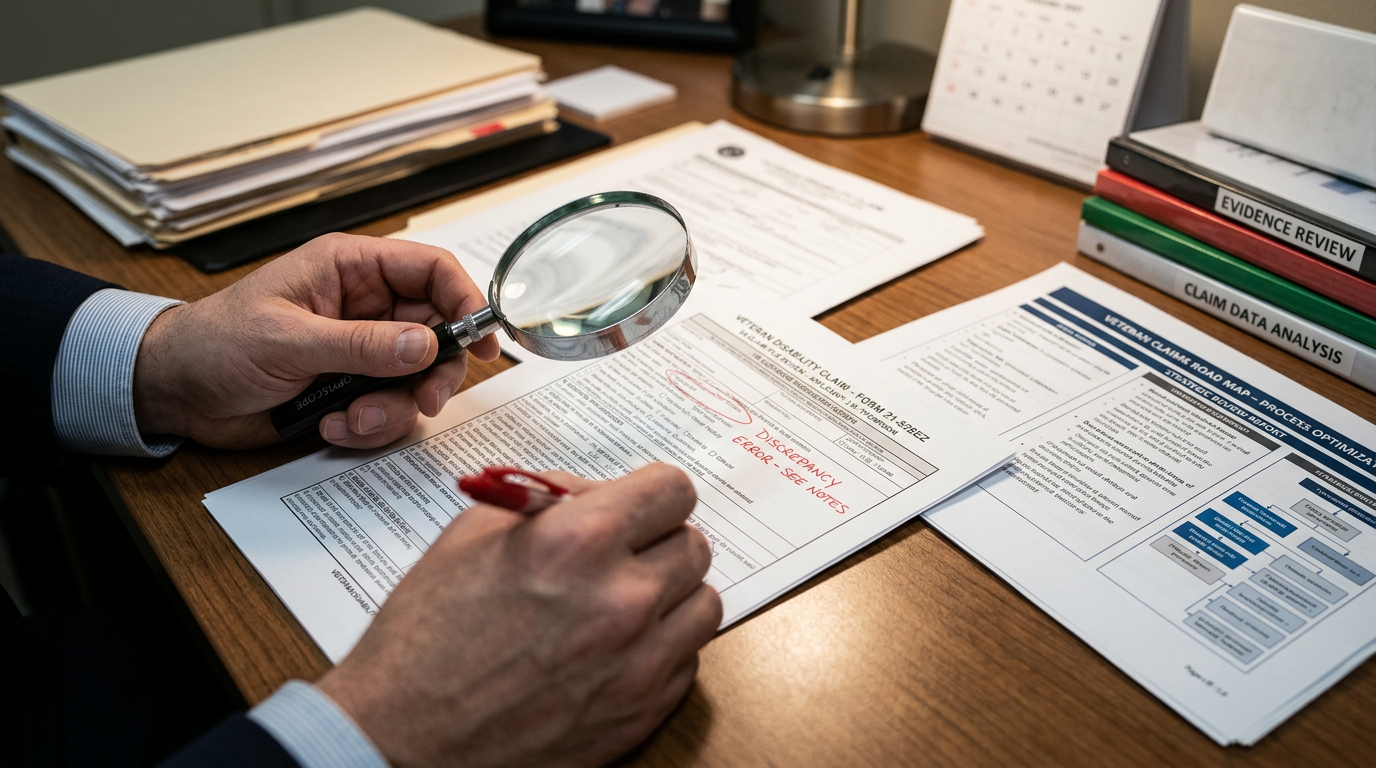

Evidence & Records
Nexus Letter vs. Lay Statement
Two different tools that do two different jobs in your claim
A nexus letter supplies the medical opinion linking your condition to service. A lay statement supplies facts you witnessed. Confusing the two costs claims. Raters give weight to medical opinions that explain the reasoning, and they throw out the ones that just check a box. Lay statements carry weight for what a person actually saw or lived. Your part is to use each one for its own job and make sure both are specific, signed, and dated.
Two Tools, Two Jobs
The VA draws a sharp legal line between medical evidence and lay evidence. Understanding this distinction, and using each type for what it is designed to do, is the difference between a claim that connects and one that leaves a gap the rater exploits.

What a Nexus Letter Does
A nexus letter is a written opinion from a qualified medical professional stating that your condition is "at least as likely as not" (≥50% probability) related to your service or to a service-connected condition. That specific phrase matters, it maps directly to the VA's benefit-of-the-doubt standard under §3.102.
A strong nexus letter does more than state a conclusion. It explains the medical reasoning: the pathophysiology, the relevant medical literature, the timeline from service to diagnosis, and why competing explanations (aging, lifestyle, genetics) are less likely. It also addresses contrary evidence in the record, because if it does not, the VA will use that evidence against you.
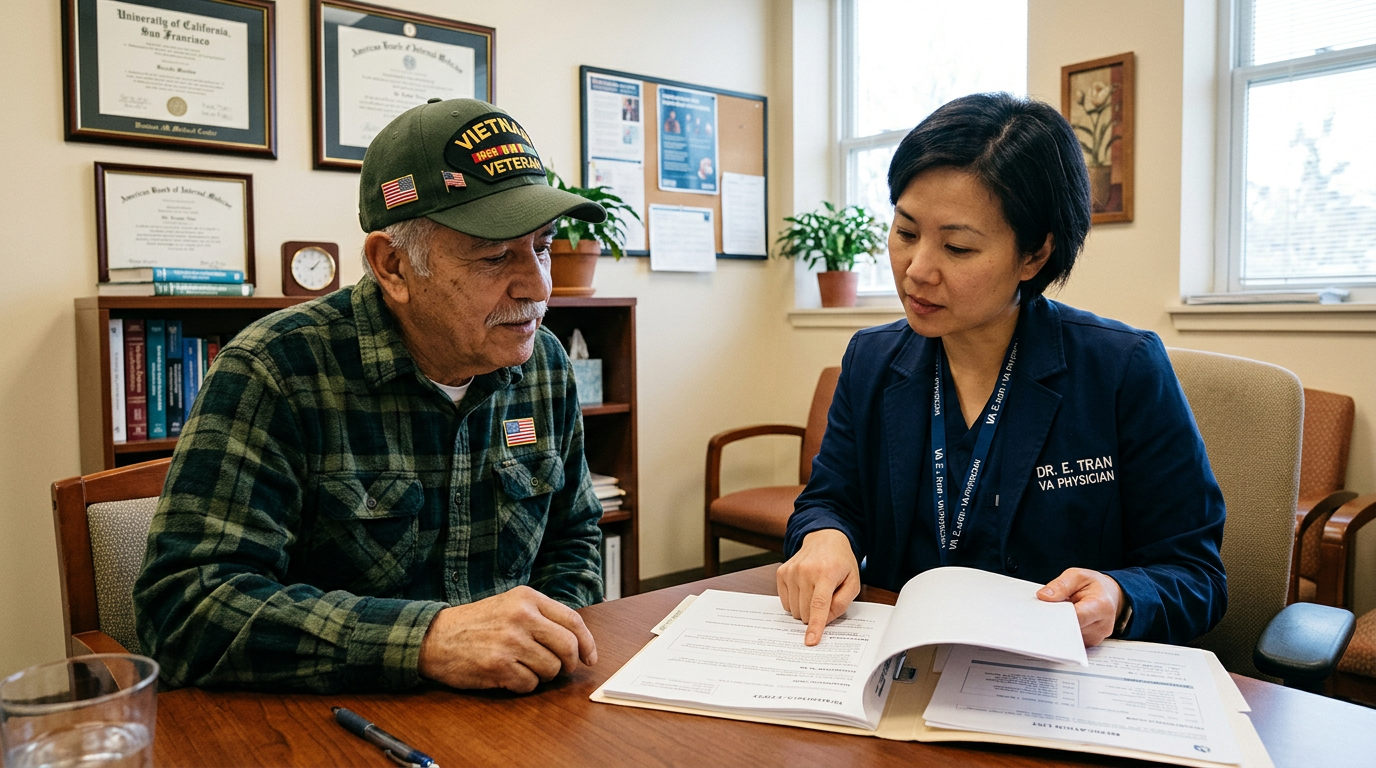
What Makes a Nexus Letter Weak or Useless

Bare conclusion, "In my opinion, this is related to service" without reasoning
Wrong standard, "It is possible" or "could be related" (too speculative; VA requires "at least as likely as not")

No record review, the provider did not review the veteran's service records or medical history

Wrong provider, a chiropractor opining on a psychiatric condition, or a provider outside their competence

Ignores contrary evidence, does not address gaps in treatment or the VA examiner's negative opinion
What a Lay Statement Does
A lay statement conveys facts you are competent to observe: what happened in service, what symptoms you have felt, how they have persisted, and how they affect your daily life. Under §3.159(a)(2), you do not need medical training to say your knees have hurt since a hard landing in 1998, you do need a medical professional to opine on the causal connection.
Lay evidence is particularly powerful for establishing continuity of symptomatology under §3.303(a). If you can show that the same symptoms have been present continuously since service, that continuity can support the nexus even in the absence of contemporaneous medical records.
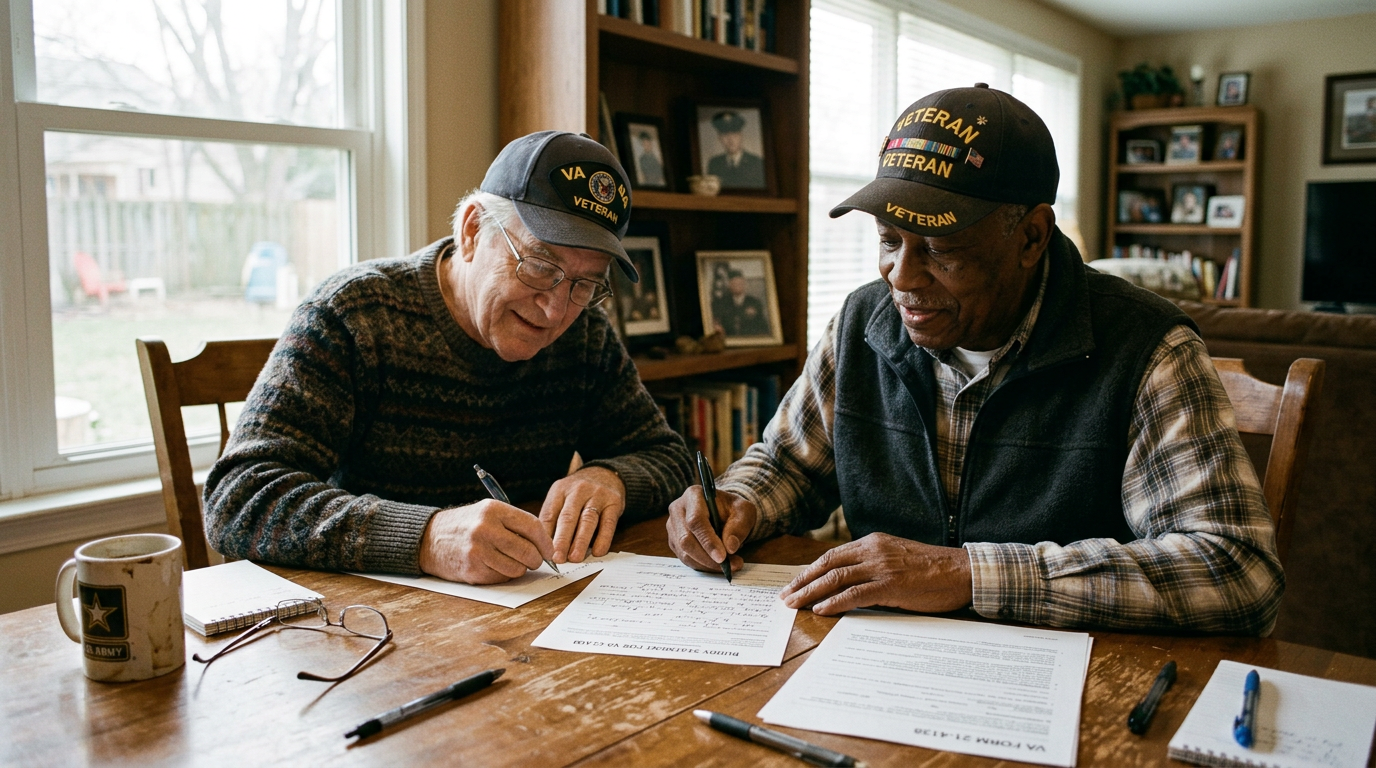
Using Them Together, The Winning Combination

Lay Statement Establishes the Event
Your personal statement and buddy statements document the in-service injury, the onset of symptoms, and what you have experienced since. This is the factual foundation.

Medical Records Show the Current Disability
Diagnosis from a qualified provider, treatment records, and clinical evidence establish element one, the current condition.

Nexus Letter Bridges the Gap
The medical opinion connects the dots: "Based on my review of the service records and current medical evidence, the veteran's current condition is at least as likely as not related to the in-service event described in his personal statement."

Together They Close Every Element
Current disability + in-service event (lay evidence) + nexus (medical opinion) = the three elements the rater must find to grant service connection.
Before You Ask for the Letter, Fix the Record It Will Sit On
Veterans tend to treat the nexus letter like the finish line. It is not. A nexus letter is only as strong as the record underneath it. The doctor is giving an opinion about a file, and if that file is thin, stale, or full of holes, the opinion inherits every one of those problems.
So I want the ground prepared first. That means a current diagnosis from someone who has actually examined you, not a problem list entry from six years ago. It means telling your provider about every symptom at every visit, so the treatment notes show the condition is ongoing. And it means your own statement and your buddy statements are already written, because the doctor needs those facts to tie the condition to a specific event in service.
If you have a private physician who knows you, my preferred order is a Disability Benefits Questionnaire first, then the nexus letter from that same doctor. The DBQ documents how bad the condition is in the format the VA reads every day. The letter explains why it is connected to service. One doctor doing both, with the same history in front of them, gives the rater two documents that agree with each other instead of two strangers who might not.
Here is the trap: a good nexus letter does not win a claim by itself. The VA still needs a current disability and an in-service event, and it will weigh the letter against everything else in the file, including its own examiner. A strong letter sitting on top of a five-year gap in treatment and no statement about what happened in service is an opinion with nothing to stand on. Fix the gaps first, then ask for the letter.
Your part: pull your recent treatment notes, confirm the diagnosis is current and in writing, write your statement, and line up your buddy statements before you ever ask a doctor for an opinion.

What Goes Into the Letter, Line by Line
When a nexus letter lands on my desk, I read it the way a rater will, looking for four things. If any one of them is missing, I send it back before it ever goes into the file, because a weak opinion submitted is a weak opinion the VA gets to weigh against you forever.
The Court of Appeals for Veterans Claims put it plainly in Nieves-Rodriguez v. Peake: an opinion gets its weight from its reasoning, not from the doctor’s title and not from a line saying the file was reviewed. The same goes in reverse. When a VA examiner says an answer cannot be given without speculation, Jones v. Shinseki requires an explanation of why. Hold your own doctor to the standard you would hold theirs.
Here is the trap: be careful with providers who sell nexus letters by the hundred. I do not refer clients to nexus providers, and I am not saying every one of them is bad. But a letter from someone who never examined you, written on a template that reads the same for every veteran, is exactly what raters are trained to discount. If you hire one, check their reputation and their real experience with VA claims, and remember that the cost is yours, not the VA’s.
Your part: before you submit any nexus letter, check it against the four cards below. If a card is missing, ask the doctor for an addendum instead of filing it as is.

Who Is Speaking, and Why They Are Qualified
The letter opens with the provider’s credentials and experience, especially as they relate to your condition. A specialist in the right field carries more weight than a generalist, and a provider who has treated you over time carries more weight than one who met you once. If they reviewed your service treatment records, they should say which ones.

The Opinion Sentence, in the Right Words
The letter must say your condition is “at least as likely as not” related to service. “Possibly,” “may be,” and “cannot rule out” are too weak. For a secondary claim, the doctor should address both theories in 38 CFR §3.310: that the service-connected condition caused the new one, and that it aggravated it. El-Amin v. Shinseki is why one without the other leaves a hole.

The Rationale That Earns the Weight
The conclusion is one sentence. The reasoning is the rest of the letter: the clinical findings, the medical literature, your history, the timeline from service to diagnosis, and why other explanations like age or weight are less likely. A letter that skips this part is a rubber stamp, and raters treat it like one.

A Match With Your Records, Plus the Proof
The letter has to line up with your service treatment records and medical history and name the specific in-service event or exposure. Any conflict, such as a separation exam that says normal or a negative VA opinion, should be addressed head on. Attach the tests, treatment records, and research the doctor relied on so the rater can see the foundation.
The Advocate's Take
A lay statement cannot diagnose, and a doctor cannot testify to what you lived through. Use each for what it is built to do, and your claim covers every element the regulation demands.
Building a Nexus Letter vs. Lay Statement Claim That Wins
Every claim stands on three legs. Knock one out and the claim falls over, no matter how bad your symptoms are. Before you file, look at your file and find all three. If one is missing, that is the piece to build first. The VA will not build it for you, and filing without it usually just buys you a denial letter and lost time.
 01
01A current diagnosis
A doctor has to say you have it, now, in writing. Not "reports symptoms of", a diagnosis. Without this leg, nothing else in the file matters.
 02
02A link to your service
An event, an injury, an exposure, or an already service-connected condition. Service records, unit records, buddy statements, and your own account all count as evidence.
 03
03A nexus that ties the two together
A medical opinion stating it is at least as likely as not that your service caused or aggravated the condition. That phrase is a legal standard: 50 percent or better. It is the leg most denials break.
Document the problem before you file
• Keep a dated symptom log for at least 30 days. Frequency, severity, and what it stopped you from doing.
• Get statements from people who see it, a spouse, a coworker, a battle buddy. Lay evidence is legal evidence.
• Pull your private treatment records. The VA only has to help; it does not have to go find everything.
• Write down what you have stopped doing. Lost work, lost sleep, lost activities. That is what impairment looks like on paper.
Your Rights in This Process
Most veterans walk into this system without knowing the rules the VA itself has to follow. That is how claims get denied for missing evidence the VA was supposed to help you find, and how exams get done by the wrong clinician. These six rights are written into federal regulation. Know them before you file, and make the VA honor every one of them when it decides your claim.

It costs nothing to file
Filing a VA claim is free. Accredited representatives may only charge for work on an appeal after an initial decision, and those fees are capped by 38 CFR §14.636.

The VA has a Duty to Assist you
Under 38 CFR §3.159 the VA must help you get the evidence it needs, and it must tell you what is missing before it denies you for missing it.

You can ask for a different examiner
You may request a trauma-informed clinician, or a clinician of a specific gender, for a C&P examination. Ask before the exam is scheduled.

You can claim every condition you have
There is no limit and no penalty. Primary conditions, secondary conditions, and conditions made worse by service all get filed.

You can appeal and be re-evaluated
A denial is not the end. You may submit new evidence, request a higher-level review, appeal to the Board, and ask for re-evaluation when your condition worsens.

You must be considered for TDIU
If your service-connected conditions keep you from holding substantially gainful employment, you may be paid at the 100 percent rate without a 100 percent rating.
When You Are Ready to File
Talk to an accredited representative before you file. It costs nothing to ask, and the order you file in changes what the VA is allowed to award you. Albert L. Thombs Jr. is VA-Accredited Claims Agent #45147. A short conversation now can save you a year spent waiting in the wrong review lane.
Your part starts at the kitchen table. Pull your DD-214, your rating decision if you have one, and the names of every doctor who treats you today. Under 38 CFR 3.159 the VA has to help you gather records, but it can only chase the records you tell it about. Leave a doctor off the 21-4142 and that treatment may never reach your file.

The application itself
This is the form that opens a disability compensation claim. List every condition you are claiming, and name the secondary conditions explicitly.
Release for private records
Authorises the VA to request records from your private doctors. Without it, treatment outside the VA may never reach your file.
Lay or buddy statement
The official form for your own statement and for statements from people who witnessed the event or the change in you.
Keep Reading
One page never tells the whole story of a claim. The VA rates every condition on its own evidence, its own exam and its own diagnostic code, and the pieces connect in ways most veterans never see until a decision letter lands. These are the pages that pick up where this one stops. Read them before you file, not after a denial, because the cheapest fix in this process is the mistake you never make.

How to Write a Compelling Statement
A well-structured lay statement gives the VA a vivid, personal account of how your service-connected condition affects your life. It is the part of the claim you have the most power over, and the part most veterans waste.
Read more
Gathering the Right Evidence
Evidence is not about volume, it is about hitting the three elements the VA must find. A thousand pages that miss the nexus lose to three pages that nail it.
Read more
How to Talk to Your Doctor
Your medical records become VA evidence. How you describe your symptoms, and whether your provider documents them, directly shapes your rating.
Read more