
Getting Started
The VA Claim Process, Start to Finish
What actually happens between filing and a decision, and where it goes wrong
Understanding each stage of the claim lifecycle lets you spot exactly where your claim stalled or failed, and which review option fixes it. The VA does not tell you which step went wrong. It sends a letter and moves on. I walk you through each stage the way a rater sees it, from the intent to file to the final decision. Your part is to know where your claim sits today and keep every letter the VA sends.
The Lifecycle of a Claim

Step 1, Intent to File (§3.155)
An intent to file preserves your effective date for up to one year while you prepare your full claim. The effective date determines when benefits are owed from, and back pay is calculated from that date. Filing an intent before you are ready to submit everything is one of the most important protective steps a veteran can take.

Step 2, Claim Submission
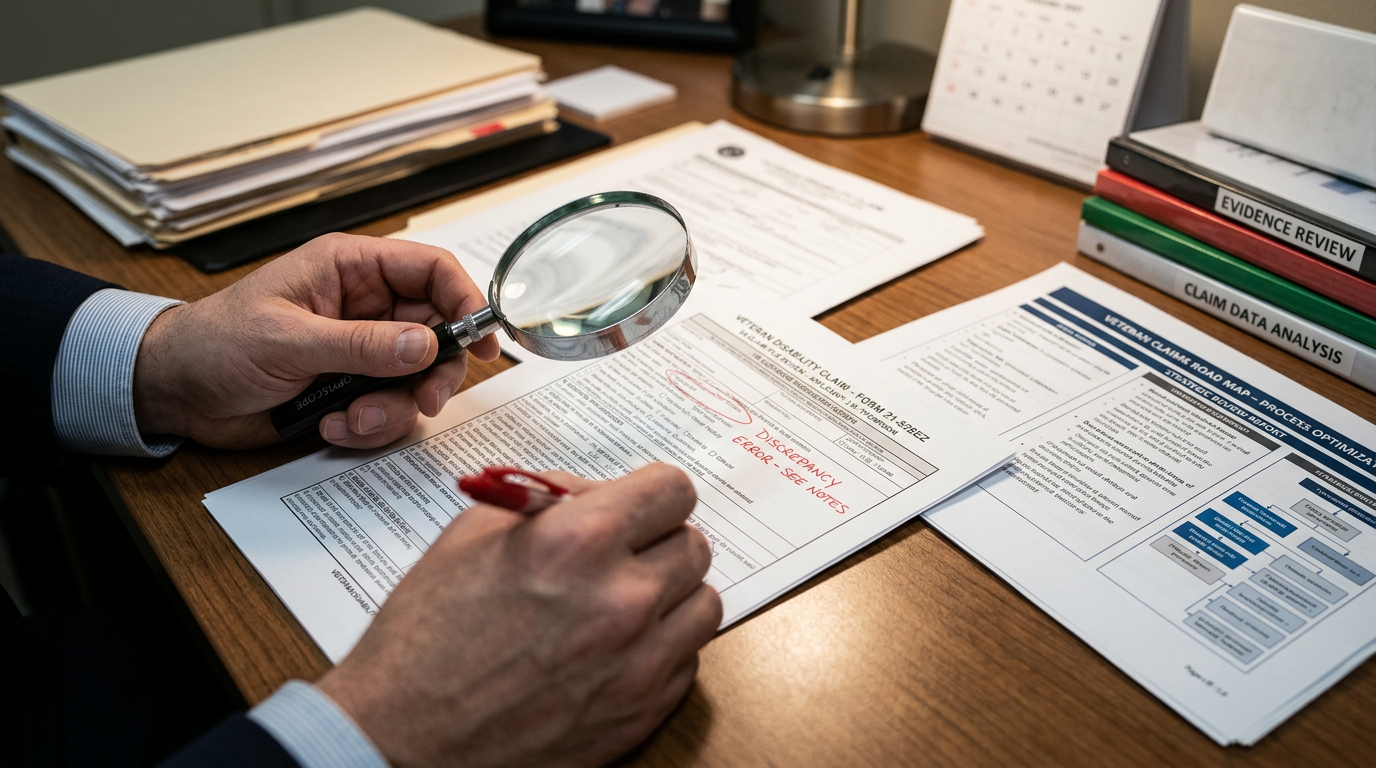
Submit your formal claim (VA Form 21-526EZ for original claims, or the appropriate decision-review form for appeals) along with all supporting evidence: medical records, nexus letters, service records, and your personal statement. A fully developed claim, one that arrives with all evidence attached, typically processes faster.

Step 3, VA Development
Under its duty to assist (§3.159), the VA gathers service records, VA treatment records, and any identified private records. It may also order a Compensation & Pension (C&P) examination. This is the stage where claims most often stall, the VA may fail to obtain relevant records or order an inadequate exam.

Step 4, C&P Examination (§3.326)
The VA schedules an exam with a contracted examiner who evaluates your condition, measures severity, and may render a nexus opinion. This exam often determines the outcome. If the examiner fails to address flare-ups, repetitive use, or the correct rating criteria, the exam may be legally inadequate.

Step 5, Rating Decision
A Rating Veterans Service Representative (RVSR) reviews the evidence and issues a decision: service connection granted or denied, a rating percentage, and an effective date. You receive a decision letter explaining the rationale and your review options.

Step 6, Decision Review (§3.2500)
If you disagree, you have one year to choose a review lane: Supplemental Claim (new evidence), Higher-Level Review (senior review, same evidence), or Board of Veterans Appeals. Missing this window can forfeit back pay and reset your effective date.
Where Claims Break, The Predictable Failure Points

Intent to file was never filed, effective date defaults to the full-claim submission date, losing months of back pay

The VA failed its duty to assist, relevant records were identified but never obtained

The C&P exam was inadequate, examiner ignored flare-ups, did not test range of motion properly, or used the wrong Disability Benefits Questionnaire

The nexus was not addressed, the rater found a current disability and an in-service event but no medical link

The effective date was set too late, the VA used the wrong date despite an earlier filing or intent

Only one theory was developed, the claim argued direct connection when secondary or presumptive was stronger
Protect Your Effective Date
Under §3.400, the effective date is generally the later of the date the VA received your claim (or intent to file) or the date entitlement arose. But important exceptions exist: §3.156 (reopened claims with new and material evidence), §3.105(a) (clear and unmistakable error), and presumptive changes under the PACT Act can push the date earlier.
File an intent to file before you are ready to submit everything. This single step can be worth tens of thousands of dollars in back pay.

The Advocate's Take
You cannot fix what you cannot locate. We diagnose exactly which stage broke your claim before choosing the remedy, because the right fix for an inadequate exam is not the same as the right fix for a missed effective date.
Building a The VA Claim Process, Start to Finish Claim That Wins
Every claim stands on three legs. Knock one out and the claim falls over, no matter how bad your symptoms are. Before you file, look at your file and find all three. If one is missing, that is the piece to build first. The VA will not build it for you, and filing without it usually just buys you a denial letter and lost time.
 01
01A current diagnosis
A doctor has to say you have it, now, in writing. Not "reports symptoms of", a diagnosis. Without this leg, nothing else in the file matters.
 02
02A link to your service
An event, an injury, an exposure, or an already service-connected condition. Service records, unit records, buddy statements, and your own account all count as evidence.
 03
03A nexus that ties the two together
A medical opinion stating it is at least as likely as not that your service caused or aggravated the condition. That phrase is a legal standard: 50 percent or better. It is the leg most denials break.
Document the problem before you file
• Keep a dated symptom log for at least 30 days. Frequency, severity, and what it stopped you from doing.
• Get statements from people who see it, a spouse, a coworker, a battle buddy. Lay evidence is legal evidence.
• Pull your private treatment records. The VA only has to help; it does not have to go find everything.
• Write down what you have stopped doing. Lost work, lost sleep, lost activities. That is what impairment looks like on paper.
Your Rights in This Process
Most veterans walk into this system without knowing the rules the VA itself has to follow. That is how claims get denied for missing evidence the VA was supposed to help you find, and how exams get done by the wrong clinician. These six rights are written into federal regulation. Know them before you file, and make the VA honor every one of them when it decides your claim.

It costs nothing to file
Filing a VA claim is free. Accredited representatives may only charge for work on an appeal after an initial decision, and those fees are capped by 38 CFR §14.636.

The VA has a Duty to Assist you
Under 38 CFR §3.159 the VA must help you get the evidence it needs, and it must tell you what is missing before it denies you for missing it.

You can ask for a different examiner
You may request a trauma-informed clinician, or a clinician of a specific gender, for a C&P examination. Ask before the exam is scheduled.

You can claim every condition you have
There is no limit and no penalty. Primary conditions, secondary conditions, and conditions made worse by service all get filed.

You can appeal and be re-evaluated
A denial is not the end. You may submit new evidence, request a higher-level review, appeal to the Board, and ask for re-evaluation when your condition worsens.

You must be considered for TDIU
If your service-connected conditions keep you from holding substantially gainful employment, you may be paid at the 100 percent rate without a 100 percent rating.
When You Are Ready to File
Talk to an accredited representative before you file. It costs nothing to ask, and the order you file in changes what the VA is allowed to award you. Albert L. Thombs Jr. is VA-Accredited Claims Agent #45147. A short conversation now can save you a year spent waiting in the wrong review lane.
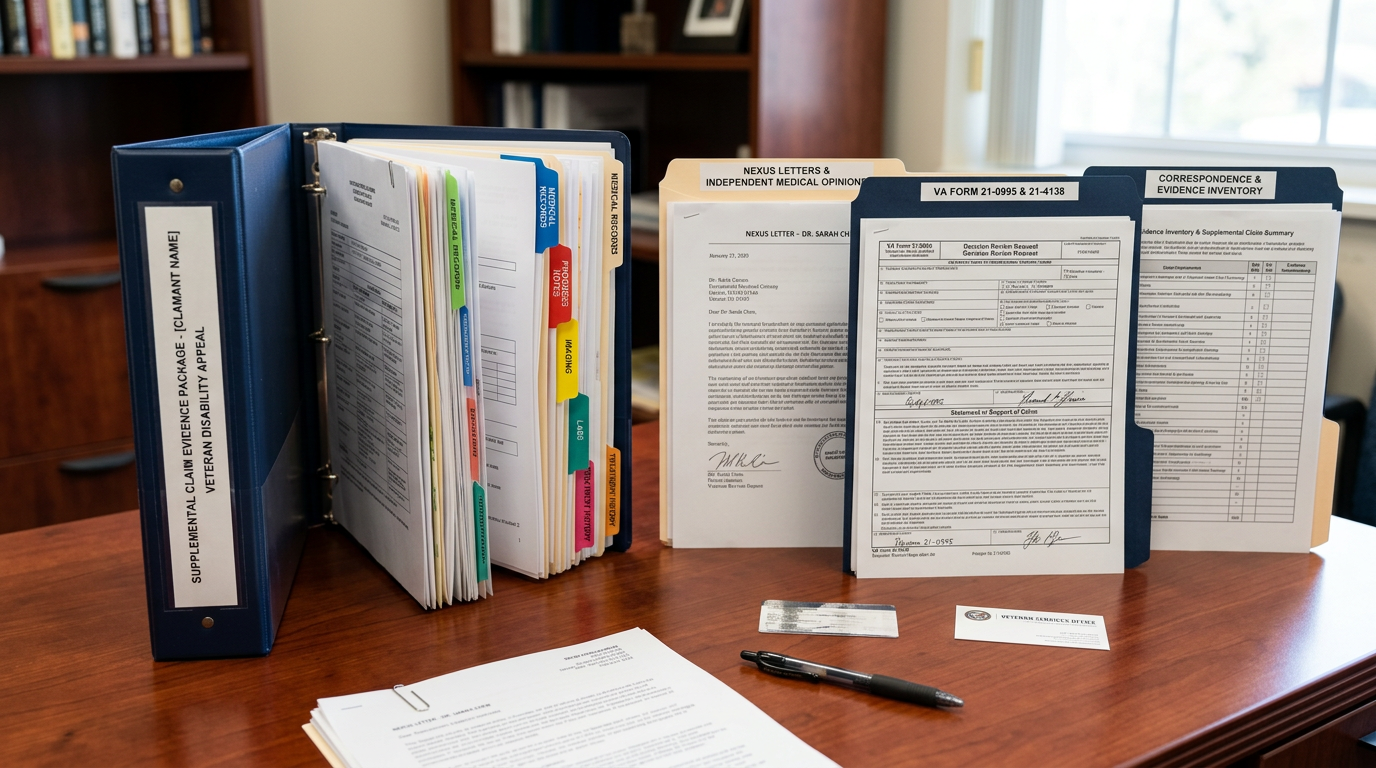
Your part starts at the kitchen table. Pull your DD-214, your rating decision if you have one, and the names of every doctor who treats you today. Under 38 CFR 3.159 the VA has to help you gather records, but it can only chase the records you tell it about. Leave a doctor off the 21-4142 and that treatment may never reach your file.

The application itself
This is the form that opens a disability compensation claim. List every condition you are claiming, and name the secondary conditions explicitly.
Release for private records
Authorises the VA to request records from your private doctors. Without it, treatment outside the VA may never reach your file.
Lay or buddy statement
The official form for your own statement and for statements from people who witnessed the event or the change in you.
Keep Reading
One page never tells the whole story of a claim. The VA rates every condition on its own evidence, its own exam and its own diagnostic code, and the pieces connect in ways most veterans never see until a decision letter lands. These are the pages that pick up where this one stops. Read them before you file, not after a denial, because the cheapest fix in this process is the mistake you never make.

The Responsibility to Yourself
Many veterans blame the VA's "deny, deny, deny" culture, and it is real, but a large share of denied claims trace back to the veteran going AWOL on their own case.
Read more
What Is Service Connection?
Service connection is the legal foundation of every VA disability claim. There are four distinct paths to establish it, and most denials happen because only one was ever argued.
Read more
DD-214 & Discharge Status
Your DD-214 and character of discharge shape eligibility for VA benefits. A less-than-honorable discharge is not always the end of the road, the rules have doors.
Read more