Getting Started
The Responsibility to Yourself
A message from the Advocate: your participation is the single biggest predictor of success
Many veterans blame the VA's "deny, deny, deny" culture, and it is real, but a large share of denied claims trace back to the veteran going AWOL on their own case.
File and Then Go AWOL Is a Recipe for Failure
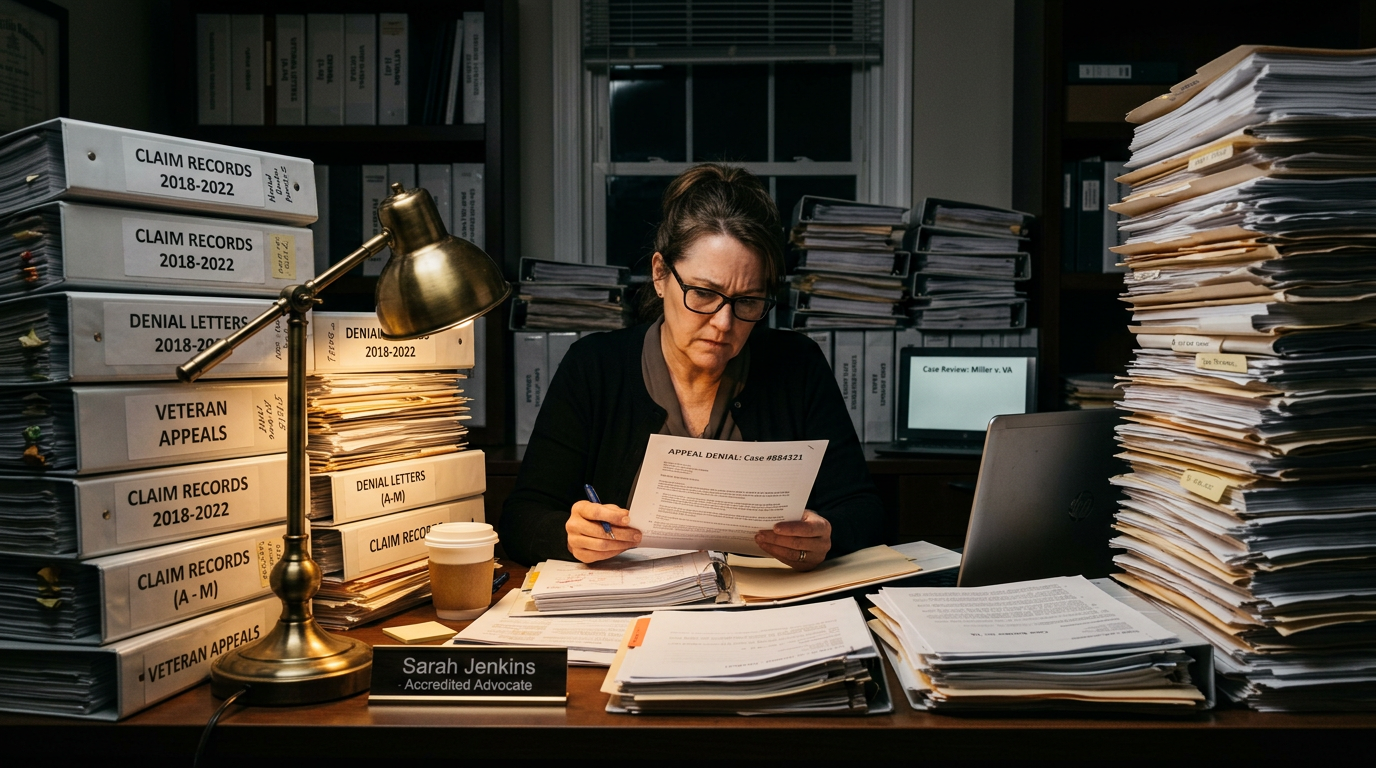
Many veterans complain about the VA's efforts to deny claims, "deny, deny, deny." There is truth to the inefficiencies and the adversarial posture. But a significant portion of denied claims trace to a single root cause: the veteran stopped participating in their own case.
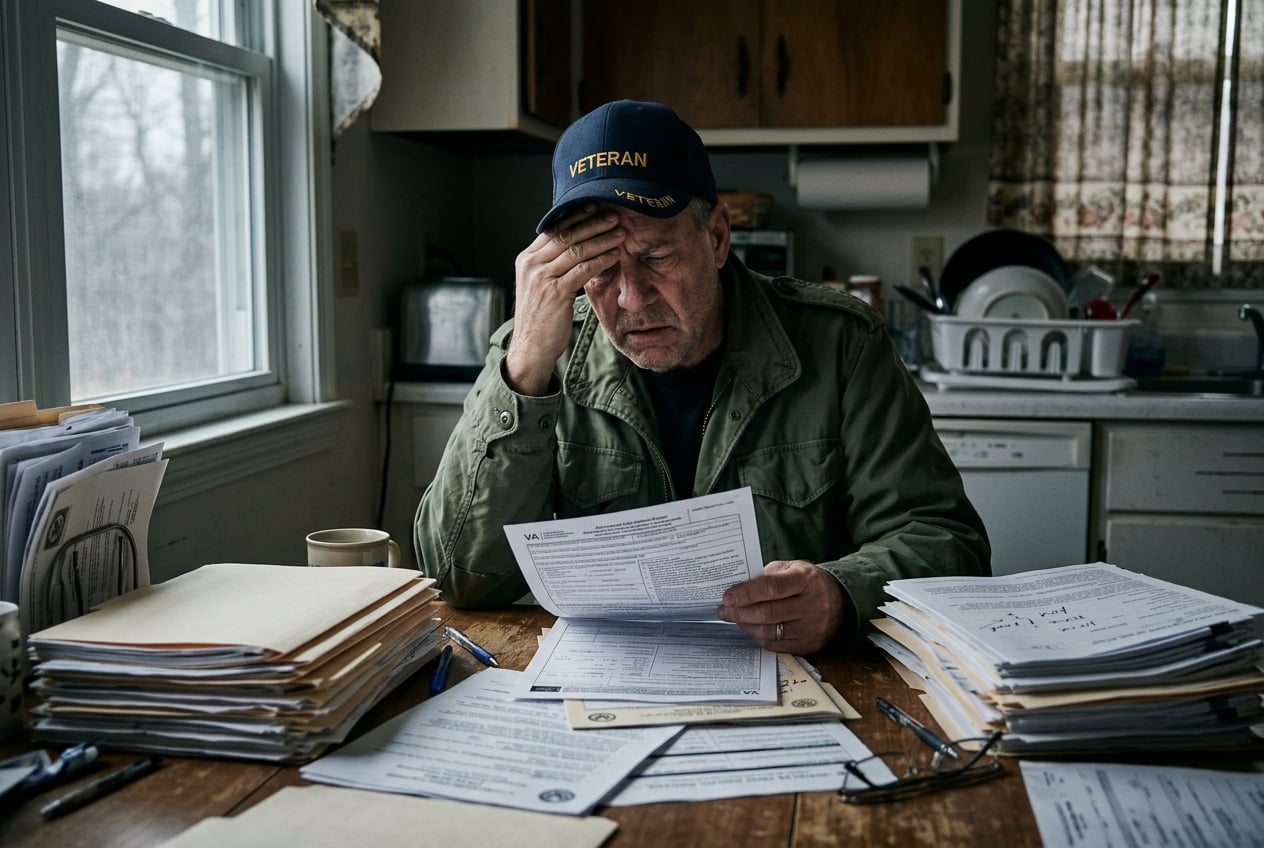
Filing a claim and then disappearing from the process is the quickest path to denial. Veterans who refuse to write detailed statements, skip follow-up care, ignore VA correspondence, and provide no supporting evidence are handing the VA exactly what it needs to deny, an empty record.

The Regulations That Punish Inaction

§3.655, Missing Your C&P Exam
If you fail to report for a scheduled VA examination without good cause, the VA can deny the claim outright for an original claim or rate based on the existing record for a re-examination. There is no obligation to reschedule without a documented reason.

§3.158, Abandoned Claims
If the VA requests evidence or action and you do not respond within one year, the claim is treated as abandoned. The effective date resets to whatever new filing you eventually make.

§3.159(c)(1)(i), Claimant Must Cooperate
The VA's duty to assist has limits. If a claimant does not provide enough information for the VA to identify and obtain relevant records, the duty is not triggered. You must do your part.
Seek Continuous Medical Care
Refusing to seek continuous medical care is one of the most damaging things a veteran can do to their claim. A diagnosis from a decade ago is insufficient without an established history of care. One appointment to coax a primary physician into linking a condition to service is not enough.
Seek care throughout the entire claims process until it is complete, and after. Under §3.303(a), continuity of symptomatology is a recognized path to service connection. Gaps in treatment give the rater ammunition to argue that your condition resolved or is not as severe as claimed.

Stop Jumping From Rep to Rep
Jumping from representative to representative is its own kind of self-sabotage. The rules are the same everywhere, 38 CFR Part 3 does not change because you changed advocates. What changes outcomes is a serious, engaged claimant working a coherent strategy with a single representative who knows the file inside and out.
Every time you switch, the new representative starts from scratch. Months of strategy, medical opinions, and case development are lost or duplicated. Pick an accredited professional, verify the accreditation, and commit.

What Getting Serious Looks Like

Write and Update Your Statements
Write and update your own detailed statements, no one tells your story better

Keep Every Appointment
Keep every medical appointment and follow through on treatment plans

Respond to Every Letter
Respond to every VA letter within the deadline, every single time

Keep Copies of Everything
Keep copies of everything you submit and receive, build your own paper trail

Commit to One Strategy
Commit to one strategy instead of restarting every time progress feels slow
Show Up for Every C&P Exam
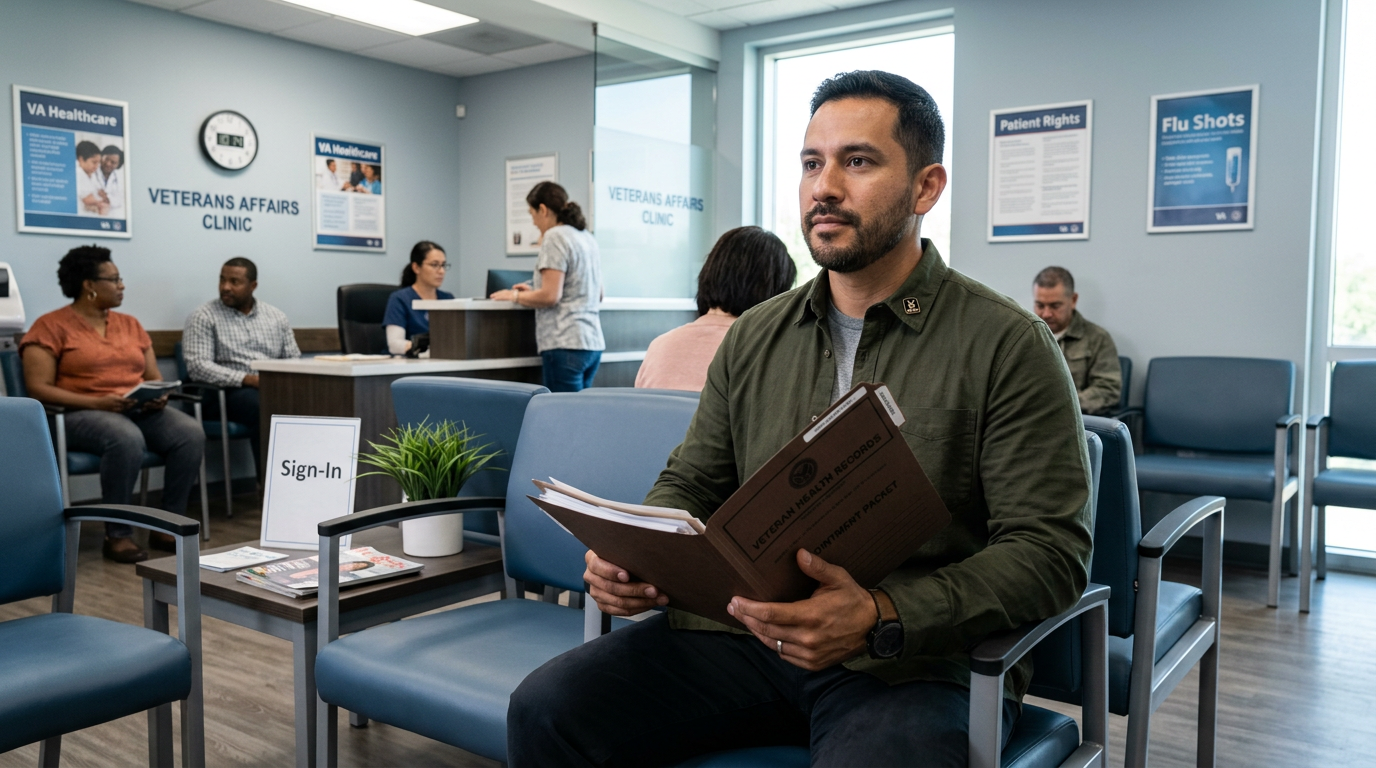
Show up for every C&P exam, on time, prepared, and ready to describe your worst days

Communicate With Your Representative
Communicate with your representative, return calls, answer questions, provide documents when asked
The Advocate's Take
We fight the VA hard, but we cannot fight it for a veteran who will not show up for their own claim. The VA's most reliable weapon is veteran attrition. Get serious, stay engaged, and we will go to war for you.
Building a The Responsibility to Yourself Claim That Wins
Every claim stands on three legs. Knock one out and the claim falls over, no matter how bad your symptoms are. Before you file, look at your file and find all three. If one is missing, that is the piece to build first. The VA will not build it for you, and filing without it usually just buys you a denial letter and lost time.
 01
01A current diagnosis
A doctor has to say you have it, now, in writing. Not "reports symptoms of", a diagnosis. Without this leg, nothing else in the file matters.
 02
02A link to your service
An event, an injury, an exposure, or an already service-connected condition. Service records, unit records, buddy statements, and your own account all count as evidence.
 03
03A nexus that ties the two together
A medical opinion stating it is at least as likely as not that your service caused or aggravated the condition. That phrase is a legal standard: 50 percent or better. It is the leg most denials break.
Document the problem before you file
• Keep a dated symptom log for at least 30 days. Frequency, severity, and what it stopped you from doing.
• Get statements from people who see it, a spouse, a coworker, a battle buddy. Lay evidence is legal evidence.
• Pull your private treatment records. The VA only has to help; it does not have to go find everything.
• Write down what you have stopped doing. Lost work, lost sleep, lost activities. That is what impairment looks like on paper.
Your Rights in This Process
Most veterans walk into this system without knowing the rules the VA itself has to follow. That is how claims get denied for missing evidence the VA was supposed to help you find, and how exams get done by the wrong clinician. These six rights are written into federal regulation. Know them before you file, and make the VA honor every one of them when it decides your claim.

It costs nothing to file
Filing a VA claim is free. Accredited representatives may only charge for work on an appeal after an initial decision, and those fees are capped by 38 CFR §14.636.

The VA has a Duty to Assist you
Under 38 CFR §3.159 the VA must help you get the evidence it needs, and it must tell you what is missing before it denies you for missing it.

You can ask for a different examiner
You may request a trauma-informed clinician, or a clinician of a specific gender, for a C&P examination. Ask before the exam is scheduled.

You can claim every condition you have
There is no limit and no penalty. Primary conditions, secondary conditions, and conditions made worse by service all get filed.

You can appeal and be re-evaluated
A denial is not the end. You may submit new evidence, request a higher-level review, appeal to the Board, and ask for re-evaluation when your condition worsens.

You must be considered for TDIU
If your service-connected conditions keep you from holding substantially gainful employment, you may be paid at the 100 percent rate without a 100 percent rating.
When You Are Ready to File
Talk to an accredited representative before you file. It costs nothing to ask, and the order you file in changes what the VA is allowed to award you. Albert L. Thombs Jr. is VA-Accredited Claims Agent #45147. A short conversation now can save you a year spent waiting in the wrong review lane.
Your part starts at the kitchen table. Pull your DD-214, your rating decision if you have one, and the names of every doctor who treats you today. Under 38 CFR 3.159 the VA has to help you gather records, but it can only chase the records you tell it about. Leave a doctor off the 21-4142 and that treatment may never reach your file.

The application itself
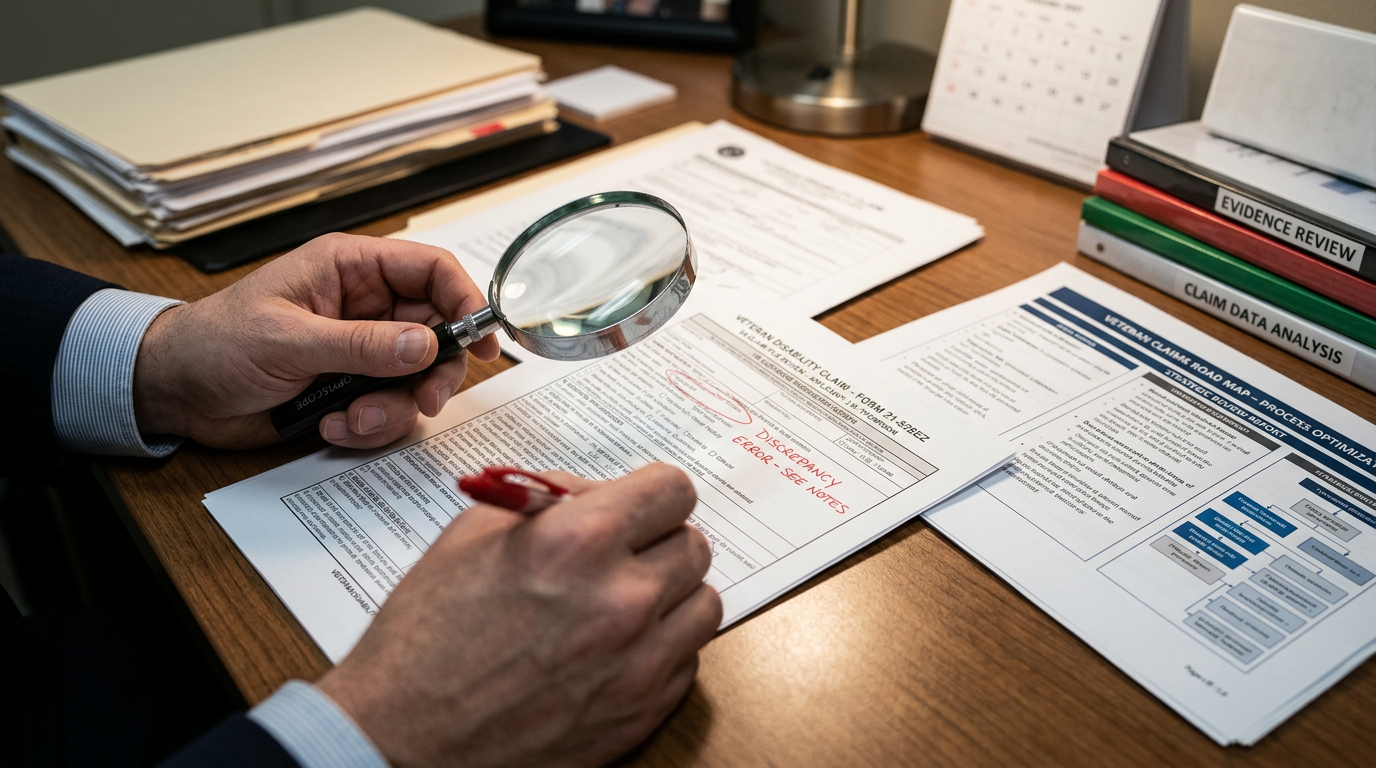
This is the form that opens a disability compensation claim. List every condition you are claiming, and name the secondary conditions explicitly.
Release for private records
Authorises the VA to request records from your private doctors. Without it, treatment outside the VA may never reach your file.
Lay or buddy statement
The official form for your own statement and for statements from people who witnessed the event or the change in you.
Keep Reading
One page never tells the whole story of a claim. The VA rates every condition on its own evidence, its own exam and its own diagnostic code, and the pieces connect in ways most veterans never see until a decision letter lands. These are the pages that pick up where this one stops. Read them before you file, not after a denial, because the cheapest fix in this process is the mistake you never make.

What Is Service Connection?
Service connection is the legal foundation of every VA disability claim. There are four distinct paths to establish it, and most denials happen because only one was ever argued.
Read more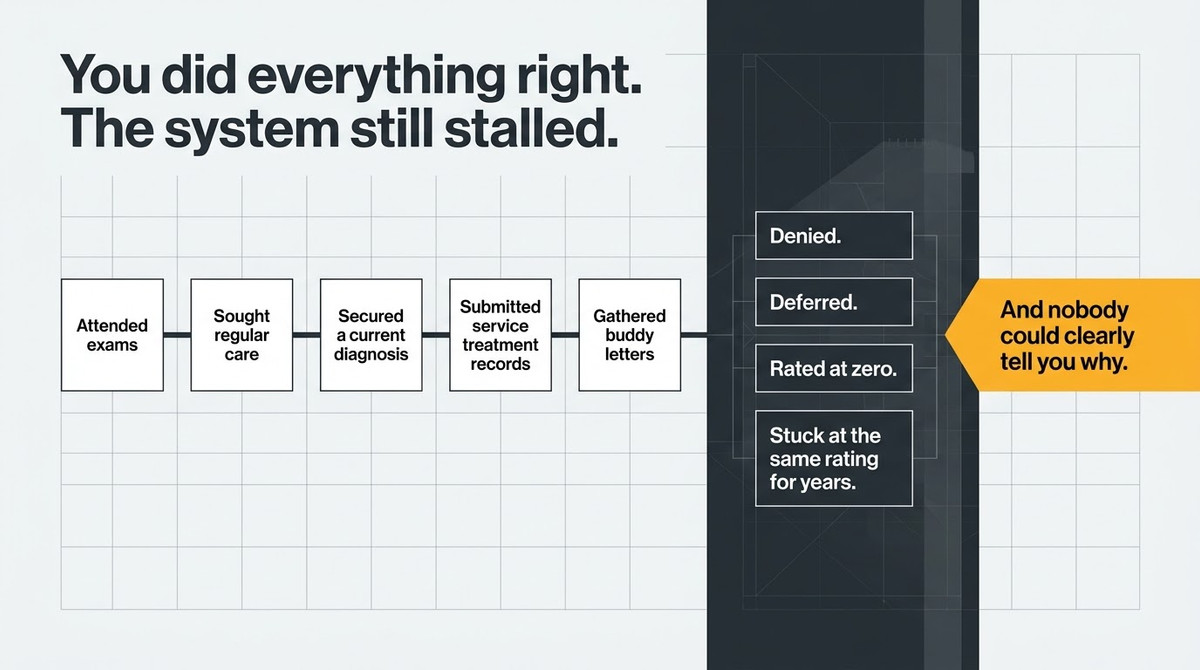
The VA Claim Process, Start to Finish
Understanding each stage of the claim lifecycle lets you spot exactly where your claim stalled or failed, and which review option fixes it.
Read more
DD-214 & Discharge Status
Your DD-214 and character of discharge shape eligibility for VA benefits. A less-than-honorable discharge is not always the end of the road, the rules have doors.
Read more