

Toxic Exposure
Gulf War & PACT Act Veterans
Burn-pit and airborne-hazard presumptions under the PACT Act
The PACT Act dramatically expanded presumptive conditions for veterans exposed to burn pits and airborne hazards in the Gulf War and post-9/11 conflicts. If you were denied for one of these conditions before, the law may have changed underneath that denial. The VA still needs proof of where and when you served and a listed diagnosis. Your part is to pull your orders and DD-214, confirm the diagnosis, and file a new claim.
The Largest Expansion in a Generation
The Sergeant First Class Heath Robinson Honoring our PACT Act of 2022 established presumptive service connection for a broad set of conditions tied to burn pits and airborne hazards, expanded the locations and eras of qualifying toxic exposure, and created a statutory presumption of exposure for veterans who served in covered locations. It is the most significant expansion of veteran benefits in decades.
What it changed mechanically: for a covered veteran with a listed condition, the VA can no longer demand proof that you personally stood next to a burn pit. Qualifying service in a covered location during a covered period does that work for you.

What a Burn Pit Actually Was, and What You Were Breathing
A burn pit was a hole in the ground. Into it went plastics, styrofoam, medical waste, batteries, tires, paint, solvents, human waste, unexploded ordnance, and vehicle parts. It was lit with JP-8 jet fuel and it burned around the clock. The pit at Joint Base Balad covered roughly ten acres and consumed as much as two hundred tons of waste a day. Nobody wore respiratory protection, the smoke plume moved with the wind across the housing units, and the men and women sleeping downwind breathed it for twelve months at a stretch.
That smoke was not nuisance haze. It carried a documented list of hazards, and the medical literature tying them to airway and lung disease is exactly what a strong claim leans on.

Fine particulate matter, PM2.5 and PM10, small enough to lodge deep in the lung

Dioxins and furans, the same family of compounds that made Agent Orange dangerous

Benzene, a known human carcinogen

Volatile organic compounds released by burning plastics and solvents

Polycyclic aromatic hydrocarbons

Hexavalent chromium and hydrogen cyanide

JP-8 jet fuel, the accelerant that kept the pit burning
Covered Locations and Periods
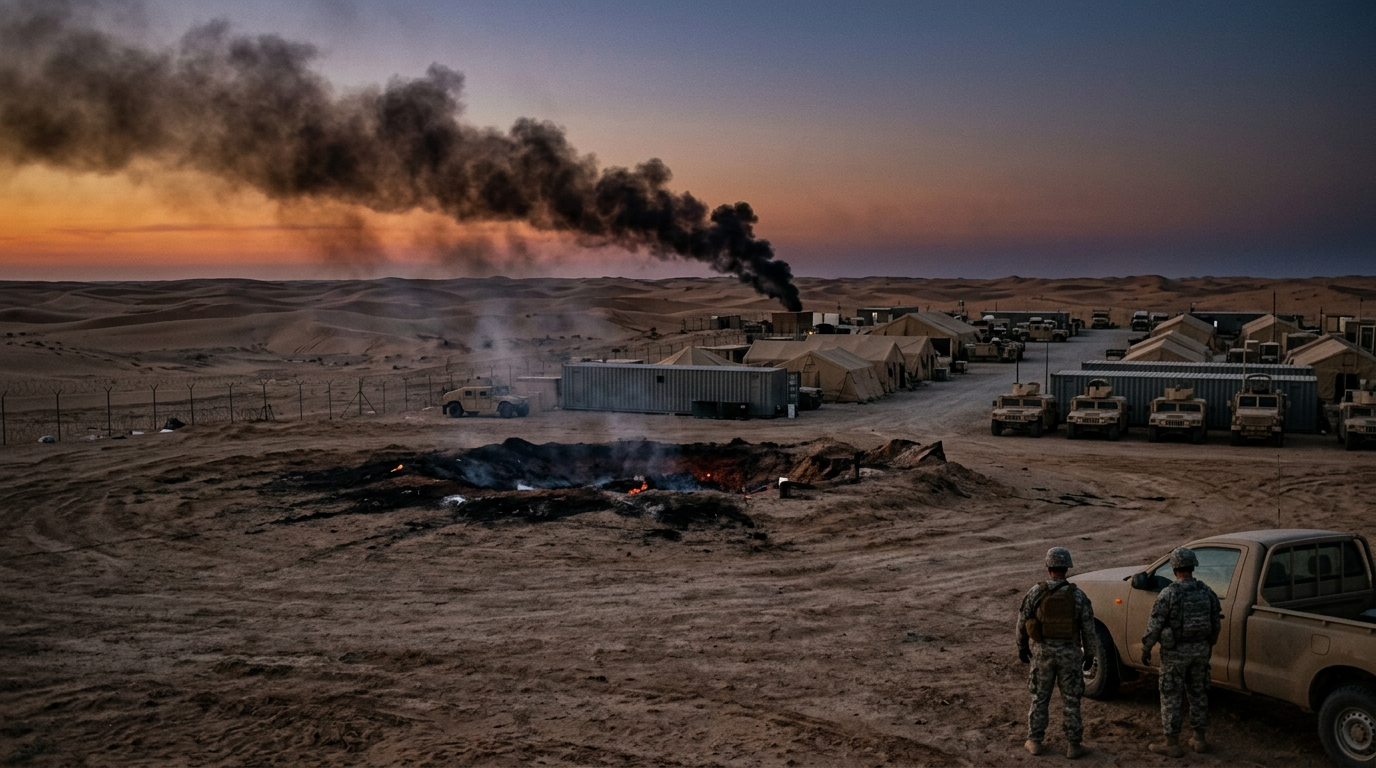
Gulf War theatre, on or after Aug 2, 1990
Bahrain, Iraq, Kuwait, Oman, Qatar, Saudi Arabia, Somalia, and the United Arab Emirates, including the airspace above those countries. Service on or after August 2, 1990 in any of them establishes the presumption of exposure.
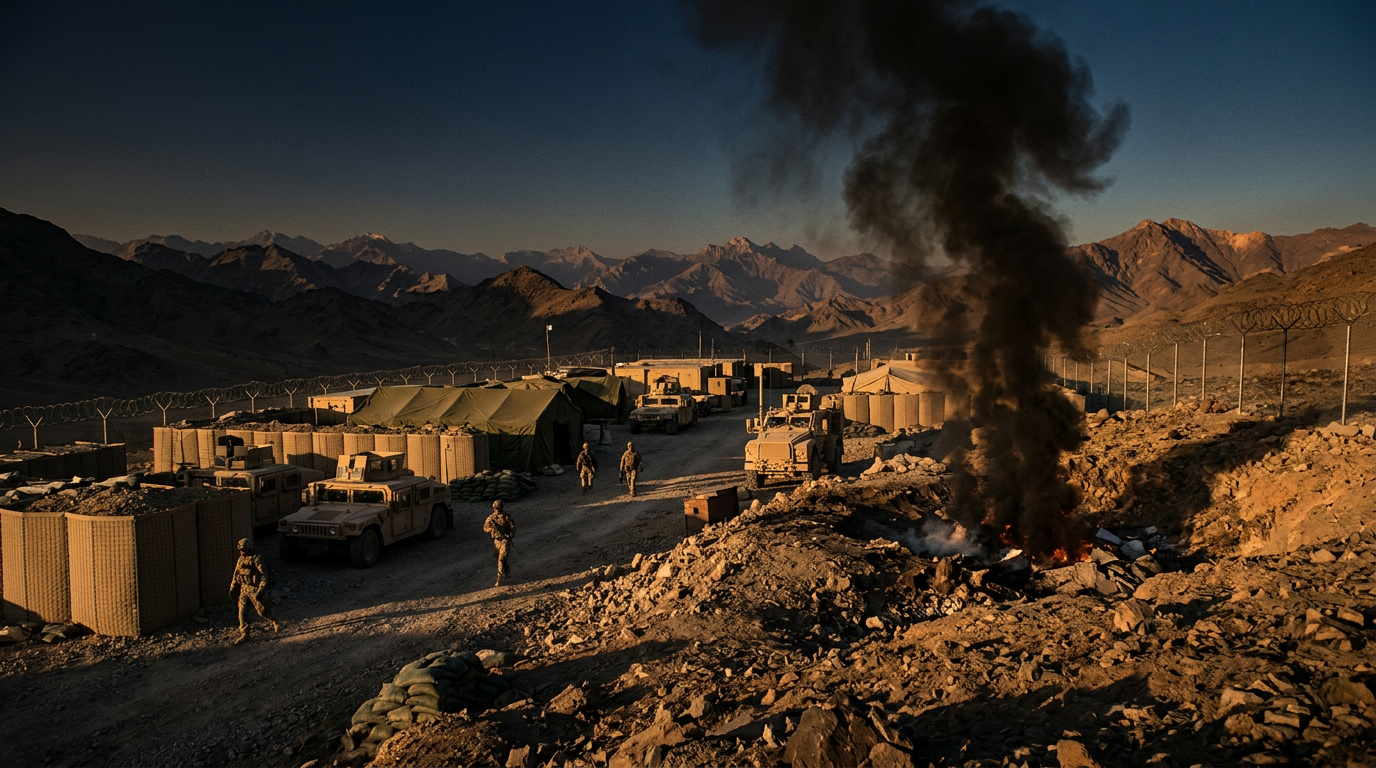
Post-9/11 theatre, on or after Sept 11, 2001
Everything above, plus Afghanistan, Djibouti, Egypt, Jordan, Lebanon, Syria, Yemen, and Uzbekistan, including the airspace above them. Service on or after September 11, 2001 in any of these locations establishes the presumption.

The air above a covered location
Boots on the ground is not the only qualifier. Service in the airspace above a covered location counts, which brings in aircrew who flew the routes without ever landing. Short deployments count, TDY counts, and there is no minimum number of days in the burn-pit presumption.

Radiation cleanup missions
The PACT Act formally recognized the radiation cleanup crews, Enewetak Atoll (1977–1980), Palomares, Spain (1966–1967), and Thule Air Base, Greenland (1968). These men were sent to clean up nuclear contamination and then written out of the record for decades.
Health Care Is Now Open, Since August 1, 2024
Every veteran who served in a covered location during the covered periods can enroll in VA health care without first needing a service-connected rating. Health care and disability compensation are separate systems, but getting into VA health care builds the treatment record that wins the compensation claim.
The Three Ways a PACT Act Claim Gets Won
Work out which route your case is on before you gather a single document. Preparing the wrong evidence is the most common reason a truthful claim comes back denied, and plenty of veterans are on more than one route at the same time.

Route one, the PACT Act presumption
Service in a covered location during the covered period plus a diagnosis on the presumptive list. That is the whole test, no nexus letter, no proof you lived beside the pit, no air-sampling data. The one detail people miss: asthma is presumptive only when it was diagnosed after service, so a childhood asthma note in your entrance physical has to be addressed head-on, not ignored.

Route two, facts-found for conditions off the list
Sleep apnea, chronic migraine, reflux, and rhinosinusitis complications are common in this population and only some made the list. Those are filed direct, exposure event, current diagnosis, and a medical nexus. The exposure half is already easy, because the PACT Act concedes exposure even when the condition is not presumptive, that is half the case already won.
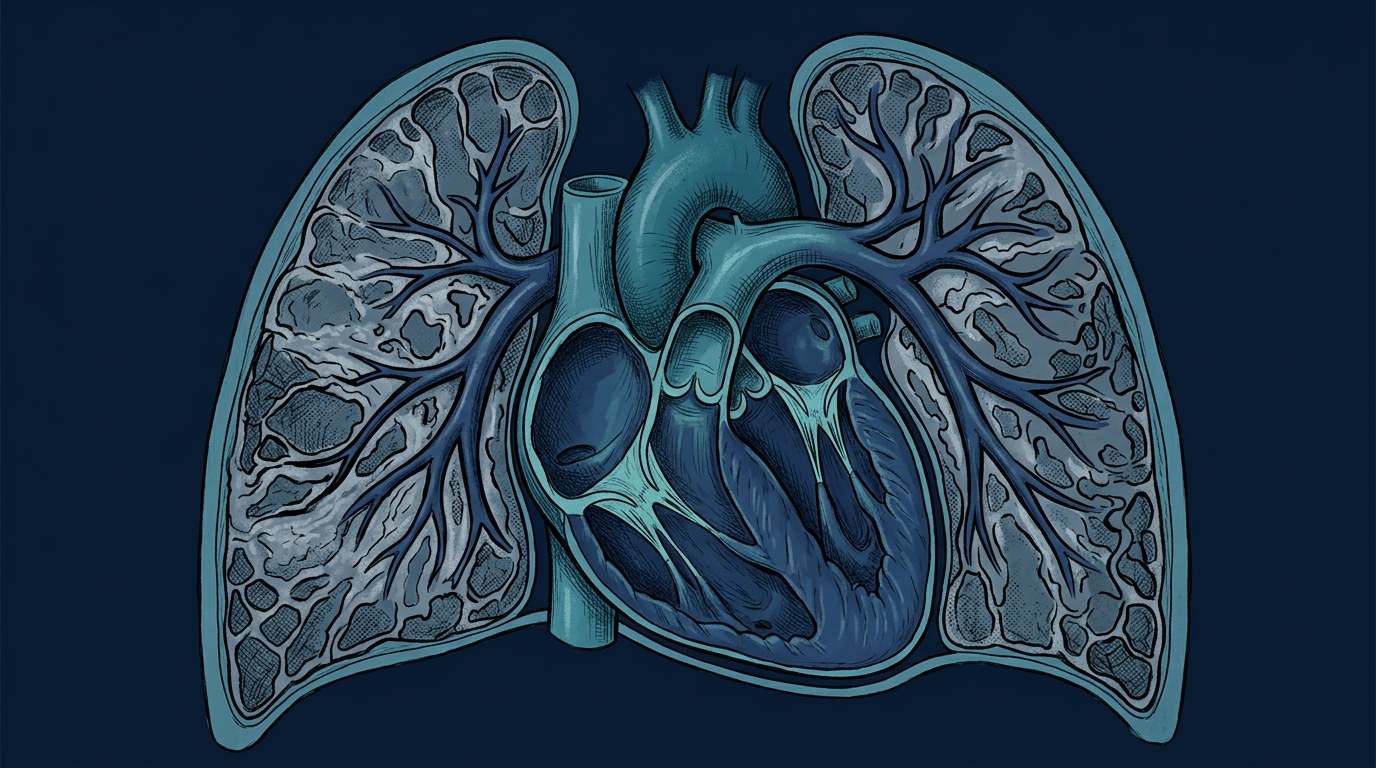
Route three, the secondaries the lung disease drives
A service-connected respiratory condition drives claims most veterans never file. Chronic low oxygen strains the right heart, long-term steroids cost you bone and glucose control, and constant breathlessness feeds sleep loss, depression, and unemployability. Each one is a separate, separately rated claim.
The Presumptive Conditions Added by the PACT Act
This is the burn-pit and airborne-hazards presumptive list. Serve in a covered location during the covered window, carry a condition on it, and exposure is conceded, no nexus opinion required. It runs to more than twenty conditions across two families, the airway and lung illnesses and the cancers, and the one detail people miss is that a diagnosis today counts even if the symptoms started years after you came home.

Asthma, diagnosed after service
Presumptive when it was diagnosed after you separated, which is why a childhood-asthma note in your entrance physical has to be addressed head-on. Rated on frequency of attacks, medication, and pulmonary function, and a rescue-inhaler-only case is still ratable.

Chronic rhinitis and chronic sinusitis
Persistent nasal and sinus inflammation from breathing burn-pit particulate. Rated on obstruction, polyps, and how often it flares into infection, and it is routinely dismissed as “just allergies” when the service treatment records tell a different story.

Chronic bronchitis, emphysema, and COPD
The obstructive lung diseases, rated together on FEV-1 and FEV-1/FVC pulmonary-function numbers. Insist the exam actually runs spirometry, because an estimate off a chest note leaves money on the table.

Constrictive and obliterative bronchiolitis
Scarring of the smallest airways, the signature burn-pit injury, and often invisible on a routine chest x-ray. It frequently takes a surgical lung biopsy to prove, so a normal spirometry result does not close the door.

Granulomatous and interstitial lung disease
Inflammatory nodules and scarring spread through the lung tissue itself. Rated on imaging, biopsy, and declining lung function, and the progression over time is what supports an increase later.

Pulmonary fibrosis
Stiff, honeycomb scarring that permanently reduces lung capacity. Rated high as function drops, and when it drives low oxygen and right-heart strain those become separate secondary claims.

Sarcoidosis and pleuritis
Granulomatous inflammation in the lungs and chest lymph nodes, with inflammation of the lung lining. Rated on active disease, organ involvement, and the steroids used to control it, which carry their own ratable side effects.

Head cancer of any type
Any head cancer is presumptive, the type does not matter. Active disease is rated 100%, and after treatment the residuals, speech, swallowing, and nerve damage, are each rated separately.

Neck cancer of any type
Any neck cancer qualifies. Rated 100% while active, and the post-treatment residuals to the voice, throat, and glands keep a rating alive long after the cancer itself is treated.

Respiratory cancer of any type
Lung, bronchus, larynx, and trachea cancers, all presumptive. Rated 100% while active and by residual lung function afterward, and because many are treated in civilian hospitals the private oncology chart is usually the key evidence.

Gastrointestinal cancer of any type
Cancers anywhere along the digestive tract, stomach, colon, esophagus, and the rest. Rated 100% while active, with residuals for weight loss, resection, and ostomy rated afterward.

Reproductive cancer of any type
Prostate, testicular, ovarian, uterine, and related cancers. Active disease is 100%, and the treatment residuals, voiding, erectile, and hormonal, are rated separately, often with special monthly compensation the VA leaves off.

Kidney and pancreatic cancer
Both are on the list. Rated 100% while active, and kidney cancer that costs an organ or drives chronic kidney disease carries a continued rating the VA will try to cut too soon.

Brain cancer and glioblastoma
Brain cancers are presumptive, and glioblastoma is recognized separately for burn-pit veterans. Rated 100%, with residuals for cognitive, motor, and seizure effects that are each ratable and frequently missed.

Melanoma, lymphoma, and lymphatic cancer
Malignant melanoma and the lymphomas of every type. Rated 100% while active, and even after remission the residuals and continued surveillance carry a rating, so do not let it be dropped to 0% at the first clear scan.
Presumption and TERA, Two Different Lanes
Two mechanisms get mixed together constantly, by veterans, by service officers, sometimes inside the decision letter itself. A presumption answers one question, where and when you served. A TERA determination answers a different one, what you actually did while you were there. Treating one as a substitute for the other is how a winnable claim gets prepared the wrong way and comes back denied.
A presumption is written into law. It has three moving parts and all three have to line up, a specific place, a specific date range, and a diagnosis on the list attached to that place. When they do, the VA presumes both the exposure and the connection, and you never produce a medical opinion. Miss the location or the dates by anything at all and the presumption simply does not apply.
TERA stands for Toxic Exposure Risk Activity. It is the VA’s finding that your duties put you at risk of a hazard, and it comes out of your assignments and the work you performed, not a list of places. It is not a presumption, and on its own it does not grant service connection. What it does under 38 U.S.C. § 1168 is force the VA to obtain an exam and a medical opinion when you have a current disability and the file is otherwise short of proof. It is frequently missing from the file, or built off your primary job code alone, which misses the duties that actually exposed you.
A necessary caution, tools and databases help you organize and establish exposure, but no consumer tool is the official exposure record. The Individual Longitudinal Exposure Record (ILER) is a government system, anything else is a research aid, and we will never tell you otherwise.

Read Both Lanes Before You Gather a Single Document
If you are in the presumptive lane, the work is proving your service facts, orders, dates, locations. If you are in the TERA lane, the work is documenting what you did and getting a medical opinion that ties it to the diagnosis. Those are two different piles of paper, and preparing the wrong one costs months.
The Secondaries Hiding in a Granted Claim
The day a respiratory condition is granted, a second set of claims opens up, and this is where most of the money is quietly left behind. A lung disease does not sit still, it drives failures in the organs downstream of it, and each of those is separately ratable.

Chronic low blood oxygen strains the right side of the heart, cor pulmonale, a separate cardiac rating.

Years of corticosteroids to stay breathing cost you bone density and glucose control, osteoporosis and steroid-induced diabetes.

Relentless breathlessness feeds sleep disruption, depression, and anxiety, each service-connected as secondary to the lung disease.

Severe pulmonary limitation that keeps you from holding a job supports Total Disability based on Individual Unemployability (TDIU), paid at the 100% rate.
Effective Dates, the PACT Act Filing Windows
The PACT Act contained a limited window allowing certain claims filed within one year of enactment to receive an effective date of August 10, 2022. That specific window has closed for most purposes, but two rules still matter enormously.
First, §3.114: when a benefit is granted under a liberalizing law, the effective date can be the date of the law if the veteran met all criteria continuously from that date and files within one year. Second, if you were previously denied a condition that is now presumptive, a Supplemental Claim under §3.156 with the new law as the basis can reach further back than a fresh claim would. Which lane you file in changes the money.

The Advocate’s Take
The PACT Act did the heavy lifting on connection for a huge number of veterans. That part is done. The job now is proving qualifying service, claiming everything the law covers, and fighting for an effective date that is not just today's date.
Here is how the law actually reads, because two different sources are in play and the VA does not always keep them straight. 38 CFR §3.320 covers fine particulate matter: if you served in the Southwest Asia theater during the Persian Gulf War, or in Afghanistan, Syria, Djibouti, or Uzbekistan on or after September 19, 2001, exposure is presumed and asthma, rhinitis, and sinusitis (including rhinosinusitis) are service connected, along with a set of rare cancers of the larynx, trachea, and lung. The PACT Act then wrote a broader presumption into the statute itself, 38 U.S.C. §1120, for covered veterans who served on or after August 2, 1990 in Bahrain, Iraq, Kuwait, Oman, Qatar, Saudi Arabia, Somalia, the UAE, and the surrounding waters, or on or after September 11, 2001 in Afghanistan, Djibouti, Egypt, Jordan, Lebanon, Syria, Uzbekistan, or Yemen. That statute is where COPD, chronic bronchitis, constrictive bronchiolitis, and the longer cancer list come from. 38 CFR §3.320b adds leukemias, multiple myelomas, myelodysplastic syndromes, and myelofibrosis. When a denial letter cites only one of these, check the other two. And if your condition is on none of them, it can still be won directly with medical evidence.
What I need from you: your DD-214, deployment orders or awards that show where you were, your diagnosis in writing, and treatment records. If you were denied before August 2022 for a condition that is now presumptive, bring me that denial.
Walk through it with me. First, we file an Intent to File, VA Form 21-0966, the same day we talk. Second, we prove the location. Third, we claim every listed condition you have, not just the worst one. Fourth, we look at the effective date. A prior denial for a now-presumptive condition can be re-adjudicated, and the date we fight for can reach well past the day you refiled. Then we claim the secondary conditions, like sleep apnea or mental health effects, that flow from what you won.
The pitfalls: claiming one condition and forgetting the rest, not proving the location, and accepting today's date as your effective date without a fight. Shocking, I know, but the presumption does not file itself, and it does not fix your effective date either.
Your part: pull your deployment records, list every breathing, sinus, and cancer diagnosis, and bring me any old denials. We work WITH you, not FOR you. The law changed in your favor. Let's make sure the check reflects it.
Evidence That Wins PACT Act Claims

DD-214 and deployment orders
The location and dates come straight off your DD-214 and mobilization orders. This is what places you inside the covered box, it is the single most important document on a presumptive claim.
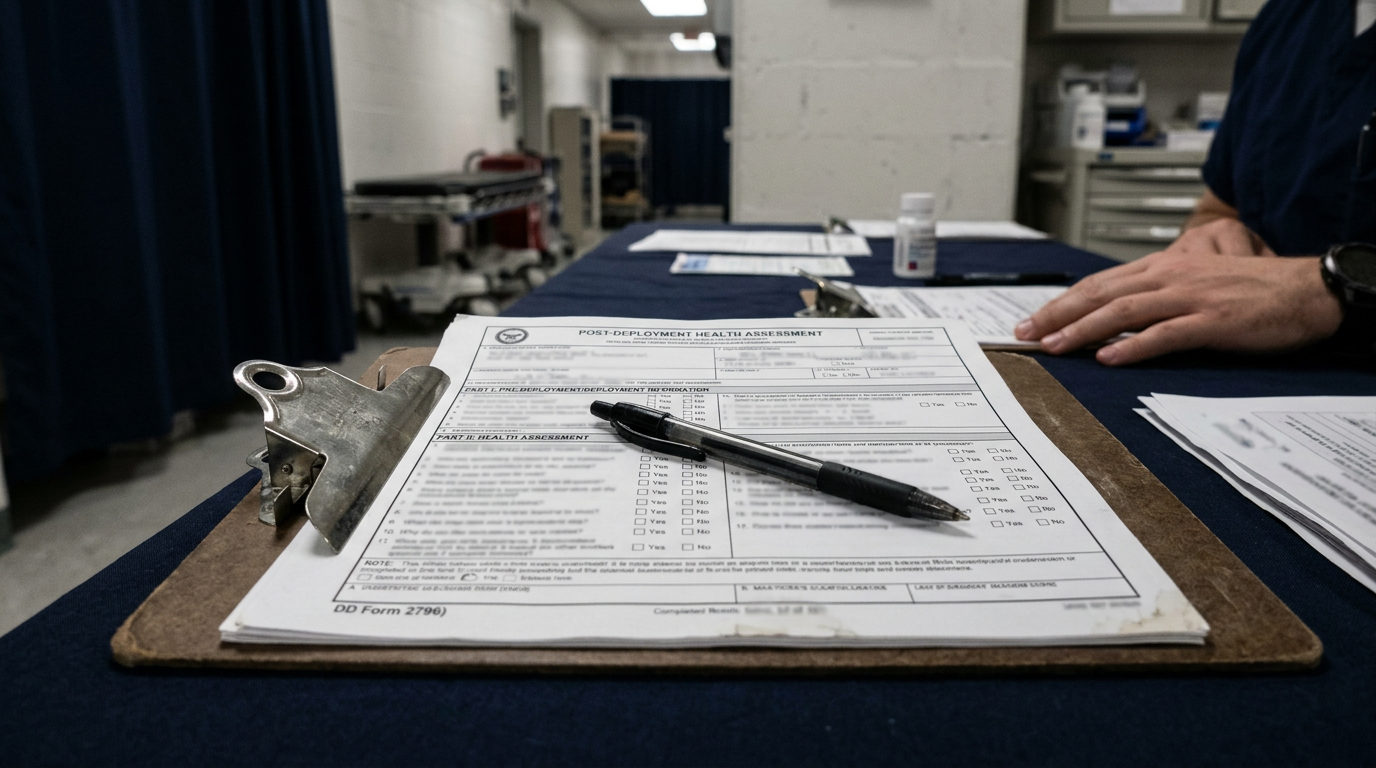
Post-deployment health assessments
The PDHA and PDHRA forms often recorded a cough, wheeze, or shortness of breath at the time, contemporaneous proof the airway trouble started in theatre, not decades later.

In-theatre sick-call records
Unit medical records and sick-call slips showing respiratory complaints during deployment establish continuity of symptoms, powerful even on a facts-found claim.

Pulmonary function testing
Respiratory ratings run on measured numbers, FEV-1, FEV-1/FVC, DLCO. Make sure testing is done on a bad day, not a good one, and that the examiner records the medication keeping you functional.

Surgical lung biopsy
Constrictive bronchiolitis is often invisible on imaging and spirometry and is diagnosed on surgical biopsy. If you have a biopsy report, it can be the whole case.

Buddy statements
Statements describing the pit, its distance from your quarters, and the prevailing wind put the exposure in plain human terms a rater cannot wave off.
What You’ll Be Told, and the Answer
“Your pulmonary function test is normal.”
Constrictive bronchiolitis is a small-airways disease that routinely produces normal spirometry and normal chest imaging. It is diagnosed on surgical biopsy. A denial resting only on a normal PFT has not addressed the actual disease.
“You had asthma as a child.”
Then the issue is aggravation, not causation. A pre-existing condition permanently worsened by service is service-connected for the degree of worsening, and the VA must show by clear and unmistakable evidence that it was not aggravated, a bar it rarely clears.
“You smoked.”
Smoking history does not defeat a presumption. Once the PACT Act presumption applies, the rater must produce affirmative evidence rebutting it, not simply point at an alternative cause. A concurrent cause does not cancel a conceded one.
“You only deployed for four months.”
There is no minimum deployment length in the burn-pit presumption. The thirty-day rule belongs to Camp Lejeune and does not apply here. A rater importing it is applying the wrong regulation.
Where the VA Gets This Wrong
Two failures repeat: denying an asthma or sinusitis claim because the condition was diagnosed after service, which the statute expressly permits, and rating a granted respiratory condition at 0% on a single normal PFT taken on a good day, without the required consideration of the veteran’s documented symptom history.

Building a Gulf War & PACT Act Veterans Claim That Wins
Every claim stands on three legs. Knock one out and the claim falls over, no matter how bad your symptoms are. Before you file, look at your file and find all three. If one is missing, that is the piece to build first. The VA will not build it for you, and filing without it usually just buys you a denial letter and lost time.
 01
01A current diagnosis
A doctor has to say you have it, now, in writing. Not "reports symptoms of", a diagnosis. Without this leg, nothing else in the file matters.
 02
02A link to your service
An event, an injury, an exposure, or an already service-connected condition. Service records, unit records, buddy statements, and your own account all count as evidence.
 03
03A nexus that ties the two together
A medical opinion stating it is at least as likely as not that your service caused or aggravated the condition. That phrase is a legal standard: 50 percent or better. It is the leg most denials break.
Document the problem before you file
• Keep a dated symptom log for at least 30 days. Frequency, severity, and what it stopped you from doing.
• Get statements from people who see it, a spouse, a coworker, a battle buddy. Lay evidence is legal evidence.
• Pull your private treatment records. The VA only has to help; it does not have to go find everything.
• Write down what you have stopped doing. Lost work, lost sleep, lost activities. That is what impairment looks like on paper.
Your Rights in This Process
Most veterans walk into this system without knowing the rules the VA itself has to follow. That is how claims get denied for missing evidence the VA was supposed to help you find, and how exams get done by the wrong clinician. These six rights are written into federal regulation. Know them before you file, and make the VA honor every one of them when it decides your claim.

It costs nothing to file
Filing a VA claim is free. Accredited representatives may only charge for work on an appeal after an initial decision, and those fees are capped by 38 CFR §14.636.

The VA has a Duty to Assist you
Under 38 CFR §3.159 the VA must help you get the evidence it needs, and it must tell you what is missing before it denies you for missing it.

You can ask for a different examiner
You may request a trauma-informed clinician, or a clinician of a specific gender, for a C&P examination. Ask before the exam is scheduled.

You can claim every condition you have
There is no limit and no penalty. Primary conditions, secondary conditions, and conditions made worse by service all get filed.

You can appeal and be re-evaluated
A denial is not the end. You may submit new evidence, request a higher-level review, appeal to the Board, and ask for re-evaluation when your condition worsens.

You must be considered for TDIU
If your service-connected conditions keep you from holding substantially gainful employment, you may be paid at the 100 percent rate without a 100 percent rating.
When You Are Ready to File
Talk to an accredited representative before you file. It costs nothing to ask, and the order you file in changes what the VA is allowed to award you. Albert L. Thombs Jr. is VA-Accredited Claims Agent #45147. A short conversation now can save you a year spent waiting in the wrong review lane.
Your part starts at the kitchen table. Pull your DD-214, your rating decision if you have one, and the names of every doctor who treats you today. Under 38 CFR 3.159 the VA has to help you gather records, but it can only chase the records you tell it about. Leave a doctor off the 21-4142 and that treatment may never reach your file.

The application itself
This is the form that opens a disability compensation claim. List every condition you are claiming, and name the secondary conditions explicitly.
Release for private records
Authorises the VA to request records from your private doctors. Without it, treatment outside the VA may never reach your file.
Lay or buddy statement
The official form for your own statement and for statements from people who witnessed the event or the change in you.
Keep Reading
One page never tells the whole story of a claim. The VA rates every condition on its own evidence, its own exam and its own diagnostic code, and the pieces connect in ways most veterans never see until a decision letter lands. These are the pages that pick up where this one stops. Read them before you file, not after a denial, because the cheapest fix in this process is the mistake you never make.

Vietnam Veterans & Agent Orange
Veterans with qualifying Vietnam-era service are presumed exposed to Agent Orange, and a long list of conditions is presumptively service-connected, no nexus required.
Read more
Blue Water Navy Veterans
The Blue Water Navy Vietnam Veterans Act restored Agent Orange presumptions to veterans who served aboard ships in the offshore waters of Vietnam, reversing years of wrongful denials.
Read more
Brown Water Navy Veterans
Brown Water Navy veterans ran the rivers, canals, and harbors of Vietnam, and they have been inside the Agent Orange presumption from the start. The fight was never about them, but the VA still stalls these claims when the paper does not instantly place the boat on an inland waterway.
Read more
Gulf War Illness
Gulf War Illness covers undiagnosed illnesses and medically unexplained chronic multisymptom conditions in Southwest Asia veterans, no nexus required when the criteria are met.
Read more