
The Board of Veterans Appeals · 38 CFR Parts 19 & 20
Board of Veterans Appeals
When the regional office gets it wrong, take it to a Veterans Law Judge, the most thorough review in the VA system
When the regional office keeps getting it wrong, the Board is where a Veterans Law Judge, not another rater, finally reads your file with the authority to fix it. You choose one of three lanes: Direct Review on the existing record, Evidence Submission with a 90-day window to add new records, or a Hearing where you testify in your own words. The lane you pick shapes everything, so I help you choose it, based on what your case actually needs.
What Is a Board Appeal?
A Board appeal takes your case from the VA regional office to the Board of Veterans Appeals (BVA) in Washington, D.C., where a Veterans Law Judge (VLJ) reviews the record and issues a decision. Filed on VA Form 10182, this is the highest level of review within the VA system before the case goes to federal court.
Under 38 CFR Part 19 and Part 20, the Board has the authority to grant benefits, deny the appeal, or remand the case back to the regional office for additional development. A VLJ's decision carries the full weight of the Board and can overturn any regional office decision.
Board appeals are the right choice when the regional office has repeatedly gotten your case wrong, when the legal issues are complex, or when your testimony before a judge would be the most persuasive way to present your case. VLJs are not local adjudicators, they are legally trained judges who apply the law, and a well-constructed brief citing the right precedent can move a case that has been stuck for years.

The Three Board Dockets
When you file VA Form 10182, you have to pick one of three dockets, and that choice controls what the Veterans Law Judge is allowed to look at. Pick wrong and you can lock out the very evidence that would have won. Before you check a box, ask yourself two questions: do I have new evidence, and will my own testimony help? Your answers decide the docket.
Direct Review
The Veterans Law Judge (VLJ) reviews the existing record. No new evidence, no hearing. The fastest Board lane, best when the evidence is strong and the error is clear on the record.

Evidence Submission
You submit new evidence within 90 days of the Board docketing your appeal. No hearing. Good when you have new evidence but do not need to testify.

Hearing Request
You testify before a VLJ, usually by video from home or a local VA office, and may submit new evidence at the hearing or within 90 days after. The most thorough lane, best for complex cases where testimony matters.
Case Snapshot, Sleep Apnea (Secondary to PTSD)
Denied to 50% via Board Appeal. The VA regional office denied secondary service connection for obstructive sleep apnea, ruling that the veteran's PTSD was not the proximate cause. The denial cited a C&P examiner's opinion that lacked supporting rationale. An opinion with no reasons behind it carries little weight, and that gap became the target of the appeal.
I filed a Board appeal on the Hearing Request docket. I submitted peer-reviewed medical literature establishing the PTSD-sleep apnea nexus through autonomic nervous system dysregulation and submitted a specialist nexus opinion stating the "at least as likely as not" standard was met under 38 CFR §3.310.
The VLJ found the private nexus opinion more probative than the VA examiner's unsupported conclusion. Service connection granted at 50%. (Anonymized; individual results depend on the specific file and evidence.)

Preparing for a Board Hearing
Most Board hearings today are held by video, either from your own home or your local VA office, though you may still request an in-person hearing at the Board in Washington, D.C. Whichever format you choose, preparation is everything. The VLJ will ask questions about your condition, your service, and the impact on your daily life. This is not a casual conversation, it is sworn spoken testimony that becomes part of the record. There is no courtroom cross-examination, the judge simply hears your account and asks questions.

I prepare a written brief for the VLJ outlining the legal errors in the regional office decision and citing the specific regulations that support your claim
I make sure you know what to expect at the hearing, what questions the VLJ will ask, and how to describe your worst days honestly without minimizing

I identify the key facts the VLJ needs to hear, the in-service event, the current symptoms, the daily functional limitations, and the connection between them

I submit any new evidence at or before the hearing, with a written explanation of how it addresses the deficiency in the prior decision
I ensure the hearing transcript accurately reflects what was said, errors in the transcript can undermine the appeal

I prepare you for questions about gaps in treatment, so a stretch without care is explained in your own words instead of being read as a sign you got better

I line up the people who can speak for you, a spouse or a friend can testify about the changes they have watched, and that testimony becomes lay evidence in the record

I use the 90-day window after the hearing, under 38 CFR §20.302 you can submit more evidence within 90 days, and I use it to answer anything the judge flagged
Beyond the Board, CAVC
If the Board denies your appeal, you have 120 days to appeal to the Court of Appeals for Veterans Claims (CAVC). This is a federal court outside the VA system. CAVC appeals require an accredited attorney, not a claims agent.
If your case reaches this level, I will tell you clearly and facilitate the transition to appropriate legal counsel. I do not pretend to be something I am not, my authority extends through the Board, and I use every bit of it. But when CAVC is the right next step, I say so.

Inside the VA's Procedural Manual
Board appeals are governed by statute, 38 U.S.C. §7105 and §7107, and by the Board's own rules in 38 CFR Part 20. The M21-1 is the VA's internal manual and, under Overton v. Wilkie, 30 Vet. App. 257 (2018), it does not bind the Board. When the Board remands a case, the regional office must comply with the VLJ's remand instructions under Stegall v. West, 11 Vet. App. 268 (1998), non-compliance is itself a reversible error.
For hearing-docket appeals, the VLJ must comply with 38 CFR §20.700(c), the duty to suggest the submission of evidence that may have been overlooked. This is codified from Bryant v. Shinseki, 23 Vet. App. 488 (2010), which held that the hearing officer must explain the issues and suggest submission of evidence that would help the veteran's case. If the VLJ fails to do this, the hearing itself may be inadequate.
Key CAVC precedent: Gilbert v. Derwinski, 1 Vet. App. 49 (1990), established that the Board must provide adequate reasons and bases for every finding, including an explanation of why evidence for was outweighed by evidence against. A Board decision that simply recites the evidence without explaining the weighing is legally deficient and can be challenged at the CAVC.
The Three Decision-Review Options, Where the Board Fits
Board appeals come in three dockets. Choose the right one based on whether you have new evidence and whether testimony will strengthen your case. The docket you pick on VA Form 10182 controls what evidence the judge can see, so this is not a box to check in a hurry. Walk through the lanes below, compare them against your own file, and know which one you are choosing and why before you sign the form.
The Three Decision-Review Options
A denial is not the end, it is a fork in the road. Choosing the WRONG option wastes months. Choosing right protects your back pay.
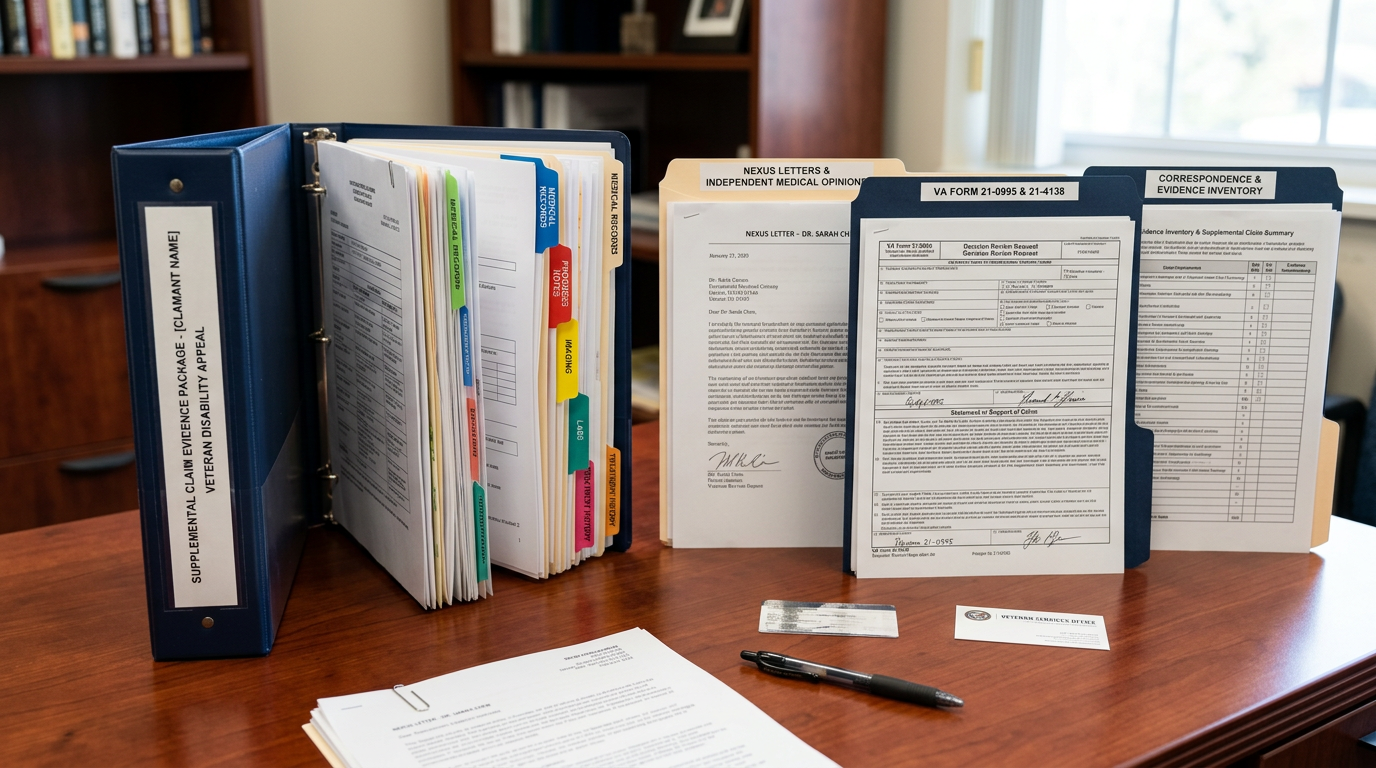
- Requires NEW & RELEVANT evidence
- File within 1 year to protect your effective date
- Reviewed by a claims adjudicator
- NO new evidence allowed
- An experienced adjudicator who did not decide your claim re-examines the same record
- Best when the evidence was there and the decision got it wrong

- Decided by a Veterans Law Judge
- Three dockets: Direct Review, Evidence Submission, or Hearing
- The most thorough review in the VA system

- A Clear and Unmistakable Error (CUE) motion is not one of the three decision-review options, it is a separate legal challenge to a FINAL decision.
- It alleges the earlier decision was undebatably wrong on the facts or the law as they existed at the time.
- When granted, it can reach back years for retroactive pay tied to the original effective date.
Protect your effective date: filing a Supplemental Claim within one year of the decision keeps your original filing date, which can mean thousands in retroactive back pay.
The Advocate's Take
The Board of Veterans' Appeals is the big room. Your case leaves the regional office and goes in front of a Veterans Law Judge, an attorney who decides nothing but VA appeals and is not part of the local office that denied you. That matters. The regional office rater is measured on speed. The judge is measured on getting the law right. When the law is on your side and the regional office keeps refusing to see it, this is where you take it.
But I am not going to sell you a fantasy. The Board is slow. You are often looking at a year or more, and the hearing docket can run much longer. So before I ever recommend this lane I ask one question: is the wait worth it compared to a Supplemental Claim or a Higher-Level Review? If the problem is a missing nexus letter, I would rather fix it in four to six months with a Supplemental Claim than make you wait two years for a judge to tell you the same thing. The Board is for cases where the regional office keeps misreading the law, where the evidence is strong but they keep weighing it wrong, or where you need someone to finally hear you in your own words.
When you file the Notice of Disagreement, VA Form 10182, within one year of the decision, you pick one of three dockets, and this choice is a big deal:
Direct Review: the judge looks only at the record as it stood on the decision. Fastest docket. Use it when the evidence is already there and the error is legal. Evidence Submission: you get 90 days after filing to add new evidence. Use it when you have a nexus opinion or records that close the gap. Hearing: you testify to the judge (virtually or in person) and get 90 days after the hearing to submit evidence. Slowest docket, but it is the only place a decision-maker actually sees and hears you. For conditions where credibility is the whole case, like PTSD, MST, or pain that does not show up on an X-ray, that can make the difference.
Here is what the VA does not advertise. The Board does not have a Duty to Assist you in gathering evidence. If something is missing, it will not go get it for you. It will either deny or remand, and a remand sends you back down to the regional office for more months. That is why the file has to be built before it ever reaches the judge. I write the argument, I cite the regulation and the case law, and I point the judge to the exact page in the record.
Your part: be patient, keep getting treatment so your records stay current, keep your address updated with the VA, and if you choose a hearing, prepare with me for it. Do not wing it. A judge can only rule on what is in the record and what you say on the record. Let's make sure both are right.

A Board appeal is the most powerful lane you have, and it is where a defective exam finally gets exposed. The Veterans Law Judge reviews the same record the regional office got wrong. Watch the VA's own videos below so you know what a proper exam should have looked like, because every gap between that standard and your exam is an argument I can put in front of the Board.
What a Judge Weighs, and Where Exams Go Wrong
Many Board appeals trace back to a defective C&P exam or a misapplied rating. A Veterans Law Judge decides your appeal on one of three dockets: direct review, evidence submission, or a hearing. These official VA videos show how the exam and the compensation math are supposed to work, so you can spot exactly where your exam fell short and show the judge why the VA should never have relied on it.
Your VA Claim Exam: What to Expect
Tips to Prepare for Your VA Claim Exam
Building a Board of Veterans Appeals Claim That Wins
Every claim stands on three legs. Knock one out and the claim falls over, no matter how bad your symptoms are. Before you file, look at your file and find all three. If one is missing, that is the piece to build first. The VA will not build it for you, and filing without it usually just buys you a denial letter and lost time.
 01
01A current diagnosis
A doctor has to say you have it, now, in writing. Not "reports symptoms of", a diagnosis. Without this leg, nothing else in the file matters.
 02
02A link to your service
An event, an injury, an exposure, or an already service-connected condition. Service records, unit records, buddy statements, and your own account all count as evidence.
 03
03A nexus that ties the two together
A medical opinion stating it is at least as likely as not that your service caused or aggravated the condition. That phrase is a legal standard: 50 percent or better. It is the leg most denials break.
Document the problem before you file
• Keep a dated symptom log for at least 30 days. Frequency, severity, and what it stopped you from doing.
• Get statements from people who see it, a spouse, a coworker, a battle buddy. Lay evidence is legal evidence.
• Pull your private treatment records. The VA only has to help; it does not have to go find everything.
• Write down what you have stopped doing. Lost work, lost sleep, lost activities. That is what impairment looks like on paper.
Your Rights in This Process
Most veterans walk into this system without knowing the rules the VA itself has to follow. That is how claims get denied for missing evidence the VA was supposed to help you find, and how exams get done by the wrong clinician. These six rights are written into federal regulation. Know them before you file, and make the VA honor every one of them when it decides your claim.

It costs nothing to file
Filing a VA claim is free. Accredited representatives may only charge for work on an appeal after an initial decision, and those fees are capped by 38 CFR §14.636.

The VA has a Duty to Assist you
Under 38 CFR §3.159 the VA must help you get the evidence it needs, and it must tell you what is missing before it denies you for missing it.

You can ask for a different examiner
You may request a trauma-informed clinician, or a clinician of a specific gender, for a C&P examination. Ask before the exam is scheduled.

You can claim every condition you have
There is no limit and no penalty. Primary conditions, secondary conditions, and conditions made worse by service all get filed.

You can appeal and be re-evaluated
A denial is not the end. You may submit new evidence, request a higher-level review, appeal to the Board, and ask for re-evaluation when your condition worsens.

You must be considered for TDIU
If your service-connected conditions keep you from holding substantially gainful employment, you may be paid at the 100 percent rate without a 100 percent rating.
The Nine Questions Every Veteran Should Be Able to Answer
This is the standard I hold every page on this site to. Before you file anything on a Board appeal, you should be able to answer these nine questions. If you cannot answer them yet, you are not ready, and that is exactly what my review is for. This is education first, representation second.

What is this?
A Board appeal sends your case to a Veterans Law Judge at the Board of Veterans’ Appeals, the most thorough review in the system. You choose one of three dockets.

What must the VA decide?
Whether the regional office decision was correct, reviewed independently by a judge with authority to grant, remand, or deny.

What must the evidence prove?
It depends on the docket. Direct Review closes the record; Evidence Submission lets you add records within 90 days; a Hearing lets you testify and submit for 90 days after.

What is the VA responsible for?
Providing an independent review by a Veterans Law Judge, honoring the docket rules you selected, and giving written reasons for the decision.

What are you responsible for?
Choosing the right docket with me, meeting the 90-day evidence windows where they apply, and showing up and testifying if you request a hearing.

What can go wrong?
Picking the wrong docket, missing the 90-day window, or expecting the Board to hunt for evidence you never submitted. The docket you choose shapes everything.

What you should not do
Do not choose a Hearing docket if you have no new evidence and only a legal argument, and do not let frustration push you to the Board when a faster option would work.

What I review as your accredited agent
I decide whether the Board is worth the wait or whether a Supplemental Claim or HLR gets you there faster, then I pick the docket and build the legal argument for the judge.

What happens next
The Board grants, denies, or remands for further development. A remand is not a loss, it is the judge ordering the VA to fix something before deciding.
Representation Means Telling You the Truth
Do Not File Yet If…
Before you take action on a Board of Veterans' Appeals appeal, check whether any of these apply. Filing at the wrong time can weaken your claim, waste a deadline, or put you on a longer path than necessary. I would rather tell you to wait than watch you lose an effective date or hand the VA a thin file it can deny in a week. A denial is not the end, but it costs you months. Read each item below honestly. If one fits your situation, call us first and we will tell you what to fix before anything gets filed.

A Grant Is Not the End of the Analysis
After a Favorable Decision
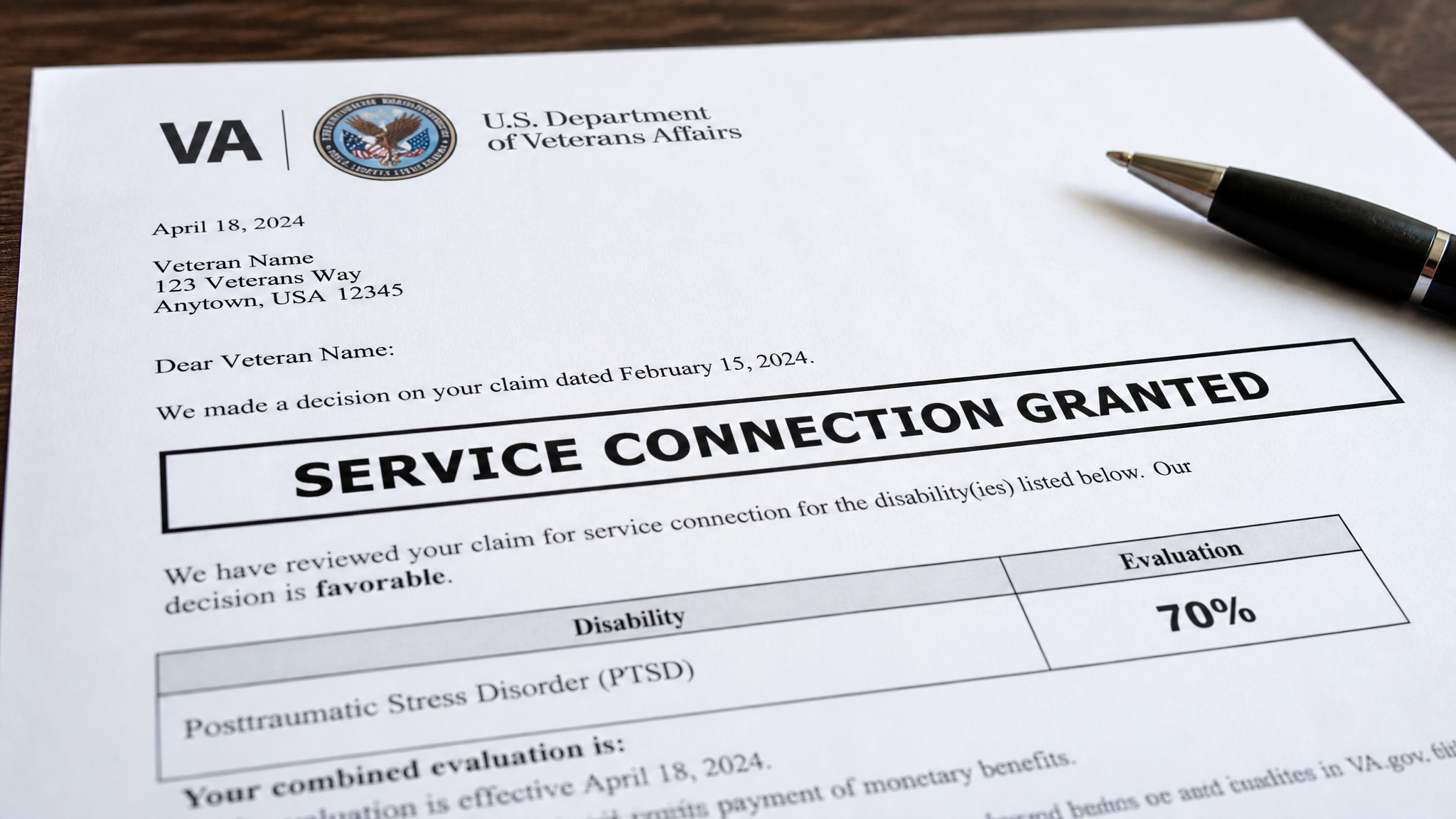
A grant does not mean “case closed.” Every favorable decision must be audited. I review each of the following before advising you that the decision is fully correct. The VA makes mistakes in grants too, and a wrong effective date or a missed condition can cost you for years. Pull your decision letter and check it against these points with me.

Was the correct diagnostic code and evaluation assigned?
Compare the assigned code and percentage against the rating schedule criteria. A correct diagnosis with the wrong code can mean the wrong evaluation.

Did VA select the correct effective date?
Check whether VA used your claim date, your Intent to File date, or the date entitlement arose. An incorrect effective date can cost thousands in back pay.
Does VA have the correct family information?
Where dependency compensation applies, verify VA has accurate dependent information. Missing or outdated records reduce your monthly payment.

Does the record raise unemployability?
If service-connected disabilities prevent substantially gainful employment, the record may support Total Disability Based on Individual Unemployability even at a combined rating below 100%.

Does the disability picture raise Special Monthly Compensation?
Certain combinations of disabilities, loss of use, or the need for aid and attendance may qualify for SMC categories that provide compensation above the standard rate.

Is the condition subject to future review?
Unless the rating is static or permanent, VA may schedule a future examination. Know whether your rating is protected and when VA might reassess.

Was P&T established where applicable?
Permanent and Total status unlocks additional benefits including Chapter 35 Dependents' Educational Assistance and exemption from future routine examinations.

Does the family understand the award?
Particularly important for aging veterans. The family should understand the rating, what records to preserve, and what survivor benefits may apply.
Frequently Asked Questions
These are the questions veterans ask me before they send a case to the Board of Veterans' Appeals. The Board is a different room than the regional office: a Veterans Law Judge, a choice of docket, and a slower clock. Picking the wrong docket can cost you months or your chance to add evidence. Your part is to read these answers before you sign VA Form 10182.
How long does a Board appeal take?
Can I choose a virtual hearing instead of in-person?
What happens if the Board denies my appeal?
Can the Board grant a higher rating than what I asked for?
Should I request a hearing?
What is the difference between a Board hearing and an HLR informal conference?
Can I change dockets after filing?

When You Are Ready to File
Talk to an accredited representative before you file. It costs nothing to ask, and the order you file in changes what the VA is allowed to award you. Albert L. Thombs Jr. is VA-Accredited Claims Agent #45147. A short conversation now can save you a year spent waiting in the wrong review lane.
Your part starts at the kitchen table. Pull your DD-214, your rating decision if you have one, and the names of every doctor who treats you today. Under 38 CFR 3.159 the VA has to help you gather records, but it can only chase the records you tell it about. Leave a doctor off the 21-4142 and that treatment may never reach your file.

The Notice of Disagreement
This is the form that sends your case to a Veterans Law Judge. File within one year of the decision and pick one docket: Direct Review, Evidence Submission, or Hearing. The docket you choose controls what evidence the judge can see.
File a Board Appeal on VA.govTrack your appeal
Board appeals take a long time. Use this tool to see where yours stands and whether a hearing has been scheduled. Do not miss a hearing notice.
Check your status on VA.govStatements for the evidence docket
On the Evidence Submission docket you get 90 days from filing to add evidence under §20.303. Your statement and your witnesses go in on this form.
Get the lay statement form on VA.govKeep Reading
One page never tells the whole story of a claim. The VA rates every condition on its own evidence, its own exam and its own diagnostic code, and the pieces connect in ways most veterans never see until a decision letter lands. These are the pages that pick up where this one stops. Read them before you file, not after a denial, because the cheapest fix in this process is the mistake you never make.

Higher-Level Review
When the error is clear on the record and speed matters, the same evidence reviewed by a senior adjudicator who did not decide your claim.
Read more
Supplemental Claims
New and relevant evidence the VA never saw, nexus letters, DBQs, or records that fill the gap.
Read more
CUE Review
Attack an undebatable error in an old, final decision for retroactive benefits.
Read more
Evidence Strategy
How I build the case the VA cannot deny.
Read more