
Appeals & Denials
VA Claim & Appeal Q&A
Plain answers to the questions veterans ask us most
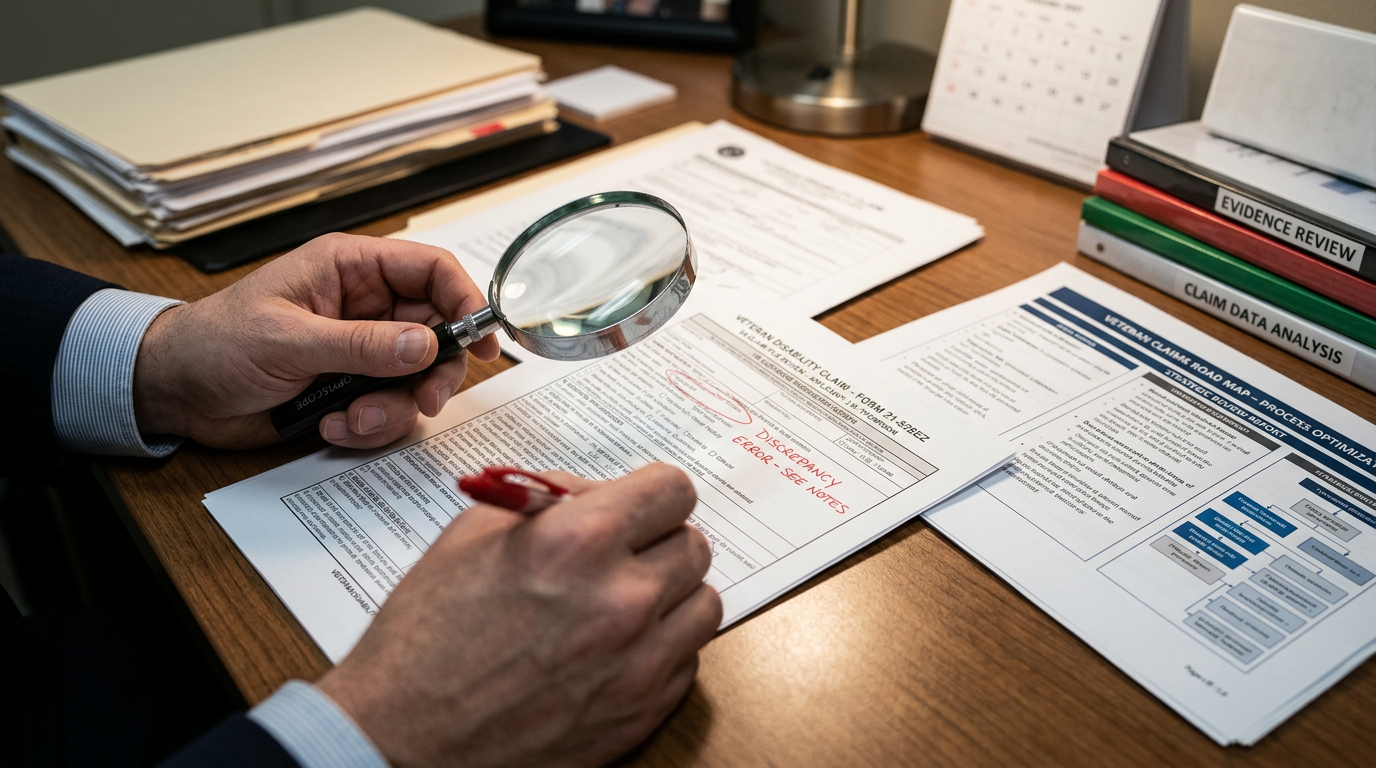
Quick, honest answers to the recurring questions about claims, denials, timelines, and appeals, without the bureaucratic fog. These are the questions veterans ask me every week, answered the way I would answer them across the desk. Most denials come down to the same handful of problems, and most can be fixed. Your part is to read the answer that fits your situation and act on it before your one-year window closes.
Questions About Filing

How long does a claim take?
It varies widely. A fully developed claim (filed with all evidence) can be decided in 3–6 months. Claims requiring VA development, C&P exams, and records retrieval often take 6–12 months or longer. Board appeals can take 1–3 years depending on the docket. The review lane you choose directly affects the timeline.

Can I work and still get compensation?
Yes. VA disability compensation is not means-tested and is paid regardless of income or employment. The exception: TDIU (Total Disability Individual Unemployability) requires that your service-connected conditions prevent you from maintaining substantially gainful employment. If you are working above the poverty threshold, TDIU is generally not available, but standard compensation at any percentage is unaffected by employment.

Should I file myself or use a representative?
You can file yourself, but a representative who understands the regulations, the rating criteria, the evidentiary requirements, the strategic choices, significantly improves outcomes. The complexity of the VA system means that most veterans leave benefits on the table when they file alone.
Can I add conditions later?
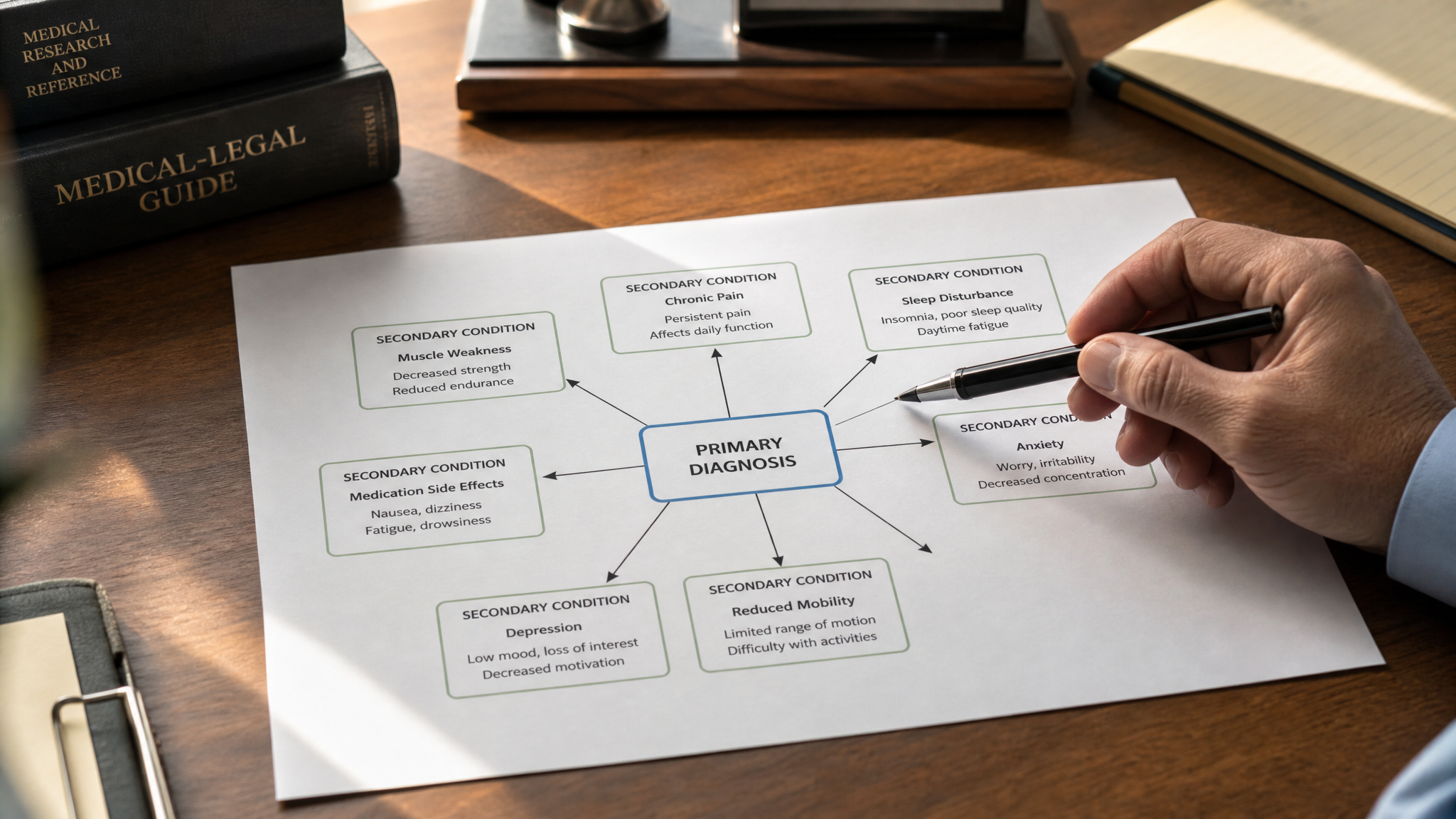
Yes. You can file for new conditions at any time. Secondary conditions, those caused or aggravated by an already service-connected disability, are frequently overlooked and can substantially increase your combined rating.
Questions About Denials and Appeals

What if I disagree with my rating?
You have three review options under the Appeals Modernization Act: (1) Supplemental Claim, submit new and relevant evidence, (2) Higher-Level Review, request a senior reviewer to re-examine the same evidence, (3) Board of Veterans Appeals, present your case to a Veterans Law Judge. Each lane has different strategic advantages depending on your situation.

Does filing an appeal risk my current rating?
In most cases, no. Filing a Supplemental Claim or Board appeal does not trigger a review of your other rated conditions. A Higher-Level Review gives the reviewer authority to reduce a rating if the evidence shows clear and unmistakable error, but this is rare. Discuss the specific risk profile with your representative.
What is "new and material evidence"?
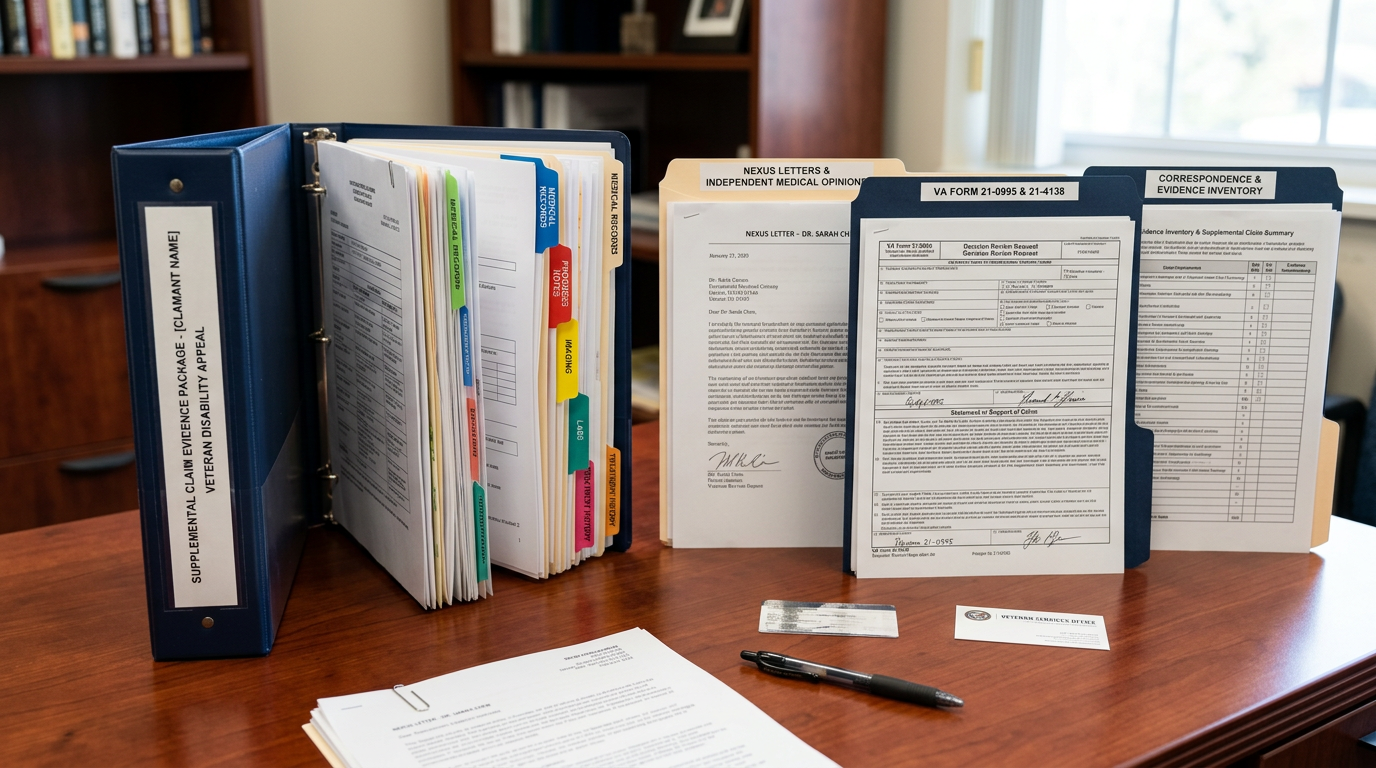
Under §3.156, new evidence is evidence not previously submitted to the VA. Material evidence relates to an unestablished fact necessary to substantiate the claim. To reopen a previously denied claim, you need evidence that is both new and material, not just new records that repeat what the VA already considered.

Can I appeal a claim denied years ago?
Yes. There is no time limit for reopening a claim with new and material evidence under §3.156. The effective date for a reopened claim is generally the date of the new filing, not the original claim. However, if the new evidence includes service department records, the effective date can potentially reach back to the original claim.
Questions About Ratings and Compensation
How are multiple ratings combined?
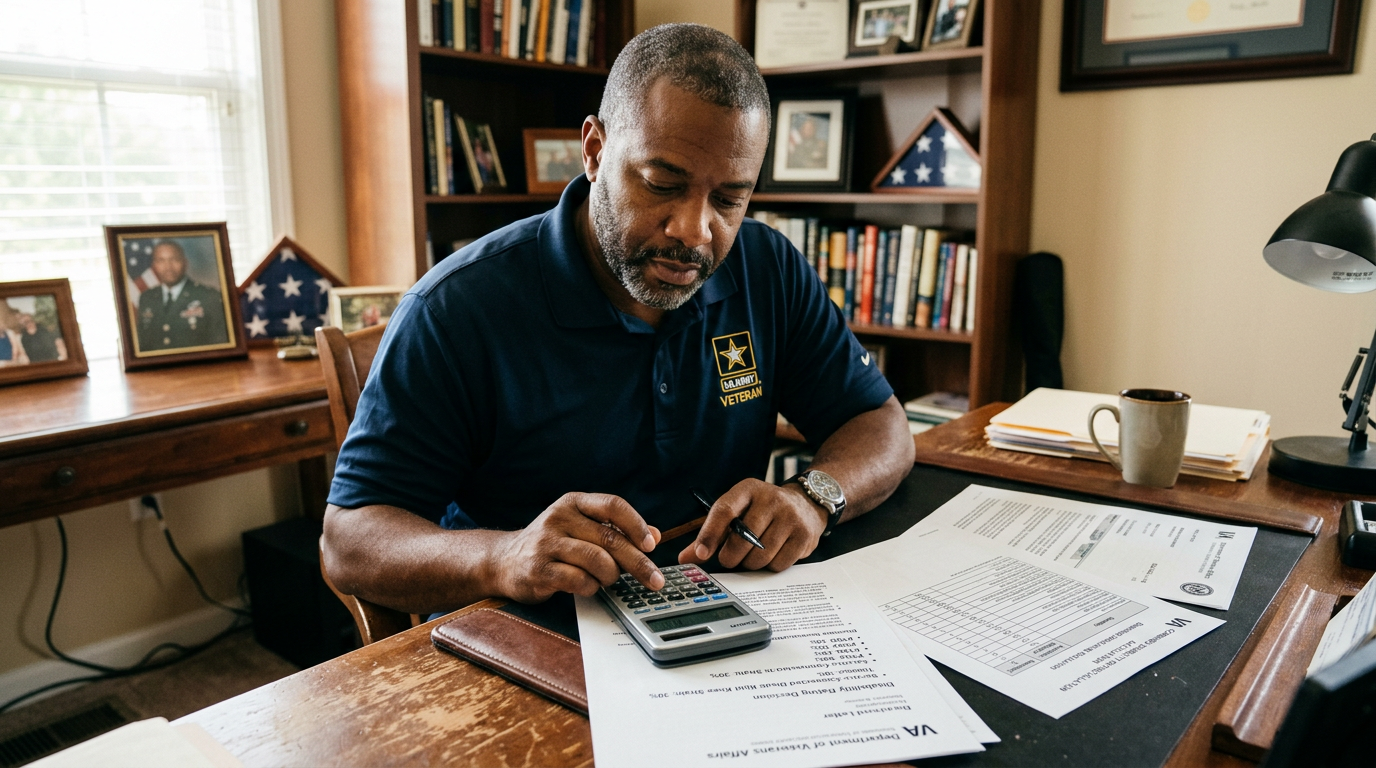
The VA uses VA Math (the bilateral factor and combined ratings table) under §4.25. Multiple ratings are not added, they are combined using a formula that accounts for the remaining "whole person" after each disability. A 50% and a 30% do not equal 80%; they combine to approximately 65%. See our Combined Ratings Calculator for the full walkthrough.

What is the difference between schedular and extra-schedular?
Schedular ratings are assigned based on the criteria in the VA's Schedule for Rating Disabilities (38 CFR Part 4). Extra-schedular ratings under §3.321(b)(1) can be assigned when the schedular criteria do not adequately describe the veteran's disability picture, for example, frequent hospitalizations or marked interference with employment beyond what the rating accounts for.

Do my dependents affect my compensation?
If your combined disability rating is 30% or higher, you receive additional compensation for dependents: spouse, children under 18, children in school (18–23), and dependent parents. At ratings below 30%, no dependent additions apply.
The Advocate's Take
There is no such thing as a dumb question about your claim, only expensive assumptions. Ask before you act, and make sure the person answering reads the regulation, not just the internet.
Building a VA Claim & Appeal Q&A Claim That Wins
Every claim stands on three legs. Knock one out and the claim falls over, no matter how bad your symptoms are. Before you file, look at your file and find all three. If one is missing, that is the piece to build first. The VA will not build it for you, and filing without it usually just buys you a denial letter and lost time.
 01
01A current diagnosis
A doctor has to say you have it, now, in writing. Not "reports symptoms of", a diagnosis. Without this leg, nothing else in the file matters.
 02
02A link to your service
An event, an injury, an exposure, or an already service-connected condition. Service records, unit records, buddy statements, and your own account all count as evidence.
 03
03A nexus that ties the two together
A medical opinion stating it is at least as likely as not that your service caused or aggravated the condition. That phrase is a legal standard: 50 percent or better. It is the leg most denials break.
Document the problem before you file
• Keep a dated symptom log for at least 30 days. Frequency, severity, and what it stopped you from doing.
• Get statements from people who see it, a spouse, a coworker, a battle buddy. Lay evidence is legal evidence.
• Pull your private treatment records. The VA only has to help; it does not have to go find everything.
• Write down what you have stopped doing. Lost work, lost sleep, lost activities. That is what impairment looks like on paper.
Your Rights in This Process
Most veterans walk into this system without knowing the rules the VA itself has to follow. That is how claims get denied for missing evidence the VA was supposed to help you find, and how exams get done by the wrong clinician. These six rights are written into federal regulation. Know them before you file, and make the VA honor every one of them when it decides your claim.

It costs nothing to file
Filing a VA claim is free. Accredited representatives may only charge for work on an appeal after an initial decision, and those fees are capped by 38 CFR §14.636.

The VA has a Duty to Assist you
Under 38 CFR §3.159 the VA must help you get the evidence it needs, and it must tell you what is missing before it denies you for missing it.

You can ask for a different examiner
You may request a trauma-informed clinician, or a clinician of a specific gender, for a C&P examination. Ask before the exam is scheduled.

You can claim every condition you have
There is no limit and no penalty. Primary conditions, secondary conditions, and conditions made worse by service all get filed.

You can appeal and be re-evaluated
A denial is not the end. You may submit new evidence, request a higher-level review, appeal to the Board, and ask for re-evaluation when your condition worsens.

You must be considered for TDIU
If your service-connected conditions keep you from holding substantially gainful employment, you may be paid at the 100 percent rate without a 100 percent rating.
When You Are Ready to File
Talk to an accredited representative before you file. It costs nothing to ask, and the order you file in changes what the VA is allowed to award you. Albert L. Thombs Jr. is VA-Accredited Claims Agent #45147. A short conversation now can save you a year spent waiting in the wrong review lane.
Your part starts at the kitchen table. Pull your DD-214, your rating decision if you have one, and the names of every doctor who treats you today. Under 38 CFR 3.159 the VA has to help you gather records, but it can only chase the records you tell it about. Leave a doctor off the 21-4142 and that treatment may never reach your file.

The application itself
This is the form that opens a disability compensation claim. List every condition you are claiming, and name the secondary conditions explicitly.
Release for private records
Authorises the VA to request records from your private doctors. Without it, treatment outside the VA may never reach your file.
Lay or buddy statement
The official form for your own statement and for statements from people who witnessed the event or the change in you.