

Toxic Exposure
Gulf War Illness
Undiagnosed illness and chronic multisymptom illness under §3.317
Gulf War Illness covers undiagnosed illnesses and medically unexplained chronic multisymptom conditions in Southwest Asia veterans, no nexus required when the criteria are met. These claims get denied because the symptoms are scattered across years of records and nobody ties them together. The VA will not do that work for you. Your part is to document every symptom, how long it has lasted, and how it affects your life, and to keep a written log between appointments.
When There Is No Diagnosis, and That Is the Point
Section 3.317 exists precisely because many Gulf War veterans suffer real, disabling symptoms that defy a clean diagnosis. For qualifying Southwest Asia theater veterans, undiagnosed illnesses and medically unexplained chronic multisymptom illnesses can be presumptively service-connected without the usual nexus requirement.
Read that carefully, because it inverts everything veterans are told: here, the absence of a definitive diagnosis is not fatal to the claim. It is the qualifying criterion. A VA examiner who writes “no diagnosis found, therefore no disability” has misapplied the regulation, and that single sentence is the most common defect we find in these files.

Who Qualifies

Active military service in the Southwest Asia theater of operations on or after Aug 2, 1990
Covered locations include Iraq, Kuwait, Saudi Arabia, Bahrain, Qatar, UAE, Oman, the Gulf of Aden, the Gulf of Oman, and the neutral zone

Afghanistan, Israel, Egypt, Turkey, Syria, and Jordan qualify for the chronic multisymptom illness provisions

The disability must have appeared during qualifying service or manifested to a 10% or greater degree before the presumptive period expires

The illness must not be attributable to a known cause
The Three Qualifying Categories

Undiagnosed illness
Objective signs or symptoms with no identified diagnosis. Rated by analogy to a closely related condition under §4.20.

Medically unexplained chronic multisymptom illness
A defined cluster with partially understood etiology, the regulation names chronic fatigue syndrome, fibromyalgia, and functional gastrointestinal disorders (IBS, functional dyspepsia, functional abdominal pain syndrome).

Certain infectious diseases
Under §3.317(c): brucellosis, Campylobacter jejuni, Coxiella burnetii (Q fever), malaria, Mycobacterium tuberculosis, nontyphoid Salmonella, Shigella, visceral leishmaniasis, and West Nile virus.
The Six-Month Chronicity Rule
The symptoms generally must have manifested to a compensable degree and existed for six months or more, or resolved and recurred over at least a six-month period. Documenting chronicity, for symptoms that have no lab test to confirm them, is the core of these claims and where they are most often mishandled.
This is a documentation war, and you win it with a symptom journal. Dated entries recording fatigue severity, pain locations, cognitive lapses, GI episodes, and how each one changed what you could do that day are admissible lay evidence and they are frequently the strongest thing in the file.

How These Conditions Are Rated
Debilitating fatigue, cognitive impairments, or a combination, restricting routine daily activities to less than 50 percent of the pre-illness level, or symptoms nearly constant and so severe as to restrict routine daily activities almost completely.
Symptoms restricting routine daily activities to less than 50 percent of the pre-illness level, or incapacitating episodes of at least six weeks total duration per year.
Symptoms nearly constant and restricting routine daily activities to 50 to 75 percent of the pre-illness level, or incapacitating episodes of at least four but less than six weeks per year.
Symptoms nearly constant and restricting routine daily activities by less than 25 percent, or incapacitating episodes of at least two but less than four weeks per year.
Debilitating fatigue and other symptoms that wax and wane but result in periods of incapacitation of at least one but less than two weeks per year, or symptoms controlled by continuous medication.
Widespread musculoskeletal pain and tender points, with or without associated symptoms, that are constant, or nearly so, and refractory to therapy.
Symptoms that are episodic, with exacerbations often precipitated by environmental or emotional stress or by overexertion, but that are present more than one-third of the time.
Symptoms that require continuous medication for control.
Severe: diarrhea, or alternating diarrhea and constipation, with more or less constant abdominal distress.
Moderate: frequent episodes of bowel disturbance with abdominal distress.
Mild: disturbances of bowel function with occasional episodes of abdominal distress.
Evidence That Wins Gulf War Illness Claims

A dated symptom journal covering at least six months

Statements from spouse, family, and coworkers describing observable changes

Records of the diagnostic workups that came back negative, they prove the illness is unexplained

Documentation of tender points, sleep disturbance, and cognitive complaints

Employment records showing absences, accommodations, or termination

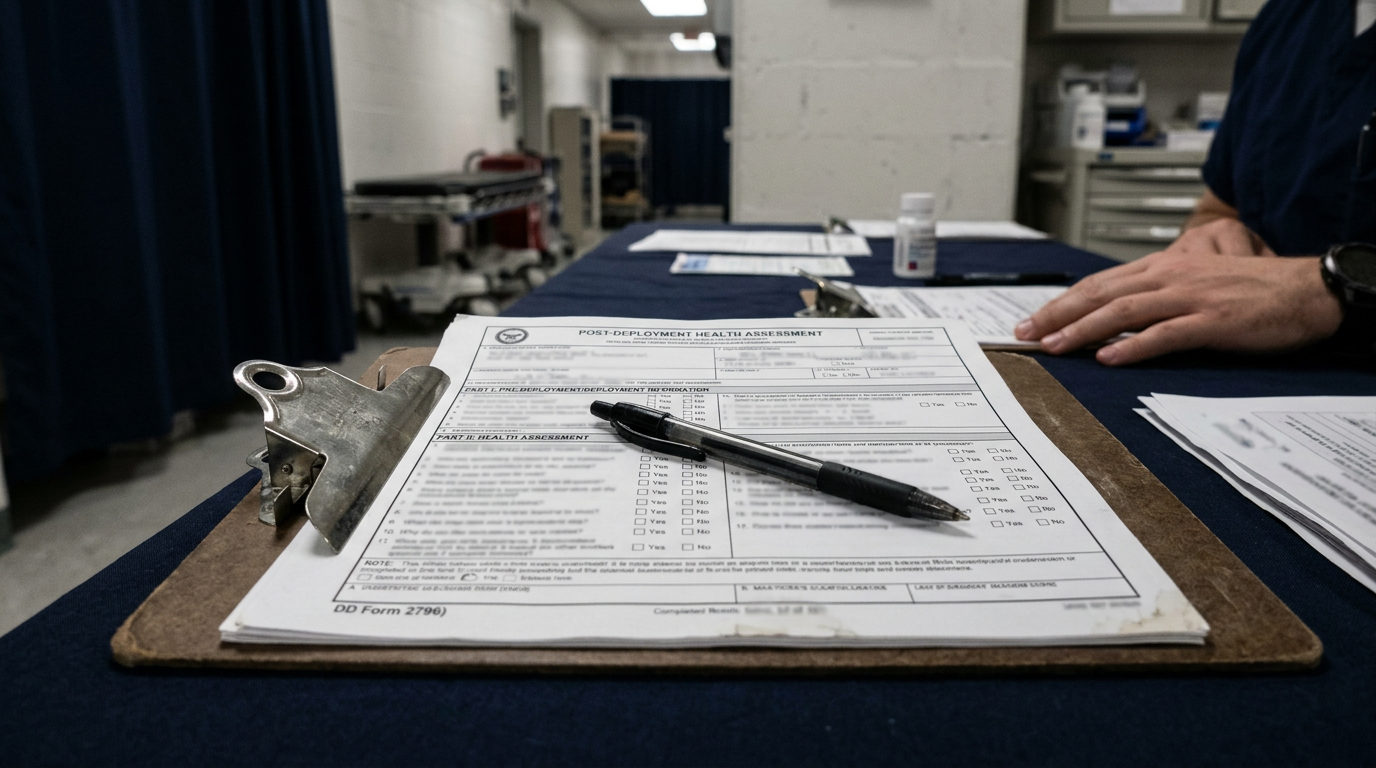
Registry participation and post-deployment health assessments
Where the VA Gets This Wrong
The classic bad exam concludes “no objective findings, symptoms are subjective.” Under §3.317 that reasoning is backwards, and an exam built on it is inadequate, which is grounds to challenge the decision rather than accept it.
Every Level the VA Can Assign You
These percentages come straight out of the rating schedule that governs gulf war illness, Diagnostic Code 6354. Read them slowly. If your current rating does not match what your records actually show, that gap is exactly what an appeal exists to correct.
100%
Debilitating fatigue, cognitive impairments, or a combination, restricting routine daily activities to less than 50 percent of the pre-illness level, or symptoms nearly constant and so sev…
60%
Symptoms restricting routine daily activities to less than 50 percent of the pre-illness level, or incapacitating episodes of at least six weeks total duration per year.
40%
Symptoms nearly constant and restricting routine daily activities to 50 to 75 percent of the pre-illness level, or incapacitating episodes of at least four but less than six weeks per year.
20%
Symptoms nearly constant and restricting routine daily activities by less than 25 percent, or incapacitating episodes of at least two but less than four weeks per year.
10%
Debilitating fatigue and other symptoms that wax and wane but result in periods of incapacitation of at least one but less than two weeks per year, or symptoms controlled by continuous med…
Building a Gulf War Illness Claim That Wins
Every claim stands on three legs. Knock one out and the claim falls over, no matter how bad your symptoms are. Before you file, look at your file and find all three. If one is missing, that is the piece to build first. The VA will not build it for you, and filing without it usually just buys you a denial letter and lost time.
 01
01A current diagnosis
A doctor has to say you have it, now, in writing. Not "reports symptoms of", a diagnosis. Without this leg, nothing else in the file matters.
 02
02A link to your service
An event, an injury, an exposure, or an already service-connected condition. Service records, unit records, buddy statements, and your own account all count as evidence.
 03
03A nexus that ties the two together
A medical opinion stating it is at least as likely as not that your service caused or aggravated the condition. That phrase is a legal standard: 50 percent or better. It is the leg most denials break.
Document the problem before you file
• Keep a dated symptom log for at least 30 days. Frequency, severity, and what it stopped you from doing.
• Get statements from people who see it, a spouse, a coworker, a battle buddy. Lay evidence is legal evidence.
• Pull your private treatment records. The VA only has to help; it does not have to go find everything.
• Write down what you have stopped doing. Lost work, lost sleep, lost activities. That is what impairment looks like on paper.
Your Rights in This Process
Most veterans walk into this system without knowing the rules the VA itself has to follow. That is how claims get denied for missing evidence the VA was supposed to help you find, and how exams get done by the wrong clinician. These six rights are written into federal regulation. Know them before you file, and make the VA honor every one of them when it decides your claim.

It costs nothing to file
Filing a VA claim is free. Accredited representatives may only charge for work on an appeal after an initial decision, and those fees are capped by 38 CFR §14.636.

The VA has a Duty to Assist you
Under 38 CFR §3.159 the VA must help you get the evidence it needs, and it must tell you what is missing before it denies you for missing it.

You can ask for a different examiner
You may request a trauma-informed clinician, or a clinician of a specific gender, for a C&P examination. Ask before the exam is scheduled.

You can claim every condition you have
There is no limit and no penalty. Primary conditions, secondary conditions, and conditions made worse by service all get filed.

You can appeal and be re-evaluated
A denial is not the end. You may submit new evidence, request a higher-level review, appeal to the Board, and ask for re-evaluation when your condition worsens.

You must be considered for TDIU
If your service-connected conditions keep you from holding substantially gainful employment, you may be paid at the 100 percent rate without a 100 percent rating.
When You Are Ready to File
Talk to an accredited representative before you file. It costs nothing to ask, and the order you file in changes what the VA is allowed to award you. Albert L. Thombs Jr. is VA-Accredited Claims Agent #45147. A short conversation now can save you a year spent waiting in the wrong review lane.
Your part starts at the kitchen table. Pull your DD-214, your rating decision if you have one, and the names of every doctor who treats you today. Under 38 CFR 3.159 the VA has to help you gather records, but it can only chase the records you tell it about. Leave a doctor off the 21-4142 and that treatment may never reach your file.

The application itself
This is the form that opens a disability compensation claim. List every condition you are claiming, and name the secondary conditions explicitly.
Release for private records
Authorises the VA to request records from your private doctors. Without it, treatment outside the VA may never reach your file.
Lay or buddy statement
The official form for your own statement and for statements from people who witnessed the event or the change in you.
Keep Reading
One page never tells the whole story of a claim. The VA rates every condition on its own evidence, its own exam and its own diagnostic code, and the pieces connect in ways most veterans never see until a decision letter lands. These are the pages that pick up where this one stops. Read them before you file, not after a denial, because the cheapest fix in this process is the mistake you never make.

Vietnam Veterans & Agent Orange
Veterans with qualifying Vietnam-era service are presumed exposed to Agent Orange, and a long list of conditions is presumptively service-connected, no nexus required.
Read more
Blue Water Navy Veterans
The Blue Water Navy Vietnam Veterans Act restored Agent Orange presumptions to veterans who served aboard ships in the offshore waters of Vietnam, reversing years of wrongful denials.
Read more
Brown Water Navy Veterans
Brown Water Navy veterans ran the rivers, canals, and harbors of Vietnam, and they have been inside the Agent Orange presumption from the start. The fight was never about them, but the VA still stalls these claims when the paper does not instantly place the boat on an inland waterway.
Read more
Gulf War & PACT Act Veterans
The PACT Act dramatically expanded presumptive conditions for veterans exposed to burn pits and airborne hazards in the Gulf War and post-9/11 conflicts.
Read more