

The Claims Women Never File, and the Ratings the VA Shortchanges
Fort McClellan, the toxic exposure ratings the VA underrates, and the claims women assume were meant for the men. Every one of them is yours to file.
Fort McClellan Has No Presumption, and That Is Exactly Why Women Lose These Claims
Toxic exposure did not only happen overseas. Fort McClellan, Alabama was home to the Army Chemical Corps school and Military Police training, and from 1952 to 1977 it was the home of the Women's Army Corps Center and School. For much of the last century, a large share of the women in the Army passed through it. The base and the town around it were contaminated with PCBs released for years by the nearby Monsanto plant in Anniston, with radioactive compounds, and with chemical warfare training agents.
Camp Lejeune has a list of presumptive conditions in 38 CFR §3.309(f), and it has its own page on this site. Fort McClellan has no presumption in 38 CFR at all. That does not mean you have no claim. It means you prove it the long way, through direct service connection under 38 U.S.C. §1110 and 38 CFR §3.303: a current diagnosis, an exposure in service, and a medical opinion linking the two. The Federal Circuit said it plainly in Combee v. Brown, 34 F.3d 1039 (Fed. Cir. 1994): the lack of a presumption does not bar a veteran from proving direct service connection.
Exposure follows where you were, not your job title. A clerk at Fort McClellan breathed the same air and drank the same water as an MP trainee. Anyone who tells you that you were not exposed because of your MOS does not understand how contamination works.
Here is the trap: the denial letter says Fort McClellan is not on the list, and the veteran treats that as the end. It is not a reason to deny a direct claim. It is a sign the rater never weighed the direct theory at all, and that is an error you can challenge.
Your part: prove the dates you were on base first. Orders, your DD-214, and your official personnel file put you there. Everything else in the claim is built on that.

Four Pieces That Build a Fort McClellan Claim
A presumptive claim asks the VA to connect your condition once you show the days. A facts-found claim asks you to build the exposure record yourself. These are the four pieces, and a claim missing any one of them usually fails.
Here is the trap: veterans file with a diagnosis and the word McClellan and expect the VA to fill in the rest. The VA has a duty to assist, but it will not research the science of your case for you.
Your part: assemble all four before you file, so the first decision is made on a complete record.

Prove You Were There
Your official personnel file, your orders, and your training records show the dates you were stationed or trained at Fort McClellan. If pieces are missing, your own statement and statements from women who served beside you count as evidence under 38 CFR §3.159(a)(2), because you are competent to describe where you lived, trained, and worked. Write down the years, the unit, the barracks, and the training areas you remember.

Tie the Contaminant to the Condition
Without a presumption, nobody assumes PCBs, radiation, or chemical agents caused your illness. The connection has to come from medical and scientific literature on the specific contaminant and the specific condition. Collect the studies that link them, and hand them to the doctor writing your opinion so she is reasoning from the science, not from a guess.

The Nexus Opinion
This is the piece that wins or loses the claim. Your doctor must say your condition is at least as likely as not caused by your exposure at Fort McClellan, and explain why with a rationale that names the contaminant, your dates on base, and the literature. A one line opinion is worth almost nothing. When the evidence is in approximate balance, 38 U.S.C. §5107(b) gives the benefit of the doubt to you.

Make the Exam Address the Exposure
Under 38 CFR §3.159(c)(4), the VA must give you an exam and opinion when the record shows a current condition and indicates it may be tied to service but lacks enough medical evidence to decide. Tell the examiner exactly where you were and what you were exposed to. If the opinion ignores the exposure or gives no reasoning, that is an inadequate exam and a duty to assist error you can raise in a Higher-Level Review.
The Presumption Got You Through the Door. The Rating Is Where They Shortchange You.
The PACT Act did something real. If you served in a covered place during covered dates and you have a listed condition, the VA has to presume the connection. Women win the service connection fight on these claims more often than they used to. Then the rating comes back at 0 or 10 percent, and they assume that is just what the condition is worth. Very often it is not. Presumptive does not mean generous. It means the argument moved from whether to how much.
The law gave you tools for that second fight too. Under 38 U.S.C. §1119, added by the PACT Act, when you claim a condition tied to a toxic exposure risk activity and there is evidence of a disability, the VA has to get a medical examination and opinion, and the examiner has to consider your total exposure across every deployment and the combined effect of everything you breathed and touched, not one event in isolation. And the respiratory, sinus, and blood pressure codes in 38 CFR §4.97 and §4.104 are written with specific numbers and specific treatment standards that a rushed exam skips right past.
Here is the trap: a respiratory condition rated off one breathing test on one good day, with the medications, the flare-ups, and the missing tests never weighed. The rating looks final. It is only as good as the exam behind it.
Your part: pull your rating decision and the exam it relied on, then check them against the four standards below. If the numbers in your record meet a higher level than the one you got, that is a Higher-Level Review or a new claim for increase.
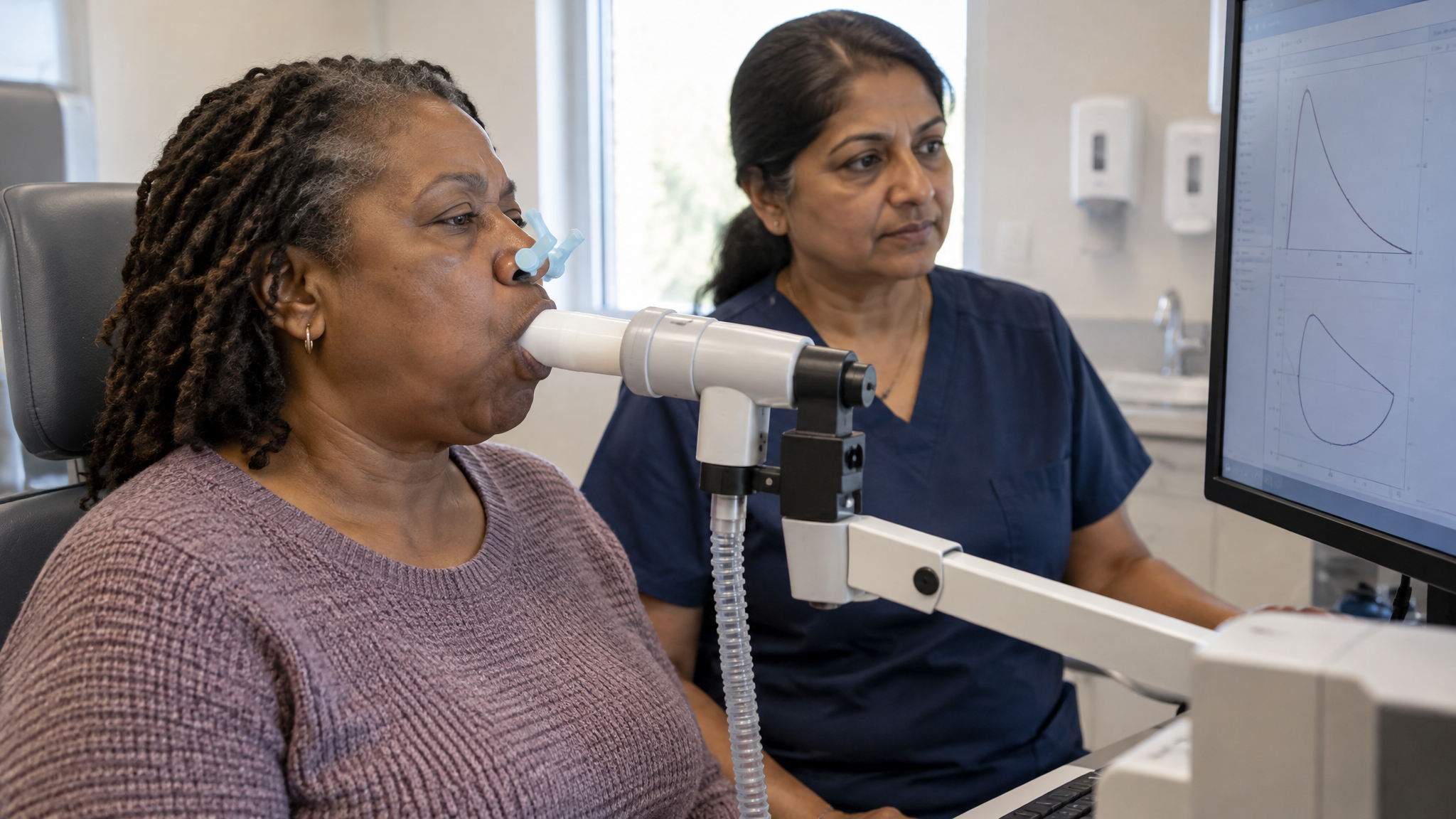
Four Rating Standards to Check on Every Toxic Exposure Award
These are the conditions I see underrated most often on exposure claims. Each standard has more than one way to qualify, and the VA is required to give you the level that fits your worst qualifying evidence, not the level that fits the easiest piece of it.
Here is the trap: when the evidence fits two levels, §4.7 says the higher one applies if your disability more nearly approximates it. Raters forget that rule. You should not.
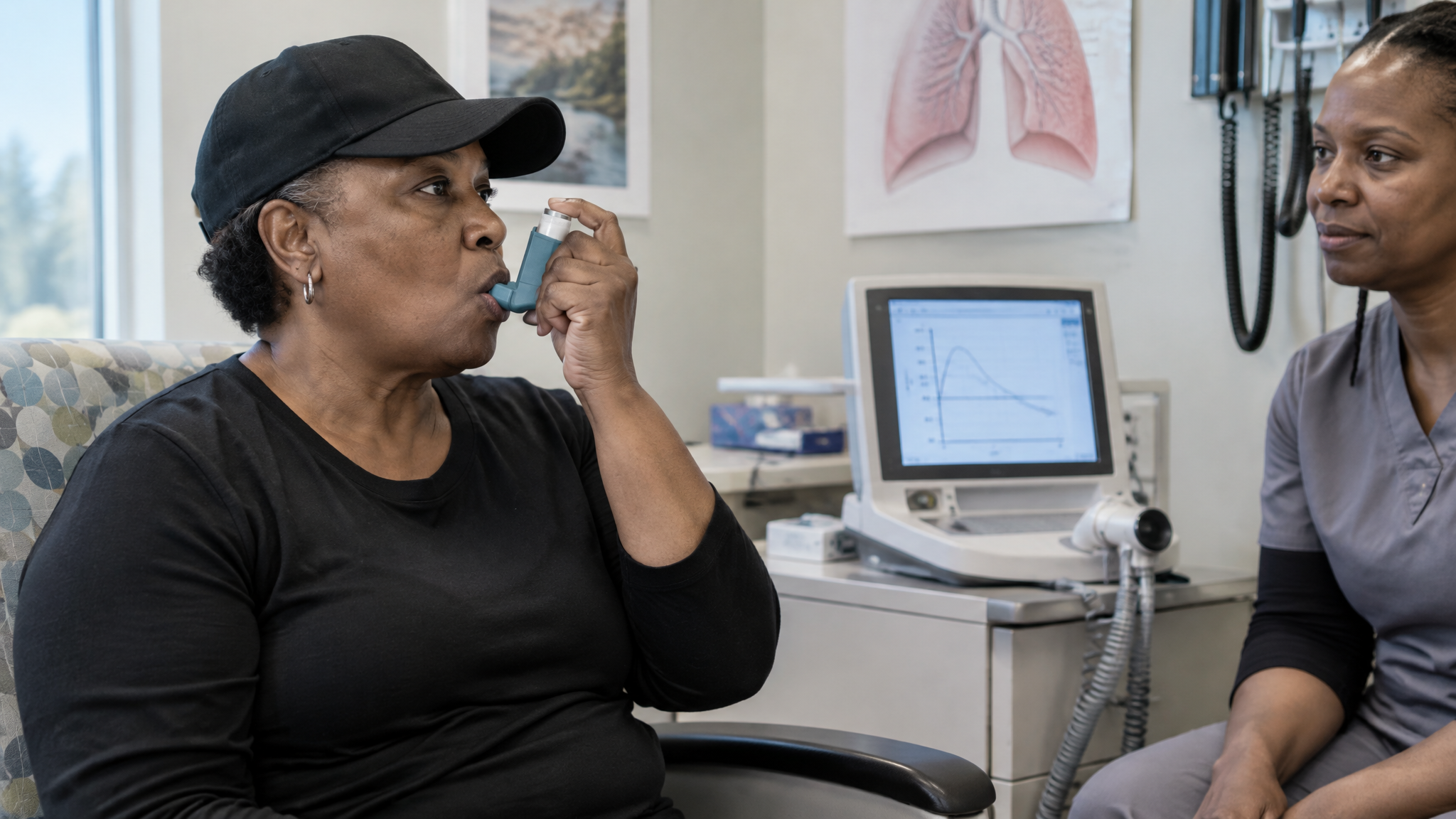
Asthma Has a Second Door Into Every Rating
Asthma rates under diagnostic code 6602 in 38 CFR §4.97, and every level can be reached two ways: by the breathing test, or by the treatment you need. Intermittent inhaler use is 10 percent. Daily inhaled bronchodilator or inhaled anti-inflammatory medication is 30 percent. At least monthly doctor visits for flare-ups, or at least three courses a year of oral or injected steroids, is 60 percent. Daily high dose systemic steroids or immunosuppressants is 100 percent. Here is the trap: a decent FEV-1 on exam day gets used to rate you low while your daily controller inhaler is sitting right there in the record. Your part: make sure every prescription, refill, and steroid burst is in the file, because the medication standard stands on its own.

Lung Disease Is Rated on Your Worst Qualifying Number
Chronic bronchitis, COPD, constrictive bronchiolitis, and interstitial lung disease are rated on pulmonary function tests, and the criteria are written with the word or: FEV-1, the FEV-1 to FVC ratio, or the DLCO, the test of how well your lungs move oxygen into your blood. Meeting any one of them at a level earns that level. Under §4.96(d), the rater uses the after-inhaler results unless those came out worse, and when two tests point to different ratings, the examiner has to say which one reflects your disability. Here is the trap: the DLCO never gets ordered, and scarring that only shows on that test disappears from the rating. Your part: if the DLCO is missing and the exam does not explain why, that exam is incomplete, and you challenge it.
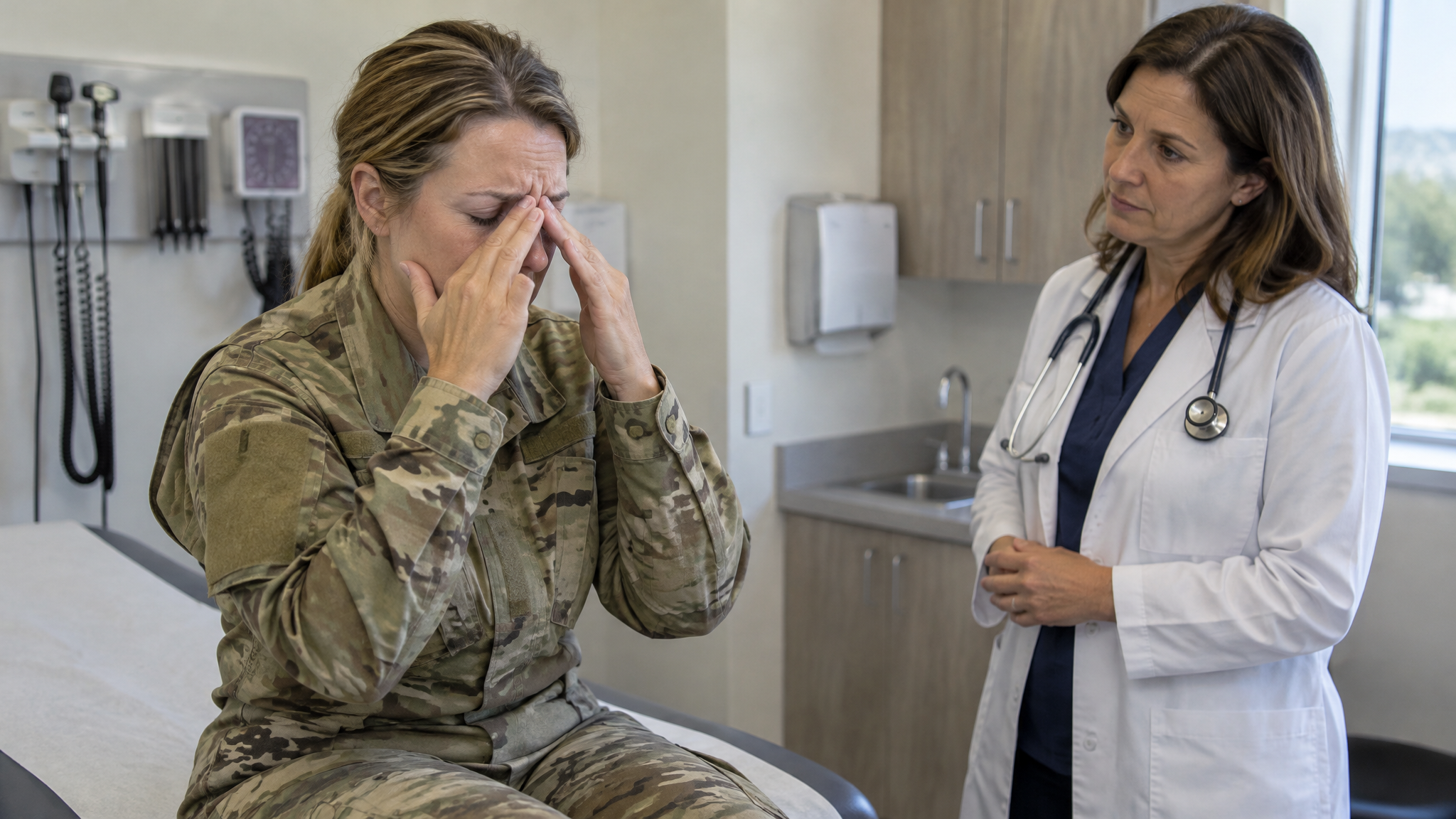
Sinusitis and Rhinitis Are Rated on Frequency, So Count
Under 38 U.S.C. §1120 and 38 CFR §3.320, chronic sinusitis and chronic rhinitis are presumptive for covered Gulf War and post 9/11 service. Sinusitis rates under the general formula for codes 6510 to 6514: one or two incapacitating episodes a year needing four to six weeks of antibiotics, or three to six lesser episodes with headache, pain, and discharge or crusting, is 10 percent. Three or more incapacitating episodes, or more than six lesser ones, is 30 percent. An incapacitating episode means bed rest and treatment by a physician. Rhinitis rates separately under code 6522: 10 percent with more than half of both nasal passages blocked or one side fully blocked, 30 percent with polyps. Your part: a flare log with dates, symptoms, and every antibiotic course.

Hypertension Is an Agent Orange Presumptive, Not a Burn Pit One
The PACT Act added high blood pressure to the herbicide list in 38 CFR §3.309(e), for Vietnam, Thailand, and the other covered herbicide locations. It is not on the burn pit list, so a Gulf War or post 9/11 veteran claims it directly or as secondary to another service connected condition under §3.310. It rates under diagnostic code 7101: 10 percent for diastolic readings of 100 or more or systolic of 160 or more, or a history of diastolic 100 or more that needs continuous medication; 20 percent at diastolic 110 or systolic 200; 40 percent at diastolic 120; 60 percent at diastolic 130. Note 1 requires readings taken two or more times on at least three different days. Here is the trap: one reading on a medicated day. Your part: bring your pre-medication history.
You Filed the Women's Claims. Now File the Ones You Assumed Were for the Men.
Here is the pattern I see in file after file. A woman claims the MST, the gynecological condition, maybe the depression. Then she stops. The back, the knees, the hips, the ringing ears, the feet never make it onto the claim, because somebody told her that was just getting older, or because she assumed those claims belonged to the men she served with. She carried the same rucks and the same body armor, and in a lot of cases it was gear sized for somebody else's body.
The rule does not care who you are. Under 38 CFR §3.303, any disease or injury incurred in service is service connected, and your own description of what happened is competent lay evidence of what you saw and felt. Some conditions that strike women more often have shortcuts. Under §3.317, Gulf War veterans with fibromyalgia or chronic fatigue syndrome can be connected as a medically unexplained chronic multisymptom illness without a nexus. Under §3.307(a)(3) and §3.309(a), multiple sclerosis that shows up to 10 percent within seven years of separation is presumed service connected.
Here is the trap: the VA rates only what you claim. It will not go looking for your knees while it decides your PTSD, and every year you wait is a year of back pay the effective date rules in §3.400 will never give back.
Your part: make a list of every part of your body that hurts, aches, rings, or does not work the way it did before you served. Then we look at which ones the evidence can carry.

Four Claims Women Leave Unfiled, and How to Win Each One
None of these are glamorous. They are the everyday wear and damage of service, and they add up. Each one is rated on its own and combined with the rest under §4.25, so two or three of them can move a combined rating a full step.
Here is the trap: women treat these as normal life. The rating schedule treats them as disabilities.

Every Painful Joint Has a Floor
Under 38 CFR §4.59, a joint that hurts when it moves is entitled to at least the minimum compensable rating for that joint, and in Burton v. Shinseki, 25 Vet. App. 1 (2011), the Court said that rule is not limited to arthritis. In Correia v. McDonald, 28 Vet. App. 158 (2016), it held the exam must test the joint in active and passive motion, with and without weight on it, and compare it to the other side. Here is the trap: an exam that measures one motion while you sit still. Your part: tell the examiner where the motion starts to hurt, and make sure the report says so.

Your Ears Do Not Care What Your Job Title Was
Flight lines, ranges, generators, motor pools, engine rooms. Women worked all of them and skip this claim because they think it belongs to the infantry. Tinnitus rates under diagnostic code 6260 at 10 percent, one rating for both ears, as the Federal Circuit confirmed in Smith v. Nicholson, 451 F.3d 1344 (2006). Hearing loss counts as a disability once your test meets the thresholds in §3.385. Normal hearing at separation does not end the claim; Hensley v. Brown, 5 Vet. App. 155 (1993), lets loss found later be tied back to service. Your part: write down the noise you worked around, and get a VA audiology exam.
The Bladder Damage From Days Without a Latrine
Long convoys, field exercises, and missions with no safe place to go. Many women held it for hours or stopped drinking water on purpose, and came home with recurrent infections, urgency, or leaking. That is a direct service connection claim under §3.303, rated through the voiding and infection formulas in §4.115a. You are competent to describe what you went through, and Jandreau v. Nicholson, 492 F.3d 1372 (Fed. Cir. 2007), says the VA cannot ignore lay evidence just because it is lay. Here is the trap: nobody wrote it down in service. Your part: a statement from a woman who served beside you, describing the same conditions, plus any sick call visits for infections.

Flat Feet and Plantar Fasciitis Rate Separately
Under 38 CFR §4.71a, flatfoot rates under diagnostic code 5276, up to 50 percent when pronounced in both feet. Plantar fasciitis has its own code, 5269: 10 percent, 20 percent for one foot with no relief from treatment, 30 percent for both, and 40 percent when there is actual loss of use of the foot. When both feet are rated, the bilateral factor in §4.26 adds value. Here is the trap: if flat feet were noted on your entrance exam, the presumption of soundness in §3.304(b) does not apply, and the VA denies. Your part: claim aggravation under §3.306, because years of marching and standing under load made them worse.
More Women Veteran Guides
Each guide below covers one part of a woman veteran's claim in depth, with the regulations, the traps, and your part spelled out.


 You are here
The Claims Women Never File
Building a Fort McClellan claim without a presumption, checking every toxic exposure rating, and the claims women leave unfiled.
You are reading this guide