
Women Veteran Claims: The Rights the System Overlooks
Women are the fastest-growing group of veterans and the most likely to be told “no” on a claim that should have been “yes.” The rules protect you more than the process admits. Here is what you are actually entitled to.
Built for Women Veterans Specifically
Too many women veterans are quietly steered away from benefits they earned, told an MST claim needs a police report (it does not), assumed to have no toxic exposure (a bias, not a rule), or never told that reproductive and gynecological conditions can be service-connected at all.
This page lays out the four areas where women lose the most ground, and exactly what the regulations actually allow. The core information is here on the page, not buried on a government site, so you can act on it today.


Four Areas Where Women Lose Ground
Each of these is a place the process quietly works against women veterans, and each one is winnable when the claim is built correctly. The rules in 38 CFR apply to you exactly as they apply to anyone else, but the evidence often looks different, gets filed in different places, or never gets asked for at all. Your part is to know where your records live and to put them in front of the rater yourself.

MST Claims, No Police Report Required
VA regulations allow markers, indirect evidence, to corroborate Military Sexual Trauma. A transfer request, a performance drop, a divorce, or later mental health treatment can carry the claim. You do not need a report or a conviction.
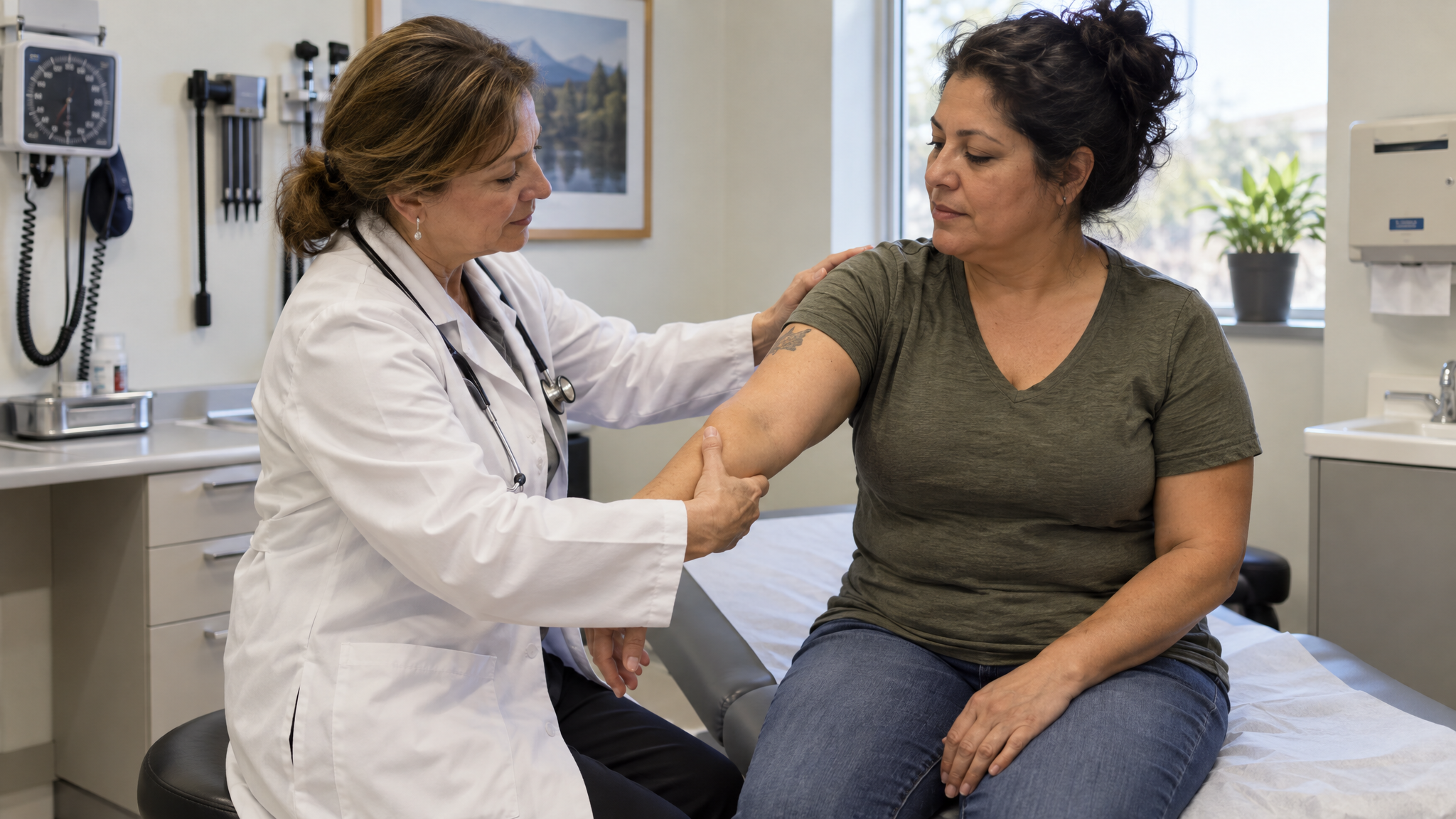
Your Right to a Female Examiner
For sensitive and gender-specific exams you can request a female examiner, and the VA is expected to accommodate it. An exam that retraumatizes you or that you cannot participate in fully is not a fair exam.
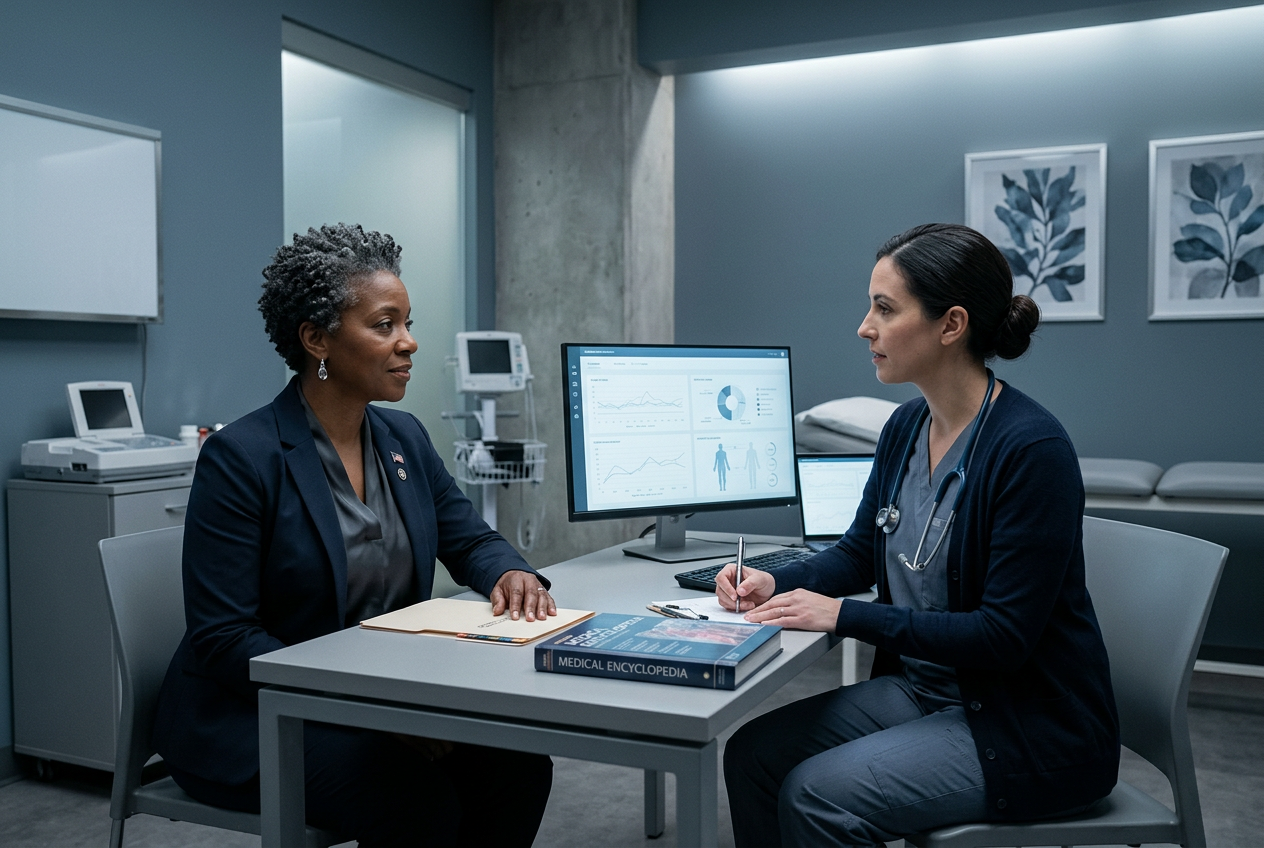
Reproductive & Gynecological Conditions
Conditions connected to service, or secondary to an already service-connected condition or its treatment, can be rated and compensated. These are among the most under-claimed conditions for women veterans.

PACT Act Presumptives for Women
Toxic-exposure presumptives apply to women exactly as they do to men, burn pits, Agent Orange, contaminated water. Being informally screened out of a combat-exposure profile is a bias, not a rule.
MST Care Starts Today, Before Any Claim
Read this part twice, because almost nobody tells you it exists. Under 38 U.S.C. §1720D, the VA is required to provide care for any physical or mental health condition related to military sexual trauma. That care is free. It does not depend on being enrolled in VA health care, on having a service-connected rating, or on meeting the usual income or length-of-service rules. There are no copays for MST-related care.
Getting treatment does not start a claim, does not create a record your old unit will see, and does not obligate you to anything. Call your nearest VA medical center, ask for the MST Coordinator by name, and tell them if you want a female, trauma-informed provider. You do not have to explain yourself at the front desk. No form, no claim, no police report, and no discharge review is required to be seen. And here is the part that matters for a claim later: the treatment notes you build now become medical evidence when you are ready to file.

Free Care, No Claim Required
MST-related treatment costs you nothing and does not wait on a claim, a rating, or enrollment. Care and compensation are two separate tracks. You can start one without ever touching the other.

No Time Limit
It does not matter if it happened last year or forty years ago. A woman who served in 1979 has the same entitlement to MST care as the woman who separated last month. There is no deadline that closes this door.

No Report Needed
You never had to report it at the time, and you do not need a police report, an incident number, or a witness now. Telling the VA you need MST-related care is enough to be seen.
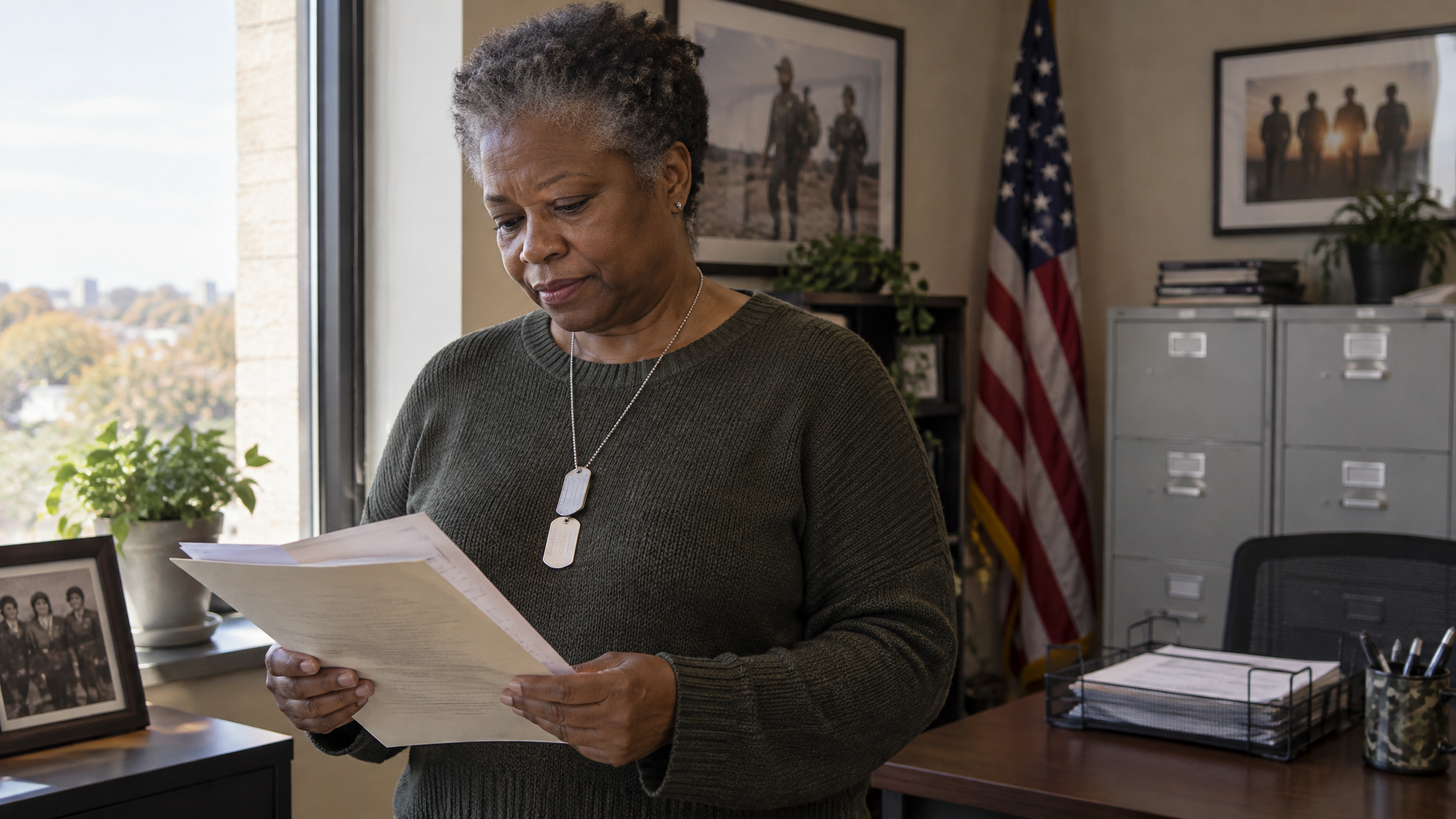
Bad Paper Is Not an Automatic Bar
An Other-Than-Honorable discharge does not automatically shut you out of MST care. Many survivors were pushed out with bad paper tied to the trauma itself, and they can still be seen.
Markers: How You Prove What Was Never Reported
Every claim stands on three legs: a current diagnosis, an in-service event, and a nexus between them. For MST, the middle leg is where the VA trips women up, because the event was so often never written down. That is exactly why 38 CFR §3.304(f)(5) exists. It lets evidence from outside your service records corroborate the event, and it bars the VA from denying the claim without first telling you about this kind of evidence and giving you the chance to submit it.
You do not need every marker below. One or two, corroborated, can carry the claim. If you served before the reporting reforms, there was often no confidential way to report and no system built to keep what you said. That silence is not a hole in your credibility. It is a documented feature of the era you served in, and the rater is supposed to weigh it that way.

Records-Based Markers

Behavioral Markers

Lay and Witness Statements

The Medical Opinion
Writing Your VA Form 21-0781 Statement Without Reliving It
On June 28, 2024, the VA replaced the old 21-0781 and 21-0781a with a single VA Form 21-0781 for the event behind a PTSD or mental health claim, MST included. The section most women dread is the blank box that asks what happened. Here is what the VA never prints on that form: you decide how much to write, and a short, honest statement is worth more than a long one that costs you a week of peace.
You set the level of detail. You do not owe the VA a scene-by-scene account. A few plain sentences, what happened, roughly when, and that it happened during service, opens the claim. Graphic detail is never required and does not make the claim stronger.
Approximate timeframes are fine. “Sometime in the spring of my second year at my first duty station” is acceptable. Trauma does not come with a timestamp, and §3.304(f)(5) was written around that fact.
Lead with the impact, not the act. What moves a rating is how your life changed: the transfer you asked for, the sleep you lost, the drinking that started, the way you pulled away from people. Describe the after. That is the evidence the rater is actually weighing under §4.130.
You are not the only voice. Someone who saw you change can write a VA Form 21-10210 lay statement. You can write yours in the third person if that makes it bearable, in one sitting or across a week. And you never have to write it alone. Deciding what belongs in that box and what does not is part of what I do.

When the Trauma Wrecked the Service Record
Think about the soldier you used to be. Early to formation, uniform squared away, evaluations high. Then the trauma happens, and the first thing that changes is performance. Late, then absent. Duties unfinished. Counseling statements, an Article 15, maybe an AWOL charge from a woman who would do anything to stop sharing a building with the person who hurt her. What looks like a discipline problem from the outside is survival on the inside, and too often it ends in an Other-Than-Honorable discharge handed out for the symptoms of the trauma itself.
The law does not leave you there. 38 CFR §3.12 governs whether a discharge bars benefits, and the 2024 amendments added a compelling circumstances exception the VA must weigh for certain bars, including mental impairment and sexual trauma during service. You can also apply to have the discharge upgraded. In plain terms: if your record fell apart after the event, that decline is not evidence against you. It is often some of your strongest marker evidence.
Then there are the secondary conditions most women leave on the table. Under 38 CFR §3.310, when a service-connected condition causes or worsens another one, that second condition is rated too. MST-related PTSD that keeps you hyper-alert can lead to chronic insomnia and sleep apnea. The stress can show up as IBS. Medication can bring weight gain and migraines. Each one is its own claim, but the link is never automatic. It takes a medical opinion tying the secondary back to the PTSD, and making sure every condition you live with is on the claim and properly connected is my job.
Go Deeper: Four Guides Built for Women Veterans
Everything above is the foundation. The guides below take each part of a woman veteran claim one at a time, with the regulations, the traps the VA sets, and exactly what your part is. Pick the one that matches what you are living with.




Myth vs. What the Rules Actually Say
The myths cost women veterans real money. Here is the reality next to each one. I hear these at kitchen tables every week, usually from a veteran who waited years to file because somebody told her she did not qualify. Read each myth, check it against your own situation, and stop letting a rumor make the decision for you. The regulation decides, and the evidence you submit decides how it gets applied.

You Did Your Part in Uniform. Let Us Do Ours Now.
Women veterans are more likely to leave conditions off a claim, accept an exam that missed the markers, or quit after one denial. You do not have to carry that alone. Ask for a free file review to see where your claim stands, or hire us and an accredited agent will build it with you, condition by condition, at the pace you can manage.

Watch the VA Explain the Exams That Decide Her Claim
These official VA videos cover the psychological exam behind most MST claims, the genitourinary exam that covers many reproductive and gynecological conditions, and the PACT Act toxic-exposure benefits that apply to you exactly as they apply to the men you served with. Watch them before your exam, then write down your worst days so the examiner hears the full picture.
VA Claim Exams: Psychological
VA Claim Exams: Genitourinary
Your PACT Act Toxic-Exposure Benefits
The Advocate's Take
The system does not fail women veterans by writing them out of the rules. It fails them at the counter, with a reviewer who assumes no exposure, an intake that never mentions reproductive conditions, and a decades-old myth that MST needs a police report. The regulations are on your side. The process often is not.
Here is how the VA is supposed to look at your claim. Every woman veteran is entitled to the same three elements as any other claim: a current diagnosis, an in-service event, injury, or exposure, and a nexus that connects them at the at least as likely as not level. For MST, the law goes further. Under 38 CFR §3.304(f)(5), evidence from outside your service records, including statements from others and changes in behavior or performance after the assault, can corroborate the event, and VA cannot deny the claim without first telling you about these kinds of evidence. VA calls these markers: requests for transfer, sudden drops in performance, episodes of depression or anxiety without an obvious cause, changes in sexual behavior, substance use, visits to a chaplain or rape crisis center, statements from family or a roommate, and even a letter you wrote home. Gynecological and breast conditions are rated under 38 CFR §4.116, and some losses, such as loss of a breast or loss of use of a reproductive organ, can also qualify for SMC-K under 38 CFR §3.350. Toxic exposure presumptives under the PACT Act apply to you exactly the way they apply to the man who stood next to you.
The courts have backed this up, and I cite these cases by name when the VA forgets them. In Patton v. West, 12 Vet. App. 272 (1999), the Court held that personal assault claims call for special evidentiary handling because these events are so often never documented, and that a medical opinion can be used to help corroborate the assault. In Menegassi v. Shinseki, 638 F.3d 1379 (Fed. Cir. 2011), the Federal Circuit confirmed that under §3.304(f)(5) a medical opinion, even one given years later, can help corroborate an MST stressor. And in AZ v. Shinseki, 731 F.3d 1303 (Fed. Cir. 2013), it held that the absence of a report in your service records cannot be treated as evidence that the assault did not happen. If your denial says there is “no record of the event,” that sentence alone is a reason to fight it.
What you need to bring. Your diagnoses, including the ones nobody ever thought to put on a claim: endometriosis, chronic pelvic pain, fertility conditions, hysterectomy, mastectomy, and the mental health conditions that so often follow MST. A written account of the in-service event in your own words, on VA Form 21-0781 for MST or PTSD, with as much detail as you can safely give. Statements from anyone who saw the change in you: a friend from your unit, a sibling, a spouse, a parent who noticed the phone calls stopped. Your treatment records, VA or private. And if you are not in care, the VA has an MST Coordinator at every medical center, and MST-related care is available even if you are not service connected.
Walk through it with me. Step one: we file an Intent to File, VA Form 21-0966, to lock in your effective date while we build the file. Step two: we list every condition, one at a time, and decide which ones are ready now. Step three: we gather the markers and lay statements, because for MST that is usually where the proof lives. Step four: before your C&P exam, you can ask for an examiner of the gender you are most comfortable with, and you should prepare to describe your worst days and how often they happen. Step five: when the decision comes back, I read it line by line and check whether the VA actually considered the markers and rated every condition we claimed.
The pitfalls I see: leaving reproductive and pelvic conditions off the claim because they feel private, believing an MST claim needs a police report, accepting an exam that never addressed the markers, and missing SMC-K entirely. That is exactly the gap an accredited advocate is built to close. We use markers, we demand fair exams, and we build the nexus that connects what happened in service to what you live with now.
Your part: tell us the whole story at the pace you can manage, list every condition even the uncomfortable ones, and ask the people who knew you before and after to put it in writing. I carry the law and the fight. We work WITH you, not FOR you.
Start with a Mission 5 Intelligence Brief, or ask us a question first. Nothing you share is used against you, it is used to build your claim.
Women Veteran Claims, Questions We Hear Most
These are the questions women veterans bring to me most often, and some of them come after years of being told no. MST claims and conditions specific to women each have their own evidence rules, and the VA has a long history of missing them. Your part is to tell your full story to your provider and make sure it gets written into your records.