
Toxic Exposure · The PACT Act · Presumptive Claims
You Served. You Were Exposed. The Law Now Presumes the Connection.
Burn pits. Agent Orange. Camp Lejeune. Radiation. Gulf War.
Conditions that were routinely denied for decades are now presumptive under the PACT Act. If you served in a covered location during a covered period, and you have a listed diagnosis, the VA must presume the connection. No nexus letter required.
This page covers every presumptive category, every condition list, and exactly how to file. If your condition is not on a presumptive list, the claim is not dead, but it has to be proven directly with records and a medical opinion. A free review tells you which way your file goes.
The PACT Act Changed Everything
The PACT Act, signed into law on August 10, 2022, is the most significant expansion of VA toxic-exposure benefits since Agent Orange legislation. It established new presumptive conditions for burn pit exposure, expanded Agent Orange presumptives, and extended eligibility for Gulf War and post-9/11 veterans.
For veterans previously denied toxic-exposure claims, the PACT Act reopens the door. Conditions that once required a difficult-to-obtain nexus letter are now presumptive, meaning the VA presumes they were caused by service if you served in a qualifying location.
If you were denied before the PACT Act for a condition that is now presumptive, file a Supplemental Claim immediately. The new law is the "new and relevant evidence" that reopens your claim.


Aug 10, 2022
PACT Act signed, the largest VA benefits expansion in decades

20+
new presumptive conditions added across burn pit and Agent Orange exposure

3.5M+
veterans exposed to airborne hazards and burn pits now covered

$0
nexus letter required for a condition on the presumptive list
The Five Presumptive Categories
Each category is set by law. When the location, the date range, and a listed diagnosis all line up, the VA presumes both the exposure and the connection, no nexus letter needed. Find the one that matches your service, then pull the orders that prove it.
 PACT Act, 38 U.S.C. §1120
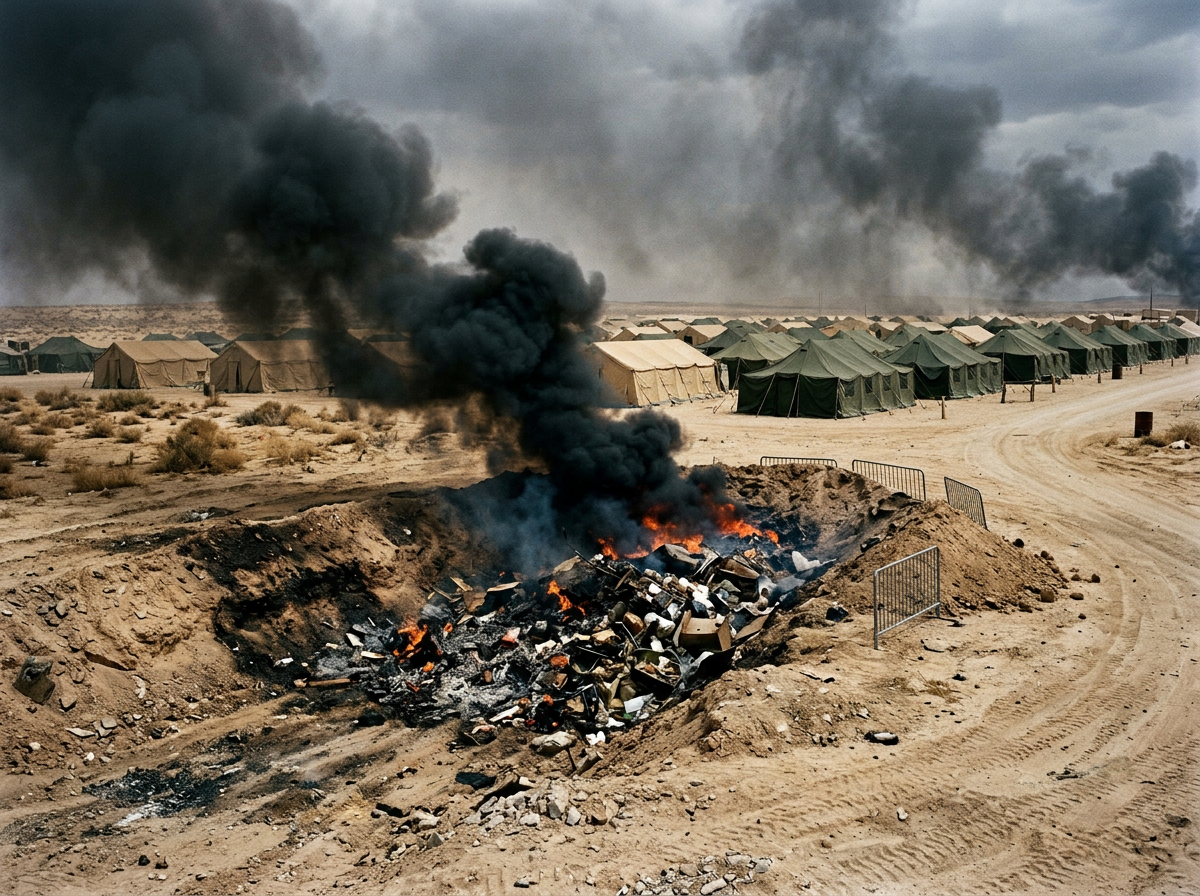
Burn Pit / Airborne Hazards
Iraq, Afghanistan, Southwest Asia (post-9/11, after August 2, 1990)
Covered conditions: Constrictive bronchiolitis, any post-1990 cancer, sinusitis, rhinitis, GERD, sleep apnea, reproductive and urinary conditions
More information 38 CFR §3.309(e)
Agent Orange / Herbicides
Vietnam, Thailand, Korea DMZ, C-123 aircraft
Covered conditions: Type 2 diabetes, ischemic heart disease, Parkinson’s, non-Hodgkin’s lymphoma, prostate cancer, bladder cancer, hypothyroidism, hypertension
More information Camp Lejeune Justice Act
Camp Lejeune Water
Camp Lejeune, NC (1953–1987)
Covered conditions: Kidney cancer, liver cancer, leukemia, multiple myeloma, bladder cancer, Parkinson’s disease
More information 38 CFR §3.317
Gulf War Illness
Southwest Asia (1990–present)
Covered conditions: Chronic fatigue syndrome, fibromyalgia, functional GI disorders (IBS), undiagnosed illnesses with objective indications
More information 38 CFR §3.309(d), §3.311
Radiation Exposure
Nuclear test sites, Hiroshima/Nagasaki cleanup, uranium processing
Covered conditions: Multiple cancers, leukemia, thyroid disease
More information 38 CFR §3.2501
Denied Before the PACT Act? Reopen It
Any category above, if the VA said no before August 10, 2022
If the VA denied a condition that is now on one of these lists, the new law itself is the new and relevant evidence. A Supplemental Claim puts it back in front of a rater, and the VA will not do it for you. Your part is to find that old decision letter and file.
How to reopen itNavy & Vietnam Waterways, Their Own Two Fights
The herbicide presumptions do not stop at the shoreline. Two groups of sailors were left out for decades and each has its own law, its own dates, and its own proof problem. If you served aboard ship in the waters off Vietnam, or on the rivers and harbors inside it, one of these is your lane. Both run on the same Agent Orange presumptive list under 38 CFR §3.309(e), no nexus letter needed once your service lines up.
 38 U.S.C. §1116A
Blue Water Navy
Aboard ship within 12 nautical miles of the Vietnam coast, January 9, 1962 to May 7, 1975
Covered conditions: The full Agent Orange list, type 2 diabetes, ischemic heart disease, Parkinson’s, prostate cancer, non-Hodgkin’s lymphoma, and every condition added under the PACT Act
Open the full breakdown 38 CFR §3.307(a)(6)
Brown Water Navy
On the inland rivers, canals, harbors and delta waterways of Vietnam
Covered conditions: The full Agent Orange presumptive list under §3.309(e), always covered, the Blue Water fight never applied to riverine service
Open the full breakdownCompare All Five Presumptive Categories
Each presumptive category turns on three things lining up: place, dates, and a listed diagnosis. If they line up, the VA presumes both the exposure and the connection. If one piece is missing, the claim is not dead, but you are back to proving it directly with records and a medical opinion. Your part is to match your service dates and locations to the table below and confirm your diagnosis is actually on the list.

| Category | Qualifying Locations | Qualifying Dates | Covered Conditions | Governing Reg | Rating Basis |
|---|---|---|---|---|---|
| Burn Pit / Airborne | Iraq, Afghanistan, Kuwait, Saudi Arabia, Djibouti, Syria, Uzbekistan | On/after Aug 2, 1990 (Gulf theater); on/after Sep 11, 2001 (Afghanistan & other post-9/11 sites) | Respiratory cancers, any post-1990 cancer, chronic sinusitis/rhinitis, asthma, COPD, constrictive bronchiolitis, GERD | PACT Act, 38 U.S.C. §1120 | Rated per diagnosis, 0–100% |
| Agent Orange / Herbicides | Vietnam, Thailand RTAF bases, Korea DMZ, C-123 aircraft | 1962–1975 (Vietnam); 1968–1971 (Korea DMZ); varies by site | Type 2 diabetes, ischemic heart disease, Parkinson’s, several cancers, hypertension | 38 CFR §3.309(e) | Rated per diagnosis, 0–100% |
| Camp Lejeune Water | Camp Lejeune / MCAS New River, North Carolina | Aug 1, 1953 to Dec 31, 1987 (30+ cumulative days) | Kidney/liver cancer, leukemia, multiple myeloma, bladder cancer, Parkinson’s | 38 CFR §3.309(f) + Camp Lejeune Justice Act | Rated per diagnosis, 0–100% |
| Gulf War Illness | Southwest Asia theater + Afghanistan | On/after Aug 2, 1990 (through present) | Chronic fatigue syndrome, fibromyalgia, functional GI (IBS), undiagnosed illness with objective signs | 38 CFR §3.317 | Rated per analogous code, 0–100% |
| Radiation Exposure | Atmospheric nuclear tests, Hiroshima/Nagasaki occupation, Enewetak, uranium/gaseous-diffusion plants | Varies by program (radiation-risk activity) | Many cancers, leukemia, thyroid disease | 38 CFR §3.309(d) & §3.311 | Rated per diagnosis, 0–100% |
Rating basis is set by each condition’s own diagnostic code and the severity in your medical record. A covered location without a covered diagnosis, or vice versa, may not qualify under the presumptive pathway; an accredited records review confirms which pathway fits.
Case Snapshots
These are anonymized outcomes from toxic-exposure files. Individual results depend on the specific record and evidence, but the pattern is consistent: once the law presumes the connection, a claim that was stuck for years can move quickly. None of these veterans won because the VA suddenly got generous. They won because the file finally showed place, dates, and diagnosis in a way the rater could not ignore. Your part is to build your file the same way.


Sinusitis (Burn Pit)
Denied → 30% via PACT Act
Previously denied for chronic sinusitis for lack of a nexus. Served in a covered Southwest Asia burn-pit location. After sinusitis became presumptive, we refiled with the verified deployment record, no nexus letter needed. Service connection granted.

Type 2 Diabetes (Agent Orange)
Granted → unlocked 3 secondaries
A Vietnam in-country veteran’s presumptive diabetes grant opened secondary claims for peripheral neuropathy, retinopathy, and kidney involvement under 38 CFR §3.310, raising the combined rating well beyond the primary condition.
Anonymized illustrations. Individual results depend on the specific file and evidence.
Conditions the VA Must Presume
These are the two lists most veterans fall under: burn pits and airborne hazards, and Agent Orange. When your diagnosis is on the list and your service lines up, you do not have to prove the exposure caused it. The law does that part. What the VA still needs is a clear diagnosis in your medical records. Your part is to make sure a doctor has actually named the condition in writing before you file.
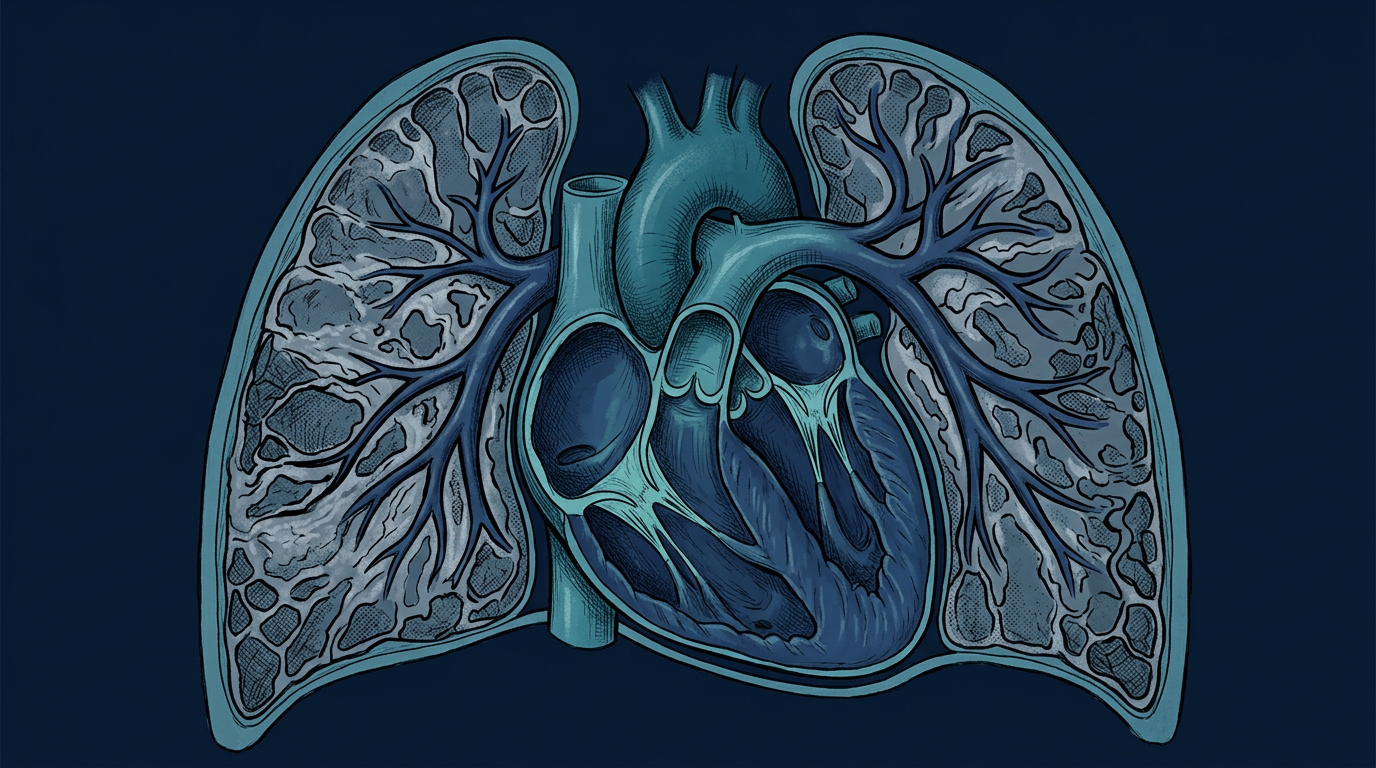
If your diagnosis is on one of these lists and your service lines up, the connection is presumed, by law.
Burn Pit / Airborne Hazards
Post-9/11 veterans who served in Southwest Asia, Afghanistan, or other covered locations after August 2, 1990.

Constrictive bronchiolitis
Scarring of the smallest airways that fine particulate from burn pit smoke drives, and it rarely shows on a routine chest X-ray. The VA often leans on normal spirometry to deny, when the real proof is a surgical lung biopsy or the pattern on a high-resolution CT. Do not accept a denial built on an exam that never looked for it.

Asthma diagnosed after service
New-onset asthma or reactive airway disease that appears after a covered deployment is presumptive under the PACT Act. The VA still tries to blame childhood history or smoking, so the diagnosis date and your post-deployment breathing complaints are what carry the claim. A rescue inhaler prescription is evidence, not a footnote.

Constrictive pericarditis
Thickening and stiffening of the sac around the heart that restricts how it fills, presumptive for burn pit veterans. It gets misread as ordinary heart failure, which changes the rating and the diagnostic code. The correct workup is imaging of the pericardium, and the rating follows the functional heart limitation it causes.

Any cancer diagnosed after August 2, 1990
The PACT Act made cancers of the covered veteran presumptive with no requirement to prove which chemical caused which tumor. What matters is the diagnosis date and a qualifying deployment, not a smoking-gun exposure record the VA will pretend you need. This is one of the widest presumptive doors ever opened, and it is routinely underused.

Sinusitis, rhinitis, laryngitis
Chronic upper-airway inflammation that the VA writes off as seasonal allergies, when it is a presumptive burn pit condition rated on how often it flares and whether it needs repeated treatment. Document the incapacitating episodes and the antibiotics, because frequency is what sets the percentage. Rhinosinusitis belongs in the same lane.

Gastric reflux (GERD)
Persistent acid reflux tied to airborne-hazard exposure, presumptive under the PACT Act and rated on symptom burden, medication, and complications like esophageal damage. It is frequently dismissed as diet, yet it also feeds secondary claims for sleep apnea and dental erosion. The daily proton-pump inhibitor is part of your evidence.

Sleep apnea
Airway obstruction during sleep that the VA treats as a weight problem, when for burn pit veterans it connects to the same airway and sinus damage the smoke caused. A sleep study confirming it, plus a prescribed CPAP, drives a 50 percent rating on its own. It also chains off GERD, rhinitis, and PTSD as a secondary.

Reproductive and urinary conditions
Kidney, bladder, and reproductive conditions the PACT Act brought into the presumptive framework for covered veterans. These are among the most overlooked burn pit claims because veterans do not connect them to smoke exposure. Get the diagnosis on paper and line it up against your deployment dates, the presumption does the rest.
Agent Orange / Herbicides
Vietnam-era, Korea DMZ, Thailand, and other covered locations (see FAQ for the full location list).

Type 2 Diabetes
The anchor Agent Orange presumptive, and the single most powerful claim in the herbicide list. One grant opens a secondary chain of peripheral neuropathy, kidney disease, retinopathy, and erectile dysfunction under 38 CFR §3.310. Rated on insulin, diet, and activity restriction, and consistently underrated.

Ischemic heart disease
Coronary artery disease and related conditions, presumptive for herbicide-exposed veterans and rated on a workload measured in METs. The VA often uses a resting exam when a stress test would show the real limitation. A prior heart attack, stent, or bypass supports a much higher evaluation than most veterans receive.

Parkinson’s disease
A progressive neurological condition that is fully presumptive with qualifying herbicide exposure. It is rated across every affected body system, tremor, rigidity, speech, swallowing, and balance, so a single low number rarely captures it. Parkinsonism from other causes falls under a related but separate pathway.

Non-Hodgkin’s lymphoma
A cancer of the lymphatic system, presumptive for Agent Orange veterans and rated at 100 percent during active disease and treatment. When treatment ends the VA schedules a re-evaluation, and any lasting residuals stay compensable. Do not let a reduction go through without accounting for what the treatment left behind.

Prostate cancer
One of the most common herbicide presumptives, rated at 100 percent while active and then re-rated on residuals, most often urinary leakage and erectile dysfunction. Those residuals are compensable and frequently missed at the reduction exam. Report every lingering symptom, because that is what carries the rating afterward.

Respiratory cancers
Cancers of the lung, larynx, trachea, and bronchus, presumptive with qualifying herbicide exposure and rated at 100 percent during active disease. The VA still tries to credit smoking instead of the presumption, which is legally the wrong analysis. Residual breathing loss after treatment remains ratable.

Chloracne
A severe, cystic skin condition that is one of the oldest recognized signs of dioxin exposure, presumptive when it appears within a year of service. It is rated on extent and disfigurement, and it is often documented poorly in old records. Photographs and dermatology notes make the difference.

AL amyloidosis
A rare disorder where abnormal proteins build up in organs and quietly damage the heart, kidneys, and nerves. It is presumptive for herbicide-exposed veterans and rated on the organ systems it attacks. Because it mimics other diseases, it is frequently diagnosed late and claimed even later.

Peripheral neuropathy (early-onset)
Nerve damage causing numbness, burning, and weakness, presumptive when it is early-onset and appears within the required window after exposure. Each affected limb is rated separately, so a single combined number usually undercounts it. It is also the most common secondary to service-connected diabetes.

Bladder cancer (added under PACT)
Added to the Agent Orange presumptive list by the PACT Act, rated at 100 percent during active disease and then on residuals like urinary frequency and voiding dysfunction. Veterans denied before the PACT Act should have this reconsidered. The added-under-PACT date is the key that reopens an old claim.

Hypothyroidism (added under PACT)
An underactive thyroid, added as a herbicide presumptive under the PACT Act, rated on the fatigue, weight gain, cardiovascular, and mental effects it produces. It is routinely treated as unrelated to service, when for covered veterans the law now presumes the link. Lifelong medication is part of the evidence.

Hypertension (added under PACT)
High blood pressure, one of the most significant PACT Act additions given how common it is among Vietnam-era veterans. It is presumptive for herbicide-exposed veterans and rated on your readings and the medication required. This one alone reopens a large number of previously denied claims.
Agent Orange presumptives are among the most powerful in the VA system. A single grant of Type 2 diabetes can unlock an entire secondary condition chain: peripheral neuropathy, retinopathy, kidney disease, erectile dysfunction, and hypertension, all under 38 CFR §3.310.
Secondary Condition Chains
A presumptive grant is often the start, not the finish. Under 38 CFR §3.310, a service-connected condition that causes or aggravates another condition makes that second condition service-connected too, each rated on its own. This is where combined ratings climb. Your part is to look down the left column for your granted condition and ask your doctor whether any of the conditions beside it show up in your own records.
| Primary (Service-Connected) | Secondary It Can Cause | Rule | Rating Impact |
|---|---|---|---|
| Type 2 Diabetes (Agent Orange) | Peripheral neuropathy, upper & lower extremities | 38 CFR §3.310 | Each affected extremity is rated separately under 38 CFR §4.124a |
| Type 2 Diabetes | Diabetic retinopathy | 38 CFR §3.310 | Rated on the degree of visual impairment; can be compensable |
| Type 2 Diabetes | Chronic kidney disease / nephropathy | 38 CFR §3.310 | Rated on renal function; frequently a high-value secondary |
| Type 2 Diabetes | Erectile dysfunction | 38 CFR §3.310 | Often 0% schedular, but qualifies for SMC(k) special monthly compensation |
| Respiratory disease / sleep apnea (burn pit) | Secondary depression or anxiety | 38 CFR §3.310 | Rated separately under 38 CFR §4.130 (mental disorders) |
| Any painful service-connected condition | Secondary depression / anxiety | 38 CFR §3.310 | Common, high-value secondary; rated under 38 CFR §4.130 |
Exact percentages depend on the diagnostic code and the severity documented in your records, these chains show which claims to raise, not a guaranteed rating. A records review maps the full chain for your file. See the full secondary-conditions analysis →
Check Your PACT Act Eligibility
Answer four quick questions and this tool will tell you which presumptive category your situation likely falls into, and what to file. It is a starting point, not a decision, and the VA will make its own call from your records. Your part is to answer from your actual service history, then gather the orders, DD214, or unit records that prove where you were and when you were there.
PACT Act Eligibility Screener
Answer 4 quick questions to see if the PACT Act may apply to your claim.
When did you serve?

What “Presumptive” Means
A presumptive condition means the VA must presume your condition is connected to your military service if you served in a qualifying location during a qualifying time period. You do not need a nexus letter. The law does it for you.

Previously Denied?
If your claim was denied before the PACT Act, the new law itself serves as new and relevant evidence, justifying a Supplemental Claim under 38 CFR §3.2501. No new nexus letter required.
Exposure Map, Drill Into Your Category
Use this tool to drill into a single exposure type and see its qualifying service locations, covered conditions, and governing regulation in one view. This is the same check a rater runs when your file lands on the desk, so it helps to see it first. Your part is to compare each location and condition against your own records and note anything that does not line up before you file.

Toxic Exposure: What the VA Now Presumes
If you served in these places and times, the VA presumes exposure, you don’t have to prove it happened, only that you were there.
Burn Pits & Airborne Hazards
Gulf War & Post-9/11 (on or after Aug 2, 1990 / Sep 11, 2001)
Asthma, rhinitis, sinusitis, many cancers, COPD
Agent Orange (Herbicides)
Vietnam (1962–1975), Thailand, Korean DMZ + Blue Water Navy
Diabetes II, ischemic heart disease, Parkinson’s, prostate cancer
Camp Lejeune Water
Aug 1953 to Dec 1987 (30+ cumulative days)
Kidney/liver cancer, Parkinson’s, bladder cancer, leukemia
Radiation & Gulf War Illness
Atomic veterans; Gulf War undiagnosed illnesses
Certain cancers, chronic fatigue, fibromyalgia, GI issues
Presumption is powerful, but not automatic. You still must file, get a current diagnosis, and be rated. We build the exposure record the VA expects to see.
How to File a Presumptive Toxic-Exposure Claim
A presumptive claim is simpler than most, but it is not automatic. The VA still needs the right form, a protected effective date, and proof of where and when you served. These three pieces are your part, and getting them right the first time keeps your claim out of the long line of files sent back for more information.

The application itself
Opens a disability compensation claim. List every condition you are claiming, and name secondary conditions explicitly.

Intent to File
Locks in your effective date for up to a year while you gather documentation. File this today if you suspect you qualify.

Prove your locations
Establish where and when you served so the VA can apply the presumptive category to your file.

Estimate Your Back Pay
Every month you wait to file is money left on the table. This estimator gives you a rough sense of what a delayed effective date costs, or what a retroactive grant could be worth. The effective date usually ties to when the VA received your claim or intent to file, so waiting costs you real money. Your part is to file an intent to file now if you are not ready, and treat these numbers as an estimate, not a promise.
Back-Pay Estimator
See what delayed filing may be costing you, in rough dollar terms.
Select a rating above to see your estimate.

Why Effective Dates Matter
Your effective date is the date from which the VA pays you. If your condition was added to the presumptive list under the PACT Act, filing within one year of the effective date can reach back to August 10, 2022. Earlier filing = more back pay.

Intent to File = Date Lock
VA Form 21-0966 (Intent to File) locks in your effective date for up to one year while evidence is gathered. Filing one today costs nothing and protects your back pay.
Lock in your date, freeWhere This Leads Next
A presumptive grant is rarely the end of the story. One service-connected condition often leads to others, an old denial may now be worth reopening, and your effective date decides how much back pay you see. Read these four next, and write down every condition and date that applies to you.

Secondary Conditions
A single PACT Act grant can unlock five or more additional claims under 38 CFR §3.310. This is where combined ratings climb.
Learn more
Supplemental Claims
Previously denied for a condition that is now presumptive? Reopen it with the PACT Act as your new and relevant evidence.
Learn more
Effective Date Review
Filing windows drive your back pay. The right effective date can reach back to August 10, 2022.
Learn more
C&P Exam Guide
A presumption gets you in the door, but the C&P exam sets the percentage. Know what a proper exam looks like before you walk in.
Learn moreTwo Things That Decide the Outcome
Presumptive claims are won or lost on two things: whether the facts in your file are exact, and whether you filed in time. A wrong deployment date or a missing diagnosis can knock you out of the presumption. A late filing can cost you years of back pay. Your part is to verify your service record and lock in your date with an Intent to File before anything else.

Accuracy Safeguard
PACT Act presumptives depend on verified deployment locations, dates of service, and specific diagnoses. A covered location without a covered diagnosis, or vice versa, may not qualify under the presumptive pathway. An accredited records review is the only way to know which pathway fits your file.

Time-Sensitive Filing Windows
File within one year of a condition being added to the presumptive list and your effective date can reach back to August 10, 2022. Earlier filing = more back pay. File an Intent to File (VA Form 21-0966) today to lock in your date.
The Free Exposure Appointment Nobody Tells You About
Most veterans hear the word registry and picture a mailing list. It is not. A VA registry evaluation is one appointment whose entire subject is what your service exposed you to, followed by an examination and a letter. It is free, you do not have to be enrolled in VA health care to get one, and it is not a claim. Nothing in the rest of the VA system sets aside an appointment for that single question.
Here is how it runs. You ask for the evaluation that fits your service, either through VA's exposure team (VET-HOME, which does these by telehealth) or through the environmental health coordinator at your own VA medical center. A clinician takes your exposure history: where you served, when, what your job really was, and what you handled, breathed, drank, or carried in a wound. Then comes a physical examination with that history in front of the examiner. Lab work happens only if the clinician thinks it is warranted. Afterward VA sends you a written summary of the findings, and your de-identified data joins the population research.
Why I push veterans to go: years from now the fight will not be whether you were exposed. It will be when you first said so. A registry evaluation puts a dated entry in VA's own record, in a VA clinician's own words, showing you raised the exposure before the diagnosis and before there was money on the table. Here is the trap: veterans skip it because nobody told them it counts. It cannot hurt your benefits, it does not start or replace a claim, and you can opt out.
Your part: find your service in the six registries below, ask for that evaluation by name, and put the letter VA mails you in your own folder.

Registries are keyed to where and when you served, not to a diagnosis. There is no registry for a disease. There is a registry for the exposure that may have caused it, and most veterans qualify for more than one.

Agent Orange Registry
Who it covers: Veterans who may have been exposed to herbicides, including Agent Orange, during service.
A free exposure-focused examination by a VA clinician, your herbicide history documented, and a written summary of what was found. It does not commit you to filing anything.

Airborne Hazards and Open Burn Pit Registry
Who it covers: Service between August 2, 1990 and August 31, 2021 in the Southwest Asia theater and its waters, plus Afghanistan, Djibouti, Jordan, Lebanon, Syria, Uzbekistan and Yemen from September 11, 2001.
Since August 1, 2024, VA and the Defense Department enroll eligible people automatically from deployment records. If you signed up yourself before that, it carried over. It holds deployment and demographic data only, no medical records.

Gulf War Registry
Who it covers: Veterans who served in the Gulf War and the Southwest Asia theater of operations.
A free registry examination, a documented exposure history, and a written summary with what to follow up on. It does not replace a claim and does not touch your eligibility for care or benefits.

Ionizing Radiation Registry
Who it covers: Veterans who took part in a radiation-risk activity during service.
A free examination with your radiation history written into VA's own record, plus a written summary. It is a clinical assessment and a research record, not a rating decision.

Depleted Uranium Follow-Up Program
Who it covers: Veterans in or on a vehicle struck by depleted uranium rounds, near a fire or blast involving depleted uranium munitions or armor, or deployed to Karshi-Khanabad (K-2) Air Base in Uzbekistan.
Urine testing for uranium plus a clinical evaluation. Ask for the actual numbers, not the word normal. A normal result does not erase the exposure from your history and does not decide a claim.

Toxic Embedded Fragment Surveillance
Who it covers: Veterans carrying retained fragments from a blast injury, metal that was never removed.
Long-term surveillance and evaluation, because embedded metal can keep releasing into the body for decades. It does not replace treatment of the injury itself.
Six Things You Were Told Wrong About the Registries
Almost every one of these came from somebody trying to help: a buddy, a clerk, a forum post. They are still wrong, and each one has kept veterans away from a free appointment for years. Check which ones you have heard, then decide for yourself.

“I have to be in a registry before I can file.” False, and it never was true. A registry is not required to file a claim and it is not required to win one.
“Being in the registry proves I was exposed.” No. The burn pit registry holds deployment and demographic data only. Being listed is not proof of exposure, and not being listed does not sink a claim.
“I still need to sign up for the burn pit registry.” Probably not. Enrollment has been automatic from deployment records since August 1, 2024 for eligible service between August 2, 1990 and August 31, 2021. Ask your environmental health coordinator to check your status.
“I have to be enrolled in VA health care first.” Not for a registry evaluation. Enrollment is required for the PACT Act toxic exposure screening, which lives inside VA's health record, but not for a registry exam.
“The registry exam is basically a C&P exam.” It is not. The registry evaluation is clinical and voluntary. The C&P exam belongs to the claims process, and the examiner is not your doctor. Neither one substitutes for the other.
“My results came back normal, so there is nothing here.” A normal result rules some things out. It does not undo where you were or what you were around, and it does not decide a claim. Here is the trap: veterans stop going back while the symptom is still there.
Your part: if any of these six kept you from going, drop it and book the evaluation that matches your service.
Your Family Was in the Exposure Too
A veteran sizing up his own risk stops at his own body. That is the wrong boundary. The people in base housing drank the same water. The person who washed your coveralls handled whatever was on them. A child conceived after a herbicide deployment can have a benefit of his own that does not wait on your claim. Assess the household, not just yourself.

What Came Home on Your Clothes
Take-home exposure is real and documented. Asbestos fibers and industrial dusts leave the shop on coveralls, boots, hair, skin, and the inside of the car. The person most often exposed at home was whoever did the laundry, and asbestos disease can surface in a spouse decades after the shipyard. If your job put you around asbestos, lead, or solvents, say so in your family's exam rooms too.

Camp Lejeune: The Family Member Program
Family members, not the veteran, who lived or worked at Camp Lejeune or MCAS New River for at least 30 cumulative days between August 1, 1953 and December 31, 1987 can get out-of-pocket health costs reimbursed for 15 covered conditions, including several cancers, female infertility, miscarriage, and neurobehavioral effects, which has included Parkinson's disease since November 11, 2023. The application is VA Form 10-10068. Here is the trap: VA pays last, so other insurance is billed first. It does not depend on the veteran ever filing.

What Was Passed On at Birth
Spina bifida, other than spina bifida occulta, in the biological child of a veteran who served in Vietnam (January 9, 1962 to May 7, 1975), in Thailand during that window with herbicide exposure, or in or near the Korean DMZ (September 1, 1967 to August 31, 1971), when the child was conceived after the veteran first entered that region. The benefit is the child's own: compensation, health care, and vocational training, applied for on VA Form 21-0304. The veteran's discharge and length of service do not affect it.

The Talk Worth Having With No Check Attached
For most household exposures there is no program and no payment. The information still matters. A doctor who knows the whole family shared an exposure asks different questions, orders different tests, and chases an unexplained illness in a spouse or adult child sooner. The exposure history you build for yourself is useful to everyone who lived under that roof. Write it once and hand a copy to each of them.
Your part: read these four cards with your spouse and adult children, write down who lived where and when, and hand that page to every doctor in the family.
Which Family Benefits Ride on Your Rating, and Which Stand Alone
Families ask me one question when they should be asking two. The first is whether the veteran's claim is won. The second is whether a family member has a benefit of their own that never needed the veteran's claim at all. Some family benefits ride on the veteran's rating. Others stand on their own facts. Never assume the answer to one settles the other.

Children of Women Vietnam Veterans: The Birth Defect Benefit Almost Nobody Knows
If the mother served in the Republic of Vietnam between February 28, 1961 and May 7, 1975, and her biological child was conceived after she first entered Vietnam, that child can qualify for a monthly allowance for covered birth defects that cause permanent physical or mental disability, plus health care and vocational training (38 U.S.C. 1815, 38 CFR 3.815). The child's age and marital status do not matter. Here is the trap: VA excludes familial and genetic disorders, birth injuries, chromosomal disorders, developmental disorders, and defects with a known outside cause. If spina bifida is the only defect, it is paid under its own rule instead. The application is VA Form 21-0304.

The Benefits Your Rating Unlocks for the Household
CHAMPVA health coverage, Chapter 35 education for a spouse and children, and DIC for survivors all hang on the veteran's own record: a permanent and total service-connected rating, or a death caused by a service-connected condition. Here is the trap: a veteran sitting at 100 percent that VA never marked permanent leaves his family outside CHAMPVA and Chapter 35. Getting the veteran's claim right, down to the P&T box, is family protection.

The Benefits That Stand on Their Own
Spina bifida for a child of a Vietnam, Thailand, or Korean DMZ veteran, the covered birth defect benefit for a child of a woman Vietnam veteran, and Camp Lejeune family member care do not wait on the veteran's rating. They turn on the parent's service, the family member's own diagnosis, and, for Lejeune, where the family lived. Here is the trap: a family waits years for the veteran's appeal to finish before filing for a benefit that never depended on it.

If You Already Lost Him, Rebuild What He Was Standing In
It is not too late to piece together his exposure history by era, base, and duty. A presumptive condition makes the survivor path far cleaner. Without one, your claim depends on the same chain a living veteran builds: unit, location, actual duties, and a medical link. Every line of the death certificate matters, including the contributing causes. Here is the trap: a certificate that lists only the final event, such as cardiac arrest, hides the service-connected disease underneath it. A pending claim he left behind can also be continued through substitution.
Your part: sort every family member into one of two columns, rides on the rating or stands alone, and file the stand-alone benefits now instead of waiting on the veteran's claim.
Questions Veterans Ask About Presumptive Claims
These are the questions veterans ask me about presumptive claims. A presumption takes the hardest part of the claim off your shoulders, but only if your service and diagnosis line up exactly. Your part is to read these answers with your DD214 and medical records next to you, and check each one against your own facts.
What is the PACT Act?
It is the largest expansion of VA benefits in decades. The PACT Act (Sergeant First Class Heath Robinson Honoring our Promise to Address Comprehensive Toxics Act of 2022) established new presumptive service connections for conditions related to toxic exposures, primarily burn pits, Agent Orange, and radiation. It also expanded eligibility for Vietnam-era and Gulf War veterans.
What does “presumptive” mean?
The VA presumes your condition was caused by service, you do not have to prove the link. If you served in a qualifying location during a qualifying period and have a listed diagnosis, you do not need a nexus letter proving the connection, the law presumes it. You still need a current diagnosis, but the burden of proving the link to service is eliminated.
Do I need a nexus letter for a PACT Act claim?
For a condition on the presumptive list, no nexus letter is required. If your condition is presumptive and you served in the qualifying location during the qualifying period, the VA must presume service connection. For a condition that is not on the presumptive list, the claim is not dead, but you are back to proving it directly with your service records and a medical nexus opinion.
I was previously denied for a condition that is now presumptive. What do I do?
File a Supplemental Claim immediately, the new law is the “new and relevant evidence.” The PACT Act creating a new presumptive condition reopens a previously denied claim. If you file within one year of the effective date for your condition, your effective date may reach back to August 10, 2022 (the date the PACT Act was signed), which can mean substantial back pay.
What are the Agent Orange service locations?
Vietnam, Thailand, the Korea DMZ, and C-123 aircraft are the core covered locations. Herbicide exposure is conceded for veterans who served in: Vietnam (in-country, offshore, or in airspace, 1962–1975), Thailand (certain Royal Thai Air Force Bases, 1962–1975), the Korea DMZ (1968–1971), and on C-123 aircraft previously used to spray Agent Orange. The VA also recognizes certain test and storage sites within the United States.
Can PACT Act conditions lead to secondary claims?
Yes, a single grant can unlock an entire chain of secondary claims. For example, Agent Orange-presumptive Type 2 diabetes can establish secondary service connection for peripheral neuropathy, retinopathy, kidney disease, erectile dysfunction, and more, all under 38 CFR §3.310. Do not stop at the presumptive condition. See our Secondary Conditions page for the full analysis.
How do I know if I served in a covered burn pit location?
Your DD-214 and deployment orders establish whether your service falls inside a covered window. The PACT Act covers service on or after August 2, 1990 in the Persian Gulf theater (Iraq, Kuwait, Saudi Arabia, Bahrain, and neighboring waters) and on or after September 11, 2001 in Afghanistan, Djibouti, Syria, Uzbekistan, and other listed locations. An accredited records review confirms whether your dates and locations line up.
Do I have to prove I was standing next to a specific burn pit?
No, the presumption is based on where and when you served, not proximity to a specific pit. You do not have to document a particular pit or a particular day. Service in a covered location during a covered period is what triggers the presumption. This is one of the most misunderstood points that causes veterans to wrongly assume they do not qualify.
What if my condition is not on any presumptive list?
You are not out of options, but you have to prove the connection directly. No presumption does not mean no claim. A condition that is not on a list can still be service connected the standard way: a current diagnosis, an exposure or event shown in your service records, and a medical opinion linking the two. That is direct service connection, and the VA fights it harder, so the medical opinion has to be well reasoned. Your part is to gather the records that show what you were exposed to and get a doctor to explain the connection in writing.
How long does a PACT Act claim take?
Timelines vary, but filing an Intent to File today protects your effective date now. The VA does not promise a fixed timeline, and toxic-exposure claims can involve an exam and a records review. What you control is your filing date. Filing VA Form 21-0966 (Intent to File) locks in your effective date for up to a year while evidence is gathered.
Can I file if I am already receiving VA compensation?
Yes, a PACT Act condition is a brand-new claim you can add anytime. Being service-connected for other conditions does not stop you from filing for a toxic-exposure condition, or from claiming secondaries that flow from a new grant. Each new condition is evaluated on its own and can raise your combined rating.
Does the PACT Act help survivors of a veteran who has passed?
Yes, survivors may be eligible for DIC and accrued benefits. Surviving spouses, dependent children, and dependent parents may be eligible for Dependency and Indemnity Compensation (DIC) if the veteran died from a now-presumptive toxic-exposure condition. Survivors can also file for accrued benefits the veteran was owed. These claims are often overlooked, they are worth reviewing.
Is there any cost to have you review my toxic-exposure claim?
No, asking a question and an initial review are free, and there is never a fee on a first-time claim. You can ask a question or get a free review at no cost and with no obligation. If you choose to have us represent you, representation begins free, fees are recovery-only and apply only to past-due benefits won on an appeal (never on a first-time claim), governed by 38 CFR §14.636. By federal law we cannot access your file or act on a claim until you sign VA Form 21-22a appointing us, so nothing happens, and nothing is owed, until you decide.

Still not sure you qualify?
Most veterans who assume they do not qualify have simply never had their deployment record matched against the current lists. That review is free.
Ask a question, freeThe Door Is Open. Walk Through It.
The PACT Act is the biggest opportunity for toxic-exposed veterans in a generation. Conditions that were routinely denied for decades are now presumptive. But the VA is not going to call you and tell you to file, you have to act. Shocking, I know. The same agency that spent thirty years telling Vietnam veterans their cancers were a coincidence is not going to knock on your door with a check.
Here is how the VA looks at a presumptive claim. A presumption takes the hardest part of the claim off your back. If you served in the right place, during the right dates, and you have a condition on the closed list, the VA must presume the exposure and presume the connection. No nexus letter. No proving what was in the smoke. The rules live at 38 CFR §3.307 and §3.309, and the PACT Act (Public Law 117-168) expanded them. Burn pit and airborne hazard presumptives cover service in the Southwest Asia theater on or after August 2, 1990, and in Afghanistan and the other listed countries on or after September 11, 2001. Agent Orange presumptives now reach beyond Vietnam to Thailand bases, Laos, Cambodia, Guam, American Samoa and Johnston Atoll for the listed dates. Camp Lejeune requires at least 30 days on base between August 1953 and December 1987. Gulf War undiagnosed and chronic multisymptom illness runs under 38 CFR §3.317.
What the presumption does not do. It does not rate you. Service connection gets you in the door; the C&P exam and the rating schedule in 38 CFR Part 4 decide how much you are paid. And it does not help if the VA cannot place you where you say you were. That is where most of these claims stall, not on the science, on the paperwork.
What you need to bring. Your DD-214 and your personnel file, which show unit, dates and deployments. Anything that puts you on the ground: orders, travel vouchers, award citations, evaluations, unit histories, photos with dates, and buddy statements from people who served beside you. A current diagnosis from a doctor that matches the name on the presumptive list. And your symptom history, written in your own words, describing your worst days and what they cost you at work and at home.
Walk through it with me. Step one: file an Intent to File, VA Form 21-0966, today. It locks your effective date while we build the file. Step two: confirm the location and dates, because without them the presumption never starts. Step three: confirm the diagnosis is on the list, by its exact name. Step four: file on VA Form 21-526EZ, one condition at a time, with the location proof attached. Step five: prepare for the C&P exam like it is the whole case, because for the rating, it is. If the VA fails to get records it knew about or gives you a lazy exam, the Duty to Assist under 38 CFR §3.159 requires it to fix that, and under 38 CFR §3.102 a tie goes to you.
If you served in a burn pit zone, Vietnam, Thailand, Camp Lejeune, or any other toxic-exposure location, and you have a condition on the presumptive list, file now. If you were previously denied, file a Supplemental Claim with the PACT Act as your new evidence. And do not stop at the presumptive condition, look at the secondary condition chains that flow from it. Diabetes brings neuropathy, kidney disease and eye damage. Hypertension brings heart disease. Respiratory conditions bring sleep apnea. Each one is its own claim, and the VA almost never raises them for you.
The pitfalls I see every week: filing for a condition that is close to the list but not on it, and getting denied; assuming the VA already knows where you served; ignoring the letter asking for more information; and stopping at the first award. The door is open, but nobody is going to carry you through it.
Your part: get the diagnosis, gather the proof of where you were, file the Intent to File, and show up to the exam ready to tell the truth about your worst days. I build the file, check the list, chase the secondaries, and fight the bad exam. We work WITH you, not FOR you.

The PACT Act changed the law, but a presumption only gets you in the door. The VA still rates your condition off a C&P exam, and that exam decides how much you are paid. Watch the official VA videos below so you know what a proper exam looks like before you walk in.
Know What the C&P Exam Should Look Like
Even presumptive claims may require a C&P exam to confirm the diagnosis and assign a rating percentage. These are produced by the VA itself, watch them, then measure your own exam against the standard the government set. Plan to describe your worst days honestly, not your best ones.
Your VA Claim Exam: What to Expect
Tips to Prepare for Your VA Claim Exam