VA Caregiver Benefits: The Stipend Families Never Claim
If you are the spouse, son, daughter, or partner who does the lifting, the driving, and the remembering, the VA has a program that can pay you a monthly stipend and cover your health care. Most families never apply, because nobody told them it exists.
What PCAFC Actually Is
The Program of Comprehensive Assistance for Family Caregivers (PCAFC) pays a monthly stipend to the family member who provides in-person care to an eligible veteran. It is not a loan, not a reimbursement, and not charity, it is a benefit built on a simple recognition: when a family caregiver keeps a veteran out of a facility, that care has real value.
Beyond the stipend, PCAFC can provide CHAMPVA health coverage for an uninsured caregiver, respite care so you can rest, mental health counseling, and travel benefits to the veteran’s appointments. The stipend does not reduce the veteran’s disability compensation. The two are separate benefits paid for separate reasons.

The Two Support Levels
PCAFC pays at one of two levels based on how much in-person care the veteran needs. Every dollar figure below is an estimate, the actual amount is set by federal wage tables for your locality, so confirm the current number on VA.gov.
Level 1, Moderate Care Need
A percentage of the full monthly stipend rate (an estimate, confirm on VA.gov)
Who this fits:
The veteran needs personal care services and supervision, but the clinical picture does not rise to the highest-need standard.
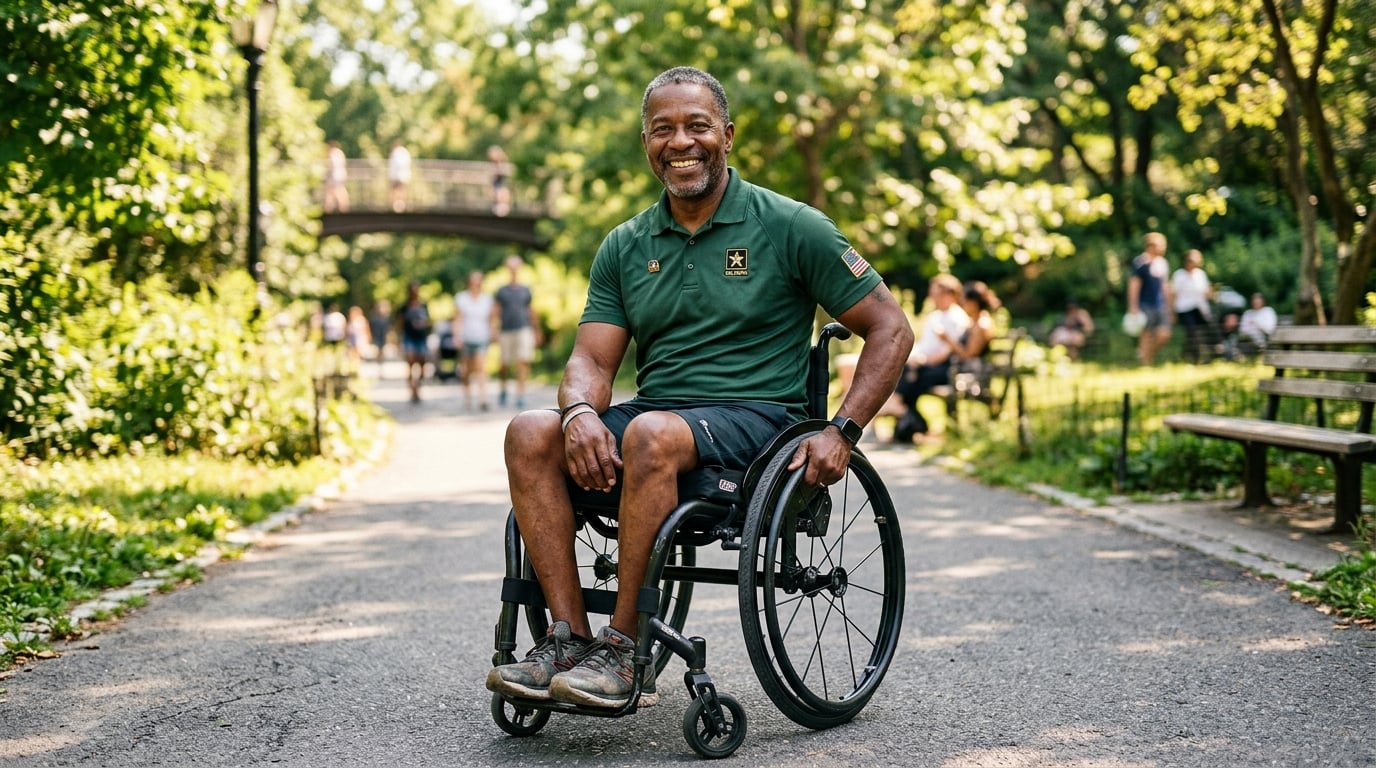
Level 2, Highest Care Need
The full monthly stipend rate for the veteran’s locality (an estimate, confirm on VA.gov)
Who this fits:
The veteran cannot perform daily activities without hands-on help, or needs regular supervision for safety, at the highest documented level.
How the Stipend Is Actually Calculated
Anyone who quotes you a flat national number is guessing. Under 38 CFR §71.40(c)(4), the VA starts with the federal GS-4, Step 1 annual pay rate set by the Office of Personnel Management for the locality where the veteran lives, and divides it by 12. That is the full monthly rate for your area, which is why the same care pays more in a high-cost city than in a rural county.
A VA clinician then assigns the level. Level 1 pays 62.5% of that monthly rate. Level 2 pays 100%. Level 2 is for a veteran the regulation calls unable to self-sustain in the community (38 CFR §71.15): he needs hands-on help each time he does three or more of the seven daily activities, or he needs supervision, protection, or instruction on a continuous basis. The stipend is paid to the Primary Family Caregiver, it is generally not taxable income, and it does not reduce the veteran's compensation or pension by a single dollar.
| The number | What it means for your family |
|---|---|
| 70% or higher | The single or combined service-connected rating the veteran must hold. Several conditions that add up to 70 count the same as one big one. |
| 6 continuous months | How long he must need in-person personal care. A rough patch after surgery does not qualify. An ongoing decline does. |
| 62.5% / 100% | The Level 1 and Level 2 stipend, as a share of the local GS-4, Step 1 monthly rate. |
| 30 days a year | The minimum respite care available so the caregiver can sleep, see her own doctor, or leave the house. |
| Up to 2 | Secondary Family Caregivers who can be approved as backup alongside the Primary. |
Work Out Your Own Estimate
Enter the federal GS-4, Step 1 annual pay rate for the OPM locality where the veteran lives, then pick the level closest to your situation. The math is the same formula the VA uses. The level itself is assigned by a VA clinician after the assessment.
Enter your locality's GS-4, Step 1 annual rate to see the estimate. We do not plug in a national number, because there is no national number.
An estimate, not a promise. The VA uses the exact GS-4, Step 1 rate for the veteran's locality and a VA clinician assigns the level. Confirm the current amount with the Caregiver Support Program.
Who Qualifies
All four of these generally need to be true. If you are close on any one of them, that is a reason to ask, not a reason to give up. The VA decides eligibility on the veteran's need for personal care, not on paperwork alone, so the clinical assessment carries real weight. Your part is to make sure your treating providers have written down what help you need every day and why.
Service-connected or aggravated
The veteran has a serious injury or illness incurred or aggravated in the line of duty. The phased expansion now reaches veterans of all service eras.
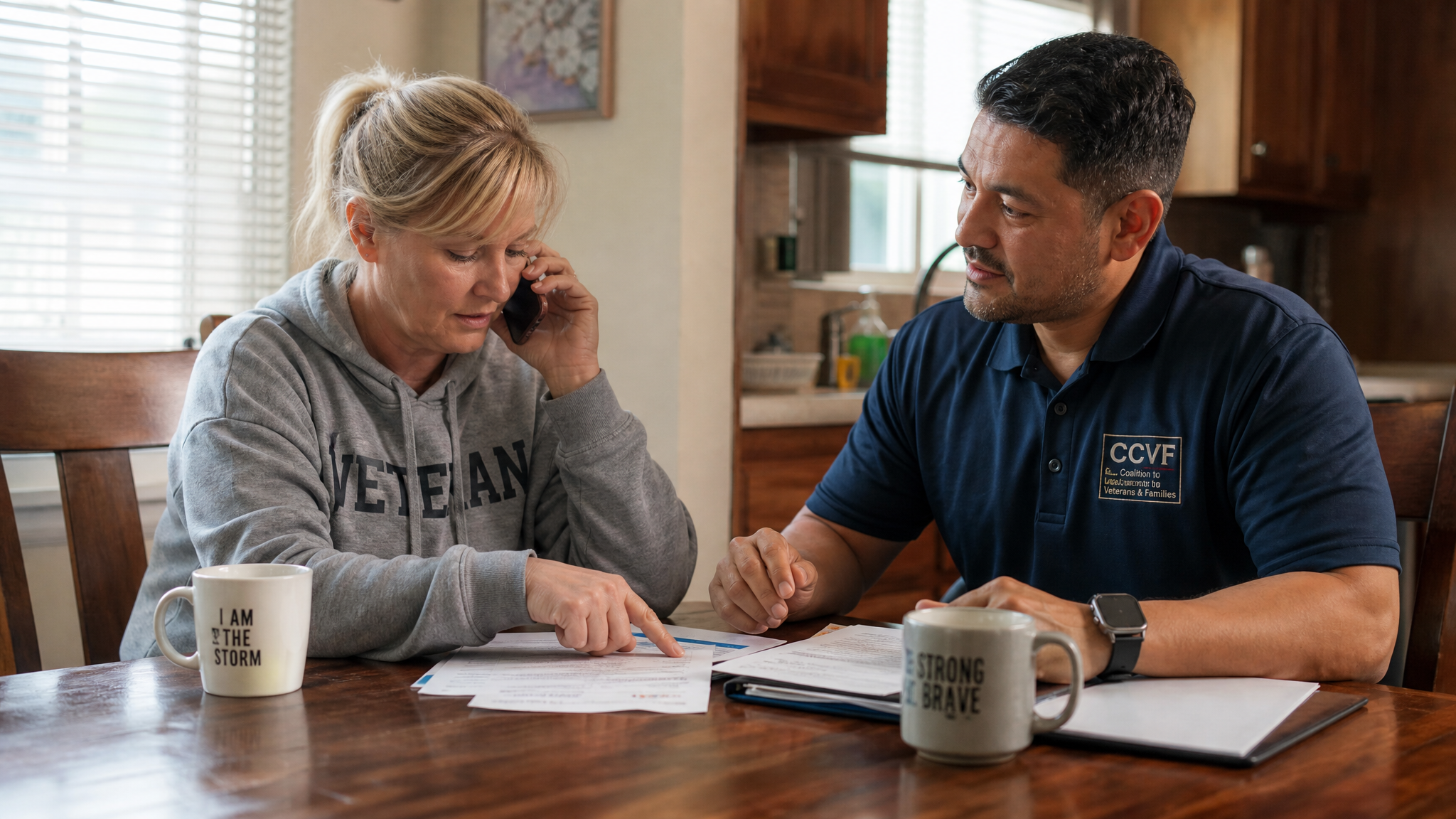
Needs personal care services
The veteran requires in-person help with daily activities, or supervision/protection because of a neurological or other impairment, for at least six continuous months.

Enrolled in VA health care
The veteran is enrolled in the VA health care system, or is eligible and will enroll.
Caregiver is 18 or older
The caregiver is at least 18 and is a spouse, family member, or someone who lives with the veteran full time (or will once approved).
What Actually Counts as Personal Care
There are two ways in, and families usually only know about the first. The first is hands-on help with activities of daily living. The regulation lists seven: dressing or undressing, bathing, grooming, adjusting a prosthetic or orthopedic device, toileting, eating, and getting around the house, from the bed to the chair to the bathroom.
The second is a need for supervision, protection, or instruction because of a cognitive, neurological, or mental health impairment. He does not have to be physically helpless. Dementia, a traumatic brain injury, and severe PTSD can qualify on this ground alone. That is how a veteran who can still walk and dress himself gets approved: he wanders, he leaves the stove on, he forgets whether he took his pills, or he cannot be left alone during a bad night.
The test is what he cannot safely do alone, not how many hours you happen to be in the house. Write it down before the assessment. Running notes kept over several weeks, what you did, when, and what happened when you were not there, tell the story far better than anything you can say from memory in a stressful interview.

Told You Were Too Old for This Program? That Answer Expired in 2022
PCAFC started out closed to older veterans. It first opened in 2011 for post-9/11 families only, then widened in phases under the MISSION Act. On October 1, 2022, it opened to caregivers of veterans from every service era: Vietnam, Korea, the Gulf, and everyone in between. A great many families were told no years ago, filed the letter away, and never went back. If that is you, the rule that turned you down no longer applies.
Combined counts
It is a single OR combined 70% rating. Several conditions that add up to 70 qualify exactly the same as one big one. If he is short, look first at TDIU, secondary conditions, and anything the VA never rated. Underrating is common in older claims, and closing that gap is claim work we do every day.
Name your backup
Up to two Secondary Family Caregivers can be approved on the same application as the Primary, at no cost. Most families name nobody, then have no approved cover the week the Primary gets sick or needs surgery of her own.
The Caregiver Program Starts With the Veteran's Rating
The caregiver stipend is only as strong as the rating behind it. The comprehensive program requires a single or combined service-connected rating of 70 percent or higher, and a denied or underrated veteran can leave the whole family locked out. If the rating is the problem, fix the rating first. Ask for a free file review, or hire us and we will build the claim that opens the door for both of you.
How the Rating Behind the Caregiver Program Is Built
Caregiver eligibility turns on the veteran's service-connected rating, so the rating math matters to the whole household. These official VA videos explain how compensation works and how the combined rating is calculated. Watch them together as a family, then check whether the veteran's current rating reflects every condition the caregiver actually helps with day to day.
How VA Disability Compensation Works
How Your Combined Rating Is Calculated
How to Apply
The application is VA Form 10-10CG. The veteran and the caregiver apply together, and a VA clinician assesses the veteran’s care needs before a decision. Be ready for a home visit and for questions about daily tasks like bathing, dressing, eating, and safety. Your part is to answer honestly, describe a typical bad day, and keep copies of the signed application and every letter the VA sends back.
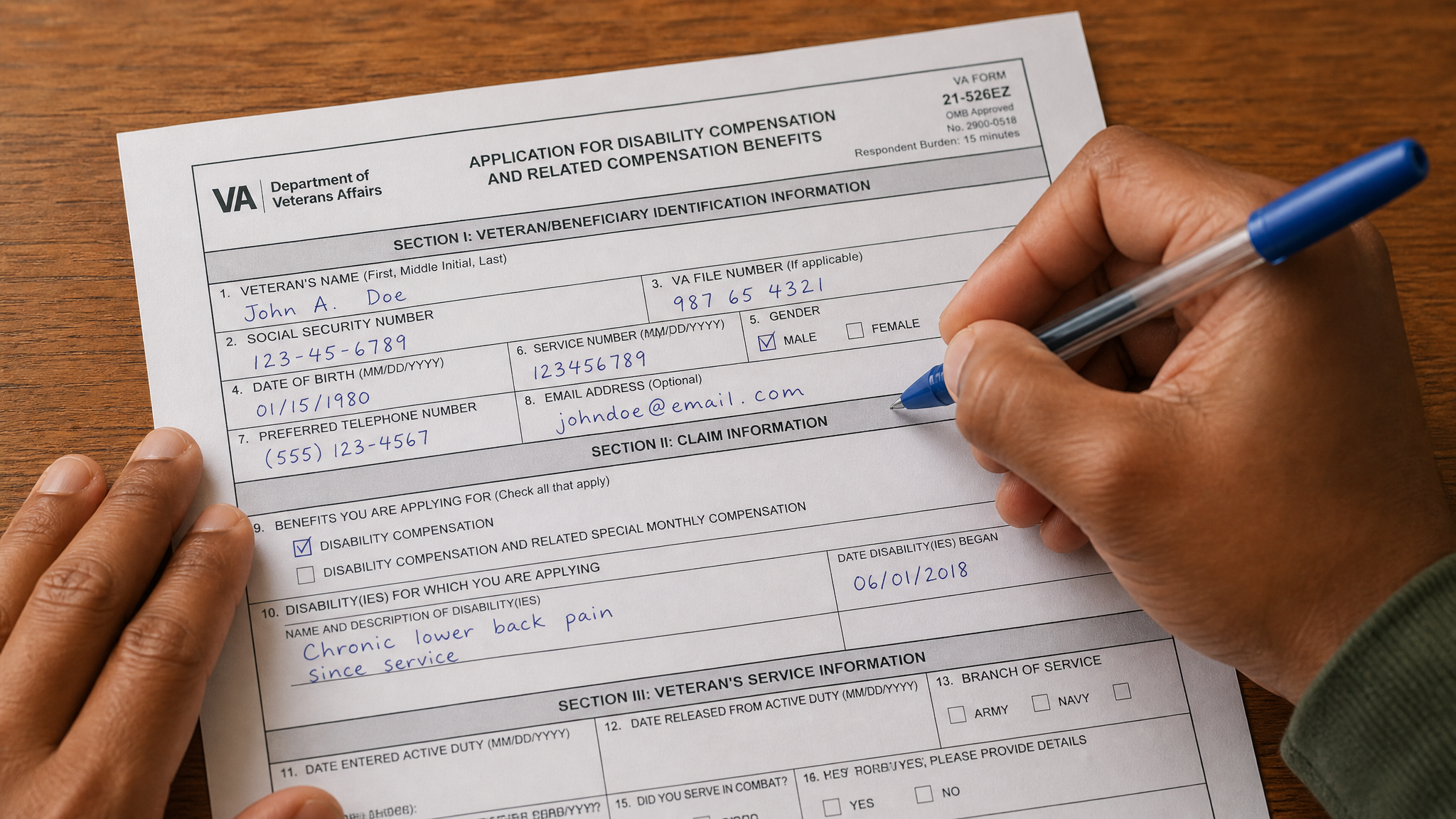
Submit VA Form 10-10CG
The veteran and the proposed Primary (and any Secondary) caregivers complete and sign the joint application, online, by mail, or in person at a VA medical center.

Clinical assessment
A VA clinical team evaluates the veteran’s ability to perform daily activities and need for supervision. This is where documented care needs matter most.

Decision and level
The VA approves or denies and, if approved, assigns Level 1 or Level 2. If denied, the decision can be challenged, and care needs can be reassessed as they change.
Filing Form 10-10CG Without Tripping Over It
Both signatures are required. The veteran signs and every caregiver named on the form signs. One missing signature sends the whole application back, and you lose weeks. Before anything goes in the mail, sit down together, read every page, and check each signature line yourself.
You can file it online, mail it to the 10-10CG Evidence Intake Center in Janesville, Wisconsin, or hand it to the Caregiver Support team at his VA medical center. Do not mail medical records with it. The VA pulls his records itself, and loose records only slow the intake down.
After it is filed, expect a phone call, then an assessment, often in the home. That assessment is the whole case. Have your notes, his current medication list, and a plain description of a bad day ready. Describe the worst days honestly, not the good ones, because the level they assign is what sets the stipend.
Reassessment, and What to Do When the Answer Is No
Approval is not a one-time event. PCAFC is reassessed, usually about once a year, or sooner if his condition changes. The level can go up. It can also come down, which is exactly why the first application has to describe the care honestly and completely, and why your notes should keep going after approval.
If the VA denies the application, drops your level, or discharges you from the program, get the decision and the reasoning in writing. How you challenge it depends on what was decided. A clinical judgment about his care needs runs through the VHA clinical appeal process at the medical center. Other eligibility decisions can go through the standard review lanes: a Higher-Level Review, a Supplemental Claim with new evidence, or the Board. The clock and the lane matter, so bring the letter to someone who works these before you pick one.
If the problem is the 70% bar, the fix is on the claim side: file to raise his rating, and look hard at TDIU, secondary conditions, and anything the VA never rated. And while you wait or appeal, the Program of General Caregiver Support Services and its respite care are still open to you with almost no requirements. Do not sit with nothing.
Thirty Days to Breathe: Respite Care Is Yours by Regulation, and Almost Nobody Uses It
I meet caregivers who have not slept a full night in two years. They have skipped their own mammogram, their own cardiology follow-up, their own sister's funeral, because there was nobody to sit with him. Then I ask whether they have used their respite days, and they look at me like I am speaking another language. Respite care is the VA arranging for somebody else to take over for a while, so you can rest, recover, or simply leave the house. Nobody at the VA is going to offer it. You have to ask.
There are two layers of law behind it. Under 38 U.S.C. §1720B, the VA may furnish respite care to any veteran enrolled in VA health care who lives at home with a chronic illness, on a limited and intermittent basis, so he can keep living at home. That is the door for every family, rating or no rating. On top of that, if you are approved as a Primary Family Caregiver under PCAFC, 38 CFR §71.40(c)(2) promises respite of not less than 30 days a year, it must be medically and age-appropriate, it must include in-home options, and it can run 24 hours a day at the level of care you normally give. If more than 30 days is clinically appropriate and you ask for it, the VA can go beyond that.
Here is the trap: families wait until the crisis to ask. The caregiver lands in the hospital, there is no backup, nobody has been approved, no setting has been tried, and the veteran ends up in the emergency room because that is the only door open at midnight. Respite set up in a calm month is a phone call. Respite set up in a crisis is often no respite at all. And thirty days does not have to be one block. A day here, a weekend there, a full week when you need it.
Your part: this month, ask his VA care team or the Caregiver Support Coordinator at his medical center to document the need for respite in his record, and schedule one short trial day while nothing is wrong.

In the Home, a Short Stay, or a Day Program: How Respite Actually Works, and What It Costs
Respite comes in three forms, and you are not locked into one. Many families run an adult day program during the week and save a facility stay for the surgery or the wedding. What decides which one works is his condition, what your VA medical center actually has nearby, and what you need the time for.
Here is the trap: caregivers assume respite is part of the stipend program only, so when PCAFC is denied they think respite went with it. It did not. The general caregiver program and his own VA health care enrollment keep the door open. The 30-day floor is a PCAFC guarantee, but the benefit itself belongs to every enrolled veteran who needs it.
Your part: read these four cards, decide which form fits your next month, and ask for it in writing through his secure messages so there is a record.
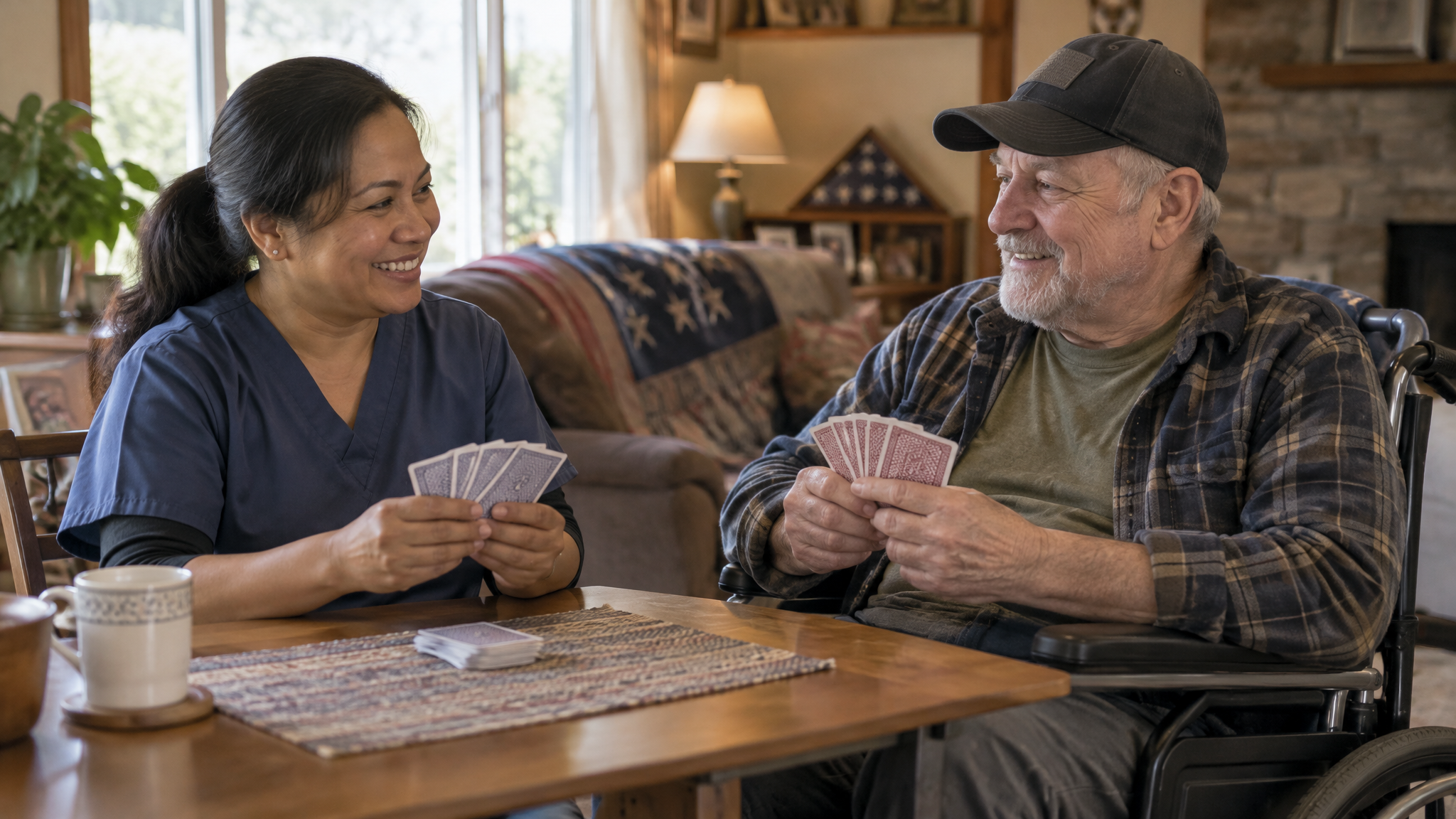
In-Home Respite
A trained aide comes to the house for a block of hours so you can sleep, run errands, or keep your own doctor's appointment. For most families this is the easiest place to start, because he stays in his own chair, with his own routine, and nobody has to pack a bag. PCAFC respite must include in-home options under 38 CFR §71.40(c)(2).
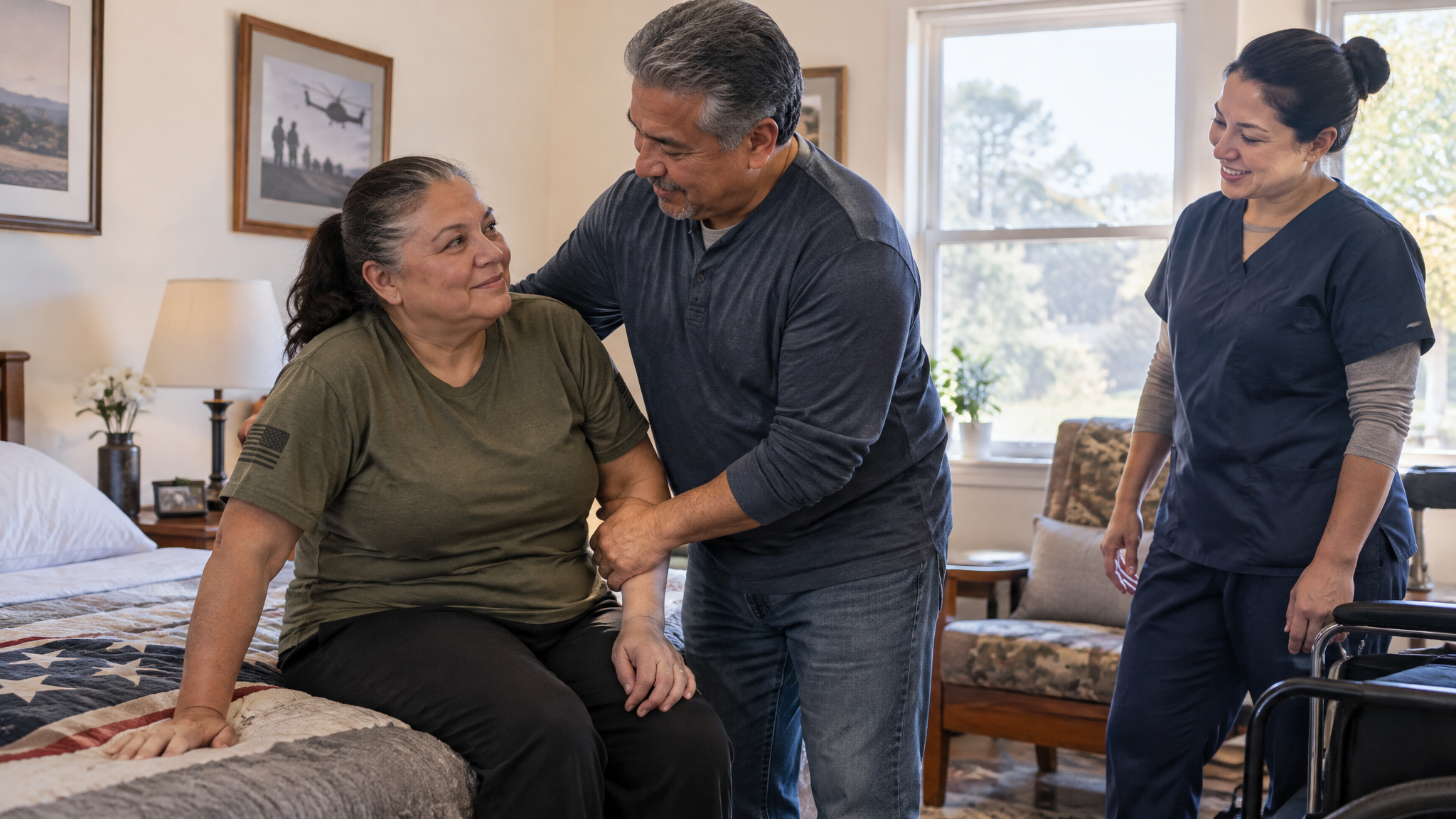
A Short Facility Stay
He stays a few days or a couple of weeks at a VA community living center or a contracted community nursing home, with round-the-clock care. This is the form that makes your own surgery, a funeral, or a grandchild's wedding possible. Ask for a trial stay while things are calm, so the first one is not happening during an emergency.
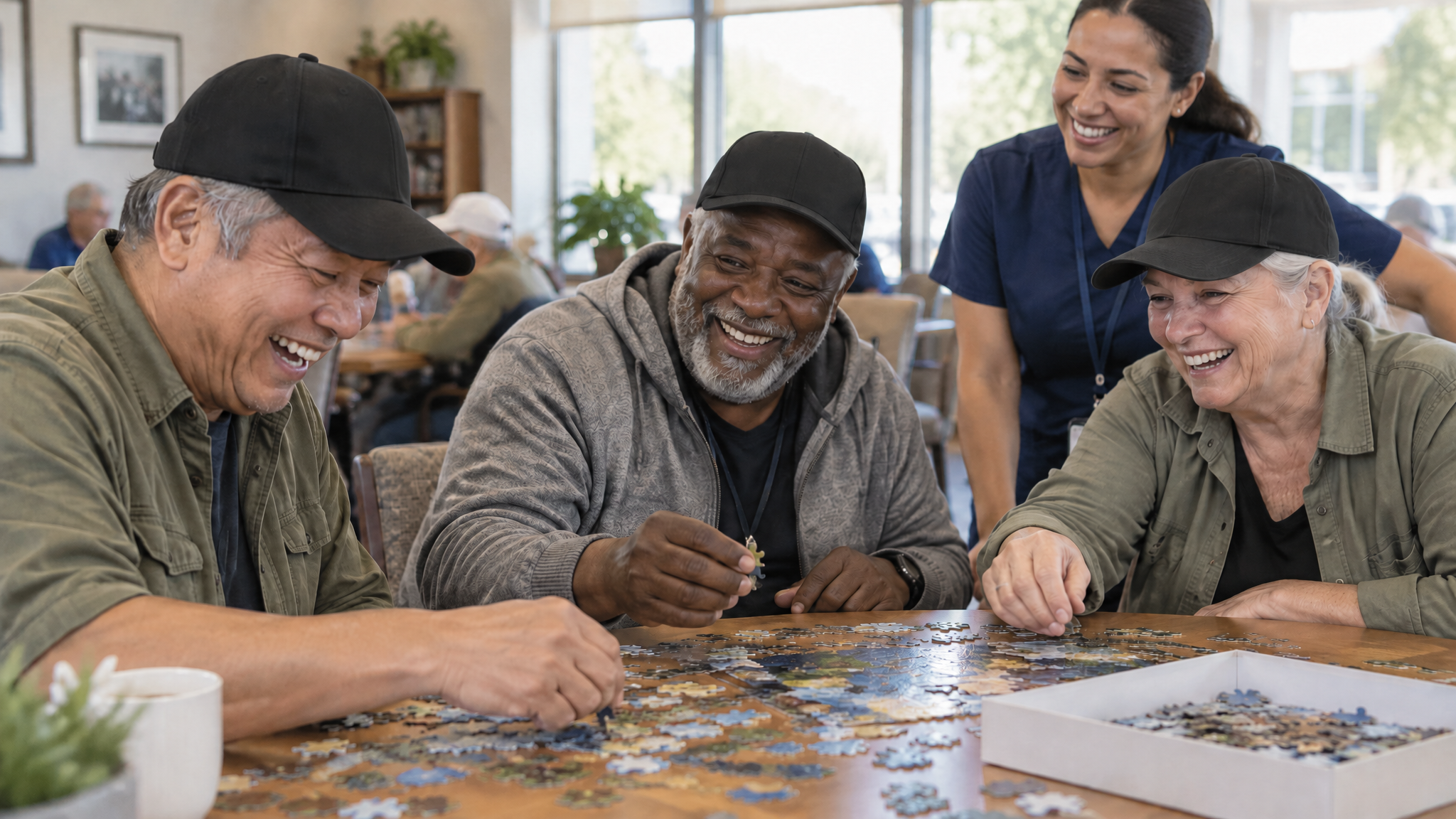
Adult Day Health Care
A supervised daytime program with meals, activities, and nursing oversight. He gets out of the house and around other veterans. You get your days back. For a veteran with dementia or a brain injury who cannot be left alone, a few days a week here can be the difference between keeping him home and placing him in a facility.

Ask About the Copay Before the First Day
Respite is an extended care service, and under 38 CFR §17.111 a copay can apply, but there is no copay for the first 21 days of extended care in any 12-month period, and a veteran with a compensable service-connected rating is generally exempt. Ask the care team in writing what he will owe before you schedule, and ask for a social work consult to put respite, day care, and home health into one workable plan.
Her Health Is Part of His Care Plan: CHAMPVA in the Caregiver's Own Name
Here is what I have watched end more home caregiving arrangements than any change in the veteran's condition: the caregiver's own health gives out. She has had no insurance since she quit her job to take care of him. She skips the doctor because there is no money for it and nobody to sit with him anyway. Then one day she is the one in the hospital bed, and the whole plan falls apart in an afternoon. The VA knows this, which is why Congress wrote her health care into the caregiver law.
Under 38 U.S.C. §1720G(a)(3)(A)(ii) and 38 CFR §71.40(c)(3), an approved Primary Family Caregiver is eligible for CHAMPVA in her own name, unless she is already entitled to care under a health-plan contract as defined in 38 U.S.C. §1725(f). In plain talk: if she already has employer coverage, a marketplace plan, or Medicare, this route is closed. CHAMPVA through the caregiver program is for the caregiver who has nothing. It covers the things caregivers put off: doctor visits, prescriptions, lab work, imaging, mental health care, and hospital care. It is cost-sharing coverage, not free care, so there is a deductible and a share after it, but it is real insurance and it is hers.
Here is the trap: caregivers go looking for a CHAMPVA application and find VA Form 10-10d. That form is for the spouse and children of a veteran rated permanently and totally disabled. File it as a caregiver and you get a denial that has nothing to do with the caregiver program. Her door is VA Form 10-10CG, the joint caregiver application. When PCAFC approves her as Primary and she has no other coverage, the CHAMPVA eligibility flows from that approval. She should not have to fight a second application to get it.
Your part: on the day the PCAFC approval letter arrives, check whether it addresses her CHAMPVA eligibility. If it does not, ask the Caregiver Support Coordinator in writing, by name, about the Primary Family Caregiver's CHAMPVA enrollment, and keep a copy of the message.

Counseling, Travel, and the Warning Signs: Four Things the VA Owes the Person Holding It All Together
The VA treats caregiver exhaustion as a clinical problem, because it is one. Depression, anxiety, and burnout in a caregiver are medical findings, not character flaws. The regulation backs that up with counseling, travel, and support built into the program, and most of it does not require a stipend approval to reach.
Here is the trap: families think counseling is a PCAFC perk, so when the stipend is denied they stop asking. That is wrong. Under 38 CFR §71.40(a), a General Caregiver, with no stipend and no approval level, is still entitled to training, technical support, information on community resources, counseling, and respite. The denial letter closes one door, not the building.
Your part: read these four cards, pick the one you have been putting off, and ask for it in writing through his secure messages this week.

Counseling Is Built In, Not Begged For
Under 38 CFR §71.50, caregiver counseling means individual and group therapy, counseling, and peer support groups. Family Caregivers get it as part of PCAFC under §71.40(b), and General Caregivers get it under §71.40(a). Peer mentoring matches you with a caregiver who has already lived the stage you are in, and for most families that does more good than any pamphlet. It does not include medication or inpatient psychiatric care, so keep your own doctor for that.
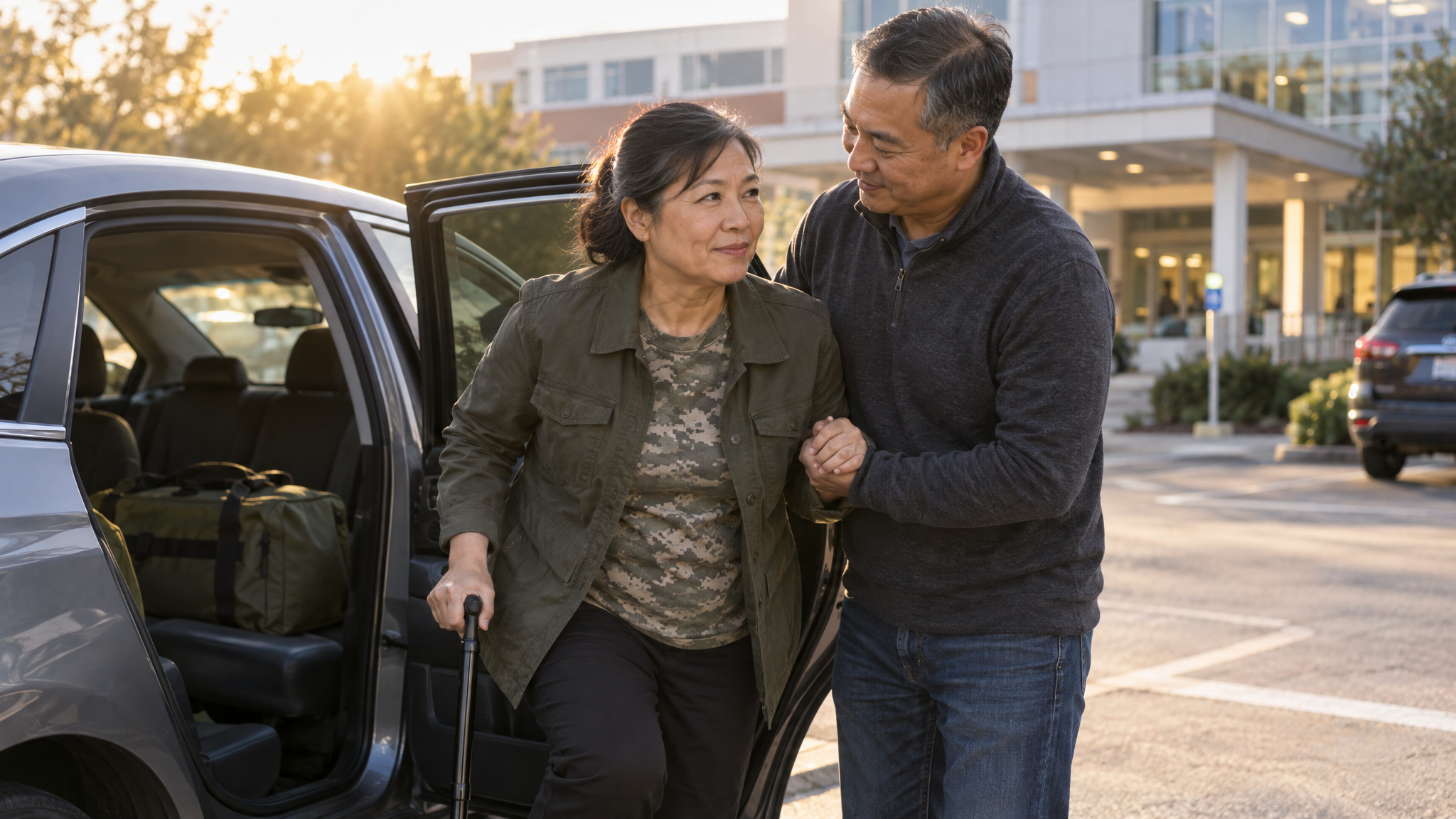
Travel, Lodging, and Meals on the Long Drive
Under 38 CFR §71.40(b), Primary and Secondary Family Caregivers are eligible for beneficiary travel under 38 CFR Part 70, but only when the veteran is eligible for that travel himself. That matters most for rural families driving hours to a regional VA medical center. Ask the travel office before the trip what is covered and what paperwork they need, and keep every receipt and appointment slip, because paperwork you did not keep is money you do not get.

The Warning Signs Nobody Says Out Loud
You stopped going to your own doctor. You are not sleeping, or you are sleeping in a chair beside him. You snapped at him over something he cannot control and then felt sick about it. You have no one covering for you, and one bad week would end the whole arrangement. If two of those are true, that is not weakness. That is the moment to ask for counseling, respite, and a named secondary caregiver.

Ask the Coordinator by Name, and Ask for Everything
Every VA medical center has a Caregiver Support Coordinator. Ask for the coordinator by title, and ask by name for each benefit: her CHAMPVA enrollment, counseling, respite, and beneficiary travel. For a Primary Family Caregiver, 38 CFR §71.40(c) also includes financial planning and legal services such as a simple will, advance directives, and power of attorney. A general question gets a general answer. A specific request gets a record.
No Rating, No Stipend Fight, No Decision Letter: The Caregiver Program With Almost No Gate
Everybody hears about the stipend program. Hardly anybody hears about its quieter sibling, the Program of General Caregiver Support Services, and that is a shame, because for most families caring for an older veteran it is the program that actually fits. Congress created it in 38 U.S.C. §1720G(b) for caregivers of veterans of every service era. Korea, Vietnam, the Gulf, peacetime, it does not matter.
Here is how short the list is. The veteran has to be enrolled in VA health care and has to need personal care services, meaning help with daily activities like bathing, dressing, or medications, or supervision to stay safe. No 70% rating. No six continuous months of care. No serious line-of-duty injury requirement. The caregiver meets the general caregiver rules in 38 CFR §71.35, and the caregiver does not have to be family. A friend, a neighbor, or somebody from church who is doing the work counts. What the caregiver gets is spelled out in 38 CFR §71.40(a): training and technical support, information on community resources, counseling, and respite.
Here is the trap: the PCAFC denial letter. The family does not clear the 70% bar, the denial arrives, and the letter almost never mentions this program. They read it as the VA saying it has nothing for them. It does. And you do not have to choose. Families use general support while a PCAFC application is pending, while an appeal is running, and after.
Your part: confirm he is enrolled in VA health care, and if he is not, file VA Form 10-10EZ first. Then ask his medical center for the Caregiver Support Coordinator by title and say the words General Caregiver Support Services out loud.
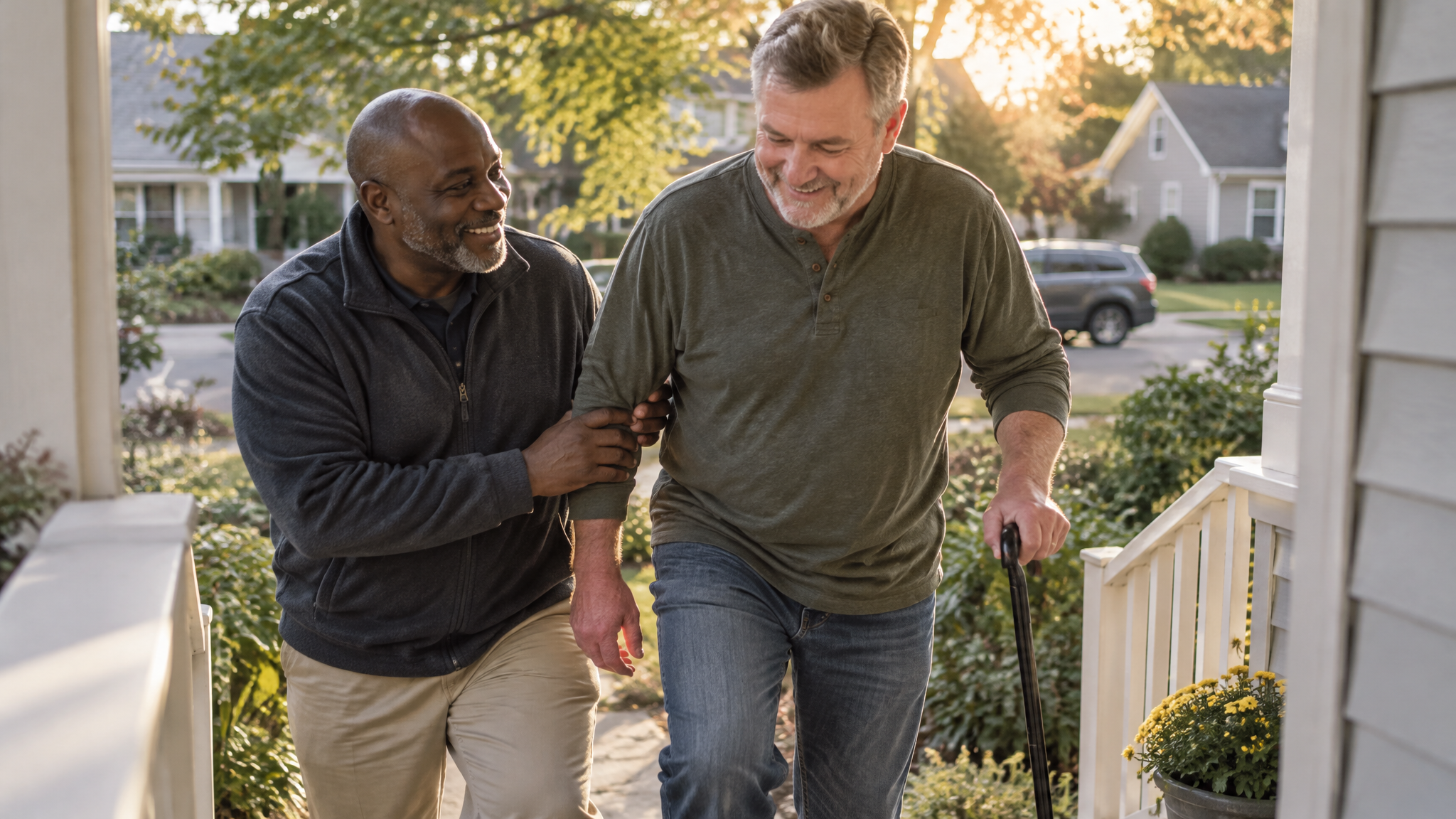
What General Caregiver Support Gives You, What It Does Not, and How to Start in One Conversation
General support is the help you can get this week, with no decision letter standing between you and it. It is not money, and I will not pretend otherwise. But skills, a counselor, a peer who has been where you are, and a few days of rest are what keep most home care arrangements from collapsing.
Here is the trap: caregivers wait to ask until they qualify for the stipend, because they think the free support is a consolation prize. The training is what prevents the fall, the back injury, and the burnout that end home care. Get it first, and keep working the rating and the stipend at the same time.
Your part: read these four cards, write down the two things you need most, and bring that list to your first conversation with the coordinator.

Training That Shows You the Mechanics
Safe transfers from bed to chair, a medication schedule that does not depend on memory, skin and wound care, and how to handle a fall without hurting yourself. It also covers the behavior that comes with dementia or PTSD, the repetition, the sundowning, and the anger that is not really aimed at you. Training comes online, by phone, and in person, so you do not have to leave him alone to get it.

Counseling, Groups, and a Peer Who Has Been There
Individual counseling, support groups, and peer mentoring, where the VA matches you with a caregiver further down the same road. For most families the peer mentor turns out to be the part that keeps them going. It is confidential, and using it does not touch the veteran's benefits or his claim file.

What It Does Not Include
No monthly stipend. No CHAMPVA for the caregiver. No caregiver travel pay. Those ride with PCAFC under 38 CFR §71.40(b) and (c). If the household needs money for the care, the routes to look at are PCAFC, Aid and Attendance, and Veteran-Directed Care, where available, which gives an enrolled veteran a budget to hire his own aide, family included. Ask his VA social worker which of those fit, and keep the general support running while you pursue them.
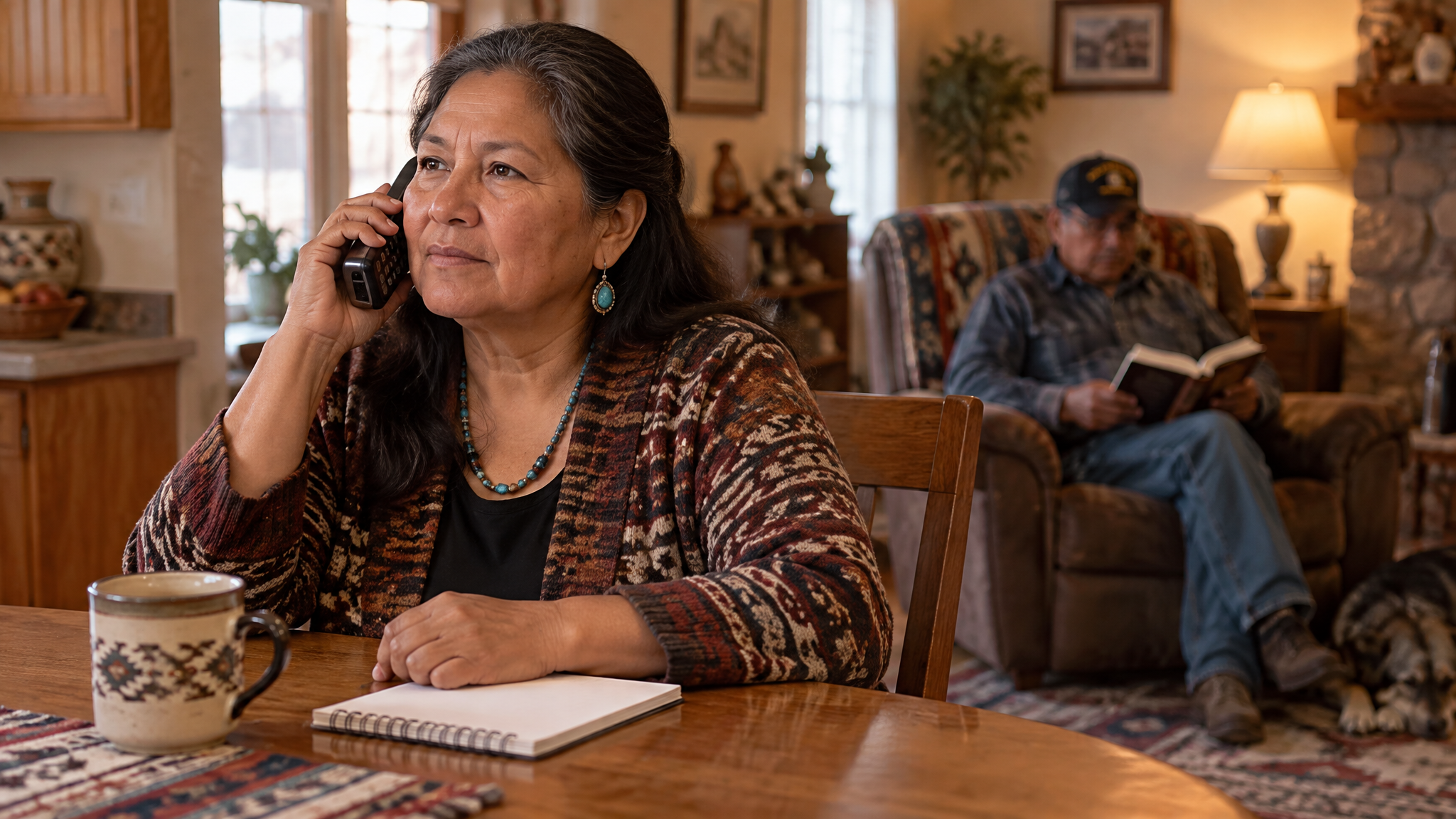
The One Conversation That Starts It
There is no long application. Have ready his full name, date of birth, whether he is enrolled in VA health care, and which VA medical center he uses. Ask for the Caregiver Support Coordinator by title, because every VA medical center has one and that person becomes your way back in. Before you hang up, ask what respite is available near you, because almost nobody knows to ask, so almost nobody is offered it.
The Advocate's Take
The caregiver program is one of the most under-claimed benefits in the entire system, and the reason is almost always the same: the family is so busy providing care that nobody has the bandwidth to fight paperwork. The stipend sits there unclaimed for years.
Here is how the VA looks at it. The Program of Comprehensive Assistance for Family Caregivers (PCAFC) is governed by 38 CFR Part 71. The veteran must have a single or combined service-connected rating of 70% or higher and must need in-person personal care services for at least six continuous months. That need is measured two ways: an inability to perform an activity of daily living, such as bathing, dressing, eating, toileting, or moving around, each time it is done; or a need for supervision, protection, or instruction because of a cognitive, neurological, or mental health impairment. The VA does not take your word for that. A clinical team evaluates the veteran and the caregiver in the home and decides whether the care need is real and ongoing.
What you need. A completed VA Form 10-10CG, signed by both the veteran and the caregiver. The veteran's rating decision and code sheet. Medical records that describe function, not just diagnosis: what the veteran cannot do alone, how often help is needed, and what happens when no one is there. A written log from the caregiver covering two typical weeks, every bath, every medication reminder, every night spent awake because he wandered or she had a panic attack. Specific beats general every time. And if the rating is under 70%, the first job is not the caregiver form, it is getting the rating right.
Walk through it with me. Step one: confirm the rating threshold. Step two: build the care log and gather the records. Step three: file the 10-10CG and prepare for the home assessment, where the caregiver should describe the worst days honestly, not the good ones. Step four: when the decision arrives, read it closely, because approvals come with a stipend level and denials come with a reason. Step five: if the decision is wrong, there are review options, and which one fits depends on what was decided. Bring me the letter before you choose.
If PCAFC is denied, that is not the end of the road. Many families still qualify for the general caregiver support program, and care needs change over time, a reassessment down the line can flip the outcome. A denial is a snapshot, not a verdict. And do not forget the veteran's own benefits: a veteran who needs that much help may also qualify for Special Monthly Compensation for aid and attendance under 38 CFR §3.350 and §3.352, which is a separate payment to the veteran.
Your part: keep the care log, tell the assessment team the truth about the hard days, and do not let pride shrink the picture. I check the rating, the evidence, and the SMC question. We work WITH you, not FOR you.
If you are the one doing the care, start with a Mission 5 Intelligence Brief or just ask us a question. We will tell you honestly whether the program fits your situation before you spend a single evening on the form.
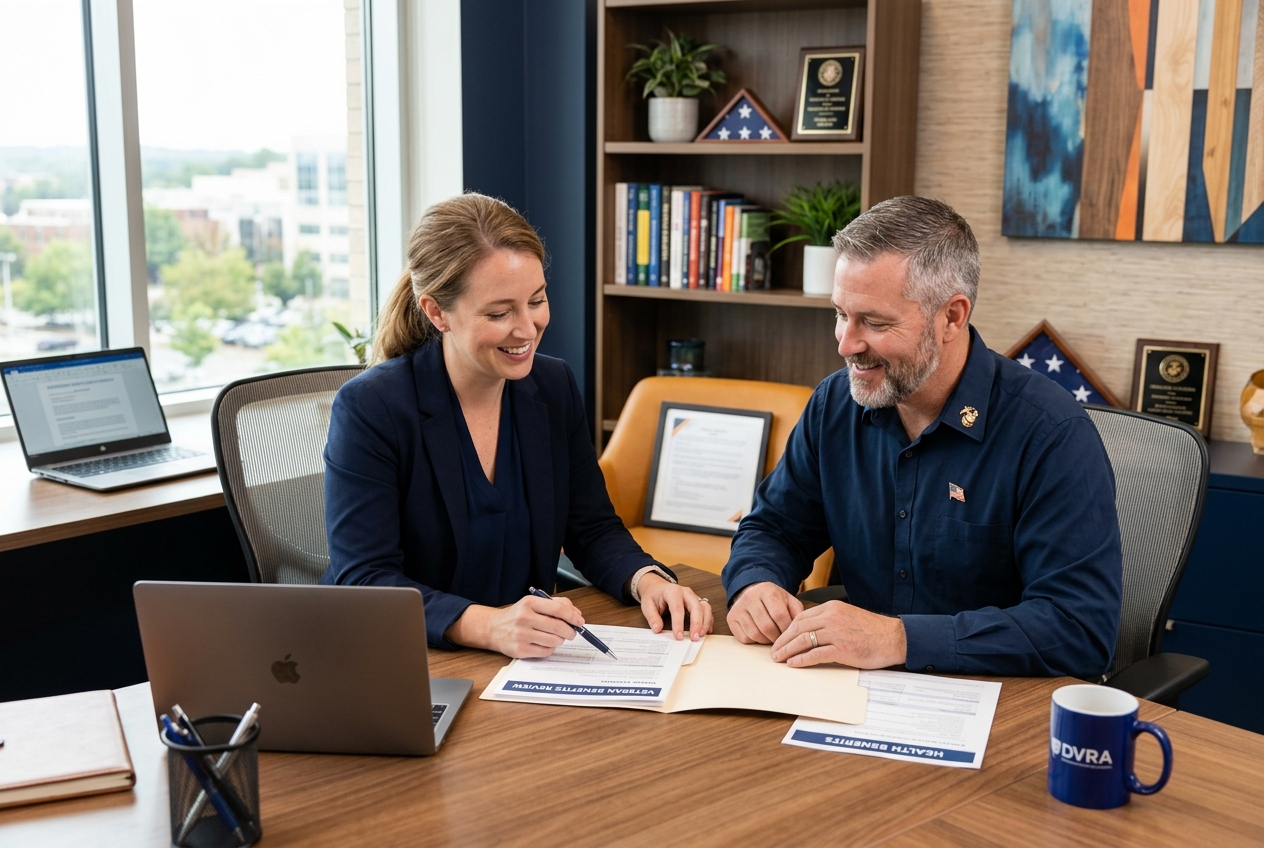
Caregiver Benefits, Questions Families Ask
These are the questions families ask me when a veteran needs daily help at home. The caregiver program has its own eligibility rules, its own application, and its own reviews, separate from a disability claim. Your part is to write down the daily care you actually provide and keep that list current, because the VA will ask for it.