
Evidence & Records
How to Write a Compelling Statement
Your Statement in Support of Claim (VA Form 21-4138) is the one part of the process you fully control
A well-structured lay statement gives the VA a vivid, personal account of how your service-connected condition affects your life. It is the part of the claim you have the most power over, and the part most veterans waste.
The One Part You Control
Almost everything in a VA claim depends on someone else, the examiner, the records custodian, the rater. The Statement in Support of Claim is the exception. It is your opportunity to present a first-person, fact-rich narrative that connects your service to your current disability in your own words.
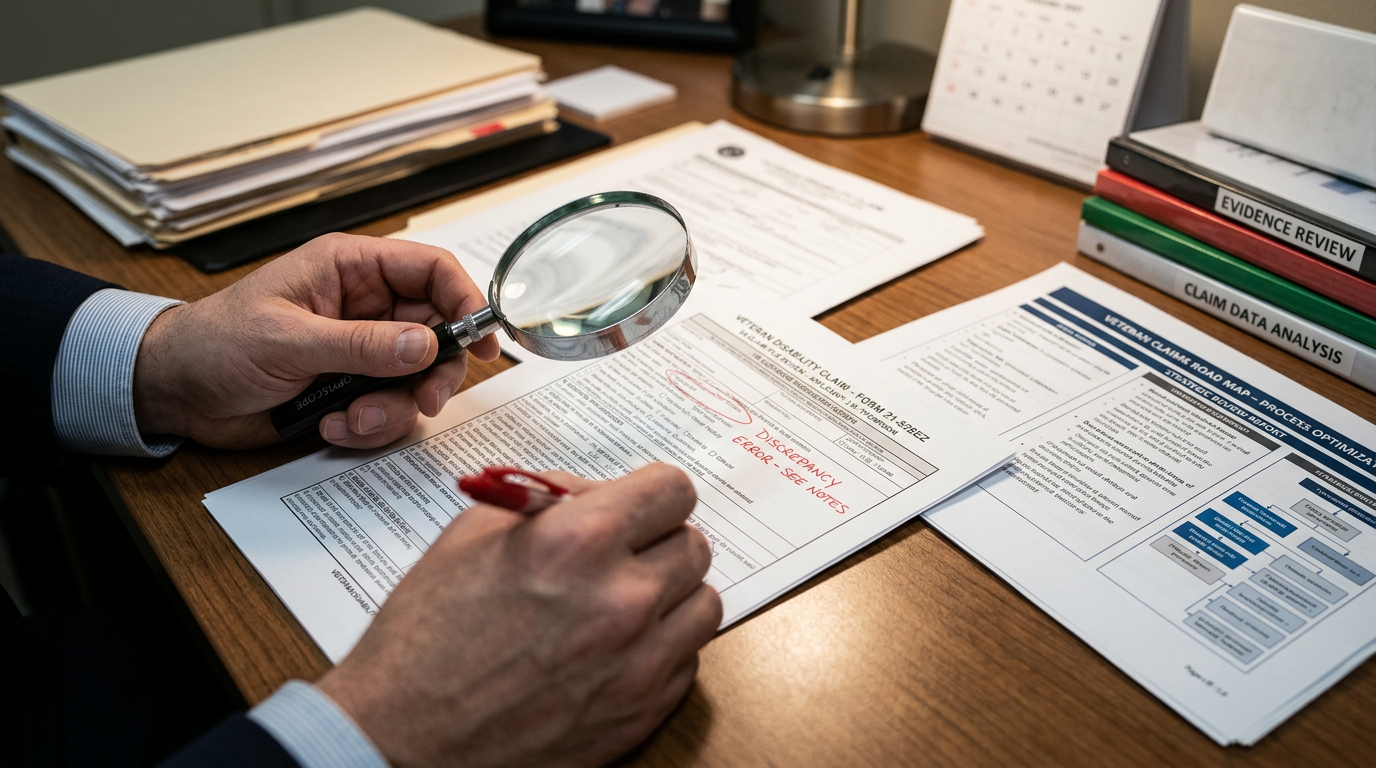
A strong statement does not beg for sympathy. It lays out facts, dates, and consequences, the kind of precise detail a rater can use to bridge the gap between a medical record and a rating decision. The VA cannot deny what it cannot dispute, and a well-documented statement is hard to dispute.

What the Statement Must Cover

Your Service Context
Branch, unit, MOS, duty stations, and deployment locations relevant to your claim. This establishes the setting the rater needs.

The In-Service Event
A chronological narrative of the injury, exposure, or onset: when it happened, where, what you experienced, and who else was present. Specific dates and locations are more powerful than vague time frames.

Onset and Continuity
When symptoms first appeared, how they progressed, and the continuity of symptomatology from service to present. Under §3.303(a), continuous symptoms since service can establish the nexus even without a formal diagnosis at the time.
Functional Impact Today
How the condition limits you right now, at work, at home, in relationships, and in daily living. The VA rates impairment, not diagnoses. Describe your worst days, your flare-ups, and the activities you have given up.
Common Statement Mistakes That Kill Claims

Too short, a three-sentence statement tells the rater nothing useful

Too old, a statement from five years ago does not describe your condition today

Too vague, "I hurt my back in service" vs. "On March 14, 2008, during a live-fire exercise at Fort Bragg, I fell from a tactical vehicle and was treated at sick call for acute lumbar strain"

Medical conclusions, do not diagnose yourself; describe what you experience and let the provider handle causation

Anger at the VA, understandable, but it gives the rater nothing to rate; channel frustration into facts
Buddy Statements, Corroboration From Witnesses
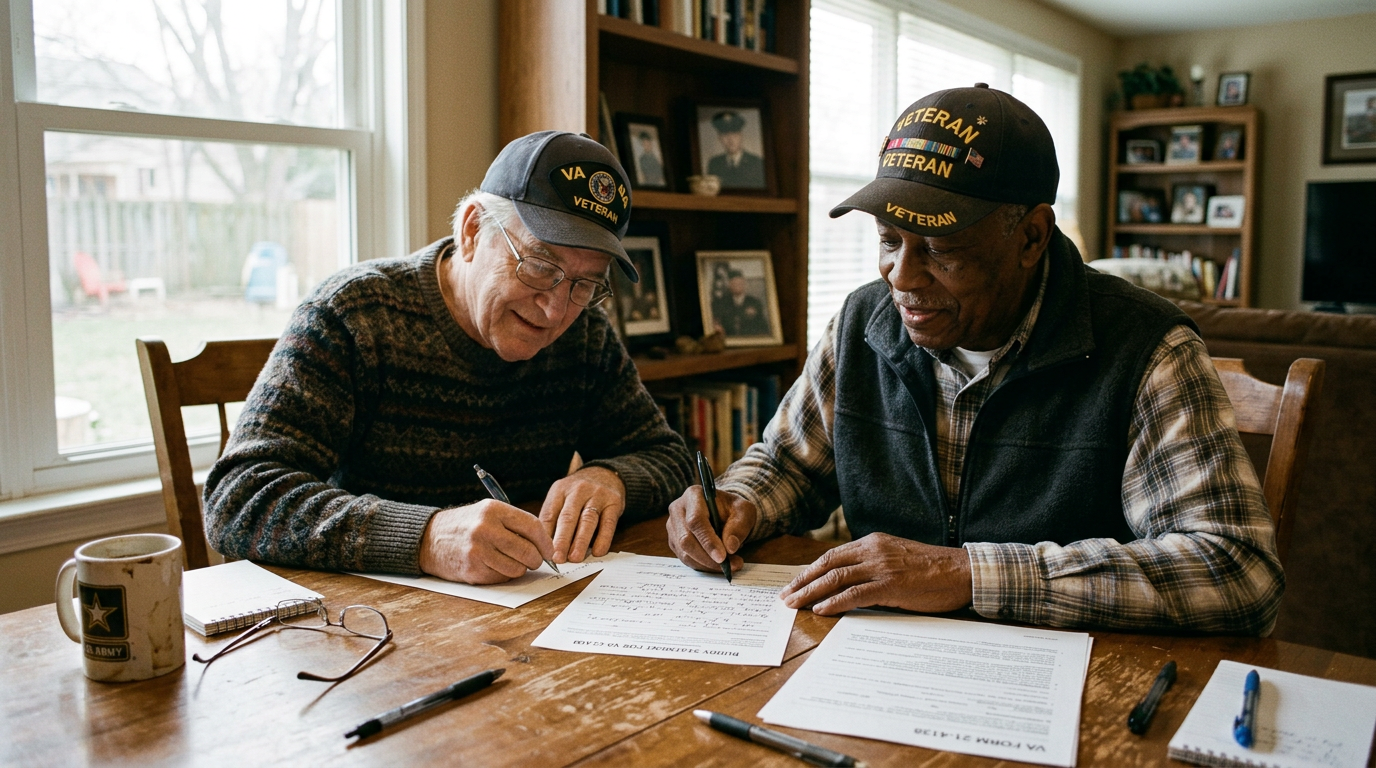
Under §3.159(a)(2), statements from fellow service members, family, and friends are competent lay evidence, they can attest to what they personally observed. A buddy statement from someone who served alongside you and saw the injury, or a spouse who has watched your decline over the years, carries real evidentiary weight.
Each buddy statement should identify the relationship to you, what they personally witnessed, and the time frame. Have them describe observable facts, limping, mood changes, sleeplessness, not medical opinions.
Special Statement Rules for Specific Claims

PTSD (VA Form 21-0781)
PTSD claims require a stressor statement on a dedicated form. Describe the traumatic event(s) with as much specificity as possible, dates, locations, unit, and any casualties. For MST claims, the VA applies the relaxed standard of §3.304(f)(5), behavioral markers in your records can serve in place of a documented report.

Secondary Conditions
When claiming a condition caused by an already service-connected disability, your statement should document the timeline: when the primary condition was established, when the secondary symptoms appeared, and how the primary condition contributes to the new one.

Increased Rating
For claims that your condition has worsened, describe what has changed since the last rating, new limitations, new medications, increased frequency of flare-ups, and any lost work or daily activities.
The Arc a Rater Needs to See: Injury, Continuity, Diagnosis, Impact
I read a lot of statements. The ones that win all follow the same shape, and the shape is not complicated: injury, continuity, current diagnosis, impact. Something happened in service. It never fully went away. A doctor has now put a name on it. And here is what it costs you every day. Leave out any one of those four links and the rater has a gap to deny through.
Picture a lumbar strain claim. The strong version opens with the event: the field exercise, the generator you and two others lifted, the pop in your lower back, the sick-call visit the next morning. It moves to continuity: the profile you were put on, the pain pills you kept taking, the ruck marches you finished hurting because quitting was not an option. Then the diagnosis: the X-ray after discharge that showed degenerative disc disease. Then the impact: the job you left because you could not stand through a full shift, the grandchild you can no longer pick up. That is a story a rater can follow from the first line to the last.
Do not skip your treatment history. List the providers, the rough dates, what they tried, and what did not work. Physical therapy that failed, injections that wore off, and medication that only takes the edge off all prove the condition is ongoing, not something that healed. If you went years without care because you could not get in, or because you were raised to tough it out, say so plainly. A gap you explain is far less dangerous than a gap the rater explains for you.
Finish with a short summary of the four links and one plain, respectful sentence about what the benefit means for your independence. Then proofread it, or hand it to someone who will. Typos do not sink a claim, but a statement that reads like it was dashed off invites the rater to treat it the same way.
Here is the trap: your statement has to match your records. If you write that your back has hurt every day for twenty years, but your last three primary care notes say “denies back pain,” the rater will believe the notes and quietly discount everything else you wrote. Read your own records before you write. Where they are wrong, say so and explain why, for example that you went in for your blood pressure and nobody asked about your back. The Federal Circuit made clear in Buchanan v. Nicholson that lay evidence cannot be rejected just because no medical record was made at the time, but it can still be weighed for credibility, and an unexplained contradiction is exactly how credibility gets lost.
Your part: write a first draft this week using the four links as your headings, add your treatment timeline, read it side by side with your records, and send it to us for review before it goes in the file.

Which Form Carries Which Statement
Your words have to travel on the right paper. The VA has one form for your own statement, a different one for witnesses, a dedicated one for trauma, and a couple that someone else has to complete and sign. A statement on the wrong form is still evidence, but it can be routed poorly or read without the context it needed.
Uploading through VA.gov or submitting through your accredited representative is faster and leaves a record. If you mail paper, it goes to the Department of Veterans Affairs Claims Intake Center, PO Box 4444, Janesville, WI 53547-4444, with copies of any records that back up what you wrote. Keep a copy of everything you send and write down the date you sent it.
Here is the trap: each of these forms ends with a certification that what you wrote is true, and the form warns that knowingly false statements carry federal penalties. Do not exaggerate. You do not need to. The truth told in detail is enough, and an overstated statement is the easiest thing in the file for an examiner to pick apart.
Your part: match each statement to its form below, sign and date every one, and keep a dated copy of each in your own claim folder.

VA Form 21-4138, Your Own Statement
The all-purpose Statement in Support of Claim. This is where your personal narrative goes when it does not fit a more specific form: the event, the continuity, the treatment, and the impact. If you run out of room, attach extra pages and put your name and file number on every one.

VA Form 21-10210, Lay or Witness Statement
Built for the people around you: a spouse, a friend, or a fellow service member who saw the injury or has watched the change in you over the years. Each witness fills out their own form and describes only what they personally saw, not medical opinions and not what you told them.

VA Form 21-0781, Mental Health Statement
The dedicated form for mental health claims based on a traumatic event, including combat, military sexual trauma, and personal assault. It walks you through the event and what changed afterward. For MST and assault, it also asks about markers such as transfer requests, drops in performance, or relationship trouble, which §3.304(f)(5) allows to stand in for a report you never made.

VA Forms 21-4192 and 21-2680, Signed by Someone Else
Two forms carry a statement you cannot sign yourself. VA Form 21-4192, the Request for Employment Information, is completed by your last employer and carries real weight in an unemployability claim. VA Form 21-2680, the Examination for Housebound Status or Permanent Need for Regular Aid and Attendance, is completed by a physician. Get them to the right person early, because waiting on someone else’s signature is how weeks disappear.
The Advocate's Take
Write the statement yourself. No one can describe your lived experience better than you. Then hand it to your representative for a forensic review, we will make sure it hits every element the regulation requires, without a single wasted word.
Where the VA Gets This Wrong
Raters routinely dismiss lay statements as "not competent medical evidence", but the regulation explicitly says you are competent to describe observable symptoms like pain, limitation, and functional impact. If your statement was ignored, that is a basis for appeal.
Building a How to Write a Compelling Statement Claim That Wins
Every claim stands on three legs. Knock one out and the claim falls over, no matter how bad your symptoms are. Before you file, look at your file and find all three. If one is missing, that is the piece to build first. The VA will not build it for you, and filing without it usually just buys you a denial letter and lost time.
 01
01A current diagnosis
A doctor has to say you have it, now, in writing. Not "reports symptoms of", a diagnosis. Without this leg, nothing else in the file matters.
 02
02A link to your service
An event, an injury, an exposure, or an already service-connected condition. Service records, unit records, buddy statements, and your own account all count as evidence.
 03
03A nexus that ties the two together
A medical opinion stating it is at least as likely as not that your service caused or aggravated the condition. That phrase is a legal standard: 50 percent or better. It is the leg most denials break.
Document the problem before you file
• Keep a dated symptom log for at least 30 days. Frequency, severity, and what it stopped you from doing.
• Get statements from people who see it, a spouse, a coworker, a battle buddy. Lay evidence is legal evidence.
• Pull your private treatment records. The VA only has to help; it does not have to go find everything.
• Write down what you have stopped doing. Lost work, lost sleep, lost activities. That is what impairment looks like on paper.
Your Rights in This Process
Most veterans walk into this system without knowing the rules the VA itself has to follow. That is how claims get denied for missing evidence the VA was supposed to help you find, and how exams get done by the wrong clinician. These six rights are written into federal regulation. Know them before you file, and make the VA honor every one of them when it decides your claim.

It costs nothing to file
Filing a VA claim is free. Accredited representatives may only charge for work on an appeal after an initial decision, and those fees are capped by 38 CFR §14.636.

The VA has a Duty to Assist you
Under 38 CFR §3.159 the VA must help you get the evidence it needs, and it must tell you what is missing before it denies you for missing it.

You can ask for a different examiner
You may request a trauma-informed clinician, or a clinician of a specific gender, for a C&P examination. Ask before the exam is scheduled.

You can claim every condition you have
There is no limit and no penalty. Primary conditions, secondary conditions, and conditions made worse by service all get filed.

You can appeal and be re-evaluated
A denial is not the end. You may submit new evidence, request a higher-level review, appeal to the Board, and ask for re-evaluation when your condition worsens.

You must be considered for TDIU
If your service-connected conditions keep you from holding substantially gainful employment, you may be paid at the 100 percent rate without a 100 percent rating.
When You Are Ready to File
Talk to an accredited representative before you file. It costs nothing to ask, and the order you file in changes what the VA is allowed to award you. Albert L. Thombs Jr. is VA-Accredited Claims Agent #45147. A short conversation now can save you a year spent waiting in the wrong review lane.
Your part starts at the kitchen table. Pull your DD-214, your rating decision if you have one, and the names of every doctor who treats you today. Under 38 CFR 3.159 the VA has to help you gather records, but it can only chase the records you tell it about. Leave a doctor off the 21-4142 and that treatment may never reach your file.

The application itself
This is the form that opens a disability compensation claim. List every condition you are claiming, and name the secondary conditions explicitly.
Release for private records
Authorises the VA to request records from your private doctors. Without it, treatment outside the VA may never reach your file.
Lay or buddy statement
The official form for your own statement and for statements from people who witnessed the event or the change in you.
Keep Reading
One page never tells the whole story of a claim. The VA rates every condition on its own evidence, its own exam and its own diagnostic code, and the pieces connect in ways most veterans never see until a decision letter lands. These are the pages that pick up where this one stops. Read them before you file, not after a denial, because the cheapest fix in this process is the mistake you never make.

Gathering the Right Evidence
Evidence is not about volume, it is about hitting the three elements the VA must find. A thousand pages that miss the nexus lose to three pages that nail it.
Read more
Nexus Letter vs. Lay Statement
A nexus letter supplies the medical opinion linking your condition to service. A lay statement supplies facts you witnessed. Confusing the two costs claims.
Read more
How to Talk to Your Doctor
Your medical records become VA evidence. How you describe your symptoms, and whether your provider documents them, directly shapes your rating.
Read more