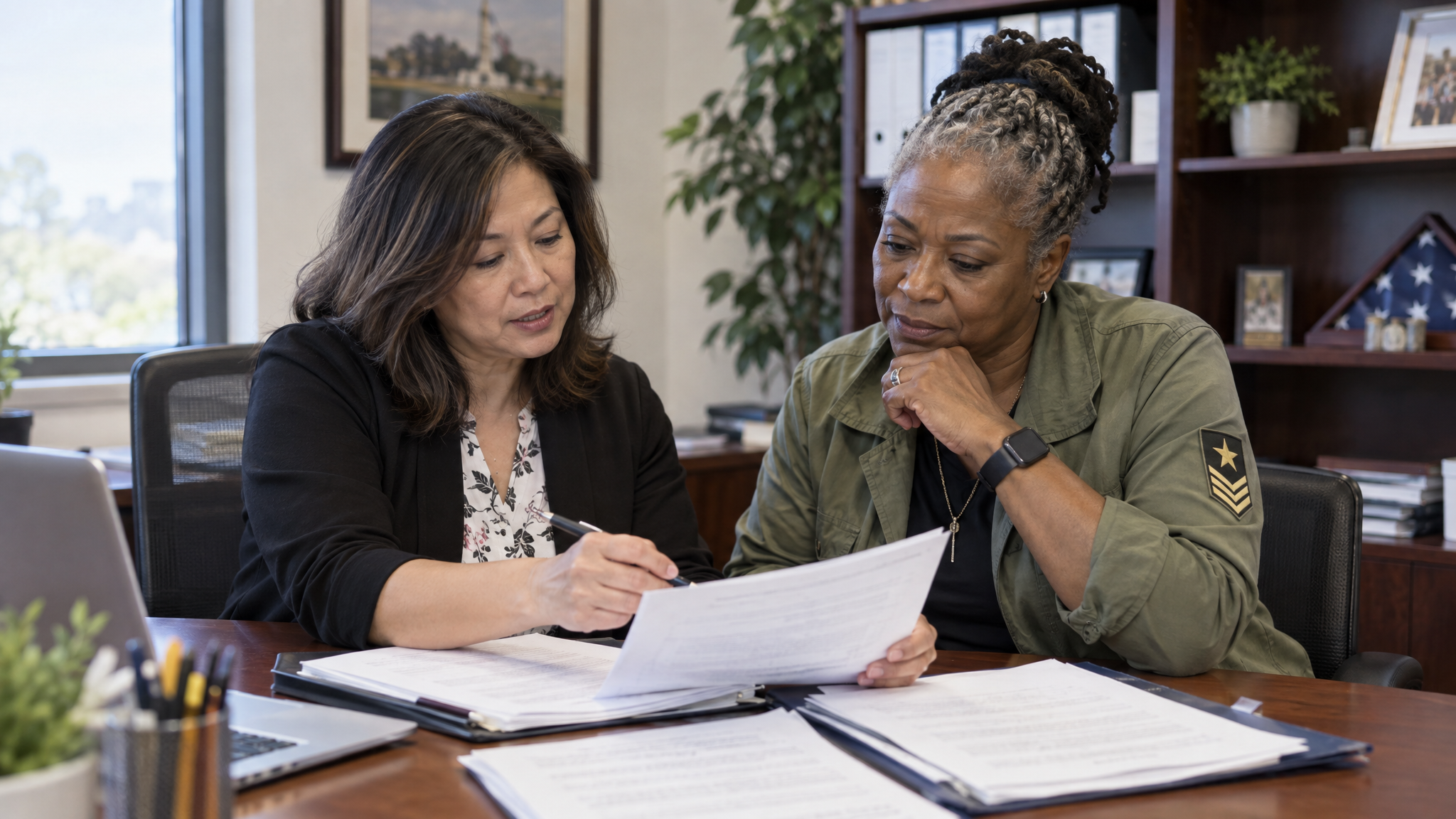

Health Care and Housing Safety: Care That Builds Your Record
Your routine VA care writes the evidence your claim depends on, and leaving an unsafe home is a housing emergency the VA is built to answer. Here is how to use both.
Your Annual Exam Is Not Optional, and It Is Not Just Health Care
I talk to women every week who have not had a mammogram or a cervical screening in years because they assumed the VA either did not do it or would not do it for them without a rating. Both assumptions are wrong. Enrollment opens the door, not a rating. Under 38 U.S.C. §1710 and the medical benefits package in 38 CFR §17.38, enrolled veterans get preventive care, which the law defines in 38 U.S.C. §1701(9) to include periodic exams, screening tests, immunizations, and health education. That covers the annual wellness visit, cancer screenings, vaccines, and the ongoing management of diabetes, blood pressure, and thyroid disease.
Every VA medical center has Women's Health Primary Care Providers, primary care clinicians with added training in the care women need: gynecological exams, contraception, menopause, and care that understands military sexual trauma. One provider handles your Pap test and your blood pressure in the same visit, and she pushes the referrals when something needs a specialist. If your current provider feels generic, you can ask to be reassigned. The Women Veterans Program Manager at your medical center can make that happen when the front desk will not. The rules for telehealth and for getting sent outside the VA under community care are laid out on the VA medical care benefits page of this site, so I will not repeat them here.
Here is the trap: women skip routine care because they feel fine, and years later, when they file a claim, there is no treatment record showing when the problem started or how long it has gone on. The VA reads a silent record as a healthy veteran. Every screening, every lab, every note your provider writes is a dated entry in a file the VA cannot ignore.
Your part: at your next visit, ask for a Women's Health Primary Care Provider and a full preventive care review, and tell her about every exposure in your history: burn pits, contaminated water, Agent Orange era locations, anything. The PACT Act added toxic exposure screening, and saying it out loud puts the exposure in your medical record. Then work through the four cards below.
Four Ways Routine Care Protects Your Claim
Routine care is health care first. But the women who win their claims are almost always the women whose records tell a continuous, dated story, and the women who struggle are the ones with a ten year gap the VA fills with its own assumptions.
Here is the trap: care you get outside the VA, through community care or your own insurance, often never lands in your VA file. The rater decides on the record in front of her, not the one sitting in a civilian clinic's system.
Your part: pick the card that fits where you are and take its one step this month.
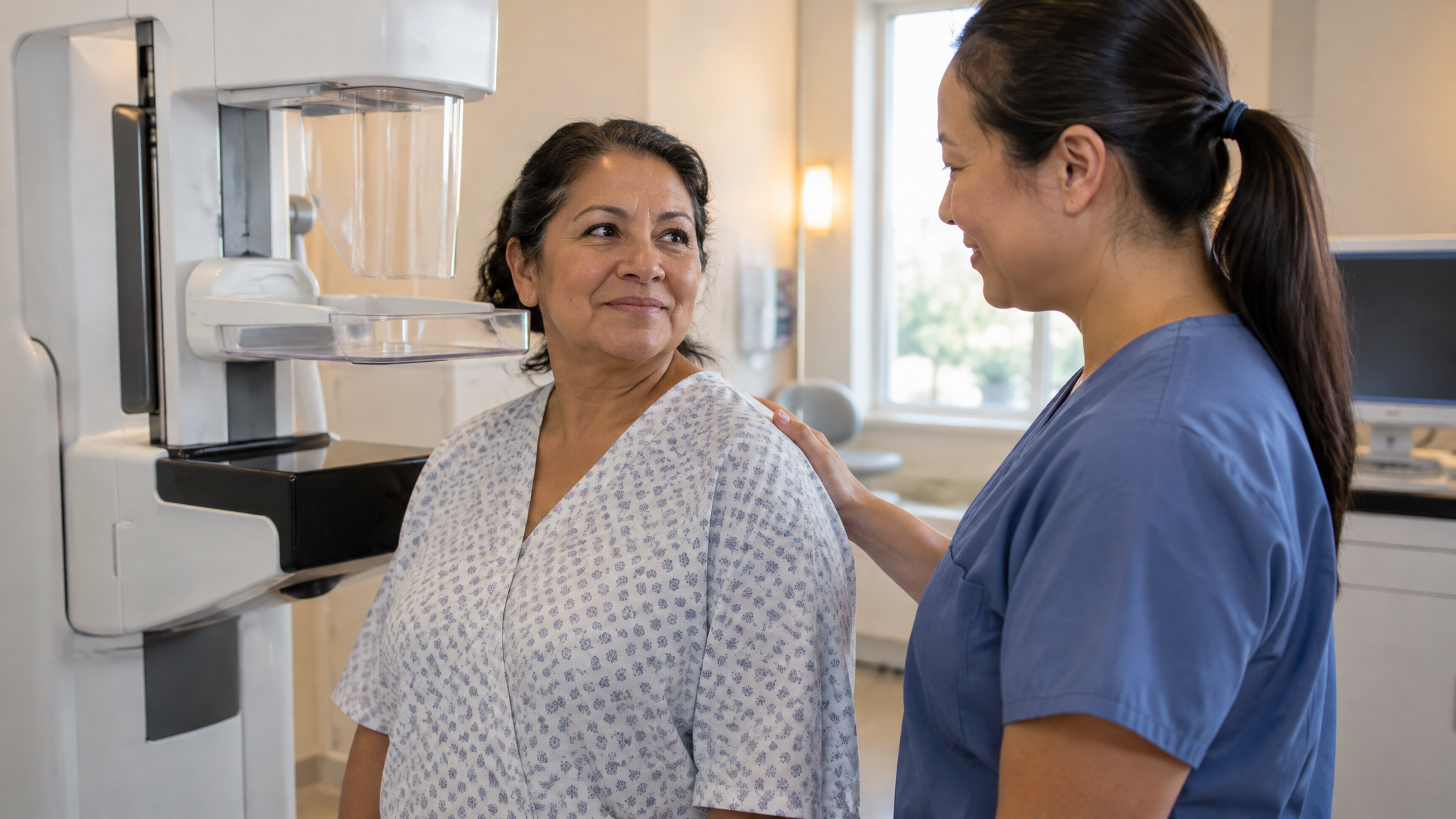
Get Every Screening on the Calendar
The VA covers screening and diagnostic mammograms, breast MRI for higher risk women, Pap and HPV testing, colorectal screening by stool test or colonoscopy, and low dose CT lung screening for women with a heavy smoking history or qualifying toxic exposure. If your facility has no mammography suite, the VA arranges the screening with a community provider. Your provider sets the schedule by your age and history, so ask her to put each one on the calendar before you leave the room.

The Screening Record Dates the Problem
A normal screening one year and an abnormal one the next pins down when a condition began, which matters for presumptive windows and for the effective date of your claim. Breast cancer is rated 100 percent during treatment and for six months after it ends, then the VA rates what remains. Breast surgery is rated under 38 CFR §4.116, diagnostic code 7626, by the type of surgery and whether one or both breasts were involved. Make sure the residuals get rated, not just the cancer.

Post-Mastectomy Care and SMC-K
After breast cancer surgery, VA Prosthetics provides breast prostheses, mastectomy bras, and related supplies, and your care team can refer you for reconstruction. On the compensation side, anatomical loss of 25 percent or more of the tissue of one breast, or both breasts combined, including by lumpectomy, or radiation treatment of breast tissue, qualifies for special monthly compensation under 38 U.S.C. §1114(k) and 38 CFR §3.350(a). It is paid on top of your combined rating, and raters miss it. Name it on the claim.

Get Outside Results Into Your VA File
Mammograms and specialist visits done through community care or private insurance often never reach the VA record. Ask your provider to have the outside results scanned into your chart, and keep your own copy of every report. When you file, identify every private provider. Under 38 CFR §3.159(c)(1), the VA must make reasonable efforts to get relevant private records you identify and authorize, and it must tell you when it cannot get them. Records you hand in yourself never depend on that effort.
Leaving an Unsafe Home Is a Housing Emergency, and You Do Not Have to Be on the Street to Qualify
When a woman veteran loses her housing, it is usually not the street first. It is a relative's couch, a car with her things in the back, or a home she cannot stay in because someone in it is hurting her. Women veterans are far more likely than men to be housing insecure while caring for children, and an unsafe relationship is one of the most common things that pushes them out the door. Most of these women never show up in a shelter count, so they assume the help is for somebody else.
It is not. The VA homeless programs under chapter 20 of title 38 use the federal definition of homelessness through 38 U.S.C. §2002(a), and that definition in 42 U.S.C. §11302(b) specifically covers a person fleeing or attempting to flee domestic violence who has no other safe place to go. The programs themselves, HUD-VASH, SSVF, Grant and Per Diem, and the outreach front door, are laid out on the homeless programs benefits page of this site. What I want you to know here is the door built for women in your situation: every VA medical center has an Intimate Partner Violence Assistance Program coordinator. She is not a housing program. She is the person who puts your safety at the center and pulls the housing, shelter, therapy, and legal help together in one conversation instead of six.
Here is the trap: women wait for something they do not need. A police report. A protective order already in hand. A finished divorce. A disability rating. Proof. A packed bag and a plan. None of those is a condition of VA housing help. Being unsafe where you are is enough to start, and the plan is what the conversation is for.
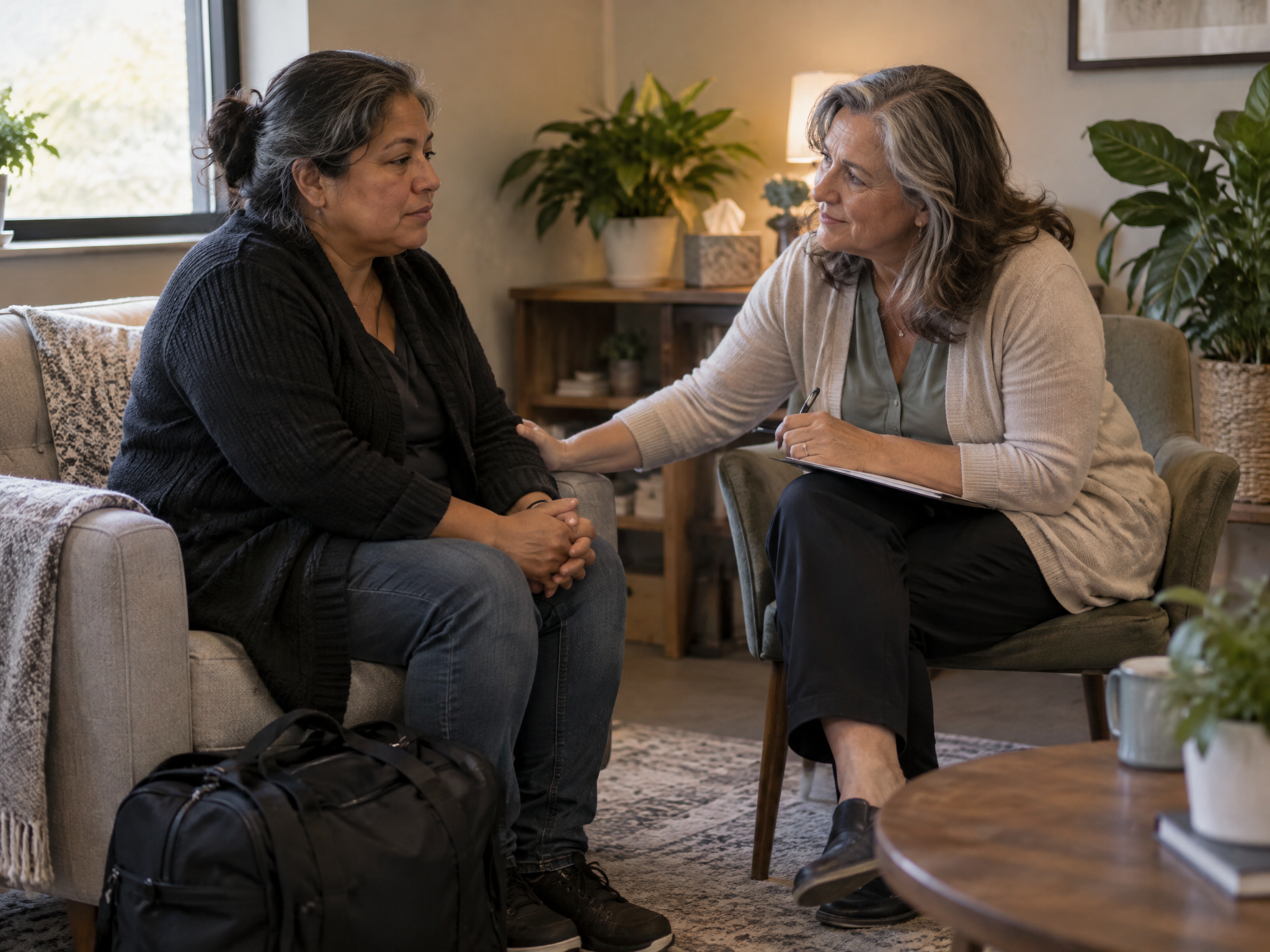
Your part: walk into your VA medical center and ask for the Intimate Partner Violence Assistance Program coordinator, the Homeless Program Coordinator, or the Women Veterans Program Manager by title. Say one sentence: I am a veteran and I am not safe in my home. If your children are with you, say that too, because it changes the placement. You can ask for a woman case manager, and you can ask who will see what before you say anything else.
Four Things to Ask For When You Leave
Safety planning is not a form. It is a person working through the mechanics of getting you out without getting hurt, then spending program money to make it happen. You do not have to arrive knowing what to ask for. These four are the ones women most often leave on the table.
Here is the trap: the emergency gets handled and the woman stops there. Emergency money ends. What keeps you housed for good is income you do not have to reapply for, and for a service-connected veteran that is a correct rating.
Your part: get safe first. Then come back to these cards one at a time.

A Placement That Keeps Your Family Together
Ask for more than one program at once, because they run in parallel. SSVF can cover a security deposit, first month of rent, utilities, and moving costs fast. A HUD-VASH voucher is sized to your household, including your children, and your VA disability compensation is not counted when deciding whether you qualify. Some Grant and Per Diem sites are women only and some accept children. Ask both questions by name: is it women only, and does it take my kids.

Your Address and Your Money
Talking to the coordinator is health care, not a police report, and nobody calls him. Tell your care team if mail, appointment reminders, or a voicemail could reveal where you went, so your record is handled with that in mind. Vet Center counseling records are kept apart from your VA medical record. If your compensation lands in a shared account, that is control someone else holds. Once you are somewhere safe, open an account in your name only and change your VA direct deposit and mailing address through VA.gov.

Care Now, and a Record That Counts Later
Ask for a same day mental health assessment. Care for military sexual trauma is provided under 38 U.S.C. §1720D with no rating required and no service connection required. If what happened made a service-connected condition like PTSD or depression worse, those treatment notes are the evidence for an increase under 38 CFR §4.130, so tell your provider exactly how your sleep, work, and daily life have changed. Let her document injuries too. It matters medically now and as evidence later.

Your Rating Is Your Housing Money
Underrated conditions, missing secondary conditions, and MST claims denied without looking at the markers in 38 CFR §3.304(f)(5) are the most common reasons a woman is paid less than her record supports. Know one more rule. A spouse who no longer lives with you can ask the VA to apportion part of your compensation under 38 CFR §3.450 and §3.451. The VA weighs both households, and you get notice and a chance to respond. Do not ignore that letter. Answer it with your own expenses and your children.
The Drive, the Kids, the Waiting Room: When Getting There Is the Problem
The women I work with rarely skip care because they do not want it. They skip it because the nearest VA is hours away, because nobody can watch the kids, or because the last time they sat in that waiting room someone made them feel unsafe. Every one of those is a real barrier. None of them has to end your care.
The VA runs VA Video Connect for visits from home, ATLAS rooms in community locations for women with no internet, and a tablet loan through the Digital Divide Consult for women with no device. Many medical centers now have women's health clinics with their own space. The rules for community care outside the VA are on the VA medical care benefits page of this site, so I will not repeat them here.
Here is the trap: a gap in care is a gap in your evidence. When the record goes quiet, the rater reads it as a veteran who got better, and an increase claim filed after three silent years starts from behind.
Your part: tell your care team exactly what keeps you from coming in, the distance, the children, the device, or the person, and ask which option below fixes it.

Four Ways to Keep Your Care, and Your Record, Going
Each of these answers one barrier. Pick the one that matches yours. What they share is the part that matters for your claim: every visit writes a dated note into your VA treatment record.
Here is the trap: treating these as second-class care. A video note carries the same weight in your file as an office note when it records the same symptoms.
An ATLAS Room Near You
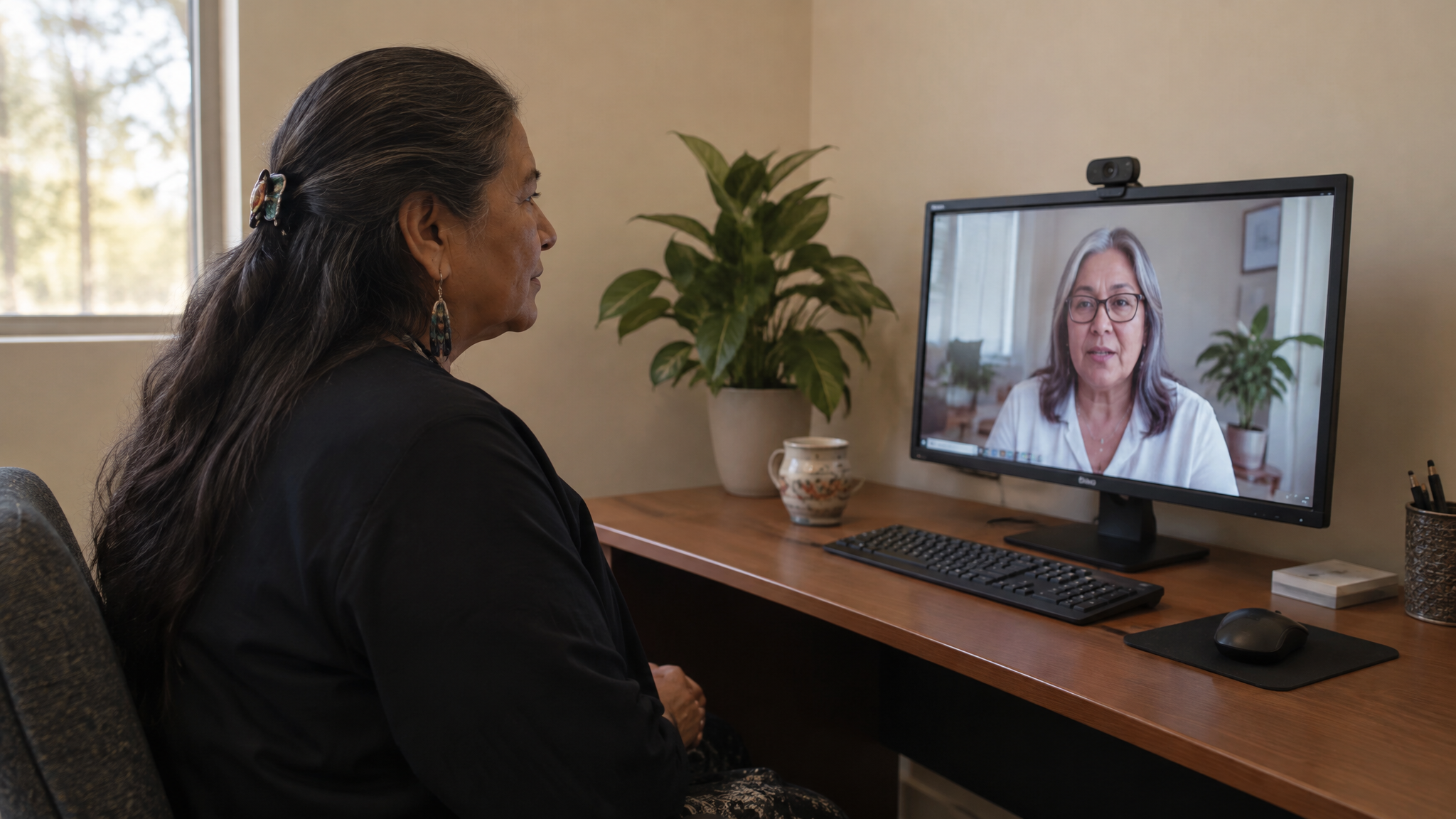
ATLAS, short for Accessing Telehealth through Local Area Stations, puts private, equipped telehealth rooms in community locations such as American Legion and VFW posts and some retail sites. An attendant helps you get connected, then leaves the room so the visit stays private. You need no home internet and no device of your own. Here is the trap: women who live far out assume the drive is the only way in, and they stop going. Your part: ask your care team whether there is an ATLAS site within reach and which of your appointments can be done there.

No Device? Ask for a Digital Divide Consult
If you have no video-capable device or no reliable internet, ask your provider for a Digital Divide Consult. A social worker reviews what you need, and eligible veterans can be loaned an internet-connected tablet at no cost, with round the clock technical support. The condition is simple: use it for at least one video appointment with a VA provider every 90 days. Several major wireless carriers also do not charge data for VA Video Connect. Here is the trap: let the tablet sit unused and you lose it. Your part: put a video visit on the calendar every quarter, even a short check-in.

A Video Visit Writes the Same Record
A VA Video Connect visit is a real appointment with a real VA provider, and the note she writes goes into the same VA treatment record as an office visit. For a claim, that is what matters: dated entries showing your symptoms, how often they happen, and how they affect your work and home. Here is the trap: women keep video visits short and polite and say they are fine, and the note says the same. Your part: before every visit, write down the two or three things that got worse since last time, and say them out loud so the provider records them.
If Someone at the VA Makes You Unsafe
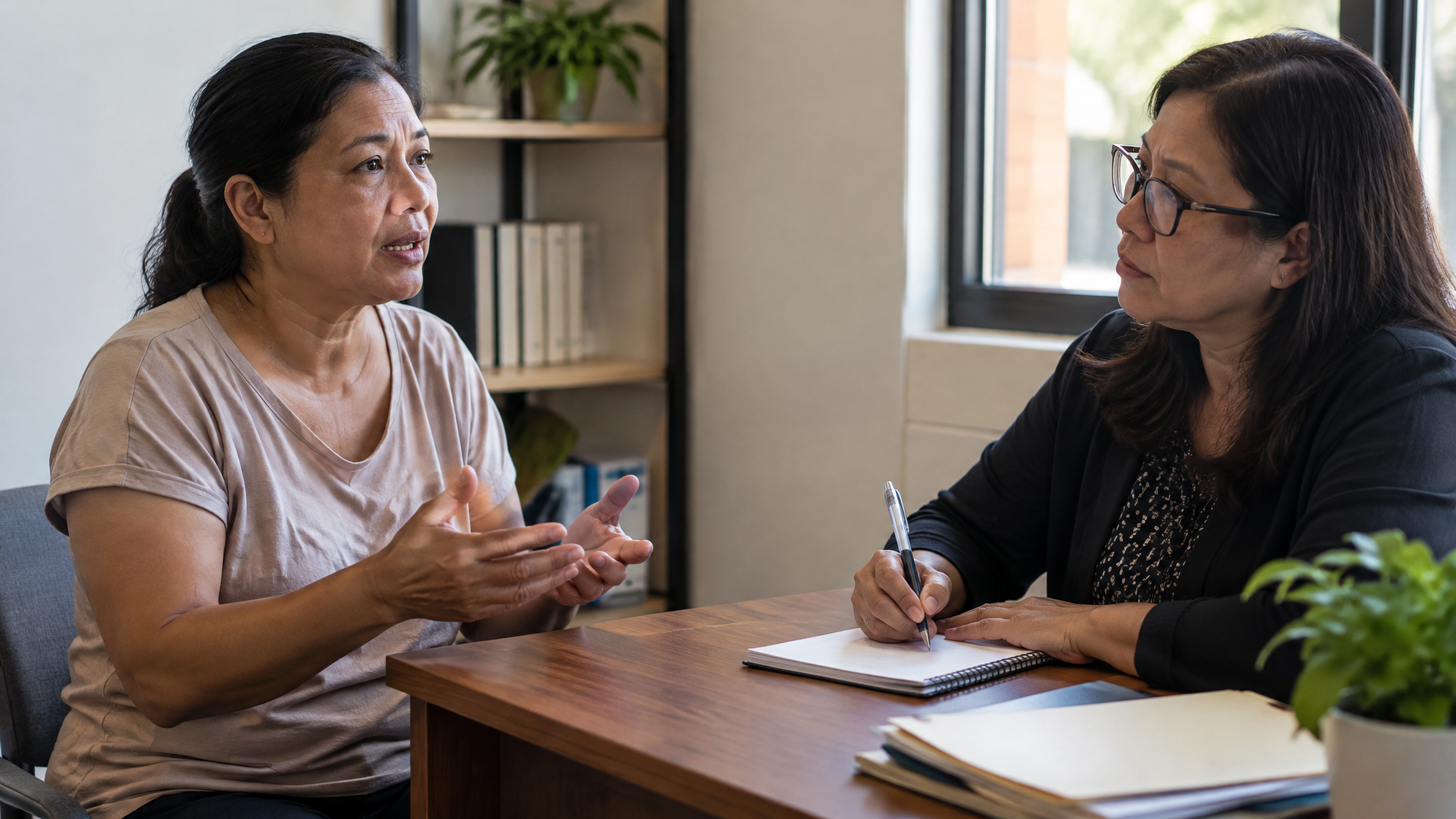
Harassment on VA property, by staff, visitors, or other veterans, is something the VA is required to act on. Report it to VA police on site, to the Patient Advocate at your medical center, or to the Women Veterans Program Manager, and write down the date, place, and what was said or done. You can ask for a woman provider, for care in a women's health clinic, and for a chaperone at any exam. Here is the trap: one bad encounter becomes the reason a woman stops coming, and her treatment record goes silent for years. Your part: report it, change the setting if you need to, but keep the care going.
More Women Veteran Guides
Each guide below covers one part of a woman veteran's claim in depth, with the regulations, the traps, and your part spelled out.

 You are here
Health Care and Housing Safety
Why your annual exam and routine screenings protect your claim, and the help the VA owes you when you leave an unsafe home.
You are reading this guide