

Toxic Exposure
Blue Water Navy Veterans
Restored herbicide presumptions after the Blue Water Navy Vietnam Veterans Act of 2019
The Blue Water Navy Vietnam Veterans Act restored Agent Orange presumptions to veterans who served aboard ships in the offshore waters of Vietnam, reversing years of wrongful denials.
A Wrong That Congress Corrected
For roughly seventeen years the VA denied Agent Orange presumptions to “blue water” sailors, those who served aboard ships offshore, by limiting the presumption to “boots on the ground” and inland waterways. That interpretation traced to *Haas v. Peake*, and tens of thousands of denials issued under it. The Federal Circuit rejected it *en banc* in *Procopio v. Wilkie* in 2019, holding that the Republic of Vietnam always included its territorial sea. Congress codified the fix the same year in the Blue Water Navy Vietnam Veterans Act (PL 116-23), now written into 38 U.S.C. §1116A.
The law restored the herbicide presumption to veterans who served aboard a vessel operating not more than 12 nautical miles seaward from the demarcation line of the waters of Vietnam and Cambodia, between January 9, 1962 and May 7, 1975, effective January 1, 2020. Inside that line, the presumption applies the same way it applies to a soldier ashore. It is a position question, not a hull-number question, and position is a matter of record.

How the Poison Reached the Crew
The single argument the VA fought hardest, and the one that decides these claims, is how dioxin reached men who never touched Vietnamese soil. Ships at sea made their own fresh water by boiling seawater and condensing the steam. Distillation is built to strip salt. It does not strip dioxin the same way, and work commissioned by the Australian government found the process could concentrate it rather than remove it. The National Academies reviewed that pathway in 2011. A sailor who never went ashore still drank that water, cooked with it, showered in it, and made his coffee with it, every day, for the length of the cruise.
The evaporators sat in the engineering spaces, but the water went everywhere: the galley, the scullery, the showers, the sick bay, the scuttlebutt on every deck. A cook, a radioman, a yeoman, a hospital corpsman, and a boatswain’s mate all drank from the same tanks. There is no rate aboard that was drinking different water, and nothing in §1116A requires that you worked below decks. Congress accepted that reasoning when it wrote the statute.
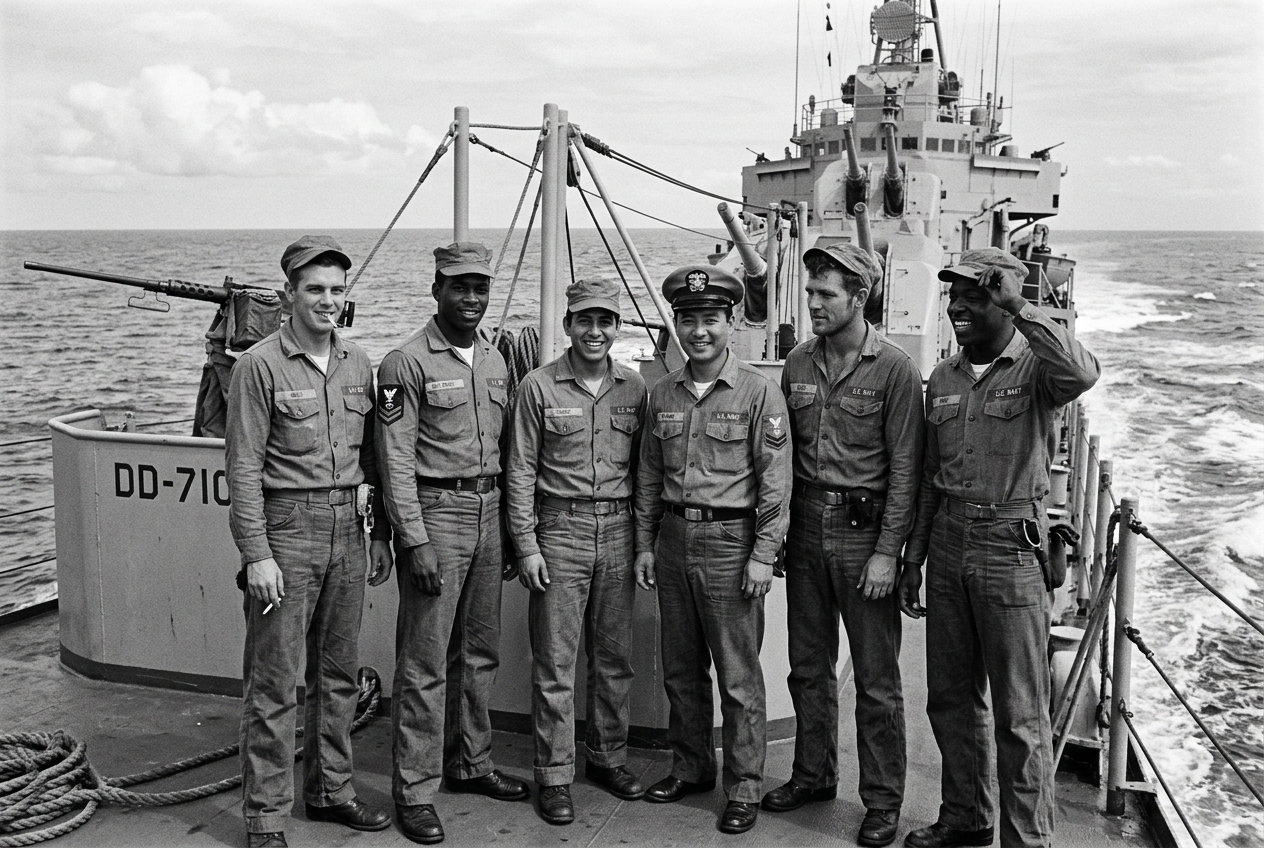
Who Qualifies Now

Service aboard a vessel operating not more than 12 nautical miles seaward of the Vietnam/Cambodia demarcation line

Any single service day inside that zone between January 9, 1962 and May 7, 1975

A current diagnosis of a condition on the §3.309(e) Agent Orange presumptive list
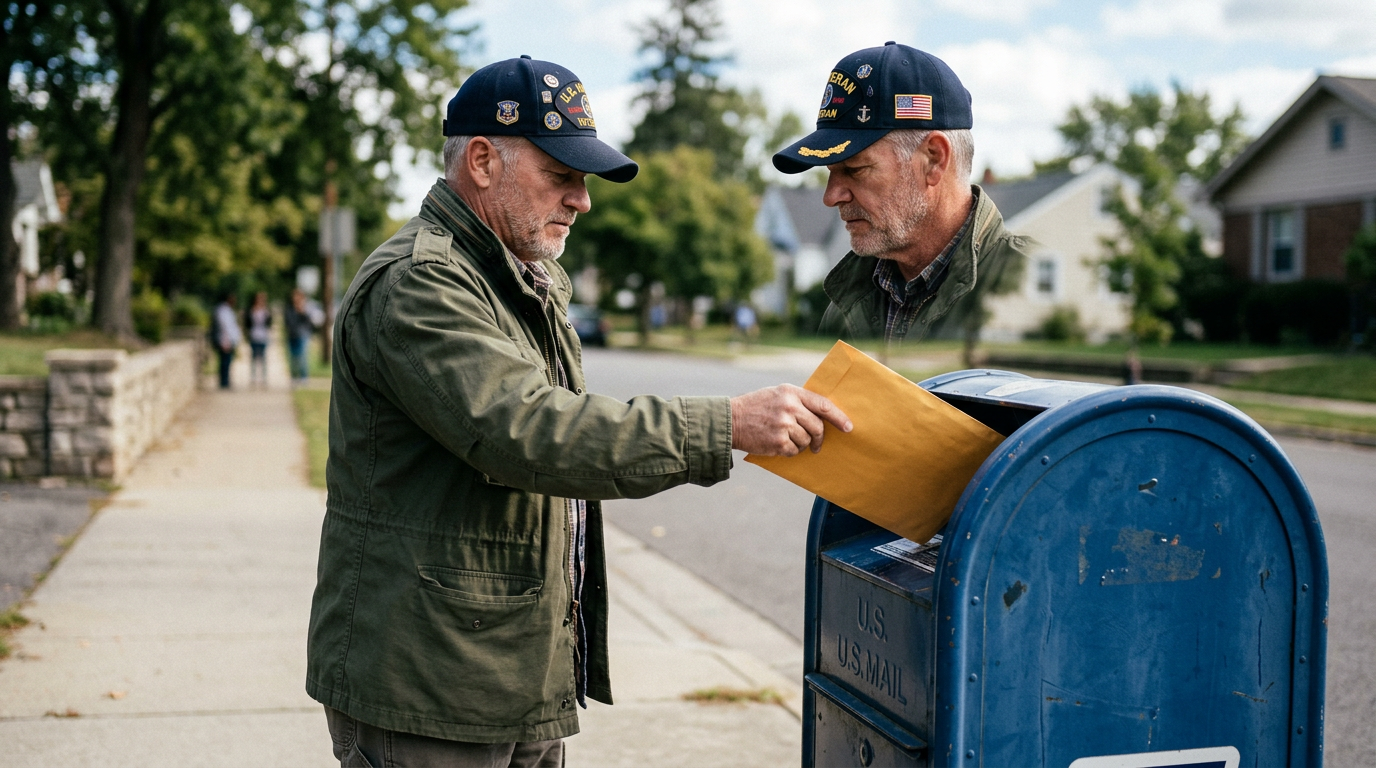
Deck logs, ship histories, or the VA’s own vessel list placing your ship in the qualifying waters

Rank, rate, and duty station do not matter, the ship’s location is the deciding fact

A single day moored or at anchor inside Da Nang, Cam Ranh Bay, Vung Tau, or Nha Trang counts, and the deck log says so

Coast Guard cutters and patrol boats on Operation Market Time count exactly the same as Navy service

Surviving spouses and dependents may qualify for DIC and accrued benefits on the same service
Proving Where Your Ship Was

Deck logs
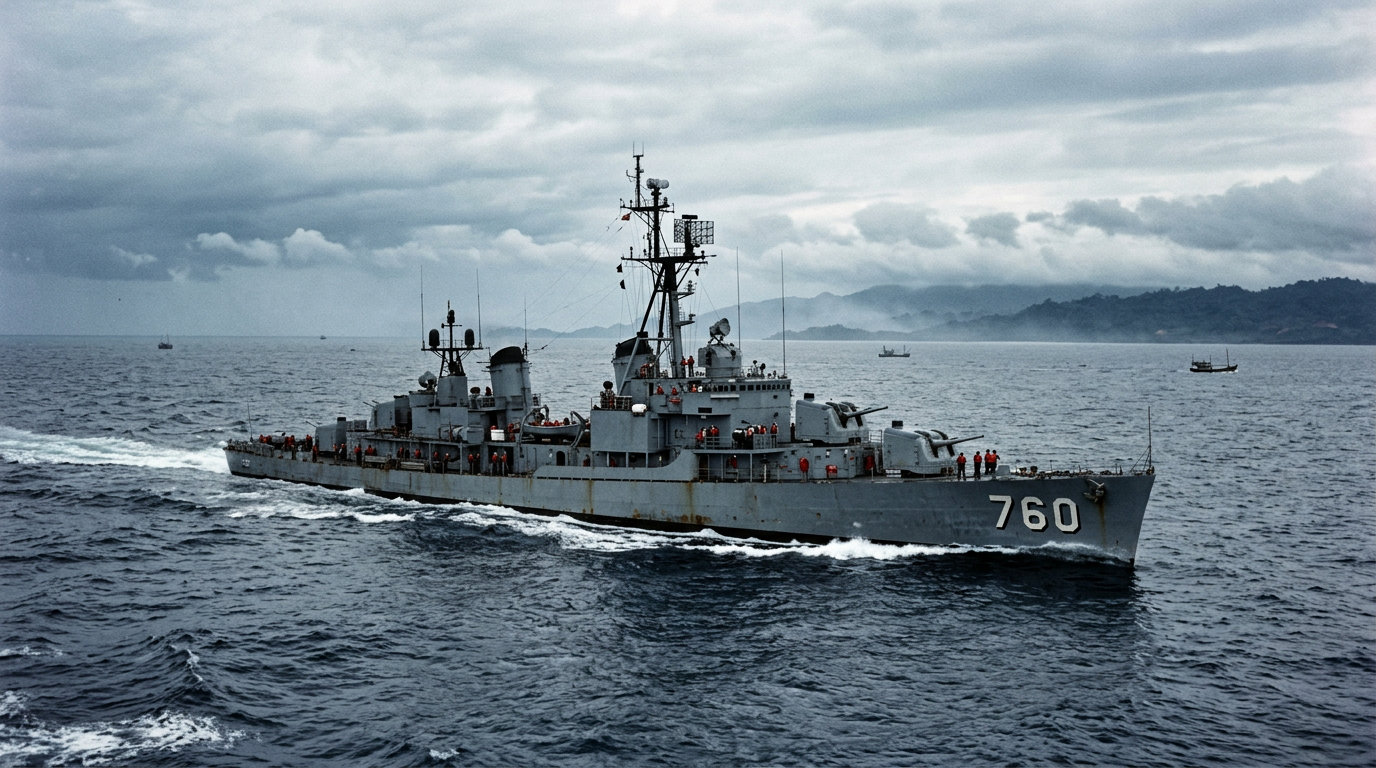
Held by the National Archives (NARA), the deck log is the ship’s official hour-by-hour record of where it was, logged in latitude and longitude by the officer of the watch. It is the single most persuasive document in a Blue Water claim because it places the vessel inside the 12-nautical-mile line on specific dates, in the Navy’s own hand. You order the relevant months by hull number and date, and a single qualifying entry can carry the whole case.
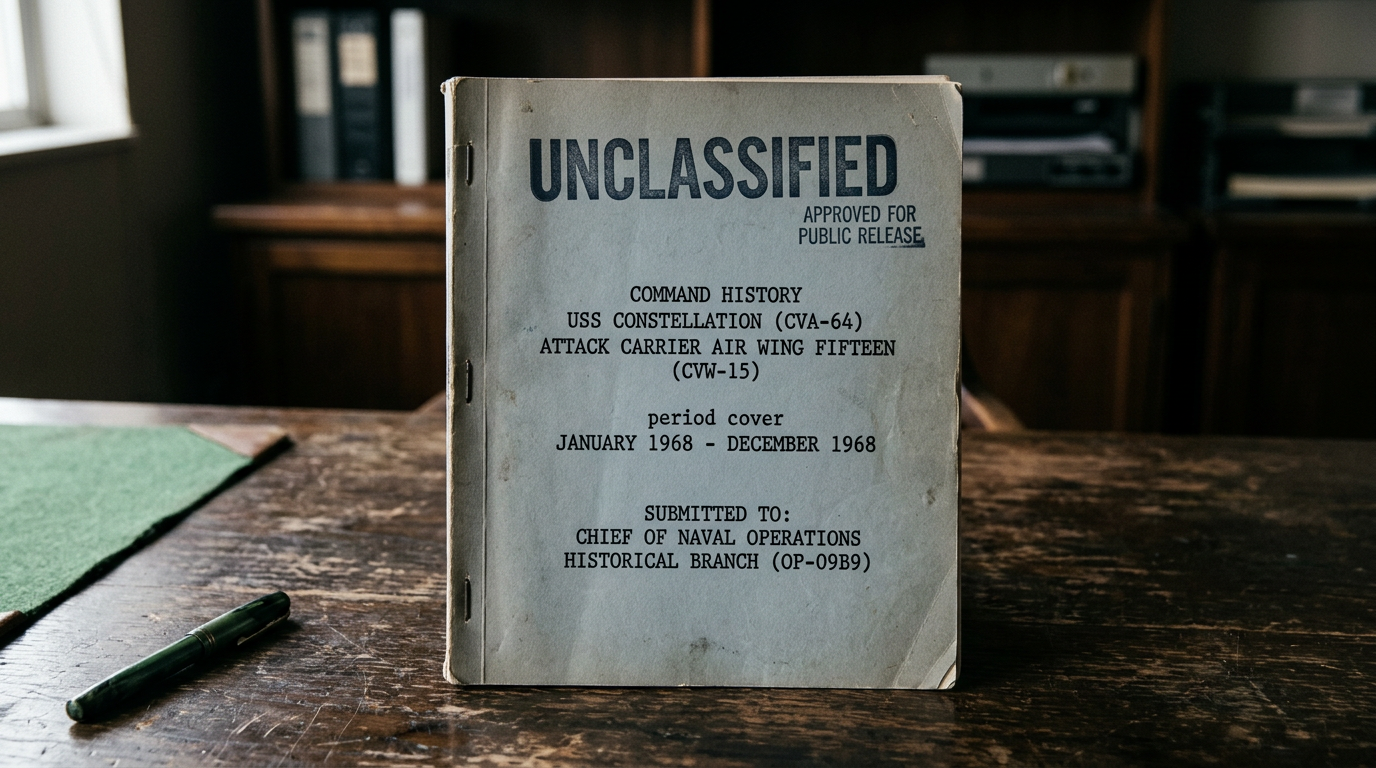
Command / squadron histories
Filed annually by every command, these narratives describe the ship’s operating areas, its Yankee Station and Dixie Station line periods, and its gunline and plane-guard assignments. They frame the deck logs: a command history that puts the ship on the gunline for a given cruise tells the rater exactly where to look, and confirms the vessel was working the coast rather than sitting in a deep-water port.
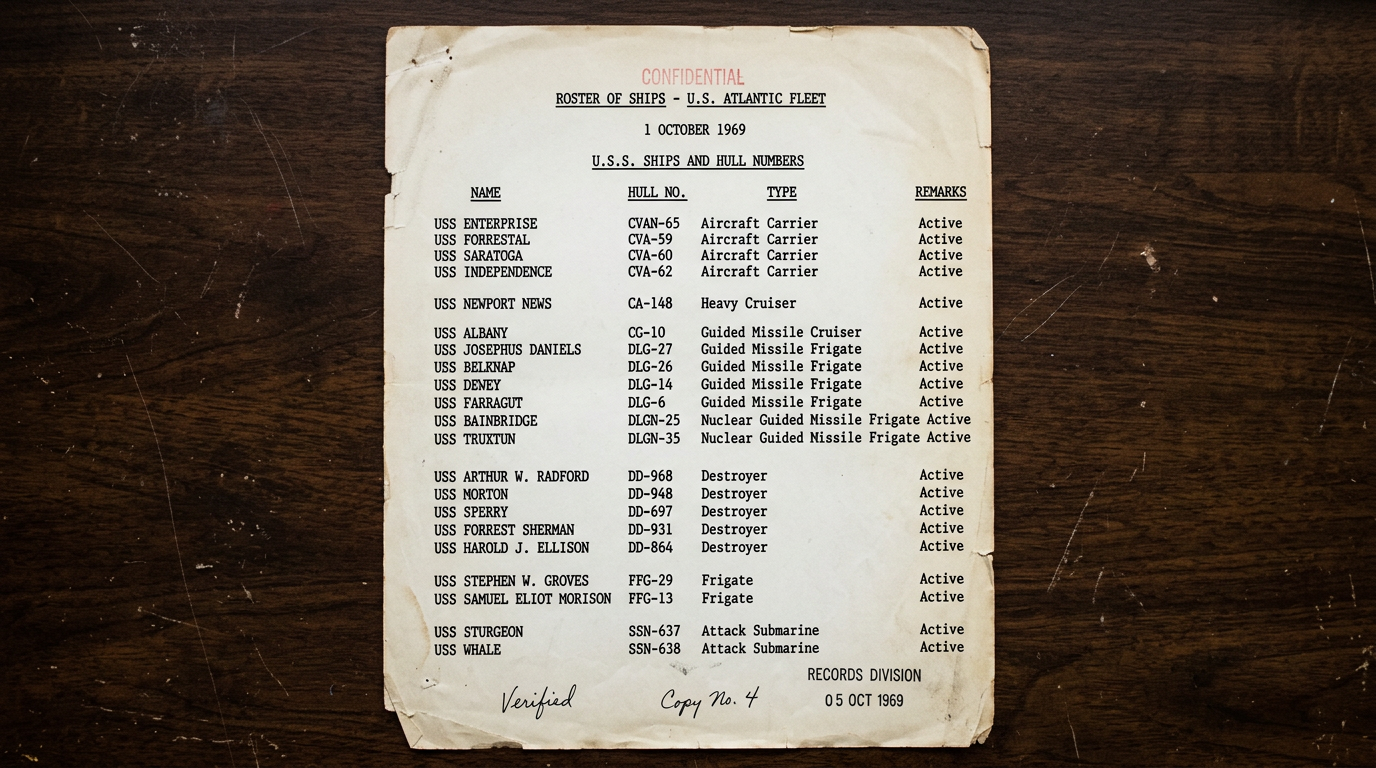
The VA’s Navy and Coast Guard ships list
The VA maintains an internal list of vessels with confirmed qualifying service. Absence from that list is not a denial, it is a convenience the VA built for itself, not the boundary of the law. If your ship is not listed, the deck logs and command histories still prove the same fact the list was meant to shortcut, and the rater is obligated to develop the evidence rather than deny for a name that never made an administrative roster.

Shipmate statements
Buddy statements from crew describing gunline operations, plane-guard duty, small-boat details, or transits inside the 12-mile line are lay evidence the VA is required to weigh. They corroborate the logs and fill the gaps a log entry cannot: a shipmate who remembers anchoring off the coast or ferrying men ashore speaks to service the paper may only imply. Signed, dated, and specific beats vague every time.
Personal documentation
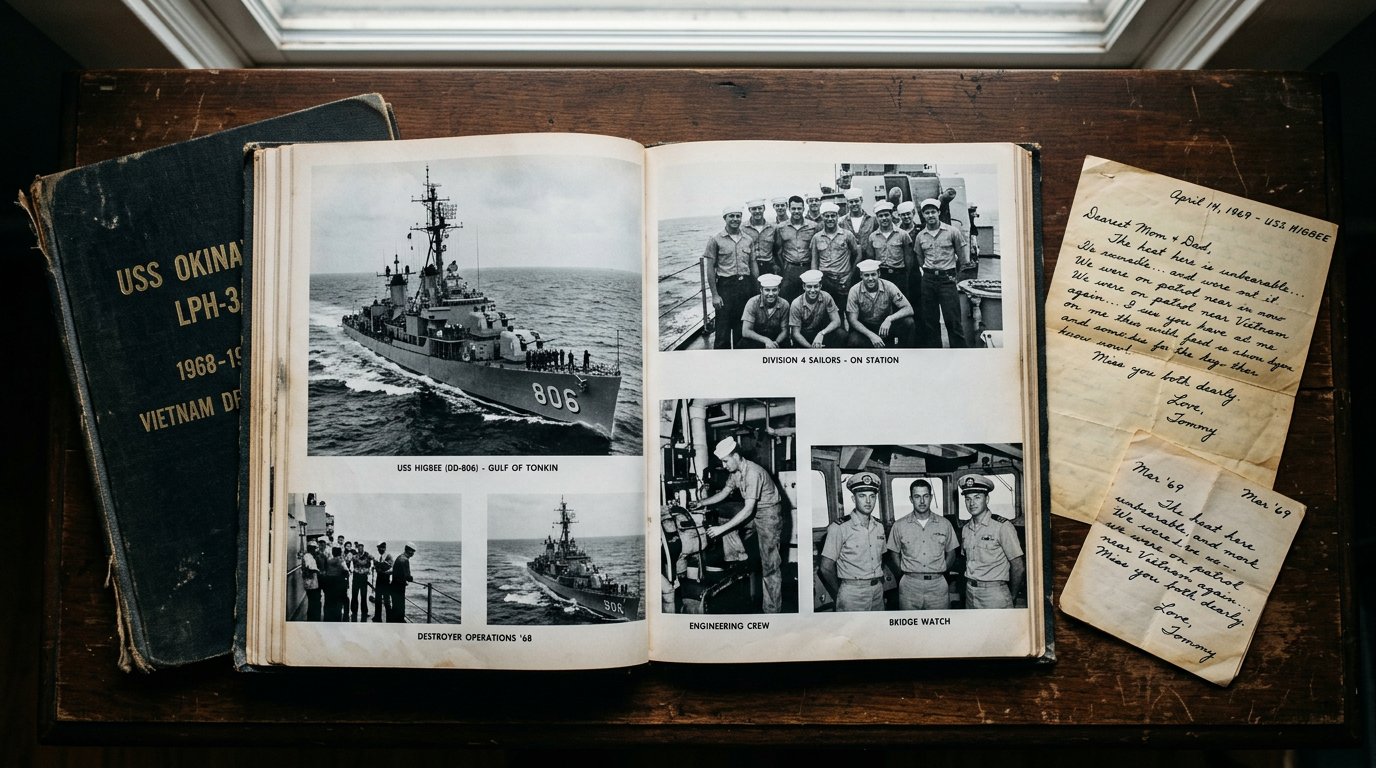
Cruise books, photographs, letters home, and liberty records can all place a ship in the zone. A liberty stamp from a coastal port, a photo of the shoreline taken from the deck, a letter describing the gunline, each one is a dated thread that ties back to the logs. Veterans routinely have this material in a box at home and never think to submit it.

Muster rolls and personnel records
Your service personnel record and the ship’s muster rolls confirm the exact dates you were aboard each vessel, tying you directly to the deck-log positions. This is the link that closes the loop: the logs prove where the ship was, the muster roll proves you were on it. Without it a rater can concede the ship’s location and still question whether you were aboard on the qualifying date.
The Three Ways a Blue Water Claim Gets Won
Presumptive, offshore service
Two facts and a diagnosis. One, the ship operated inside 12 nautical miles during the window. Two, you were aboard. Three, you carry a condition on the 38 CFR §3.309(e) list. Meet those and the VA concedes exposure, no nexus opinion required. The location rule lives at §3.307(a)(6); there is no manifestation deadline, a prostate cancer diagnosed in 2024 is as presumptive as one diagnosed in 1984. This is the cleanest lane in the whole system, decided on service records alone, and it is the first theory to test every condition against before you reach for anything harder.

Facts-found, off the list or outside the line
If your ship is not on the VA list, that is an evidence problem, not a legal problem, and the deck logs settle it. If your diagnosis is not on §3.309(e), the presumption does not reach it, but a facts-found claim still can, built on the exposure evidence plus a medical opinion that reads at least as likely as not and explains the mechanism. No presumption is not the same as no claim, it just means the burden of proof moves from the calendar to the medical file.

Secondary, what the presumptive disease caused
The presumptive disease is the doorway, not the whole house. Diabetes drives neuropathy, retinopathy, and kidney disease. Prostate cancer leaves voiding dysfunction and erectile residuals rated separately, often with special monthly compensation. Ischemic heart disease drives the METs limits that carry a TDIU argument. Files that claim the headline condition and stop are the most common form of money left behind, every secondary you fail to claim is a rating the VA is happy to let you forget.
A Presumption and a TERA Determination Are Not the Same Thing
These two get mixed together constantly, by veterans, by service officers, and sometimes in the decision letter itself. They answer different questions. A presumption asks *where and when* you served: a specific place, a specific date range, and a diagnosis on the list attached to that place. All three have to line up. When they do, the VA presumes both the exposure and the connection, and the claim is decided on service records, not medical evidence. Offshore Vietnam service is a presumption case.
A TERA determination, Toxic Exposure Risk Activity, asks *what you did*. It is the VA’s finding that your duties put you at risk of a hazard, and under 38 U.S.C. §1168 it generally forces the VA to obtain an exam and a medical opinion. What it does not do is concede the medical link, the VA can find TERA and still deny for “no nexus.” A TERA finding never removes the need for a nexus opinion, it is what forces the VA to go get one.
You Can Stand in Both Lanes
Plenty of Blue Water veterans are presumptive on one condition and facts-found on another inside the same application. Preparing the wrong pile of paper for a condition, service facts when you needed a nexus opinion, or the reverse, costs months. Sort each condition into its own lane before you file.
The Presumptive Conditions Under §3.309(e)
If you served inside the line and carry any condition on this list, exposure is conceded. The list is closed, a diagnosis that is not on it is not presumptive, however strong the science, but it can still be pursued on a facts-found theory.

AL amyloidosis
A rare disorder where misfolded proteins deposit in organs, most dangerously the heart and kidneys. It is easy to miss and often caught late, so a documented cardiac or renal workup is what carries the claim.

Bladder cancer
Added to the herbicide list in 2021. Rated on voiding dysfunction and recurrence, and if treatment left you using pads or a catheter, that residual is a separate ratable line the VA rarely scores on its own.

Chronic B-cell leukemias, including hairy cell leukemia
A group of blood cancers of the B-lymphocytes. Even in a watch-and-wait phase with no active treatment, the diagnosis alone establishes the presumption, so file at diagnosis rather than waiting for chemotherapy.

Chloracne or similar acneform disease
A skin condition tied directly to dioxin, but the presumption requires it to appear within one year of separation. Old service or early VA skin records are the evidence that saves this one.

Type 2 diabetes mellitus
The most commonly granted herbicide condition, rated on insulin, diet, and activity restriction. Its real value is downstream: it drives neuropathy, retinopathy, and kidney disease that each rate separately.

Hodgkin’s disease
A lymphatic cancer that responds well to treatment, which is exactly why the VA tries to rate it at 0% once you reach remission. The residuals of chemo and radiation, and any relapse, keep the rating alive.

High blood pressure (hypertension), added by the PACT Act
One of the newest additions and one of the most common. Rated on your diastolic and systolic numbers and your medication history, it is on almost every Blue Water veteran’s chart and routinely goes unclaimed.

Hypothyroidism, added by the PACT Act
An underactive thyroid, added by the PACT Act. Rated on fatigue, weight gain, and mental sluggishness, symptoms so easily blamed on age that veterans never connect them to service.

Ischemic heart disease
Reduced blood flow to the heart, rated by METs on a stress test. A low METs number is what opens a TDIU argument, so insist the exam actually measures it instead of estimating.

Monoclonal gammopathy of undetermined significance (MGUS), added by the PACT Act
A pre-cancerous plasma-cell condition that can progress to multiple myeloma. It is presumptive in its own right, so it should be claimed and monitored, not brushed off as “just a lab finding.”

Multiple myeloma
A cancer of the bone-marrow plasma cells. Aggressive and often rated high, with anemia, bone pain, and kidney involvement that support secondary claims on top of the primary rating.

Non-Hodgkin’s lymphoma
A broad family of lymphatic cancers. Active disease is rated 100%, and even after remission the residuals and follow-up carry a continued rating the VA will try to cut too soon.

Parkinson’s disease
A progressive neurological disease rated across tremor, rigidity, speech, and swallowing, each body system scored separately. Filed as a single line, it is almost always under-rated.

Parkinsonism, added by the PACT Act
Parkinson-like symptoms that do not meet the full Parkinson’s diagnosis, added by the PACT Act so veterans are no longer denied on a technicality of the exact diagnostic label.

Early-onset peripheral neuropathy
Nerve damage in the hands and feet, but the presumption requires onset within one year of exposure, a narrow window. Chronic later-onset neuropathy is usually claimed secondary to diabetes instead.

Porphyria cutanea tarda
A rare condition causing skin blistering and fragility on sun-exposed areas, with liver involvement. Like chloracne, it carries a one-year onset requirement, so early records matter.

Prostate cancer
One of the most common presumptives. Active cancer is rated 100%, and after treatment the voiding dysfunction and erectile residuals are rated separately, often with special monthly compensation the VA leaves off.

Respiratory cancers, lung, larynx, trachea, bronchus
Cancers of the airway, rated 100% while active and by residual lung function afterward. Because most were treated in civilian hospitals, the private oncology chart is usually the key evidence.

Soft tissue sarcomas, excluding osteosarcoma, chondrosarcoma, Kaposi sarcoma, and mesothelioma
Cancers of muscle, fat, and connective tissue. The excluded types are carved out by regulation, but the covered sarcomas are presumptive and rated by location, treatment, and residual function.
Reopening Old Denials, and the Effective Date Fight
If you were denied before the law changed, you are entitled to have that claim readjudicated. Critically, blue water veterans are Nehmer class members under §3.816. That means the effective date reaches back to the date of the original denied claim, not to 2019 and not to the date you refile.
Do the math on that. A sailor denied for ischemic heart disease in 2004, granted at 60% today, is owed back pay from 2004, not from the day the VA finally got it right. Surviving spouses of blue water veterans who died with a pending or previously denied claim may be entitled to accrued benefits and DIC on the same theory.

The Advocate’s Take
Thousands of blue water sailors were denied under a rule that the Federal Circuit and Congress both rejected. If that was you, the fight is not over. The effective-date fight alone can be worth years of back pay, and the VA will not raise it for you.
Here is how the VA looks at it. In 2019 the Federal Circuit decided Procopio v. Wilkie, holding that the offshore territorial sea of Vietnam counts. Congress followed with the Blue Water Navy Vietnam Veterans Act, effective January 1, 2020. If your ship operated within 12 nautical miles of the Vietnam or Cambodia coastline between January 9, 1962 and May 7, 1975, you are presumed exposed to Agent Orange under 38 CFR 3.307(a)(6), and every condition listed in §3.309(e) is presumed connected. And if you were denied before for a now-covered condition, the VA must look again and the effective date can reach back to that earlier claim.
What I need from you: your DD-214, your personnel file, the ship name and hull number, your dates aboard, and every prior denial letter. Deck logs and the ship's position records prove the 12-mile distance. The VA uses ship records to check, and I check them too.
Walk through it with me. First, we file an Intent to File, VA Form 21-0966. Second, we confirm the ship was inside the line on your dates. Third, we claim every listed condition, diabetes, ischemic heart disease, Parkinson's, hypertension, the listed cancers, and their secondary conditions under §3.310. Fourth, we pull your old denials and demand the earliest effective date the law allows. If you have passed, your surviving spouse may be able to claim it.
The pitfalls: veterans who never refiled after the law changed, claims that skip the old denial, and survivors who never learned the rule changed. Shocking, I know, but a denial from 2010 can be the most valuable piece of paper in your house.
Your part: find that ship, those dates, and every old letter from the VA. We work WITH you, not FOR you. The law finally caught up to where you served. Let's collect what it owes you.
What About Brown Water and Inland Waterway Service?
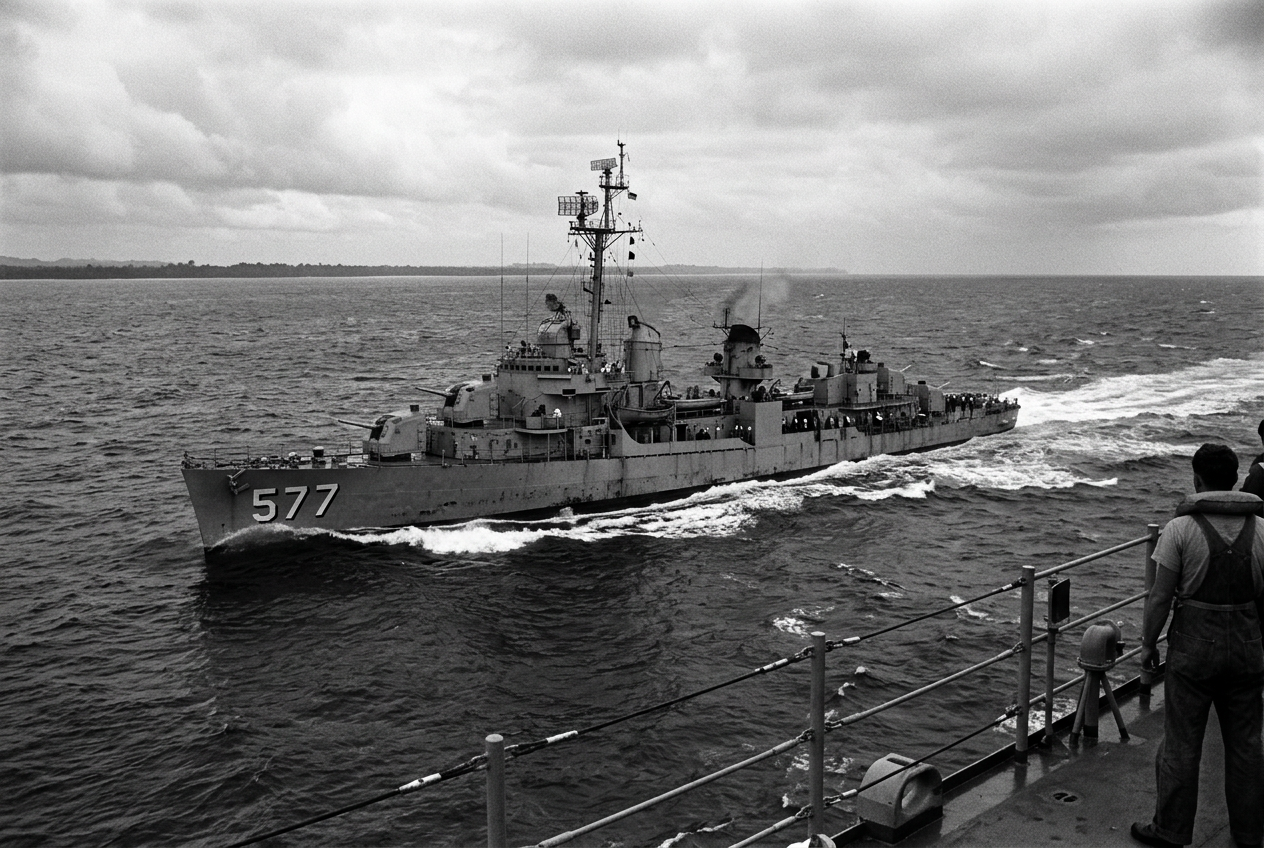
“Brown water” service, riverine, harbor, and inland waterway operations, was always covered and still is, the dispute was only ever about the ships offshore. If you served on a river patrol boat, a swift boat, or a landing craft in the Mekong Delta, or your service included transits up the Saigon River, Da Nang Harbor, Cam Ranh Bay, Nha Trang, Qui Nhon, or Vung Tau, you are inside the original presumption, not the Blue Water fight at all. Any documented liberty ashore also establishes boots-on-ground service on its own.
Evidence Checklist for a Blue Water Claim

DD-214 plus your full service personnel record

Ship name(s) and exact dates aboard each vessel
Deck log extracts for the relevant operating periods

Command history or cruise book excerpts showing the operating area

Any record of liberty ashore or inland waterway transit

Every prior VA decision letter, these define the Nehmer effective date

Current medical evidence diagnosing a §3.309(e) presumptive condition

Muster rolls or a shipmate statement confirming the dates you served aboard
What You’ll Be Told, and the Answer
“You were Blue Water Navy, so the presumption does not apply.”
That rule was repealed. 38 U.S.C. §1116A restored the presumption out to 12 nautical miles, effective January 1, 2020, after *Procopio* held the Republic of Vietnam always included its territorial sea. Anyone still applying *Haas* is applying a case that no longer controls.
“Your ship is not on the VA list, so we cannot concede exposure.”
The list is an administrative convenience the VA built for itself. The statute is the boundary, not the list. If the ship operated inside 12 nautical miles, the deck logs prove it, and the absence of a hull number from a VA spreadsheet proves nothing at all.
“The 2019 law only pays from 2020 forward.”
The most expensive sentence in the entire Blue Water file, and it is wrong. Herbicide claims carry the Nehmer effective-date rules at §3.816, which can reach back to the date of the original denied claim. A sailor denied in 2005 and granted today may be owed the years in between.
“You never set foot in country, so where is the exposure?”
The route was the water, not the soil. The ship distilled seawater for drinking, cooking, and washing, and distillation does not remove dioxin the way it removes salt. The crew drank the exposure, and Congress accepted that reasoning when it wrote §1116A.
“My husband was denied years ago and has since passed away.”
The claim does not die with the veteran. DIC and accrued benefits are separate survivor claims, and under Nehmer a retroactive award on a herbicide condition can be paid to the survivor. Widows of Blue Water sailors denied before 2020 are the most under-claimed group in this entire population.
Where the VA Gets This Wrong
The recurring error is treating a grant after the 2019 law as a brand-new claim with a 2019 or later effective date. For a Nehmer class member with a prior denial, that is legally wrong under §3.816, and it is worth challenging every single time.
Building a Blue Water Navy Veterans Claim That Wins
Every claim stands on three legs. Knock one out and the claim falls over, no matter how bad your symptoms are. Before you file, look at your file and find all three. If one is missing, that is the piece to build first. The VA will not build it for you, and filing without it usually just buys you a denial letter and lost time.
 01
01A current diagnosis
A doctor has to say you have it, now, in writing. Not "reports symptoms of", a diagnosis. Without this leg, nothing else in the file matters.
 02
02A link to your service
An event, an injury, an exposure, or an already service-connected condition. Service records, unit records, buddy statements, and your own account all count as evidence.
 03
03A nexus that ties the two together
A medical opinion stating it is at least as likely as not that your service caused or aggravated the condition. That phrase is a legal standard: 50 percent or better. It is the leg most denials break.
Document the problem before you file
• Keep a dated symptom log for at least 30 days. Frequency, severity, and what it stopped you from doing.
• Get statements from people who see it, a spouse, a coworker, a battle buddy. Lay evidence is legal evidence.
• Pull your private treatment records. The VA only has to help; it does not have to go find everything.
• Write down what you have stopped doing. Lost work, lost sleep, lost activities. That is what impairment looks like on paper.
Your Rights in This Process
Most veterans walk into this system without knowing the rules the VA itself has to follow. That is how claims get denied for missing evidence the VA was supposed to help you find, and how exams get done by the wrong clinician. These six rights are written into federal regulation. Know them before you file, and make the VA honor every one of them when it decides your claim.

It costs nothing to file
Filing a VA claim is free. Accredited representatives may only charge for work on an appeal after an initial decision, and those fees are capped by 38 CFR §14.636.

The VA has a Duty to Assist you
Under 38 CFR §3.159 the VA must help you get the evidence it needs, and it must tell you what is missing before it denies you for missing it.

You can ask for a different examiner
You may request a trauma-informed clinician, or a clinician of a specific gender, for a C&P examination. Ask before the exam is scheduled.

You can claim every condition you have
There is no limit and no penalty. Primary conditions, secondary conditions, and conditions made worse by service all get filed.

You can appeal and be re-evaluated
A denial is not the end. You may submit new evidence, request a higher-level review, appeal to the Board, and ask for re-evaluation when your condition worsens.

You must be considered for TDIU
If your service-connected conditions keep you from holding substantially gainful employment, you may be paid at the 100 percent rate without a 100 percent rating.
When You Are Ready to File
Talk to an accredited representative before you file. It costs nothing to ask, and the order you file in changes what the VA is allowed to award you. Albert L. Thombs Jr. is VA-Accredited Claims Agent #45147. A short conversation now can save you a year spent waiting in the wrong review lane.
Your part starts at the kitchen table. Pull your DD-214, your rating decision if you have one, and the names of every doctor who treats you today. Under 38 CFR 3.159 the VA has to help you gather records, but it can only chase the records you tell it about. Leave a doctor off the 21-4142 and that treatment may never reach your file.

The application itself
This is the form that opens a disability compensation claim. List every condition you are claiming, and name the secondary conditions explicitly.
Release for private records
Authorises the VA to request records from your private doctors. Without it, treatment outside the VA may never reach your file.
Lay or buddy statement
The official form for your own statement and for statements from people who witnessed the event or the change in you.
Keep Reading
One page never tells the whole story of a claim. The VA rates every condition on its own evidence, its own exam and its own diagnostic code, and the pieces connect in ways most veterans never see until a decision letter lands. These are the pages that pick up where this one stops. Read them before you file, not after a denial, because the cheapest fix in this process is the mistake you never make.

Vietnam Veterans & Agent Orange
Veterans with qualifying Vietnam-era service are presumed exposed to Agent Orange, and a long list of conditions is presumptively service-connected, no nexus required.
Read more
Brown Water Navy Veterans
Brown Water Navy veterans ran the rivers, canals, and harbors of Vietnam, and they have been inside the Agent Orange presumption from the start. The fight was never about them, but the VA still stalls these claims when the paper does not instantly place the boat on an inland waterway.
Read more
Gulf War & PACT Act Veterans
The PACT Act dramatically expanded presumptive conditions for veterans exposed to burn pits and airborne hazards in the Gulf War and post-9/11 conflicts.
Read more
Gulf War Illness
Gulf War Illness covers undiagnosed illnesses and medically unexplained chronic multisymptom conditions in Southwest Asia veterans, no nexus required when the criteria are met.
Read more