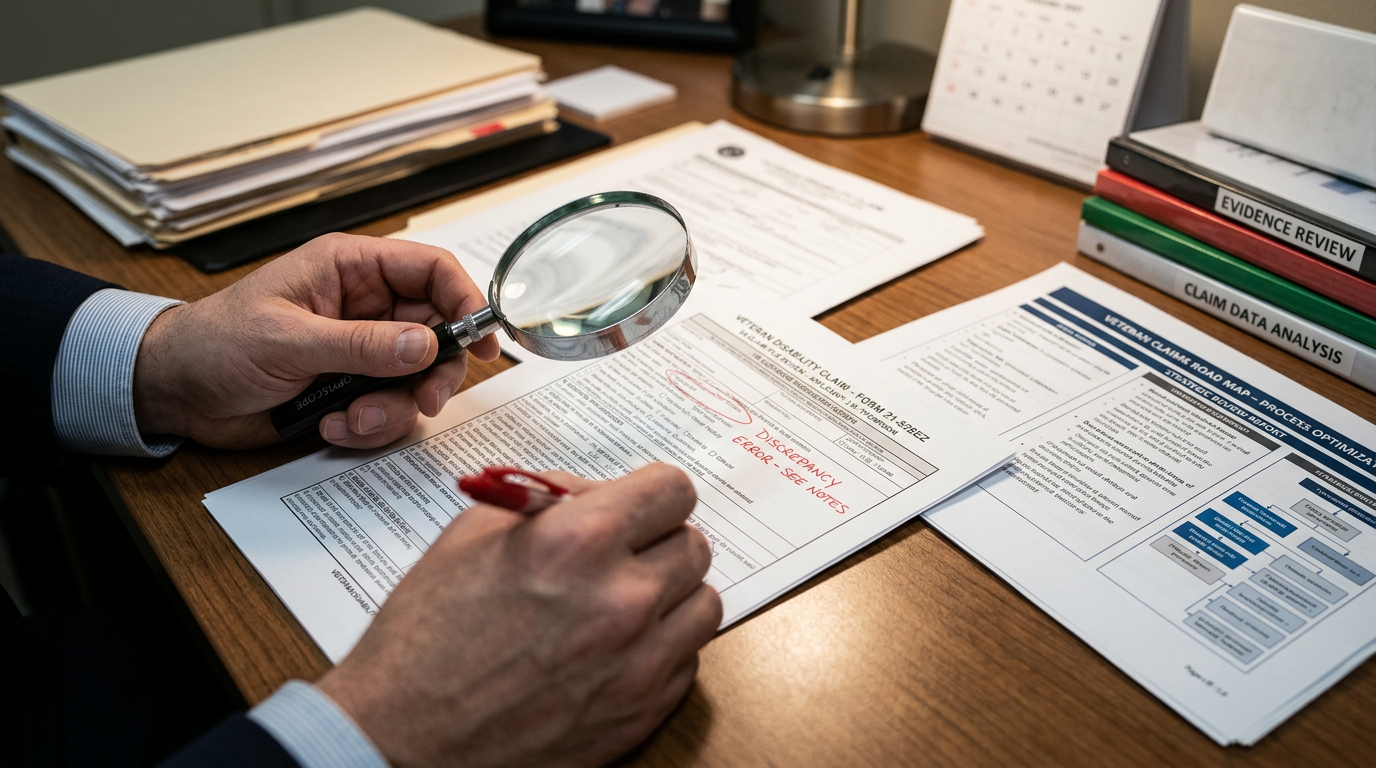

Mental Health
Mental Health: Anxiety & Depression
Rated under 38 CFR §4.130, the General Rating Formula for Mental Disorders
Anxiety and depressive disorders are among the most under-rated conditions in the VA system. Occupational and social impairment, not a symptom checklist, drives the rating.
Each Condition, Broken Out
Every Condition In This Category Has Its Own Page
These are separate diagnostic codes with separate criteria, separate exams and separate money. Each one below opens a full page: how it is rated, the schedule spelled out, the service-connection arguments, and exactly what happens at that specific C&P exam.
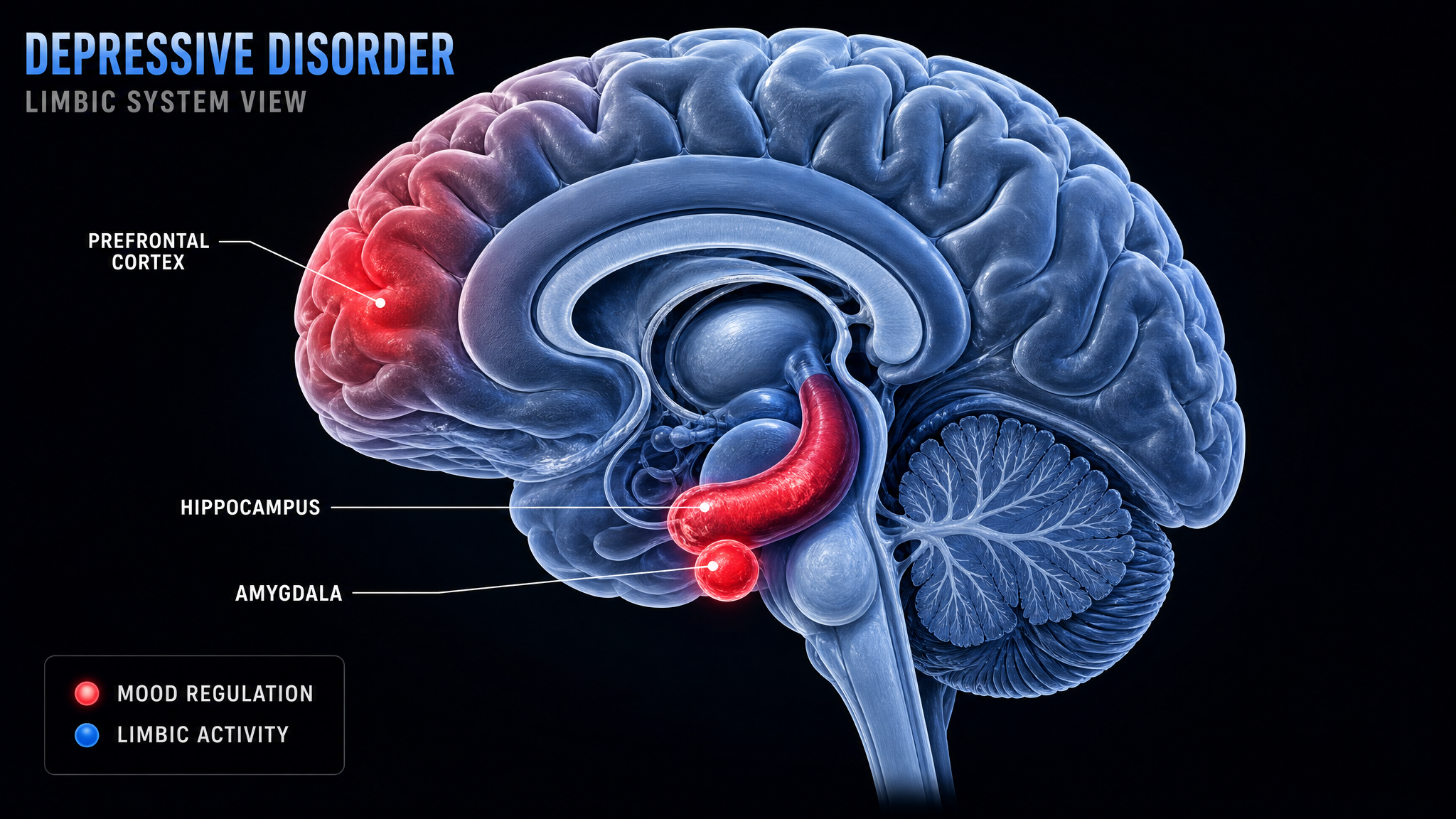
DC 9434
Major Depressive Disorder
Depression is rated on how much it impairs your ability to hold a job, maintain relationships, and care for yourself, not on how sad you feel on a given day.
Read the full Depressive Disorder page
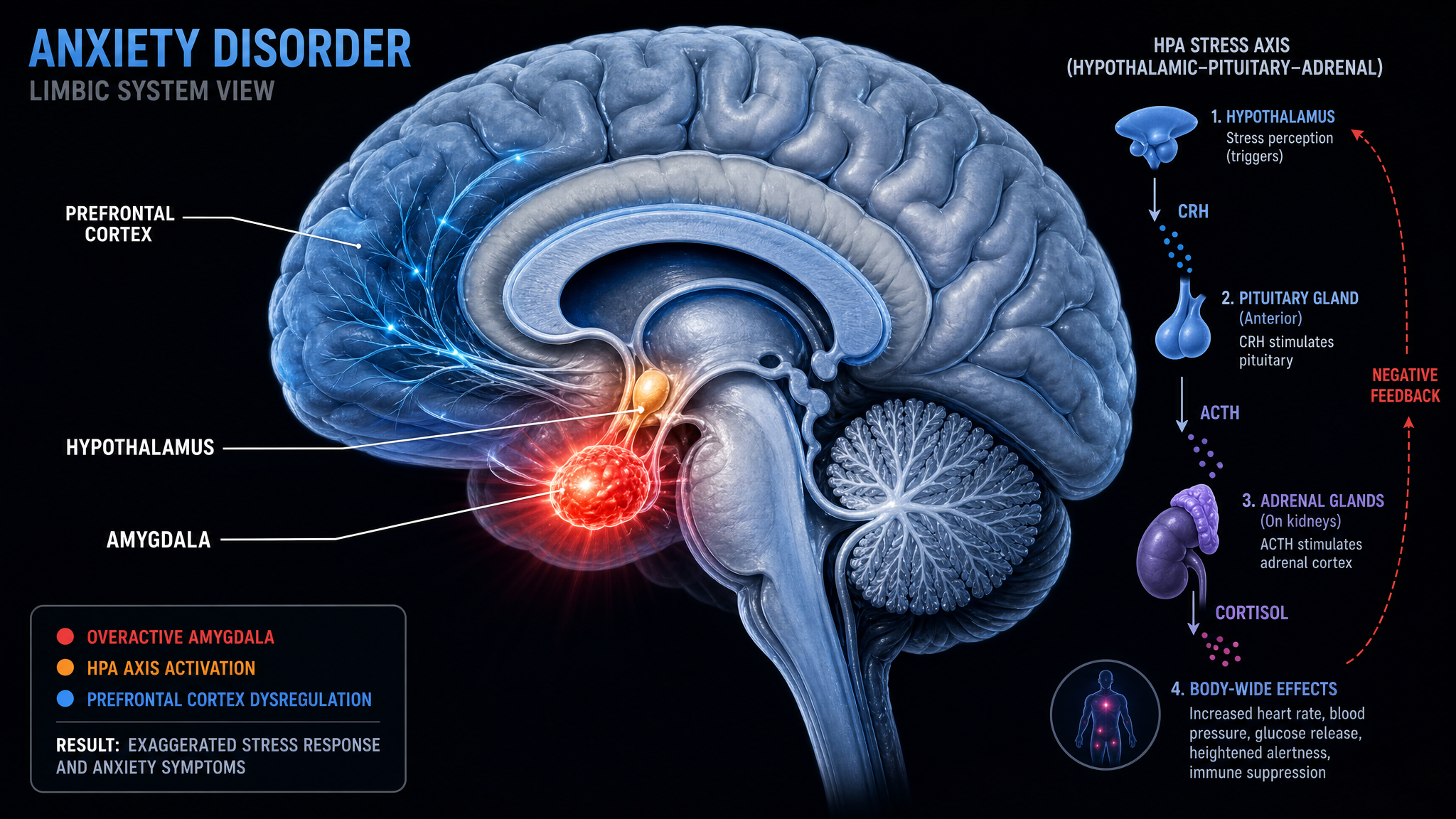
DC 9400
Generalized Anxiety Disorder
Anxiety is rated on how much the worry, tension, and panic degrade your ability to work and hold relationships together, not on whether you "look" anxious in the exam room.
Read the full Anxiety Disorder page
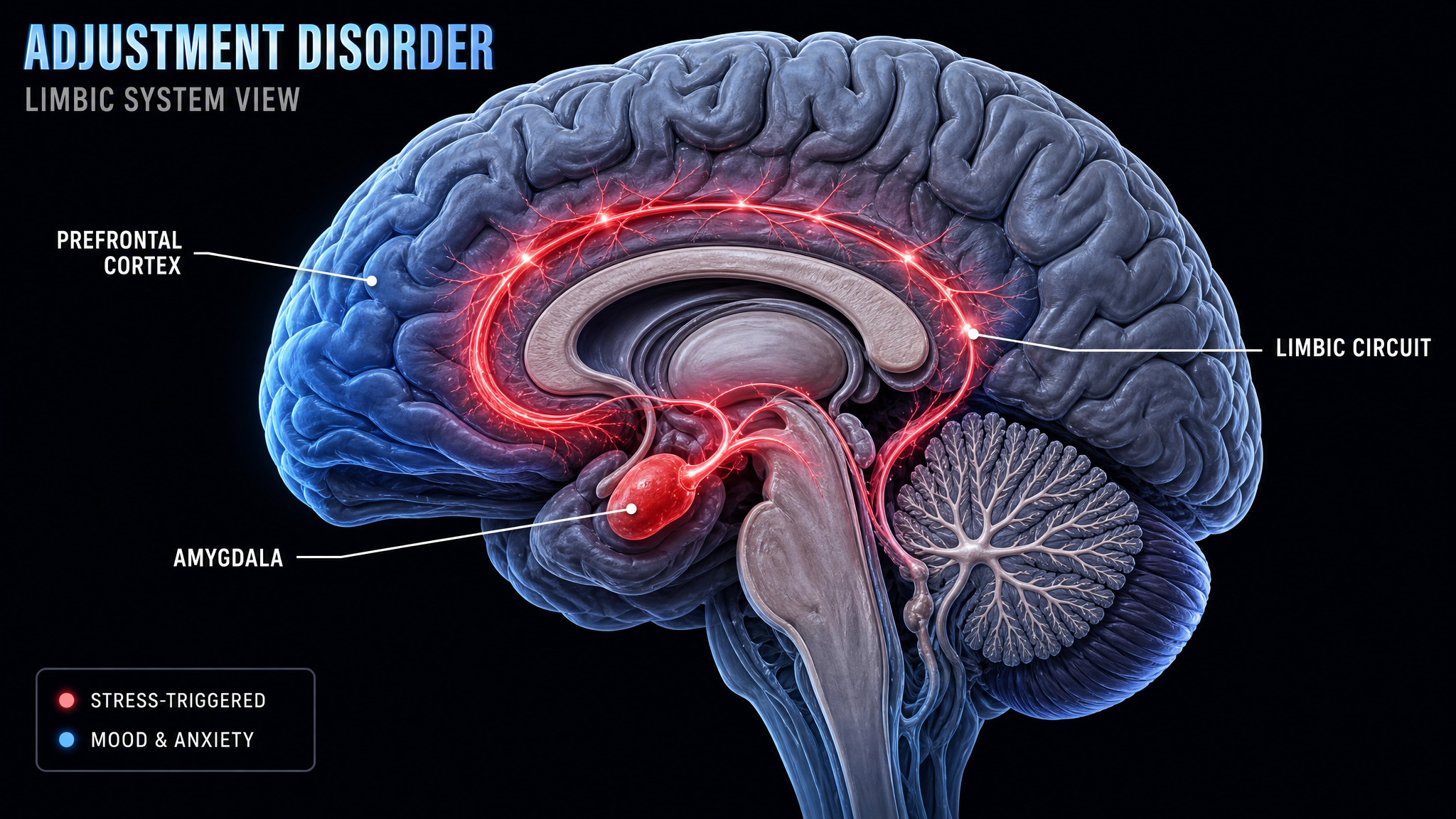
DC 9440
Chronic Adjustment Disorder
The VA does not rate you on how hard the transition was. It rates you on how much your response to the transition, depression, anxiety, or both, impairs your ability to hold a job, maintain relationships, and care for yourself.
Read the full Adjustment Disorder page
What Mental Health: Anxiety & Depression Really Is
Anxiety and depressive disorders are diagnosable medical conditions that change how you function, concentration, motivation, sleep, patience, and the ability to hold a job and a relationship together.

What it actually means
Anxiety and depressive disorders are diagnosable medical conditions that change how you function, concentration, motivation, sleep, patience, and the ability to hold a job and a relationship together.

What the VA measures
One thing only: the level of occupational and social impairment your symptoms cause, measured against the General Rating Formula in 38 CFR §4.130 at 0, 10, 30, 50, 70 or 100 percent.

Why claims get missed
Veterans describe symptoms and never translate them into impairment. A list of symptoms with no evidence of what it costs you at work and at home reads as 30 percent to a rater no matter how bad it feels.
What in Your Service Causes Mental Health: Anxiety & Depression
Service connection is not a feeling, it is a chain of evidence. These are the pathways the VA already recognises. Find yours, then make sure your file says it out loud.
Secondary to chronic pain
A service-connected back, knee, or joint condition that grinds on for years is a recognized cause of depression under §3.310. The pain came first; the depression is a ratable consequence of it.
Traumatic and high-stress duty
Combat, casualty handling, mortuary affairs, medical and aeromedical duty, law-enforcement and recovery operations, sustained exposure to death and threat is a documented cause of anxiety and depressive disorders.
Harassment, hazing, and command climate
A hostile unit, retaliation after a report, or sustained harassment is an in-service stressor. Personnel records, transfer requests, and evaluation drops corroborate it.
Sleep destruction and shift rotation
Years of watch rotation, alert status, and deployment sleep deprivation are contributors to mood and anxiety disorders, and they interact with sleep apnea and tinnitus.
How the VA Actually Rates It
Every mental health condition rated under §4.130 uses the same formula, 0, 10, 30, 50, 70, or 100 percent. The rating is not decided by how many symptoms you list. It is decided by the level of “occupational and social impairment” your symptoms cause. That is the phrase the rater is trained to look for, and it is the phrase the C&P examiner is asked to check a box for.
This is where veterans get low-balled. You can describe crushing symptoms and still land at 30% if nobody translates those symptoms into impairment of work and relationships. Our job is to make that connection explicit and undeniable.

Establishing Service Connection
Under §3.303, direct connection requires a current diagnosis, an in-service event or stressor, and a medical nexus linking the two. Depression and anxiety are also frequently secondary (§3.310) to chronic pain, tinnitus, sleep apnea, or a service-connected physical condition that has upended your life. The VA rarely develops these secondary theories on its own, you have to raise them.

Where Claims Break Down
Most mental health denials and low ratings do not come from weak symptoms. They come from a thin file. The rater under §4.130 can only rate the impairment that is written down, so every gap in your treatment, every missing lay statement, and every exam that undercounts your bad days pulls the number down. Check your own file against this list before you file, and close each gap you find.

A single therapy visit with no continuous treatment history

A stressor statement that never explains current impairment

No lay statements from spouse, coworkers, or friends

A C&P exam that undercounts symptom frequency and severity

Depression treated as “just” a reaction instead of a secondary disability
Why Work With an Accredited Advocate
Veterans should seek the assistance of an Accredited VA Disability Advocate because we guide you through the complex claims process and ensure all necessary evidence is gathered and presented effectively. Our advocates are trained to identify and link service-related conditions, increasing the likelihood of a successful claim. We also provide personalized representation, helping veterans navigate appeals and secure the benefits they deserve. As a VA-Accredited Claims Agent, our fees are regulated under 38 CFR §14.636, and there are no fees unless we win your appeal.

The Rating Schedule, Spelled Out
Mental health conditions are all rated under the same General Rating Formula for Mental Disorders in 38 CFR §4.130. The percentage is not driven by your diagnosis, it is driven by how much the condition impairs your work and social life. These are the actual criteria the VA measures your claim against.
A mental condition has been formally diagnosed, but symptoms are not severe enough either to interfere with occupational and social functioning or to require continuous medication.
Occupational and social impairment due to mild or transient symptoms which decrease work efficiency only during periods of significant stress, or symptoms controlled by continuous medication.
Occupational and social impairment with occasional decrease in work efficiency and intermittent periods of inability to perform tasks, due to such symptoms as depressed mood, anxiety, suspiciousness, weekly panic attacks, chronic sleep impairment, and mild memory loss.
Reduced reliability and productivity due to such symptoms as flattened affect; circumstantial or stereotyped speech; panic attacks more than once a week; difficulty understanding complex commands; impaired judgment and abstract thinking; disturbances of motivation and mood; and difficulty establishing effective work and social relationships.
Deficiencies in most areas, work, school, family relations, judgment, thinking or mood, due to such symptoms as suicidal ideation; obsessional rituals; near-continuous panic or depression; impaired impulse control; neglect of personal hygiene; and inability to establish and maintain effective relationships.
Total occupational and social impairment, due to such symptoms as gross impairment in thought processes or communication; persistent delusions or hallucinations; grossly inappropriate behavior; persistent danger of hurting self or others; disorientation to time or place; and memory loss for names of close relatives, own occupation, or own name.
Key Points to Remember
These are the rules the rating board applies to this condition, stripped down to what you can act on. Read each one and ask a single question: does my file prove it? If the answer is no, that is your homework, not the VA's. The VA has a duty to assist under 38 CFR 3.159, but it has no duty to build your argument for you.

Rated under the General Rating Formula for Mental Disorders (38 CFR §4.130) at 0, 10, 30, 50, 70, and 100 percent

The rating turns on occupational and social impairment, not the diagnosis label

Document frequency, severity, and duration of symptoms; do not minimize bad days

Depression and anxiety are frequently secondary to service-connected pain or illness (§3.310)
What to Expect at Your Mental Health C&P Examination
A mental health exam is not measured with an instrument, it is scored against the General Rating Formula for Mental Disorders in 38 CFR §4.130, which rates on one thing: the level of occupational and social impairment your symptoms cause. The examiner has roughly an hour to reach a conclusion about your whole life. Answer for your worst weeks and your average week, not for the hour you are sitting in that chair.

A structured clinical interview covering symptom onset, frequency, duration and severity, and the in-service stressor or event.

Assessment against the §4.130 levels: occupational and social impairment that is occasional and mild, reduced reliability and productivity, deficiencies in most areas, or total.

Direct questions about panic attacks and their frequency, sleep impairment, memory and concentration, irritability and anger, and hygiene and self-care.

Screening for suicidal and homicidal ideation, and for hallucinations, delusions and dissociation.

A functional history: relationships, marriages, friendships, ability to leave the house, jobs held and lost, disciplinary actions and days missed.

Complete medication and treatment history, including hospitalizations, therapy, and what has and has not worked.

Lay statements from a spouse, family member, coworker or friend describing what they observe, these are evidence, and they carry weight the examiner cannot get from you in one hour.
What Happens Once the C&P Exam Is Complete
The examiner compiles a detailed report, your medical history, physical findings, and diagnostic results, and assesses the severity, symptoms, and impact of your condition. That report is sent to the VA Regional Office handling your claim and becomes part of your official file, reviewed alongside your other evidence.
The VA may send the report back for corrections, clarification, or a second opinion if it finds it incomplete or unclear. This can delay your claim, because the VA requires thorough and accurate information to decide. Your claim only moves to the decision phase once the VA is satisfied with the evidence, which is exactly why the quality of the file we build for you matters so much. Once decided, your effective date controls how far back your back pay reaches, and any denial can be challenged through a Supplemental Claim, Higher-Level Review, or Board appeal.

The Advocate’s Take
The mental health rating is won or lost in the language of impairment. Symptoms without documented impact on work and relationships equal a lower rating. We build the record so the rating reflects your reality.
Every Level the VA Can Assign You
These percentages come straight out of the rating schedule that governs mental health: anxiety & depression, Diagnostic Code 9411 / 9434 / 9400. Read them slowly. If your current rating does not match what your records actually show, that gap is exactly what an appeal exists to correct.
0%
A mental condition has been formally diagnosed, but symptoms are not severe enough either to interfere with occupational and social functioning or to require continuous medication.
10%
Occupational and social impairment due to mild or transient symptoms which decrease work efficiency only during periods of significant stress, or symptoms controlled by continuous medicati…
30%
Occupational and social impairment with occasional decrease in work efficiency and intermittent periods of inability to perform tasks, due to such symptoms as depressed mood, anxiety, susp…
50%
Reduced reliability and productivity due to such symptoms as flattened affect;
70%
Deficiencies in most areas, work, school, family relations, judgment, thinking or mood, due to such symptoms as suicidal ideation;
100%
Total occupational and social impairment, due to such symptoms as gross impairment in thought processes or communication;
Secondary Claims, Both Directions
Under 38 CFR §3.310, a condition caused or made worse by an already service-connected condition is itself service connected. That runs in both directions, and it is the single largest pool of unclaimed compensation in the system.
What can cause mental health: anxiety & depression
If one of these is already service connected, this condition can be claimed as secondary to it.
Chronic pain conditions (back, knee, joints)
Continuous pain and loss of function are recognized causes of depressive disorder under §3.310.
Tinnitus
Constant, unrelenting noise is a documented driver of anxiety, irritability, and sleep loss.
Traumatic brain injury
Mood and anxiety disorders are frequently residuals of TBI and may be rated separately from the cognitive residuals.
What mental health: anxiety & depression can cause
If this condition is already service connected, each of these is a separate claim you may be owed.
Sleep apnea
Weight gain from psychiatric medication and disrupted sleep architecture are recognized pathways to obstructive apnea.
Erectile dysfunction
Both the condition and the SSRIs used to treat it are established causes, and ED can carry Special Monthly Compensation (SMC-K).
GERD and irritable bowel
Gastrointestinal conditions are commonly connected as secondary to anxiety and to the medication used to treat it.
A secondary claim still needs two things: a current diagnosis of the secondary condition, and a medical opinion saying it is at least as likely as not caused or aggravated by the service-connected condition. You do not have to prove it happened in service.
Building a Mental Health: Anxiety & Depression Claim That Wins
Every claim stands on three legs. Knock one out and the claim falls over, no matter how bad your symptoms are. Before you file, look at your file and find all three.
 01
01A current diagnosis
A doctor has to say you have it, now, in writing. Not "reports symptoms of", a diagnosis. Without this leg, nothing else in the file matters.
 02
02A link to your service
An event, an injury, an exposure, or an already service-connected condition. Service records, unit records, buddy statements, and your own account all count as evidence.
 03
03A nexus that ties the two together
A medical opinion stating it is at least as likely as not that your service caused or aggravated the condition. That phrase is a legal standard: 50 percent or better. It is the leg most denials break.
Document the problem before you file
• Keep a dated symptom log for at least 30 days. Frequency, severity, and what it stopped you from doing.
• Get statements from people who see it, a spouse, a coworker, a battle buddy. Lay evidence is legal evidence.
• Pull your private treatment records. The VA only has to help; it does not have to go find everything.
• Write down what you have stopped doing. Lost work, lost sleep, lost activities. That is what impairment looks like on paper.
Your Rights in This Process
Most veterans walk into this system without knowing the rules the VA itself has to follow. That is how claims get denied for missing evidence the VA was supposed to help you find, and how exams get done by the wrong clinician. These six rights are written into federal regulation. Know them before you file, and make the VA honor every one of them when it decides your claim.

It costs nothing to file
Filing a VA claim is free. Accredited representatives may only charge for work on an appeal after an initial decision, and those fees are capped by 38 CFR §14.636.

The VA has a Duty to Assist you
Under 38 CFR §3.159 the VA must help you get the evidence it needs, and it must tell you what is missing before it denies you for missing it.

You can ask for a different examiner
You may request a trauma-informed clinician, or a clinician of a specific gender, for a C&P examination. Ask before the exam is scheduled.

You can claim every condition you have
There is no limit and no penalty. Primary conditions, secondary conditions, and conditions made worse by service all get filed.

You can appeal and be re-evaluated
A denial is not the end. You may submit new evidence, request a higher-level review, appeal to the Board, and ask for re-evaluation when your condition worsens.

You must be considered for TDIU
If your service-connected conditions keep you from holding substantially gainful employment, you may be paid at the 100 percent rate without a 100 percent rating.
Questions Veterans Ask About Mental Health: Anxiety & Depression Claims
Does the diagnosis label set my rating?
No. Anxiety, depression, PTSD, and most other mental disorders are all rated under the same General Rating Formula in 38 CFR §4.130. Whether the file says "major depressive disorder" or "generalized anxiety disorder" does not move the percentage. What moves it is documented occupational and social impairment.
I only went to therapy a few times. Is that enough?
It is enough to establish a diagnosis, but it is rarely enough to establish severity. The VA reads a thin treatment record as a mild condition. Continuous treatment, medication records, and lay statements from people who see you daily are what carry the higher levels.
Can I be rated for both depression and PTSD?
You get one rating under §4.130 for all mental health conditions, because the formula measures overall impairment rather than separate diagnoses. That is not a loss, it means every symptom from every psychiatric diagnosis counts toward one, higher rating.
My depression started because of my service-connected back pain. Is that claimable?
Yes, and it is one of the most commonly missed claims in the system. Under 38 CFR §3.310, a condition caused or aggravated by an already service-connected condition is itself service-connected. It needs a diagnosis and a medical opinion linking the two.
When You Are Ready to File
Talk to an accredited representative before you file. It costs nothing to ask, and the order you file in changes what the VA is allowed to award you. Albert L. Thombs Jr. is VA-Accredited Claims Agent #45147.
The application itself
This is the form that opens a disability compensation claim. List every condition you are claiming, and name the secondary conditions explicitly.
Release for private records
Authorises the VA to request records from your private doctors. Without it, treatment outside the VA may never reach your file.
Lay or buddy statement
The official form for your own statement and for statements from people who witnessed the event or the change in you.
What This Rating Is Worth (2026)
| 10% | $180.42/mo |
| 20% | $356.66/mo |
| 30% | $552.47/mo |
| 40% | $795.84/mo |
| 50% | $1,132.90/mo |
| 60% | $1,435.02/mo |
| 70% | $1,808.45/mo |
| 80% | $2,102.15/mo |
| 90% | $2,362.30/mo |
| 100% | $3,938.58/mo |
Rates shown are the veteran-alone amounts effective December 1, 2025. A spouse, children, or dependent parents increase your payment at 30% and above. Every 10% you are under-rated can cost you thousands of dollars a year for the rest of your life.
Estimate Your Exact Pay Veteran Representation
Your VA Claim Exam: What to Expect
This official VBA video walks you through the entire C&P exam process. Understanding what happens in that room is the difference between a rating that reflects your true condition and one that undervalues you.
 Veteran Representation
What It Takes to Win These Benefits
Winning is not about how bad the condition is. It is about what your file proves. The rating board checks three things, and if one is missing the claim stalls no matter how much you hurt. Line up the evidence below before you file, not after the denial. The VA must help you gather records, but you are the one who knows where they are.
The Three-Part Test
Service connection under 38 CFR §3.303 requires all three:
- 1A current, diagnosed disability
- 2An in-service event, injury, or exposure
- 3A medical nexus linking the two
 Veteran Representation
The medical evidence the VA is actually looking for:
VA Claim Exams: Psychological
This exam is specific to your body system. The examiner uses a specialized DBQ for this category of conditions, and the tests they perform determine your exact rating level. Watch this before your appointment.
What to Expect at Your C&P Exam
Your Compensation & Pension (C&P) exam is not treatment. It is a rating tool. The examiner will not fix anything, they complete a Disability Benefits Questionnaire (DBQ) and check the boxes that decide your rating. What happens in that room can move your rating an entire level, so walk in prepared.
 Veteran Representation
The Forms You File, We Prepare Them For You
These are the forms that drive this claim. Start any of them on our site and an accredited agent prepares and files it for you, correctly, the first time.
Application for Disability Compensation
The core application that opens or reopens your claim.
Start this with usStatement in Support of Claim
Your own account and buddy/lay statements that fill the gaps in your record.
Start this with usAppoint Us as Your Representative
Authorizes our accredited agent to act on your behalf with the VA.
Start this with usStatement for Mental Health Disorders
Documents the in-service stressor(s) behind PTSD, anxiety, depression, or MST.
Start this with usUnemployability (TDIU) Application
Claims 100% pay when your conditions keep you from working, even below 100%.
Start this with usDisability Benefits Questionnaire
The exam form that captures the severity criteria for this specific condition.
Start this with usSMC & TDIU, When Your Rating Isn't the Whole Story
TDIU, Paid at 100% Without a 100% Rating
Total Disability based on Individual Unemployability (38 CFR §4.16) pays you at the 100% rate when your service-connected conditions prevent substantially gainful employment, even if your combined rating is lower. You may qualify if:
- One condition is rated 60% or higher, or
- Two+ conditions combine to 70% with at least one rated 40%, and
- Those conditions keep you from holding steady, gainful work.
- Cannot meet the numbers? Extraschedular TDIU under §4.16(b) may still apply.
Special Monthly Compensation (SMC)
SMC (38 CFR §3.350) pays above the normal schedule for especially serious losses, loss or loss of use of a body part, being housebound, or needing the aid and attendance of another person. Common levels:
- SMC-K, Loss / loss of use, Add-on for loss or loss of use of a specific body part (hand, foot, eye, reproductive organ, or certain other losses). Paid on top of your regular compensation. Can stack (up to the statutory cap).
- SMC-S, Housebound, Statutory housebound: a single 100% disability plus additional disabilities of 60%+, or substantially confined to your home. Veteran-alone rate shown.
- SMC-L, Aid & Attendance, You need the regular aid and attendance of another person, or have anatomical loss/loss of use of both feet, one hand and one foot, blindness, or are permanently bedridden. Veteran-alone rate shown.
- SMC-M, Higher Aid & Attendance, A higher level of aid and attendance (e.g., loss of use of both hands, or loss of use of both legs at a higher level). Veteran-alone rate shown.
These are the benefits veterans most often leave on the table because no one told them they qualified. If any of this sounds like your situation, call an accredited agent at 702-992-4883, we screen for SMC and TDIU on every case.
Keep Reading
One page never tells the whole story of a claim. The VA rates every condition on its own evidence, its own exam and its own diagnostic code, and the pieces connect in ways most veterans never see until a decision letter lands. These are the pages that pick up where this one stops. Read them before you file, not after a denial, because the cheapest fix in this process is the mistake you never make.