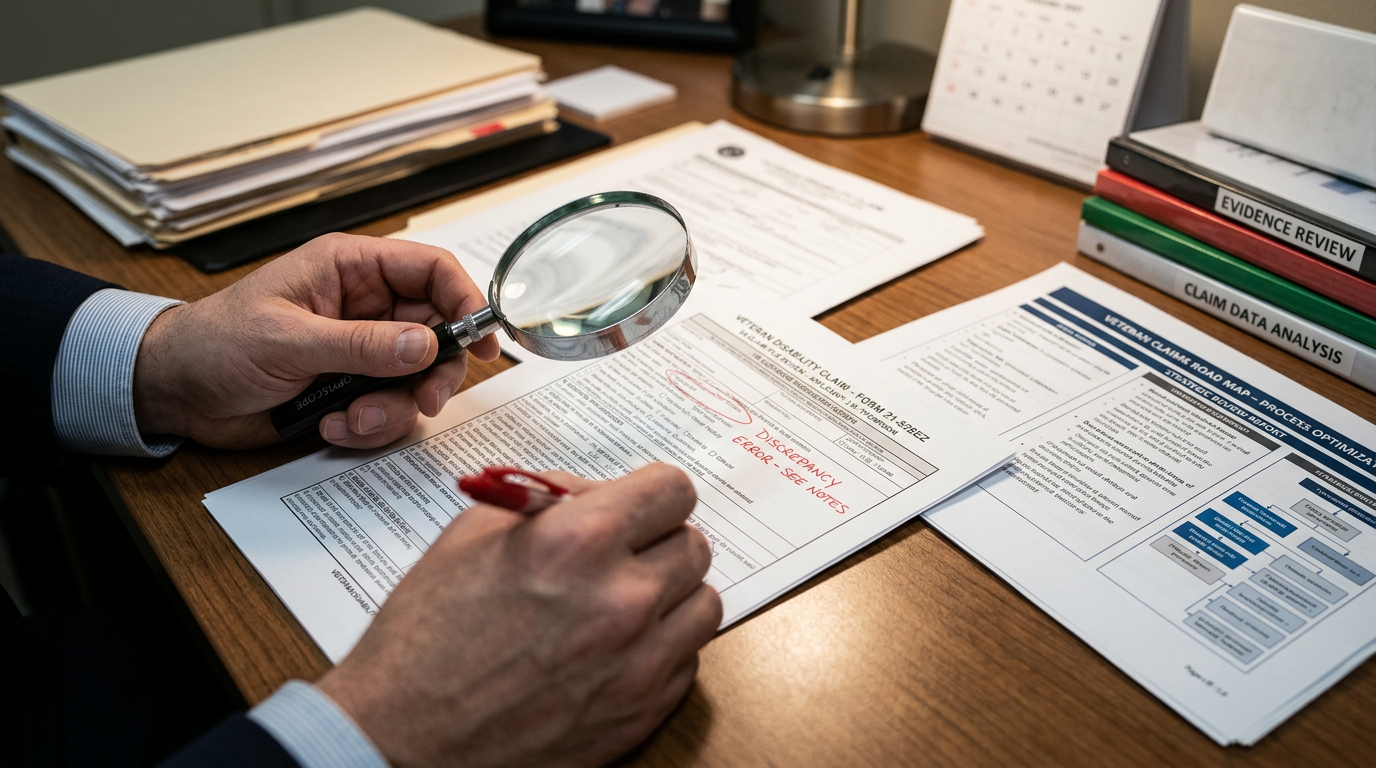

Supplemental Claim · 38 CFR §3.2501
Supplemental Claims
Submit new and relevant evidence to overturn a VA denial, the most common and often fastest post-denial pathway
A denial is not the end of your claim, it is the start of the fight. A Supplemental Claim reopens a decision by putting evidence in front of the VA that it never saw the first time, a new diagnosis, a worsening record, a buddy statement, or a private nexus opinion. File within one year and you protect your original effective date, which can mean thousands of dollars in back pay riding on a single deadline.
What Is a Supplemental Claim?
A Supplemental Claim under §3.2501 allows you to submit new and relevant evidence after a VA denial. Filed on VA Form 20-0995, it is the most common post-denial action and often the fastest pathway to getting a wrong decision corrected.
Unlike a Higher-Level Review (which only re-examines existing evidence), a Supplemental Claim lets you introduce documentation the VA has never seen: medical opinions, nexus letters, buddy statements, private DBQs, updated treatment records, and service records that were not in the original file.
The critical requirement is that the evidence must be both new (not previously considered) and relevant (it must tend to prove or disprove a fact necessary to decide the claim). Submitting the same evidence the VA already rejected is not a Supplemental Claim, it is a waste of time.
What a Supplemental Claim Gives You
A Supplemental Claim under 38 CFR 3.2501 gives you three things the other lanes do not, all in one filing. But none of them work unless you bring the evidence. The VA will help you gather records under its duty to assist, but it will not figure out what your denial was missing. That is your homework first, and mine second. Read your decision letter tonight and circle every reason it gives.

New Evidence
Submit medical opinions, nexus letters, buddy statements, and records the VA never saw. A private DBQ can be the single most powerful piece of new evidence.

Faster Resolution
Typically resolved in 4 to 6 months, significantly faster than Board appeals. File within one year (the filing deadline, not the processing time) to preserve your original effective date and protect back pay.

Targeted Strategy
I decode the denial to identify exactly what the VA said was missing, then build an evidence package that fills that specific gap, no guesswork.
The One-Year Rule, Why Timing Is Everything
Under the AMA framework, filing a Supplemental Claim within one year of the decision you are challenging preserves your original effective date. That means if the Supplemental Claim is granted, the VA pays you retroactively from the date of the original claim, not the date you filed the Supplemental Claim.
At a 70% rating ($1,808.45 a month for a veteran alone in 2026), every month of effective date lost is $1,808 you never get back. Every year, about $21,700. If your original claim was filed two years ago and you miss the one-year window on the denial, you can forfeit two years of back pay, more than $43,000.
If you are inside that one-year window right now, act immediately. The evidence strategy can be refined later, but the filing date must be established while the window is open. If you are inside the window but still gathering evidence, do not let the deadline pass waiting for the perfect record. Call me before the year runs out.
The Types of Evidence That Win Supplemental Claims
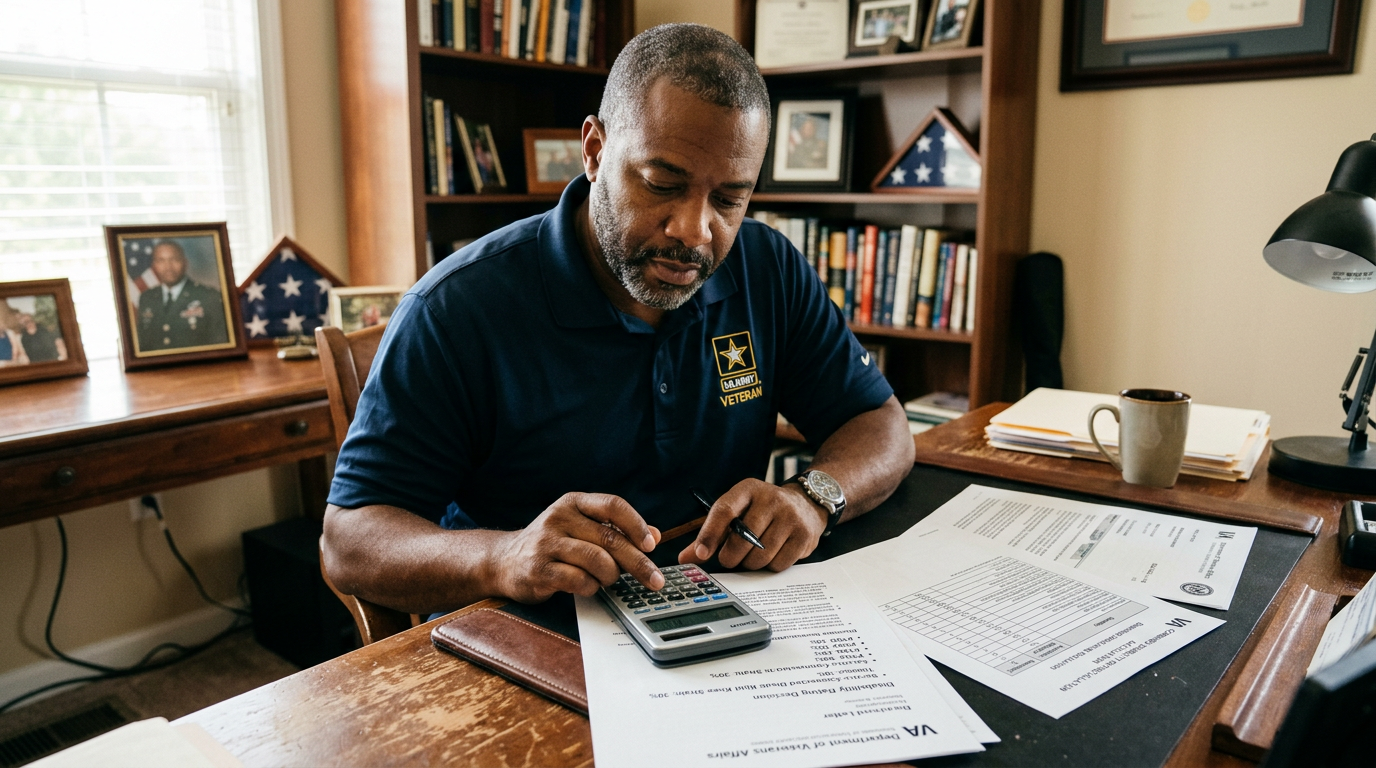
A Supplemental Claim only moves if you add new and relevant evidence, meaning something the VA did not have before that speaks to the reason you were denied. Start with the denial letter. Find the exact leg the VA said was missing, then pick the evidence below that fills that specific gap.

Private medical nexus opinion, a qualified physician states "at least as likely as not" under 38 CFR §3.102 that your condition is connected to service, with a written rationale

Disability Benefits Questionnaire (DBQ), a standardized VA form completed by your own physician that documents your condition in the exact format the VA rating system requires

Buddy statements (VA Form 21-10210), written statements from people who witnessed your in-service event or can describe how your condition affects your daily life

Updated medical records, new diagnoses, worsening conditions, or treatment records that post-date the original denial
Service records obtained through a targeted records request, personnel files, unit histories, deployment records, or medical records the VA did not have

Vocational expert opinion, for TDIU claims, a professional assessment of how your disabilities prevent substantially gainful employment

PACT Act presumptive status, if the PACT Act made your condition presumptive after your denial, the law change itself is new and relevant evidence

Your own lay statement (VA Form 21-4138), your signed account of when the symptoms started and how they limit your work and daily life, which the VA must weigh as competent evidence of what you saw and felt
Common Mistakes That Kill Supplemental Claims
I see the same eight mistakes over and over, and every one of them is avoidable. None of them is the VA being unfair. They are veterans filing in a hurry, filing the same paper twice, or trusting a doctor who wrote two lines. Go down this list before you sign VA Form 20-0995. If you can check off every one, you are filing a real claim. If you cannot, stop and fix it first.

Filing without actually new evidence, resubmitting what the VA already considered is an automatic denial
Missing the one-year deadline, filing after one year loses your original effective date and can cost thousands in back pay

Submitting a nexus letter without adequate rationale, "may be related" is not enough; it must say "at least as likely as not" with an explanation

Not addressing the specific reason for the original denial, the VA told you what was missing; the Supplemental Claim must fill that exact gap

Filing a Supplemental Claim when a Higher-Level Review was the better move, if the evidence was already strong but the decision was wrong, HLR is faster

Using a physician who is not qualified in the relevant specialty, a podiatrist writing a nexus for a cardiac condition weakens the opinion
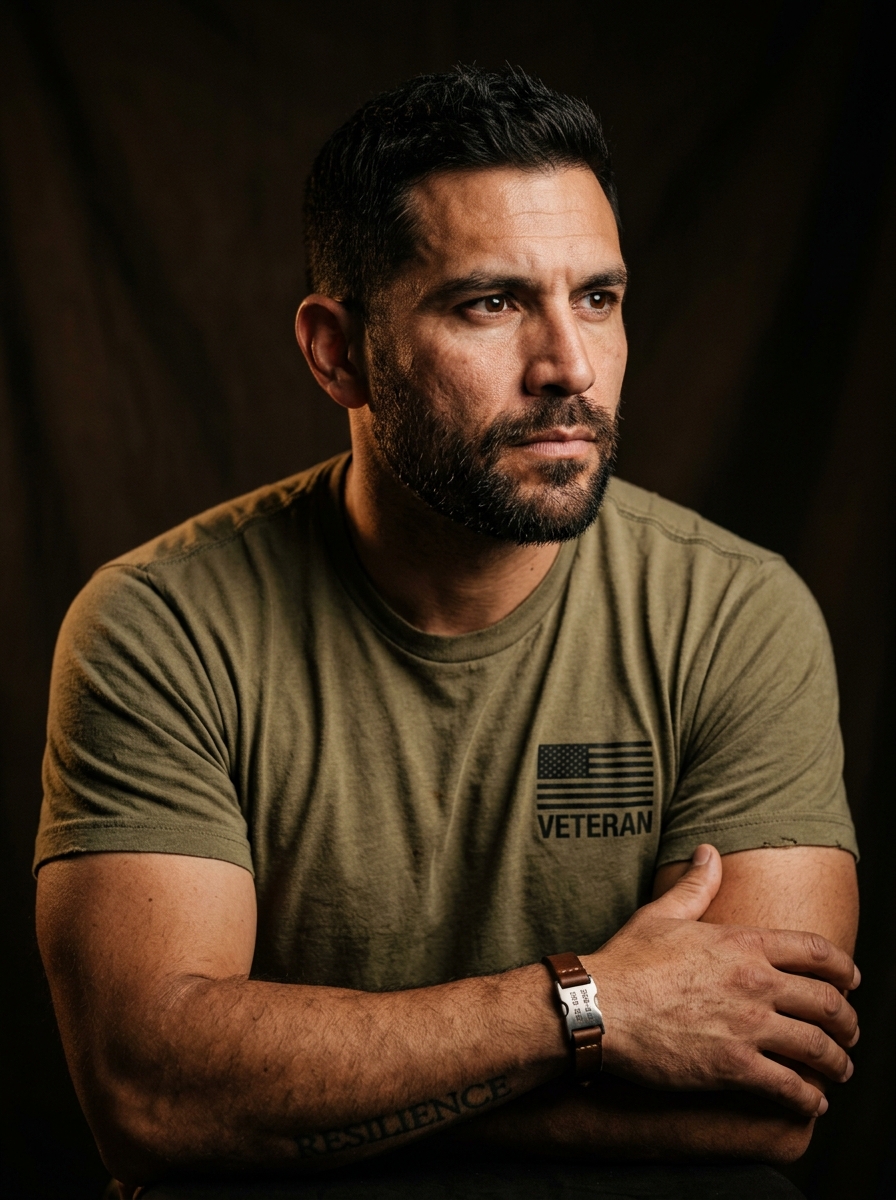
Mailing evidence without the claim form, a stack of records sent in with no VA Form 20-0995 does not start a Supplemental Claim and does not protect your effective date

Leaving private records for the VA to guess at, if a private doctor holds the key records and you never name the provider or sign VA Form 21-4142, the gap the denial pointed to stays open
How I Build Your Supplemental Claim
This is the four-step process I run on every Supplemental Claim that comes across my desk. It is not magic and it is not fast talk. It is reading what the VA actually wrote, finding the gap, and filling it with evidence that answers the exact question the rater asked. Your part is to get me the decision letter, your records, and honest answers. Mine is to make them count.

Decode the Denial
I read your decision letter line by line, identify the exact deficiency cited by the VA, and determine what type of evidence will fill the gap.

Analyze the C&P Exam
If a C&P exam contributed to the denial, I review the examiner report for DeLuca defects, inadequate rationale, or findings inconsistent with the record.

Build the Evidence Package
I identify the specific evidence needed, nexus letter, DBQ, buddy statement, records request, and guide you through obtaining it.

File and Track
I file VA Form 20-0995 with the evidence package, track the claim through the VA system, and respond to any development requests.
What the Courts Say About the Evidence You Add

A Supplemental Claim lives or dies on one word in 38 CFR §3.2501: the evidence has to be new and relevant. New means the VA has not seen it. Relevant means it tends to prove or disprove something that matters to the claim. That is a low bar on purpose. When you clear it, the VA must readjudicate, and its duty to assist under 38 U.S.C. §5103A and 38 CFR §3.159 comes right back into play.
The courts have already told the VA how to weigh what you add. In Nieves-Rodriguez v. Peake, 22 Vet. App. 295 (2008), the Court held that most of the probative value of a medical opinion comes from its reasoning. A doctor's conclusion with no explanation is worth little, and a well-reasoned private opinion can outweigh a thin VA exam. That is why I never send in a one-line nexus letter. In Jandreau v. Nicholson, 492 F.3d 1372 (Fed. Cir. 2007), the Federal Circuit held that lay evidence can be competent, including to describe symptoms you can see and feel, and in Buchanan v. Nicholson, 451 F.3d 1331 (Fed. Cir. 2006), it held the VA cannot reject lay evidence as not credible just because there are no medical records from the same time.
Here is what that means for your package. The VA cannot wave off your statement or your spouse's statement because nobody wrote it down in 1998. It has to weigh it. And the medical opinion you add has to do the work the first exam did not: name the records it reviewed, explain the medicine, and answer the exact question the denial turned on. Your part is to get me the people who saw it and the records you have. My part is to make sure what goes in is new, relevant, and reasoned.
The Three Decision-Review Options, Where the Supplemental Claim Fits
A Supplemental Claim is one of three decision-review options after a denial. See when new-and-relevant evidence is the right move versus a Higher-Level Review or Board appeal. A Supplemental Claim only works if you bring evidence the VA has not seen before that speaks to the reason you were denied. Resending the same records will not get it reopened. Read your denial letter, find the missing piece it names, and get that piece in hand before you file VA Form 20-0995.
The Three Decision-Review Options
A denial is not the end, it is a fork in the road. Choosing the WRONG option wastes months. Choosing right protects your back pay.
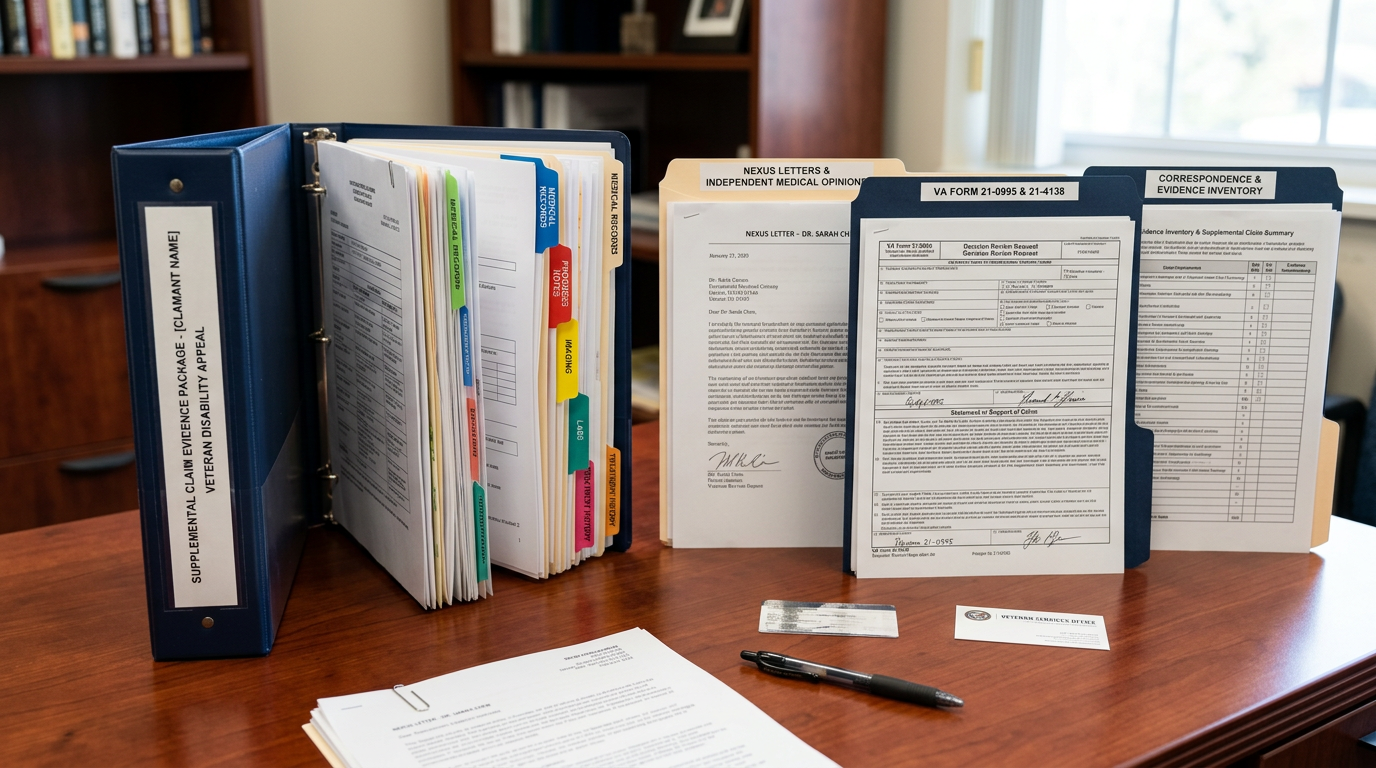
- Requires NEW & RELEVANT evidence
- File within 1 year to protect your effective date
- Reviewed by a claims adjudicator
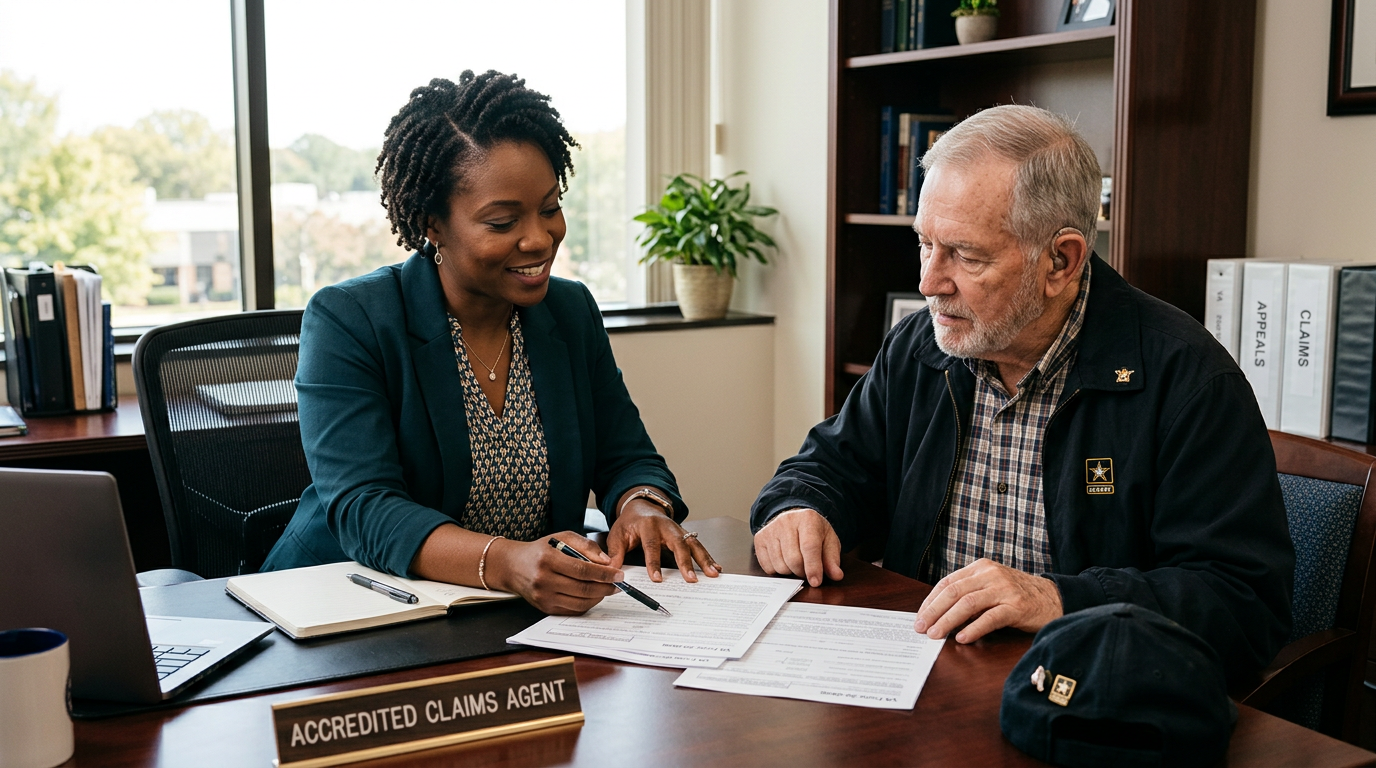
- NO new evidence allowed
- An experienced adjudicator who did not decide your claim re-examines the same record
- Best when the evidence was there and the decision got it wrong

- Decided by a Veterans Law Judge
- Three dockets: Direct Review, Evidence Submission, or Hearing
- The most thorough review in the VA system

- A Clear and Unmistakable Error (CUE) motion is not one of the three decision-review options, it is a separate legal challenge to a FINAL decision.
- It alleges the earlier decision was undebatably wrong on the facts or the law as they existed at the time.
- When granted, it can reach back years for retroactive pay tied to the original effective date.
Protect your effective date: filing a Supplemental Claim within one year of the decision keeps your original filing date, which can mean thousands in retroactive back pay.
The Advocate's Take
Let me be straight with you. A Supplemental Claim is not a do-over, and if you treat it like one you will get the same denial letter back with a new date on it. I see it every week. A veteran gets denied, gets angry, grabs the 20-0995, attaches the same records the VA already looked at, and adds a two-page statement about how unfair it all is. Six months later: denied again. Nothing changed because nothing new went in. The VA is not going to change its mind because you are upset. It changes its mind when the record changes.
Here is how the VA actually looks at this lane. Under 38 CFR §3.2501, the rater only has to reopen the question if you bring evidence that is new (it was not in the file when they decided) and relevant (it tends to prove or disprove the exact point they denied you on). That is a low bar on paper, but veterans miss it constantly because they never figured out what the point was. So the first thing you and I do is read the denial letter like a road map. Somewhere in the reasons and bases the VA told you what was missing. Usually it is one of three things: no current diagnosis, no proof of the in-service event, or no medical link (the nexus) between the two. Whatever they said was missing is the only thing that matters right now.
Then we go get exactly that piece. If the gap is the nexus, that means a medical opinion from a qualified provider who has actually read your records and says it is at least as likely as not (50 percent or better) that your condition is tied to service, and explains why. A nexus letter with no reasoning is worth almost nothing; the VA throws out conclusions without rationale. If the gap is the event, we look for buddy statements, unit records, performance reports, sick call notes, anything that puts you there. If the gap is severity, a private DBQ that measures what the VA exam missed. This is also the only review lane where the VA still owes you its Duty to Assist under §3.159, so if records exist that the VA never pulled, we tell them exactly where to find them.
Now the clock. File within one year of the decision date and you keep your original effective date, which can mean months or years of back pay. Miss it and you can still file, but your effective date resets to the new filing date and that money is gone. The VA's target is about 125 days. In real life, plan on 4 to 6 months, sometimes longer if they order a new exam. And if they do order a new exam, you prepare for it this time. Read our C&P guide, describe your worst days, and do not walk in there and say you are doing fine.
Your part is not optional. You get the evidence to me, you keep your appointments, and you tell me the truth about your symptoms, even the embarrassing ones. We work WITH you, not FOR you. If you do your part, I will make sure the claim that goes back to the VA answers every question the last one left open. If you are not sure what the VA said was missing, send me the letter. That is where we start.

A Supplemental Claim reopens the fight with new and relevant evidence, and very often that means a new exam. I do not want you going into that second exam the same way you went into the first one. Watch the official VA videos below, then use what you learn to make sure the record finally shows your real condition.
What New Evidence Changes, Straight From the VA
A Supplemental Claim turns on new and relevant evidence under 38 CFR §3.2501. New means the VA did not have it before. Relevant means it speaks to the exact reason you were denied. These official VA videos explain how compensation and the claim exam work, so you can read your denial, find the missing element, and submit evidence that fixes that element instead of piling more paper on the file.
Tips to Prepare for Your VA Claim Exam
How VA Disability Compensation Works
Building a Supplemental Claims Claim That Wins
Every claim stands on three legs. Knock one out and the claim falls over, no matter how bad your symptoms are. Before you file, look at your file and find all three. If one is missing, that is the piece to build first. The VA will not build it for you, and filing without it usually just buys you a denial letter and lost time.
 01
01A current diagnosis
A doctor has to say you have it, now, in writing. Not "reports symptoms of", a diagnosis. Without this leg, nothing else in the file matters.
 02
02A link to your service
An event, an injury, an exposure, or an already service-connected condition. Service records, unit records, buddy statements, and your own account all count as evidence.
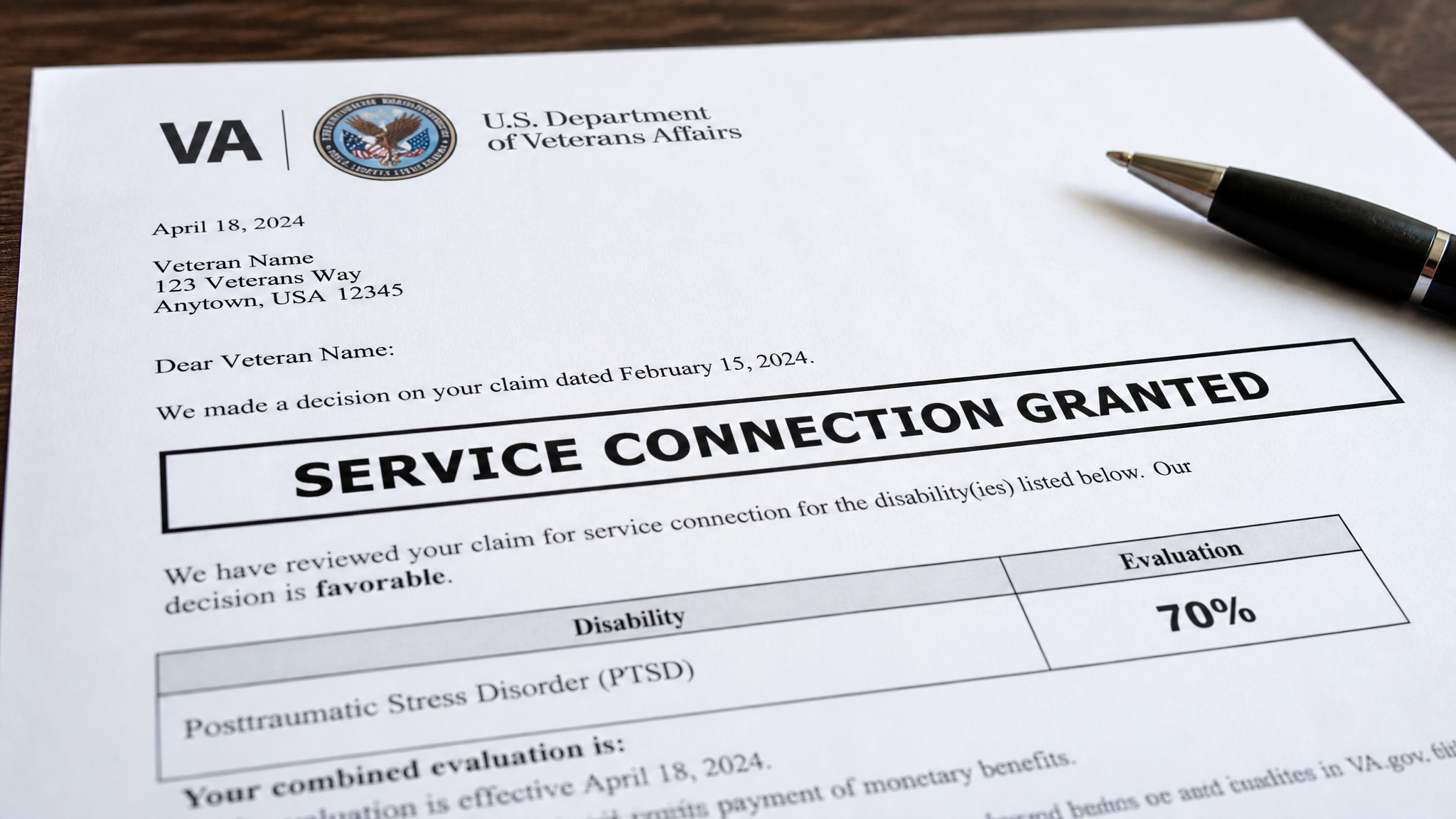 03
03A nexus that ties the two together
A medical opinion stating it is at least as likely as not that your service caused or aggravated the condition. That phrase is a legal standard: 50 percent or better. It is the leg most denials break.
Document the problem before you file
• Keep a dated symptom log for at least 30 days. Frequency, severity, and what it stopped you from doing.
• Get statements from people who see it, a spouse, a coworker, a battle buddy. Lay evidence is legal evidence.
• Pull your private treatment records. The VA only has to help; it does not have to go find everything.
• Write down what you have stopped doing. Lost work, lost sleep, lost activities. That is what impairment looks like on paper.
Your Rights in This Process
Most veterans walk into this system without knowing the rules the VA itself has to follow. That is how claims get denied for missing evidence the VA was supposed to help you find, and how exams get done by the wrong clinician. These six rights are written into federal regulation. Know them before you file, and make the VA honor every one of them when it decides your claim.

It costs nothing to file
Filing a VA claim is free. Accredited representatives may only charge for work on an appeal after an initial decision, and those fees are capped by 38 CFR §14.636.

The VA has a Duty to Assist you
Under 38 CFR §3.159 the VA must help you get the evidence it needs, and it must tell you what is missing before it denies you for missing it.

You can ask for a different examiner
You may request a trauma-informed clinician, or a clinician of a specific gender, for a C&P examination. Ask before the exam is scheduled.

You can claim every condition you have
There is no limit and no penalty. Primary conditions, secondary conditions, and conditions made worse by service all get filed.

You can appeal and be re-evaluated
A denial is not the end. You may submit new evidence, request a higher-level review, appeal to the Board, and ask for re-evaluation when your condition worsens.

You must be considered for TDIU
If your service-connected conditions keep you from holding substantially gainful employment, you may be paid at the 100 percent rate without a 100 percent rating.
The Nine Questions Every Veteran Should Be Able to Answer
This is the standard I hold every page on this site to. Before you file anything on a Supplemental Claim, you should be able to answer these nine questions. If you cannot answer them yet, you are not ready, and that is exactly what my review is for. This is education first, representation second.

What is this?
A Supplemental Claim is one of the three decision-review options. You reopen a decided issue by submitting new and relevant evidence the VA has not seen before.

What must the VA decide?
Whether your new evidence is new and relevant, and if so, whether it is enough to change the prior outcome. The trigger is the evidence, not just disagreement.

What must the evidence prove?
The evidence must be both new (not already in the file) and relevant (it tends to prove or disprove something at issue). A stronger nexus opinion, a missing service record, or a new diagnosis are common examples.

What is the VA responsible for?
Once you identify new evidence, the VA’s duty to assist reattaches. It must help obtain the records you point to and, when warranted, provide a new examination.

What are you responsible for?
Identifying evidence that is genuinely new, not resubmitting what the VA already rejected, and filing within the window that protects your effective date.

What can go wrong?
Submitting the same evidence again, mislabeling old records as new, or waiting so long that you lose the earlier effective date under the continuous-pursuit rules.

What you should not do
Do not use a Supplemental Claim to argue the VA misread evidence it already had. That is a decision problem, and Higher-Level Review is usually the right tool.

What I review as your accredited agent
I separate what is truly new from what is not, decide whether this is an evidence problem or a decision problem, and make sure the filing protects your date.

What happens next
The VA reviews the new evidence and issues a new decision. If it is granted, we check the percentage and effective date. If not, the other review options remain open.
Representation Means Telling You the Truth
Do Not File Yet If…
Before you take action on a Supplemental Claim, check whether any of these apply. Filing at the wrong time can weaken your claim, waste a deadline, or put you on a longer path than necessary. I would rather tell you to wait than watch you lose an effective date or hand the VA a thin file it can deny in a week. A denial is not the end, but it costs you months. Read each item below honestly. If one fits your situation, call us first and we will tell you what to fix before anything gets filed.



A Grant Is Not the End of the Analysis
After a Favorable Decision
A grant does not mean “case closed.” Every favorable decision must be audited. I review each of the following before advising you that the decision is fully correct. The VA makes mistakes in grants too, and a wrong effective date or a missed condition can cost you for years. Pull your decision letter and check it against these points with me.

Was the correct diagnostic code and evaluation assigned?
Compare the assigned code and percentage against the rating schedule criteria. A correct diagnosis with the wrong code can mean the wrong evaluation.

Did VA select the correct effective date?
Check whether VA used your claim date, your Intent to File date, or the date entitlement arose. An incorrect effective date can cost thousands in back pay.

Does VA have the correct family information?
Where dependency compensation applies, verify VA has accurate dependent information. Missing or outdated records reduce your monthly payment.

Does the record raise unemployability?
If service-connected disabilities prevent substantially gainful employment, the record may support Total Disability Based on Individual Unemployability even at a combined rating below 100%.

Does the disability picture raise Special Monthly Compensation?
Certain combinations of disabilities, loss of use, or the need for aid and attendance may qualify for SMC categories that provide compensation above the standard rate.

Is the condition subject to future review?
Unless the rating is static or permanent, VA may schedule a future examination. Know whether your rating is protected and when VA might reassess.

Was P&T established where applicable?
Permanent and Total status unlocks additional benefits including Chapter 35 Dependents' Educational Assistance and exemption from future routine examinations.

Does the family understand the award?
Particularly important for aging veterans. The family should understand the rating, what records to preserve, and what survivor benefits may apply.
Frequently Asked Questions
A Supplemental Claim reopens the decision with new and relevant evidence. These are the questions I hear most about what counts as new, what counts as relevant, and what happens after you file. Your part is to find the specific piece of evidence that answers the reason you were denied, not just more of what you already sent.
What counts as "new and relevant" evidence?
How long does a Supplemental Claim take?
Can I file a Supplemental Claim and an HLR at the same time?
What if my Supplemental Claim is denied?
Does filing a Supplemental Claim protect my effective date?
Can the PACT Act serve as new evidence for a Supplemental Claim?
What is the difference between a Supplemental Claim and a reopened claim?

When You Are Ready to File
Talk to an accredited representative before you file. It costs nothing to ask, and the order you file in changes what the VA is allowed to award you. Albert L. Thombs Jr. is VA-Accredited Claims Agent #45147. A short conversation now can save you a year spent waiting in the wrong review lane.
Your part starts at the kitchen table. Pull your DD-214, your rating decision if you have one, and the names of every doctor who treats you today. Under 38 CFR 3.159 the VA has to help you gather records, but it can only chase the records you tell it about. Leave a doctor off the 21-4142 and that treatment may never reach your file.

The Supplemental Claim itself
This is the form that puts new and relevant evidence in front of the VA under §3.2501. File it within one year of the decision and you keep your original effective date. List the exact evidence you are adding and the records the VA still needs to pull.
File a Supplemental Claim on VA.govRelease for private records
If the new evidence sits with a private doctor, this release lets the VA request it. Name every provider. The VA can only chase the records you tell it about under §3.159.
Get the records release on VA.govYour statement and your witnesses
Under Jandreau and Buchanan, lay evidence counts. Use this form for your own statement and for the spouse, friend, or fellow service member who saw it happen or saw the change in you.
Get the lay statement form on VA.govKeep Reading
One page never tells the whole story of a claim. The VA rates every condition on its own evidence, its own exam and its own diagnostic code, and the pieces connect in ways most veterans never see until a decision letter lands. These are the pages that pick up where this one stops. Read them before you file, not after a denial, because the cheapest fix in this process is the mistake you never make.

Higher-Level Review
No new evidence, challenge a legal error on the record the VA already had.
Read more
Board of Veterans Appeals
A Veterans Law Judge reviews complex cases when the regional office gets it wrong.
Read more
CUE Review
Attack old, final decisions built on an undebatable error.
Read more
Evidence Strategy
How I build the evidence package that fills the exact gap the VA cited.
Read more