
Compensation
Aid & Attendance and Housebound
Enhanced benefits for veterans who need daily help or are confined to home
Aid and Attendance and Housebound are enhanced benefit levels for veterans who need the regular help of another person or are substantially confined to their home. These benefits turn on what a doctor writes about your daily life, not just your diagnosis. Vague notes get denied. Your part is to make sure your provider documents exactly what help you need with bathing, dressing, eating, and safety, and how often you actually leave home.
When You Need Help to Get Through the Day
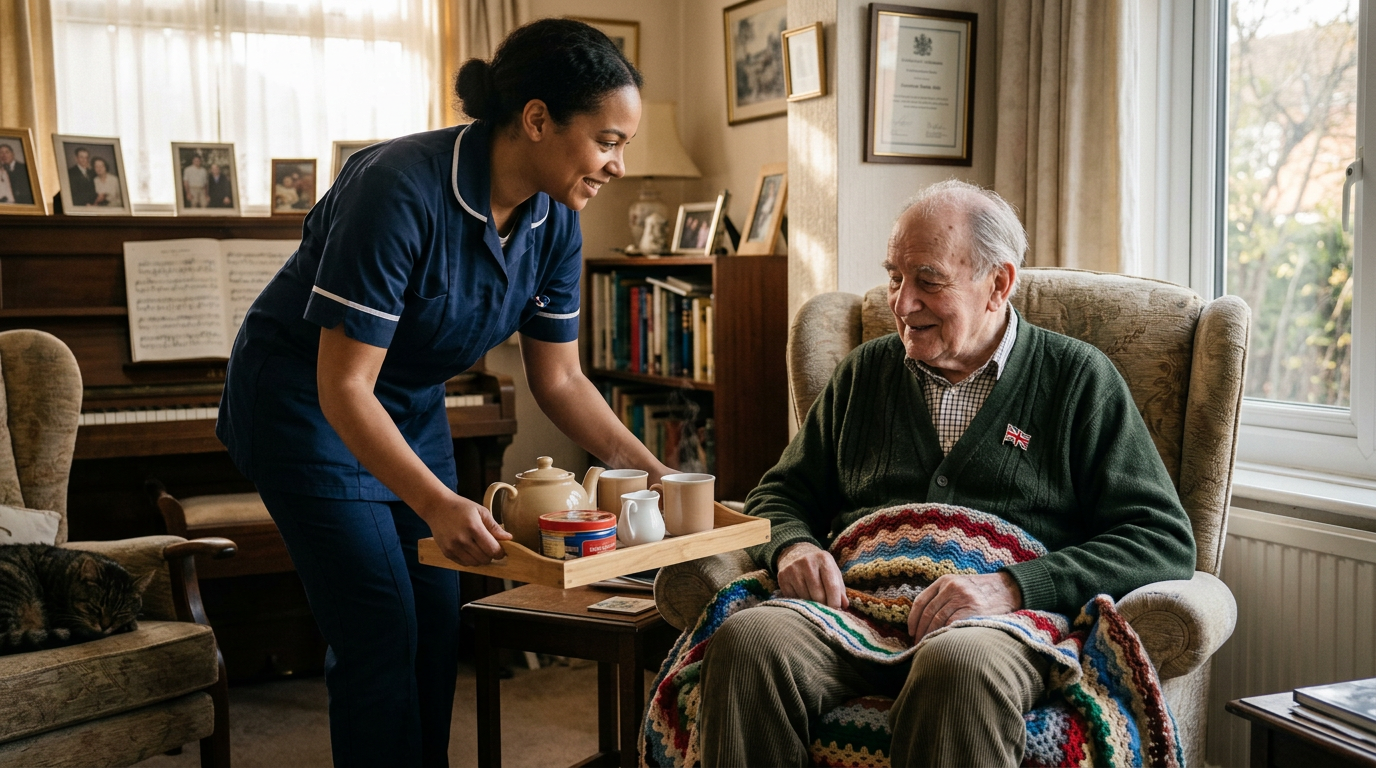
Aid and Attendance provides an increased benefit for veterans who need the regular aid of another person to perform the ordinary activities of daily living. Housebound benefits apply when you are substantially confined to your home and immediate premises because of disability. Both are paid at rates above the ordinary schedule.
Two things veterans consistently get wrong. First, you do not have to be in a nursing home, a spouse providing the care at home fully satisfies the standard. Second, the aid does not have to be needed constantly; §3.352(a) requires only that the need be regular, not that an attendant be present twenty-four hours a day.

The §3.352(a) Factors the VA Must Weigh

Inability to dress or undress yourself, or to keep yourself ordinarily clean and presentable

Frequent need of adjustment of a prosthetic or orthopedic appliance which cannot be done without aid

Inability to feed yourself through loss of coordination of the upper extremities or through extreme weakness

Inability to attend to the wants of nature
Incapacity, physical or mental, requiring care or assistance on a regular basis to protect you from the hazards or dangers incident to your daily environment
Being bedridden, a condition that actually requires that you remain in bed, beyond mere doctor’s advice to rest
Two Systems, Two Doors

Special Monthly Compensation (compensation track)
For service-connected veterans. Aid and attendance is paid under §3.350(b) at the SMC (l) rate or higher; housebound at the SMC (s) rate. SMC (s) can also be granted, without literal housebound status, where a veteran has a single disability rated 100% plus additional disabilities independently combining to 60%.
Special Monthly Pension (pension track)
For wartime veterans meeting the needs-based pension criteria, under §3.351. The aid-and-attendance increase raises the maximum annual pension rate substantially, and unreimbursed medical expenses, including in-home care and assisted living, can be deducted from countable income.

Surviving spouses
A surviving spouse receiving Survivors Pension may also qualify for the aid-and-attendance increase. This is one of the most under-claimed benefits in the entire system.
The Evidence That Actually Wins It
The claim rises or falls on VA Form 21-2680, the physician’s examination for housebound status or aid and attendance. A form returned with checkboxes and no narrative rarely wins. A form where the physician writes specifically, *“patient cannot bathe without standby assistance due to loss of balance; requires medication to be pre-sorted and administered by spouse; has fallen three times in six months”*, wins.
Pair it with a lay statement from the caregiver describing an ordinary day in concrete terms: who does what, at what hour, and what happens when they are not there. Under §3.159 lay evidence about observable functional limitations is competent evidence, and caregivers see what a fifteen-minute exam never will.

The Advocate’s Take
If a spouse, a child, or a caregiver is getting you through the day, there is very likely a benefit paying for exactly that need. Aid and Attendance and Housebound are two of the most under-claimed benefits the VA has. For surviving spouses on pension, they are almost never claimed at all.
Here is how the VA looks at it. Under 38 CFR 3.351 and 3.352, Aid and Attendance is paid when you need help with daily living: bathing, dressing, eating, toileting, adjusting a prosthetic, or protecting yourself from the hazards of daily life. You do not need help with every task. You need regular help, not constant help. Being bedridden, in a nursing home because of mental or physical incapacity, or having very limited vision also qualifies. Housebound is for veterans substantially confined to the home because of permanent disability. These add-ons attach to pension, to survivors pension, and on the compensation side, to Special Monthly Compensation.
What I need from you: a clear picture of a normal day and a bad day. Who helps you, with what, and how often. Your doctor's records on falls, memory problems, mobility, and vision. If you live in assisted living or a nursing home, the facility's records and costs. For pension-based claims, your income, assets, and unreimbursed medical expenses, including what you pay the people who care for you.
Walk through it with me. Your doctor completes VA Form 21-2680, the examination for housebound status or need for regular aid and attendance. If you are in a nursing home, the facility completes 21-0779. We attach statements from your caregiver describing the help in plain words. We file with the right base claim, pension, survivors pension, or SMC on compensation. Then we make sure the VA counts your care costs against your income.
The pitfalls: a doctor's form that says "independent" because you dressed up for the visit, a family member who never writes down what they do, and veterans who assume pension is out of reach because of income before medical costs are subtracted. Shocking, I know, but the paperwork decides this one, not the need.
Your part: tell your doctor the truth about your worst days, and have your caregiver write down what they actually do. We work WITH you, not FOR you. The help you are getting is real. Let's make the VA pay for it.
Aid and Attendance and Housebound benefits are paid for what your conditions stop you from doing on your own, and the VA will not see that unless the exam and the medical evidence spell it out. Watch the official VA videos below so you know how the exam works, then make sure every limit you live with day to day is on the record.
Straight From the Source
The rating behind this benefit is set at your claim exam. Watch these official VA walkthroughs to understand what that exam involves and how to prepare.
The official overview of the VA claim exam process, what happens, who conducts it, and why it matters for your rating.
What the VA's own guidance covers, what to bring, how to report your symptoms honestly, and the mistakes that cost veterans rating levels.
When Home Is No Longer Enough: The VA Runs Long-Term Care, and Aid and Attendance Is a Different Door
The call I get usually comes from a daughter. Dad fell again, Mom cannot lift him anymore, and somebody at the hospital said the words nursing home. The family assumes the money is gone and the house goes with it. Before anyone panics, I want you to know there are two separate systems here, and most families only hear about one of them.
The first is VA long-term care, and it runs through VA health care, not through your disability claim. When an enrolled veteran has a clinical need, the VA can provide or arrange care at every level: a Home-Based Primary Care team that comes to the house, a homemaker or home health aide for bathing and dressing, adult day health care, respite for the family caregiver, hospice, and three kinds of nursing homes. Those are Community Living Centers the VA runs itself, community nursing homes that contract with the VA closer to your family, and State Veterans Homes run by the states with VA support.
The second is Aid and Attendance, which is the money this page is about. The VA generally does not pay the monthly bill at a private assisted living facility or a private nursing home it does not run or contract with. Aid and Attendance puts monthly money in your hands, as an add-on to pension, survivors pension, or compensation, and you can apply it to that private bill.
Here is the trap: a disability rating is not VA health care enrollment. I meet veterans rated for years who have never filed VA Form 10-10EZ, and then the family learns, in the middle of a crisis, that the long-term care door was never open. The rating decision does not enroll you. The enrollment form does.
For the most seriously disabled veterans, the law goes further. Under 38 U.S.C. §1710A, the VA is directed to provide needed nursing home care to a veteran who needs it for a service-connected disability, or who has a service-connected rating of 70 percent or more. Under 38 CFR §51.41, that includes a veteran rated totally disabled through individual unemployability, and it reaches into State Veterans Homes through agreements that pay the home directly.
Your part: confirm the veteran is enrolled in VA health care today, before anything goes wrong. Then ask the primary care team for a VA social worker. The social worker is the person who assesses clinical need and opens every one of these doors.

Paying for Care Without Losing the House: Copays, State Homes, and the Two-Door Plan
Families who get this right almost always use both doors at once. VA home-based services keep the veteran at home longer, and Aid and Attendance pays for the help the VA does not provide. When home stops working, the State Veterans Home or a VA-contracted nursing home is often far less costly than the family expected.
The cost rules for VA-provided extended care are in 38 CFR §17.111, and they are better than most families think. Nobody pays a copay for the first 21 days of extended care in a 12-month period. A veteran with a compensable service-connected disability, which means 10 percent or higher, is exempt from the extended care copay altogether. For everyone else, the copay depends on income and available resources, and the VA uses VA Form 10-10EC to figure it.
Here is the trap: families sell the house, drain the savings, or move Dad into the most expensive private facility in town before anyone asks the VA a single question. Once that money is spent, it is spent. The VA options and Aid and Attendance should be priced out first, not after the savings are gone.
Your part: sit down with the social worker and with me, and line up the VA care options and the Aid and Attendance claim side by side. The four cards below are the pieces I walk families through.
Help That Comes to the House
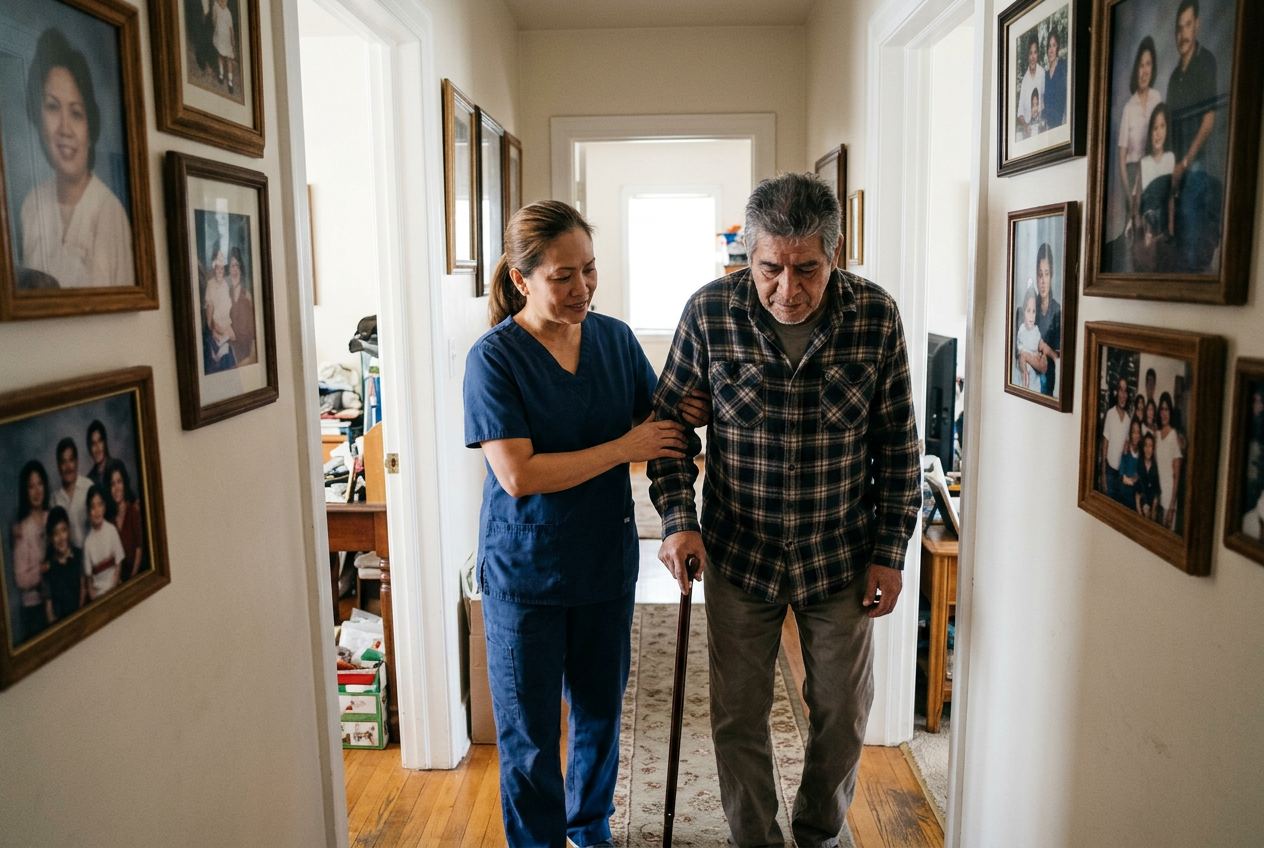
A homemaker or home health aide can help with bathing, dressing, and daily tasks for an enrolled veteran with a clinical need, where the service is available. Home-Based Primary Care brings a VA medical team to a veteran who has trouble getting to the clinic. These services are how many veterans stay in their own homes for years longer than anyone expected.

Get on the State Home List Early
State Veterans Homes are run by the states with VA support, and they are often the most affordable choice for a permanent stay. Many also accept a veteran's spouse or a Gold Star parent. Waiting lists are common, so apply long before the day you need a bed. For a veteran rated 70 percent or more, ask the home how the VA's direct payment works under §51.41.

Know Your Copay Before You Fear It
Under §17.111, there is no extended care copay for the first 21 days in a 12-month period, and a veteran with a compensable service-connected rating pays none at all. Care for a 0 percent service-connected condition is also exempt. Fill out VA Form 10-10EC honestly, and let the VA tell you the number before you assume you cannot afford it.

Respite Is for the Caregiver
The spouse or child doing the lifting, the medications, and the night shifts burns out, and then two people need care instead of one. Respite care gives that caregiver a planned break while the veteran is cared for at home, in an adult day program, or for a short nursing home stay. Ask for it before the caregiver breaks, not after.
Where the VA Gets This Wrong
Denials that require the veteran to be bedridden or institutionalized, when §3.352(a) requires neither; and ignoring the hazards of the daily environment factor, which is the criterion that most often carries dementia, TBI, and severe mental health cases.
Building a Aid & Attendance and Housebound Claim That Wins
Every claim stands on three legs. Knock one out and the claim falls over, no matter how bad your symptoms are. Before you file, look at your file and find all three. If one is missing, that is the piece to build first. The VA will not build it for you, and filing without it usually just buys you a denial letter and lost time.
 01
01A current diagnosis
A doctor has to say you have it, now, in writing. Not "reports symptoms of", a diagnosis. Without this leg, nothing else in the file matters.
 02
02A link to your service
An event, an injury, an exposure, or an already service-connected condition. Service records, unit records, buddy statements, and your own account all count as evidence.
 03
03A nexus that ties the two together
A medical opinion stating it is at least as likely as not that your service caused or aggravated the condition. That phrase is a legal standard: 50 percent or better. It is the leg most denials break.
Document the problem before you file
• Keep a dated symptom log for at least 30 days. Frequency, severity, and what it stopped you from doing.
• Get statements from people who see it, a spouse, a coworker, a battle buddy. Lay evidence is legal evidence.
• Pull your private treatment records. The VA only has to help; it does not have to go find everything.
• Write down what you have stopped doing. Lost work, lost sleep, lost activities. That is what impairment looks like on paper.
Your Rights in This Process
Most veterans walk into this system without knowing the rules the VA itself has to follow. That is how claims get denied for missing evidence the VA was supposed to help you find, and how exams get done by the wrong clinician. These six rights are written into federal regulation. Know them before you file, and make the VA honor every one of them when it decides your claim.

It costs nothing to file
Filing a VA claim is free. Accredited representatives may only charge for work on an appeal after an initial decision, and those fees are capped by 38 CFR §14.636.

The VA has a Duty to Assist you
Under 38 CFR §3.159 the VA must help you get the evidence it needs, and it must tell you what is missing before it denies you for missing it.

You can ask for a different examiner
You may request a trauma-informed clinician, or a clinician of a specific gender, for a C&P examination. Ask before the exam is scheduled.

You can claim every condition you have
There is no limit and no penalty. Primary conditions, secondary conditions, and conditions made worse by service all get filed.

You can appeal and be re-evaluated
A denial is not the end. You may submit new evidence, request a higher-level review, appeal to the Board, and ask for re-evaluation when your condition worsens.

You must be considered for TDIU
If your service-connected conditions keep you from holding substantially gainful employment, you may be paid at the 100 percent rate without a 100 percent rating.
When You Are Ready to File
Talk to an accredited representative before you file. It costs nothing to ask, and the order you file in changes what the VA is allowed to award you. Albert L. Thombs Jr. is VA-Accredited Claims Agent #45147. A short conversation now can save you a year spent waiting in the wrong review lane.
Your part starts at the kitchen table. Pull your DD-214, your rating decision if you have one, and the names of every doctor who treats you today. Under 38 CFR 3.159 the VA has to help you gather records, but it can only chase the records you tell it about. Leave a doctor off the 21-4142 and that treatment may never reach your file.

The application itself
This is the form that opens a disability compensation claim. List every condition you are claiming, and name the secondary conditions explicitly.
Release for private records
Authorises the VA to request records from your private doctors. Without it, treatment outside the VA may never reach your file.
Lay or buddy statement
The official form for your own statement and for statements from people who witnessed the event or the change in you.
What It Takes to Claim This Benefit
Confirm you meet the eligibility rules for this specific benefit, the criteria below and in the governing regulations tell you exactly what the VA is looking for.
Gather the proof that matches those rules, service records, medical evidence, income or dependency documents, and the physician statements the VA weighs.
File the right form the right way, the correct application, fully supported, so the VA cannot deny it on a technicality or delay it for missing evidence.
 Veteran Representation
 Veteran Representation
The Forms & Applications We File For You
These are the applications that drive this benefit. Start any of them on our site and an accredited agent prepares and files it for you, correctly, the first time.
Application for Disability Compensation
The core application that opens or reopens a service-connected compensation claim.
Start this with usUnemployability (TDIU) Application
Claims pay at the 100% rate when your conditions keep you from working.
Start this with usAid & Attendance / Housebound Exam
A physician documents the daily-help or housebound needs that raise your benefit.
Start this with usAppoint Us as Your Representative
Authorizes our accredited agent to act on your behalf with the VA on this benefit.
Start this with usSee How Ratings Drive This Benefit
Most benefits scale with your combined disability rating, and the VA does not add your ratings the way you would expect. Work the real math below. The VA uses the combined ratings table in 38 CFR 4.25, which applies each rating to whatever is left of your remaining efficiency, then rounds to the nearest 10. That is why a 50% and a 30% come out to 70%, not 80%. Before you assume you are short of a threshold for this benefit, run your own numbers here and compare them to your rating decision letter.
Why 50% + 30% Does NOT Equal 80%
The VA uses “whole-person” math, not simple addition. This is how ratings really stack.
The VA always begins from a whole, healthy person (100%).
50% of 100 is subtracted. You have 50% “efficiency” left.
30% is taken from the REMAINING 50 (0.30 × 50 = 15). 50 − 15 = 35 left.
100 − 35 = 65, then rounded to the nearest 10 → 70%.
Bottom line: 50% and 30% combine to 65% → rounded to 70%, not 80%. The same math turns two 50% ratings into 75% → rounded to 80%, not 100%. Every rating you add is worth less than the last. That is why which conditions you claim, and in what order, matters as much as how many.
 Veteran Representation
Not sure if you qualify?
An accredited agent reviews your eligibility for this benefit at no cost and tells you straight whether it is worth pursuing. If it is, we prepare and file every form for you.
Keep Reading
One page never tells the whole story of a claim. The VA rates every condition on its own evidence, its own exam and its own diagnostic code, and the pieces connect in ways most veterans never see until a decision letter lands. These are the pages that pick up where this one stops. Read them before you file, not after a denial, because the cheapest fix in this process is the mistake you never make.

TDIU, Total Disability based on Individual Unemployability
Total Disability based on Individual Unemployability (TDIU) pays at the 100% rate when service-connected conditions prevent you from holding substantially gainful employment, even if your combined rating is lower.
Read more
100% Disabled Veteran Benefits
A 100% rating, schedular or TDIU, opens a wide range of ancillary benefits for you and your family that many veterans never fully claim.
Read more
Benefits by Disability Percentage
VA ratings are not additive. Understanding the combined ratings table, and what benefits attach at each level, explains why 50% plus 30% does not equal 80%.
Read more