
Appeal Denied VA Benefits
A denial is the VA's opening move, not the final word
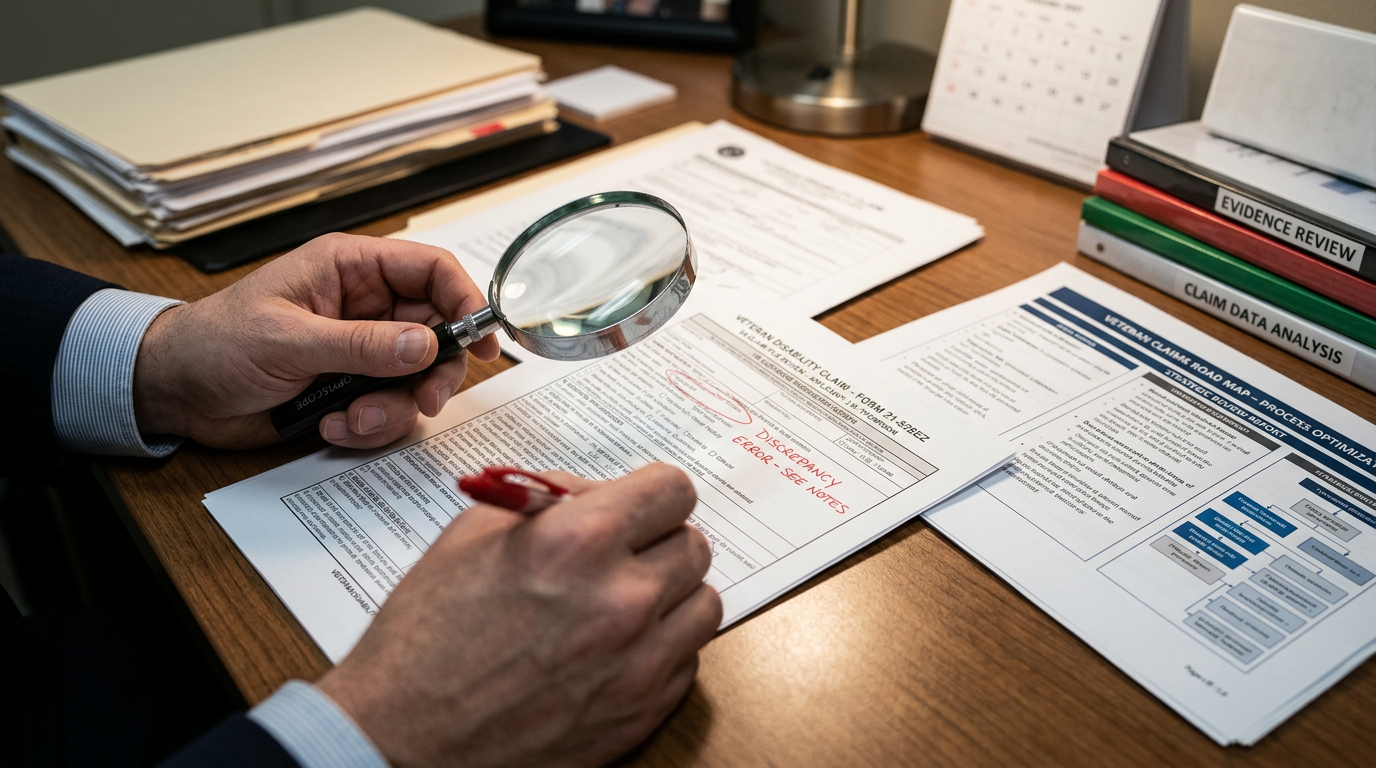
I have read thousands of denial letters, and most of them say the same thing in different words: the file did not prove what the law requires. That is fixable. You have one year from the date on the letter to pick a review lane and keep your effective date alive. Your part is to find that date, read the reasons the VA gave, and get help before the year runs out.
You Were Denied. Now What?
A VA denial letter is designed to feel final. It is not. Under the Appeals Modernization Act (AMA), enacted in 2019 and codified at 38 CFR §3.2500, Congress created three distinct review pathways specifically because the old system failed veterans. A large percentage of denied claims are overturned on appeal, when the veteran actually appeals and does it correctly.
The denial is not a judgment on your service or your suffering. It is a bureaucratic output based on the evidence the VA chose to weigh, and often on evidence it chose to ignore. Our job is to expose the gaps in their reasoning, supply what they missed, and force a different outcome through the correct legal channel.
The Three Appeal Lanes, 38 CFR §3.2500
A denial letter is not the end of your claim. The law gives you three lanes to fight it, and each one works differently. One lets you add new evidence, one sends the same file to a senior reviewer, and one puts your case in front of a Veterans Law Judge. Pick the wrong lane and you can lose months. Your part is to read the reason for denial in your letter first, then match that reason to the lane built to fix it.

Lane 1: Supplemental Claim
38 CFR §3.2501
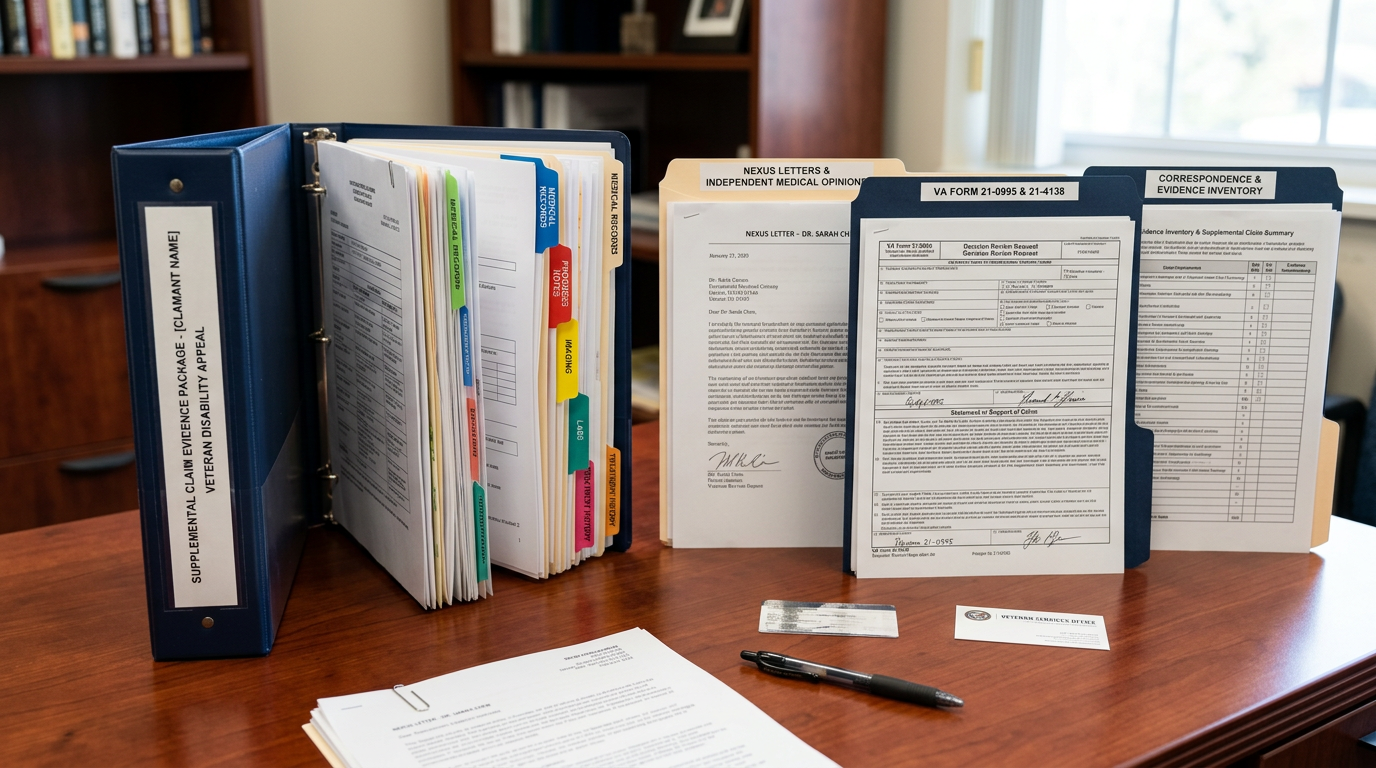
Submit new and relevant evidence the VA did not previously consider. This is the most commonly used lane and often the fastest path when we identify a specific evidentiary gap, a missing nexus letter, an inadequate C&P exam, or overlooked treatment records.
Best for: Claims denied for insufficient evidence, missing nexus, or an inadequate exam
New evidence allowed: Yes, this is the point of the lane
Hearing: No
Timeline: Typically 3–6 months
Key advantage: Preserves effective date if filed within one year of the denial

Lane 2: Higher-Level Review (HLR)
38 CFR §3.2601
A senior reviewer re-examines your existing evidence without new submissions. Best used when we believe the original rater misapplied the law, ignored favorable evidence already in the file, or made a clear factual error.
Best for: Claims where the evidence was sufficient but the rater made a legal or factual error
New evidence allowed: No, same record, different reviewer
Hearing: Informal conference (phone) available
Timeline: Typically 2–4 months
Key advantage: If the reviewer identifies a duty-to-assist error, the VA must correct it

Lane 3: Board of Veterans’ Appeals (BVA)
38 CFR §20.202
Appeal directly to a Veterans Law Judge. You can request a hearing, submit new evidence, or request a direct review of the record. This is the most formal avenue and is often necessary for complex multi-issue claims or when the regional office has repeatedly gotten it wrong.
Best for: Complex claims, credibility disputes, multi-issue denials, or repeated regional office errors
New evidence allowed: Yes, on the evidence-submission and hearing dockets
Hearing: Yes, live or virtual testimony before a Veterans Law Judge
Timeline: 1–3 years depending on the docket
Key advantage: A judge evaluates the claim, not the same rating office that denied it
Why Most Veterans Lose on Appeal
The appeal itself is not the problem, the execution is. I see the same mistakes in file after file, and none of them have anything to do with how disabled the veteran is. They come down to picking the wrong lane, missing the deadline, or sending the VA nothing new to work with. Your part is to read your denial letter before you choose anything. Veterans lose on appeal because they:
How We Fight Denials, The Forensic Approach
We start with the denial letter itself. Every VA denial contains a “Reasons and Bases” section that tells you exactly why they said no. Most veterans never decode this section. We do. We identify:
Once we have the intelligence, we choose the correct appeal lane and build a precision-targeted response. No shotgun approaches. No boilerplate. Every piece of evidence and every argument is aimed at the specific gap the VA exploited.
Deadlines That Protect Your Back Pay
You have one year from the date of your decision letter to file an appeal and preserve your effective date. If you miss this window, your effective date resets to whenever you eventually re-file, potentially costing you years of back pay.
Even if you are unsure which lane to choose, filing an Intent to File (VA Form 21-0966) within the one-year window preserves your effective date for an additional year while you build your case.
After the one-year window, you can still reopen with new and material evidence under 38 CFR §3.156, but the effective date resets. The exception: if the new evidence includes service department records not previously associated with the file, the effective date can reach back to the original claim.
The Three Decision-Review Options
A denial is not the end, it is a fork in the road. Choosing the WRONG option wastes months. Choosing right protects your back pay.
- Requires NEW & RELEVANT evidence
- File within 1 year to protect your effective date
- Reviewed by a claims adjudicator

- NO new evidence allowed
- An experienced adjudicator who did not decide your claim re-examines the same record
- Best when the evidence was there and the decision got it wrong

- Decided by a Veterans Law Judge
- Three dockets: Direct Review, Evidence Submission, or Hearing
- The most thorough review in the VA system

- A Clear and Unmistakable Error (CUE) motion is not one of the three decision-review options, it is a separate legal challenge to a FINAL decision.
- It alleges the earlier decision was undebatably wrong on the facts or the law as they existed at the time.
- When granted, it can reach back years for retroactive pay tied to the original effective date.
Protect your effective date: filing a Supplemental Claim within one year of the decision keeps your original filing date, which can mean thousands in retroactive back pay.
Where the VA Gets This Wrong
The most common errors we find in denial decisions:
Inside the VA's Procedural Manual
When a claim is denied, the notice requirements come from the law itself, 38 U.S.C. §5104(b) and 38 CFR §3.103: the decision must clearly state the evidence considered, the reasons for denial, and the veteran's appeal rights. If the denial letter is vague or fails to explain which element was not met, that itself is a procedural deficiency you can challenge.
Your three lanes after a denial are set by statute, 38 U.S.C. §5104C, and by 38 CFR §3.2500: Supplemental Claim, Higher-Level Review, or the Board. The M21-1 is only the VA's internal manual for processing them and never overrides the regulation. The VA will list the lanes for you, but the decision about which lane is strategically the most advantageous requires understanding the specific deficiency in the denial, that is what we analyze.
Key CAVC precedent: Kent v. Nicholson, 20 Vet. App. 1 (2006), required the VA to notify veterans of exactly what evidence is needed to reopen a previously denied claim. While the AMA framework modified some of Kent's applicability, the principle holds: the VA must tell you why you lost, and that "why" is the roadmap for your appeal strategy.
The Advocate's Take
A denial is the beginning of the real fight, not the end. The VA denied your claim based on a rater’s interpretation of the evidence, and raters make errors every day. I have read thousands of these letters. Most of them are not saying you are not hurt. They are saying the file was missing one piece.
Here is how the VA looks at it. Every claim needs three elements: a current diagnosis, an in-service event or exposure, and a nexus that links them at the at least as likely as not level. The denial letter must tell you which element failed. Any favorable findings in that letter are binding going forward under 38 U.S.C. §5104A, so what the VA already conceded stays conceded. Under 38 CFR §3.102, when the evidence is in approximate balance, the tie goes to you, and under 38 CFR §3.159 the VA had a Duty to Assist in getting records and an adequate exam. If it did not do that, the denial was built on a broken foundation.
What you need. The full decision letter, the code sheet, the C&P exam report, and any evidence the VA did not see. Then walk through it with me. Step one: find the element that failed. Step two: ask whether it is an evidence problem or a decision problem. Step three: choose the lane. Missing evidence goes to a Supplemental Claim with new and relevant evidence, often a nexus opinion or buddy statement. A misapplied rule with the right evidence already in the file goes to a Higher-Level Review. A complex case that needs a judge goes to the Board of Veterans' Appeals. Step four: file inside the one-year window so your effective date survives.
The pitfalls: refiling a brand-new claim and losing years of back pay, sending the same evidence again and calling it new, and choosing HLR when what you need is a doctor's opinion. Your part: keep the letter, gather what you have, and do not wait. We decode the denial, identify every error and every unexplored theory, choose the right lane, and build a case the record fully supports. If you were denied, do not accept it and do not wait, the one-year clock is running.
A denial almost always traces back to one weak link, and most of the time that link is the exam. I read the denial letter to find exactly where the VA's reasoning broke down. Watch the official VA videos below, then compare what the VA says the exam should look like to what actually happened in yours.
Why Claims Get Denied, and What the VA Standard Is
Most denials trace back to a defective exam or a misread record. These official VA videos show how the exam and compensation are supposed to work, so you can see where yours went wrong.
Your VA Claim Exam: What to Expect
How VA Disability Compensation Works
Denied? Do Not Accept It.
We decode the denial, choose the right lane, and build a case the record fully supports. Start with a free review of your denial letter.
Request Free Appeal Review
The Nine Questions Every Veteran Should Be Able to Answer
This is the standard I hold every page on this site to. Before you file anything on a denied claim, you should be able to answer these nine questions. If you cannot answer them yet, you are not ready, and that is exactly what my review is for. This is education first, representation second.

What is this?
A denial is not the end, it is a decision you can challenge. The first job is to read what the VA actually decided, not just that it said no.

What must the VA decide?
On review, whether the denial was correct, either on the existing record or in light of new evidence, depending on the route you choose.

What must the evidence prove?
It depends on why you were denied. An evidence gap needs new records; a misapplied law needs a legal challenge. The problem dictates the proof.

What is the VA responsible for?
Giving you a written decision that states what it considered, what it favorably found, and why it denied, plus your review options and deadlines.

What are you responsible for?
Reading the decision carefully, meeting the review deadline, and choosing the correct route instead of refiling blindly.

What can go wrong?
Reading only the denial and missing the favorable findings, choosing the wrong review lane, or letting the one-year window lapse and losing your effective date.

What you should not do
Do not simply refile the same claim, and do not react in anger. First decide whether you have an evidence problem, a decision problem, or no problem at all.

What I review as your accredited agent
I read what the VA already conceded, diagnose why it denied, and match the denial to the right route, Supplemental Claim, Higher-Level Review, Board appeal, or CUE.

What happens next
We file the correct review within the deadline that protects your date. Every denial is a new starting point, not a finish line.
Representation Means Telling You the Truth
Do Not File Yet If…
Before you take action on your denied claim, check whether any of these apply. Filing at the wrong time can weaken your claim, waste a deadline, or put you on a longer path than necessary. I would rather tell you to wait than watch you lose an effective date or hand the VA a thin file it can deny in a week. A denial is not the end, but it costs you months. Read each item below honestly. If one fits your situation, call us first and we will tell you what to fix before anything gets filed.





Read the Whole Decision, Not Just the Denial
What VA Already Conceded
A rating decision contains favorable findings. Never read only why VA denied you. Read what VA already conceded. If VA has already favorably found a diagnosis, qualifying event, exposure, or other fact, that can fundamentally change what still needs to be proved.

VA acknowledged a current disability exists in the record.

VA conceded the qualifying event, injury, disease, or exposure occurred during service.

VA accepted that you were exposed to a specific hazard during qualifying service.

VA found that your condition has worsened, even if the assigned evaluation was lower than expected.

VA credited your statements as competent and credible on matters within your personal knowledge.

VA determined its duty-to-assist obligations were satisfied, which you can challenge if they were not.
What I Do as Your Accredited Agent
I read every favorable finding in your decision before I read the denial. Those findings tell me what VA has already accepted as fact. Once VA concedes a point, you generally do not need to reprove it. That narrows the remaining question, and a narrower question is easier to answer with the right evidence and the right procedural path.
Frequently Asked Questions
Getting denied feels final, but it is usually the start of the fight. These are the questions I hear most from veterans holding a denial letter. Each answer comes back to the reason on your letter, because that reason picks your next move. Your part is to read your denial closely, find the exact reason the VA gave, and keep the date you received it.