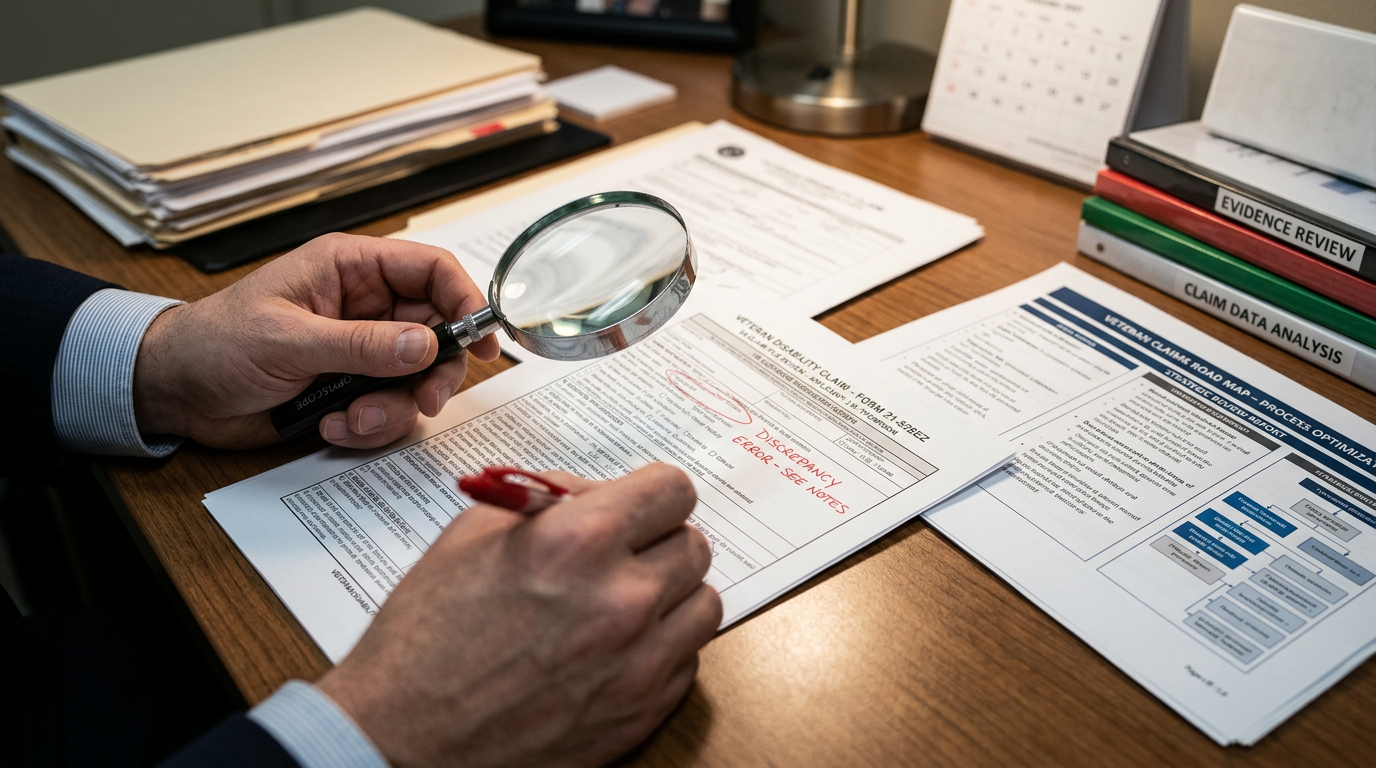

Frequently Asked Questions
Plain-language answers to the most common questions about VA disability claims, our process, and working with an accredited claims agent. These are the questions veterans ask me every week, answered the way I would answer them across the table. No sales pitch and no legal fog. If your question is not here, send it to us. Your part is to read the answer that fits your situation before you file anything.
What does it cost to work with The VA Disability Advocate?
Representation is on contingency: 20% of past-due benefits on Standard Direct-Pay (the VA pays us directly) or 30% on High-Complexity (billed to you after your retro arrives), governed by 38 CFR §14.636. If we do not win, you do not pay a representation fee. The Mission 5 Brief is a separate service at a $750 flat fee. We do not bill by the hour and we do not charge for phone calls, emails, or the number of times we talk. Our fee comes out of the past-due benefits recovered, not your ongoing monthly compensation. We cannot charge for initial/first-time claims.
Who do you help?
We focus on veterans the VA has already denied or under-rated. We handle appeals, rating fights, CUE motions, effective date disputes, and toxic exposure claims, not first-time initial claims. You must have served honorably and not be currently under contract with another VSO, attorney, or agent.
What is the difference between a VA-accredited claims agent and a VSO?
A VSO (Veterans Service Organization) representative, such as those from the DAV, VFW, or American Legion, provides free assistance and can file claims on your behalf. They are valuable for straightforward claims. A VA-accredited claims agent like Albert (#45147) is federally accredited by the Department of Veterans Affairs to represent claimants in VA benefits matters, legally authorized to charge a contingency fee and who specializes in complex appeals, denials, and rating increases. The key difference is that an accredited agent can go directly into your claims file, challenge inadequate exams, argue legal error, and take a case to the Board of Veterans' Appeals with the full authority of an accredited representative. Accreditation is federal authorization to represent claimants, it does not make him a federal employee or officer.
Do I need a lawyer?
Not necessarily. Inside VA, up through the Board of Veterans' Appeals, an accredited claims agent has the same authority as an accredited attorney. The Court of Appeals for Veterans Claims has its own admission rules, separate from VA accreditation. If your case needs to go to court, I will tell you plainly and make sure you are connected to the right representation.
How long does the process take?
It depends on the lane. A Supplemental Claim can resolve in 4 to 6 months. A Higher-Level Review typically takes 4 to 5 months. A Board Appeal, Direct Review currently averages 12 to 18 months. A Board Appeal with Hearing can take 2 to 4 years. These are general estimates based on current VA processing times, which change. We choose the lane based on what your file actually needs, not what is fastest.
What is the Mission 5 Intelligence Brief?
It is our flat-fee forensic file review product ($750). You receive a 7-section written report within 7 days plus a 45-minute strategy call with an accredited agent. It gives you a complete picture of your claim's strengths, weaknesses, evidence gaps, and next steps. This is a standalone forensic report, not a representation agreement, you can use it yourself, take it to a VSO, or bring it back to us for full representation.
What is a supplemental claim?
A supplemental claim (38 CFR §3.2501) allows you to submit new and relevant evidence after a denial. It is often the fastest path to reversing a wrong decision. The key requirement is that the evidence must be "new" (not previously considered) and "relevant" (tends to prove or disprove a matter at issue).
What is a Higher-Level Review?
An HLR (38 CFR §3.2601) asks a senior VA adjudicator to re-examine your existing evidence. No new evidence can be submitted, but it is effective when the evidence was there and the decision got it wrong, such as failing to apply the benefit of the doubt or ignoring favorable evidence.
What is CUE?
Clear and Unmistakable Error (CUE) under 38 CFR §3.105(a) is when the VA made an undebatable error in a prior final decision, the kind of error that, had it not been made, would have manifestly changed the outcome. Proving CUE can unlock retroactive benefits going back years or even decades to the original claim date.
What if my denial is years old?
Old denials are not necessarily dead. CUE motions can attack final decisions from any year if the error meets the legal standard. The PACT Act reopened many pre-2022 denials for toxic exposure conditions. And an Intent to File (38 CFR §3.155) filed today starts a new clock. We audit old files specifically for these opportunities.
What is secondary service connection?
Under 38 CFR §3.310, a condition caused by or aggravated by an already service-connected disability can also be service-connected and rated. The VA frequently misses these connections. Common examples include sleep apnea secondary to PTSD, radiculopathy secondary to a spine condition, and erectile dysfunction secondary to medication for a service-connected condition.
How does the PACT Act affect my claim?
The PACT Act (Public Law 117-168, signed August 10, 2022) expanded presumptive conditions for toxic-exposed veterans, including burn pit/airborne hazard exposure, Agent Orange, Gulf War illness, and radiation. If you were exposed during covered service, you may now be eligible for benefits previously denied without needing a nexus letter.
What is a DBQ?
A Disability Benefits Questionnaire (DBQ) is a standardized VA form completed by a physician that documents a specific condition in the format the VA's rating system requires. A private DBQ from your own physician, or from a contracted medical provider, can be the single most powerful piece of new evidence in a Supplemental Claim. We identify when a DBQ is needed and what it must say to meet the legal standard.
What do I need to get started?
Three things. First, be in active medical treatment for your conditions, current records are the ammunition. Second, locate your most recent VA Decision Letter, this is the legal baseline. Third, contact us. If you cannot locate your decision letter, we can help you obtain it once you are on file.
Do I need to sign anything to get started?
We review your situation first and tell you honestly whether we can help. If we move forward, you sign VA Form 21-22a, which authorizes us to represent you before the VA. This is the standard federal form for accredited agent representation.
What is TDIU?
Total Disability Based on Individual Unemployability (TDIU) under 38 CFR §4.16 pays you at the 100% rate even if your combined rating is below 100%, if your service-connected conditions prevent you from maintaining substantially gainful employment. There are two pathways: schedular TDIU (§4.16(a)) if you meet the rating thresholds, and extraschedular TDIU (§4.16(b)) if you do not.
Can I file for conditions I did not know were service-connected?
Yes. Many veterans do not know that a condition they developed years after service is legally connectable to their military service. Secondary conditions, toxic exposure presumptives, and conditions with long latency periods are all claimable. We specifically look for these in every file review.
What is VA accreditation and why does it matter?
VA accreditation (our number is #45147) means we are officially recognized by the VA to represent veterans in their claims. An accredited agent can access your claims file directly, file appeals, challenge inadequate exams, argue legal error, and represent you before the Board of Veterans' Appeals. This is a critical anti-scam signal, only work with accredited representatives.
How is back pay calculated, and how far back can it go?
Back pay (retroactive benefits) is the difference between what the VA paid you and what it should have paid you, from your effective date forward. Under 38 CFR §3.400 the effective date is normally the date the VA received your claim, but it can reach much further back through an unadjudicated earlier claim, an Intent to File, a CUE motion, or a Nehmer-class Agent Orange readjudication. Correcting an effective date can be worth more than a rating increase, and it is one of the first things we audit in every file.
What is Special Monthly Compensation (SMC)?
SMC is compensation paid above the standard 100% rate for specific severe circumstances, loss or loss of use of a limb, blindness, deafness, the need for regular aid and attendance, or being housebound. The levels run from SMC-K through SMC-T under 38 CFR §3.350. SMC-S (housebound) and SMC-L (aid and attendance) are the two most frequently missed. The VA is supposed to award SMC automatically when the evidence supports it, and routinely does not.
Real Veterans. Real Claims. Real Outcomes.
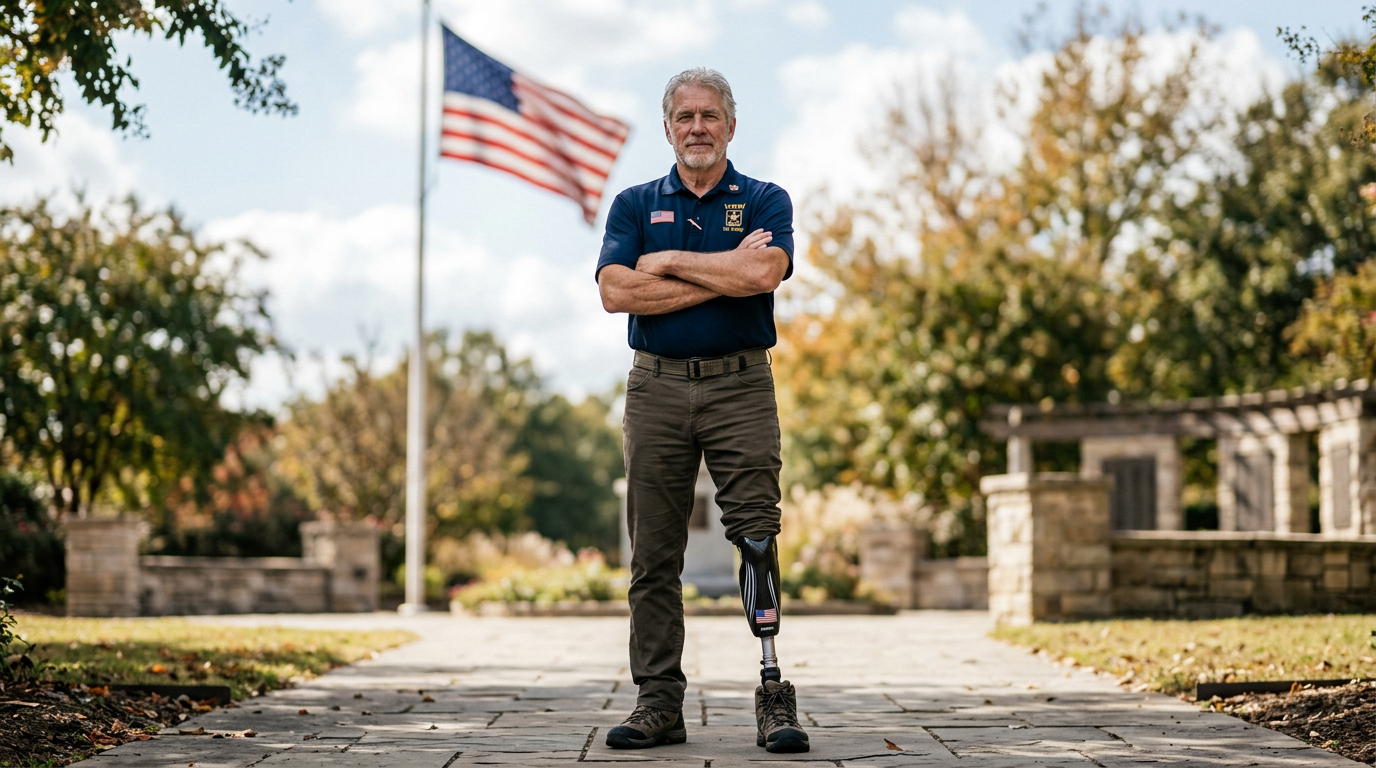
Every case on this desk belongs to someone who served. These are the veterans this practice represents, across every era, branch, and condition: the Vietnam vet who was told it was too late, the Gulf War vet the system called a mystery, the young veteran who walked out of a five minute exam with a zero. Different stories, same fight. The record decides the claim, so we build the record.
 Veteran Representation
 Veteran Representation
 Veteran Representation
Still Have Questions About the Exam?
The C&P exam raises the most questions of all. These are the official VA walkthroughs of what to expect, and how to prepare. Watch them before your appointment, write down your questions, and request a copy of your exam report afterward. If the report does not match what happened in the room, that is something you need to raise in writing, and the sooner the better.
Your VA Claim Exam: What to Expect
Tips to Prepare for Your VA Claim Exam