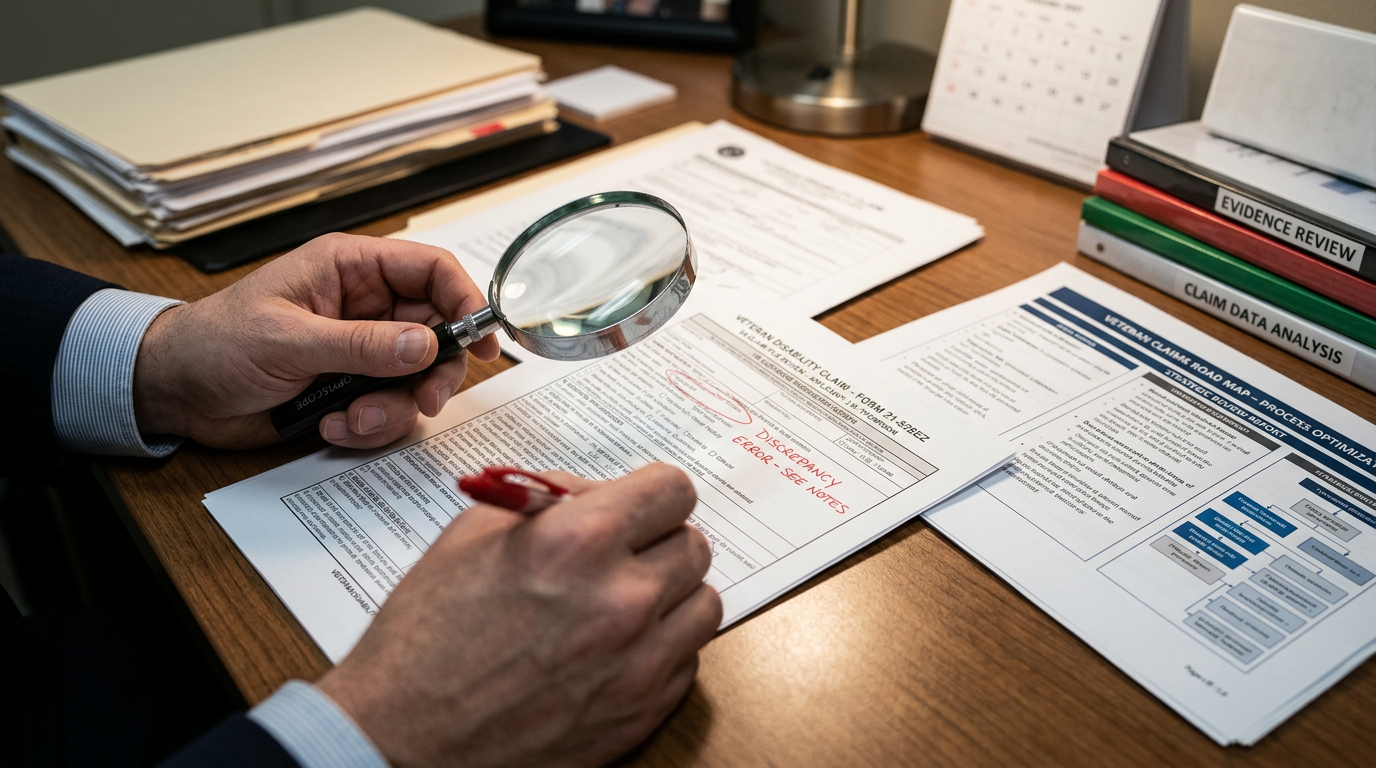
The first claim sets the tone, and the effective date, for everything that follows. Do it deliberately, not in a panic.
Your first claim is more important than most veterans realize. It anchors your effective date, sets the record the VA will rely on, and shapes every appeal or increase that follows. Rushing it is expensive.
Step 1: Lock your date with an Intent to File
Filing an Intent to File preserves your effective date for up to a year while you gather evidence. That protected date can mean thousands of dollars in back pay.
Step 2: List every condition, and its secondaries
Claim each condition by name, and think about what each one caused. Under 38 CFR § 3.310, a service-connected condition that causes another (sleep apnea from PTSD, depression from chronic pain) opens a secondary claim.
Step 3: Build the evidence before you file
A current diagnosis, service records showing the event, and a nexus opinion turn a claim from a coin flip into a decision the VA cannot easily deny. File when the file is ready, not before.
The entire framework governing VA disability compensation is codified in Title 38 of the Code of Federal Regulations, with the rating schedule at 38 CFR Part 4 and the service-connection standards at §3.303 (direct), §3.310 (secondary), and §3.306 (aggravation). Raters adjudicate claims using the procedures in M21-1, the VA's internal manual that tells them exactly what evidence to develop, what exams to order, and how to apply the rating schedule. Under Gilbert v. Derwinski, when the evidence is in approximate balance, every doubt must be resolved in your favor. Under Caluza v. Brown, service connection requires three elements: a current disability, an in-service event, and a medical nexus linking the two, miss any one, and the claim fails.