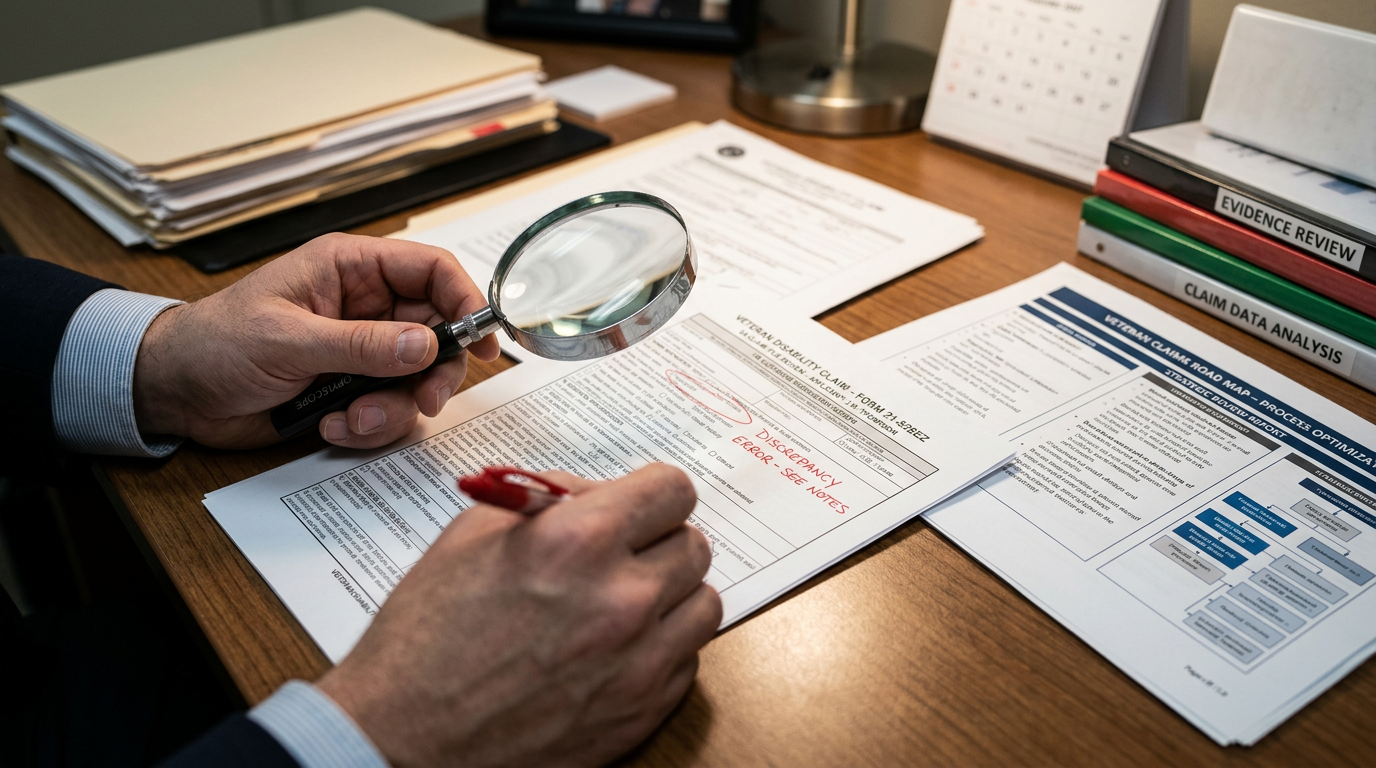
Your treatment records become evidence. A few honest conversations with your doctor can make or break the file.
Every time you see a provider, you are creating evidence. The problem is that most veterans downplay their symptoms to their doctors out of habit, and those understated notes end up in the file the VA reads.
Be honest about the bad days
Your doctor can only document what you report. If you say “I’m fine” when you are not, that is what goes in the record. Describe the frequency, the severity, and the impact on your daily life, accurately, not stoically.
Ask for what the record needs
- That symptoms and their functional impact are documented
- That flare-ups and their frequency are noted
- That the connection to service, when appropriate, is discussed
Do not ask your doctor to lie, ask them to be complete
You are not asking for favors. You are asking for an accurate, thorough record. That is good medicine and good evidence at the same time.
Every VA disability claim is adjudicated under the procedures in M21-1, the VA's internal Adjudication Procedures Manual, and the regulatory standards in 38 CFR Parts 3 and 4. Raters are bound by these rules, and when they deviate, veterans have grounds to challenge the decision. Under Gilbert v. Derwinski, the benefit-of-the-doubt standard at §3.102 requires the VA to resolve every evidentiary tie in the veteran's favor. Under Esteban v. Brown, separate disabilities producing separate functional losses must be rated independently, even when they arise from the same injury, the VA cannot collapse distinct impairments into one rating.