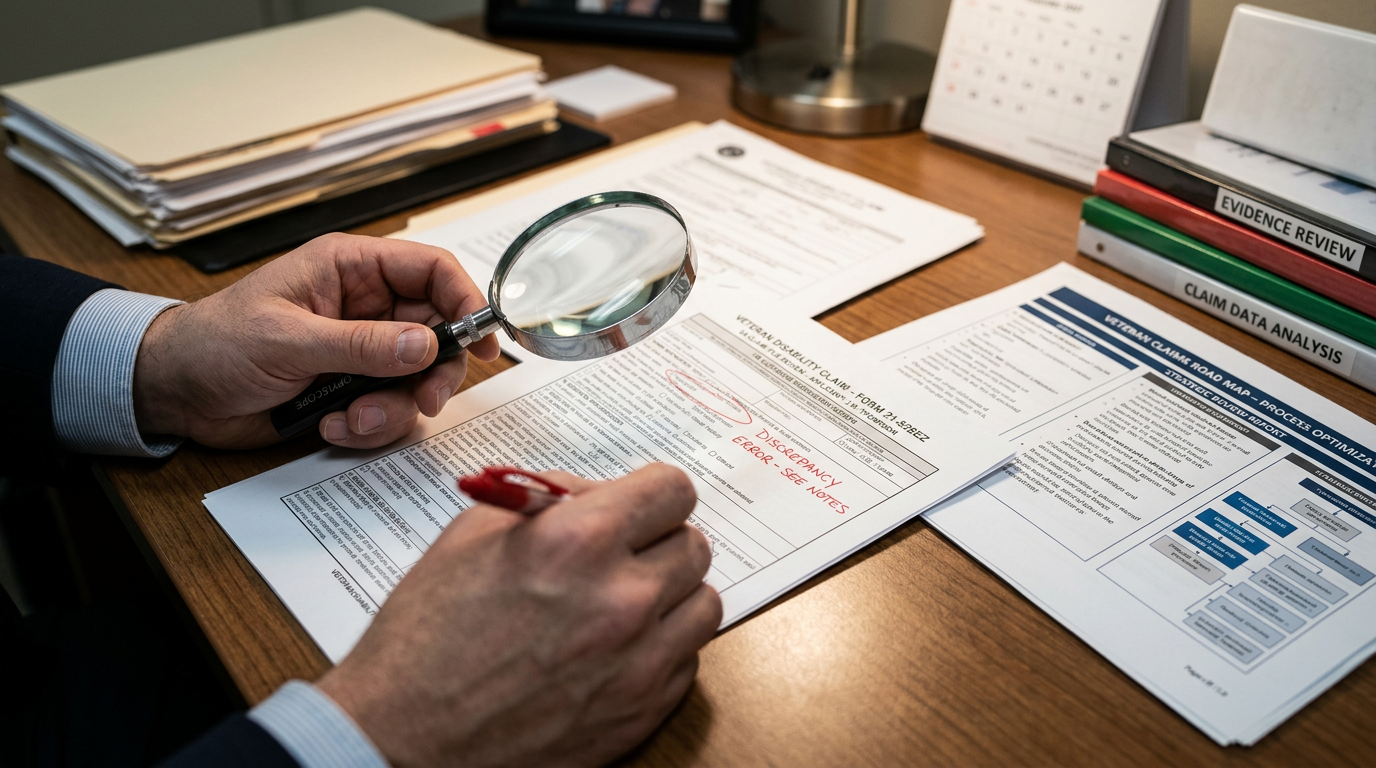
The DBQ is the scorecard the VA uses to rate you. Knowing how it works turns a mystery into a strategy.
A Disability Benefits Questionnaire (DBQ) is the standardized form that translates your medical condition into rating language. The C&P examiner completes one, and the rater uses it to assign your percentage.
Private DBQs
Your own doctor can complete a DBQ. A private DBQ from a provider who actually knows your condition can carry real weight, especially when it is more thorough than a rushed C&P exam. It must be complete, internally consistent, and supported by the treatment record.
Where DBQs go wrong
- Left blank in critical sections, incomplete DBQs get little weight
- Findings that contradict the treatment records
- No functional-impact detail, so the rater defaults low
We review every DBQ against the rating criteria before it goes in, because a single missing checkbox can cost an entire step in your rating.
The adequacy standard for C&P examinations is codified in M21-1, Part III, Subpart iv, Chapter 3 (Obtaining Medical Examinations and Medical Opinions), and the body-system-specific requirements in Chapter 4. When an examiner fails to address functional loss, skips required testing, or provides a "bare conclusion" without a rationale, the exam is legally inadequate under Barr v. Nicholson. Under Sharp v. Shulkin, an examiner who dismisses flare-up impact without a reasoned explanation has produced a deficient opinion. Under Correia v. McDonald, musculoskeletal exams must include active, passive, and weight-bearing versus non-weight-bearing testing, skip any one of those, and the exam is incomplete.