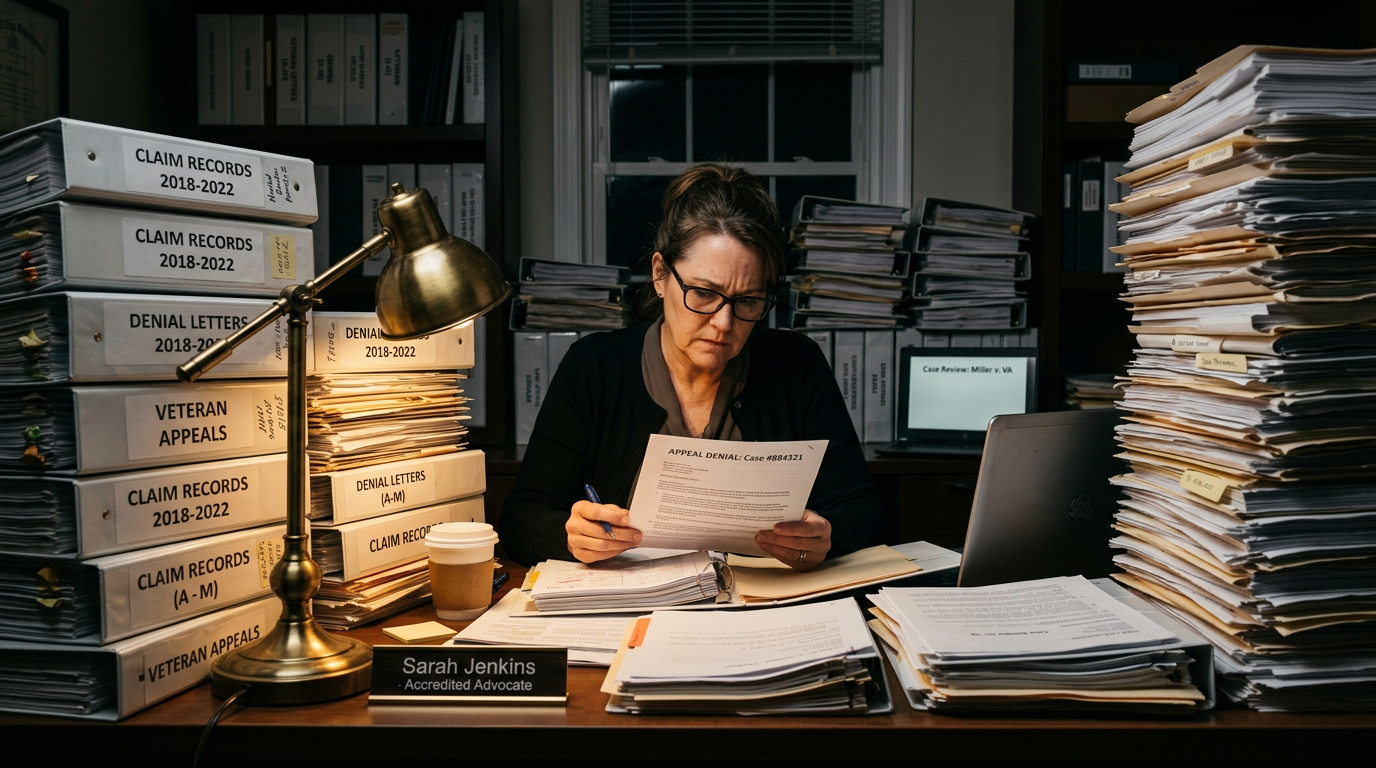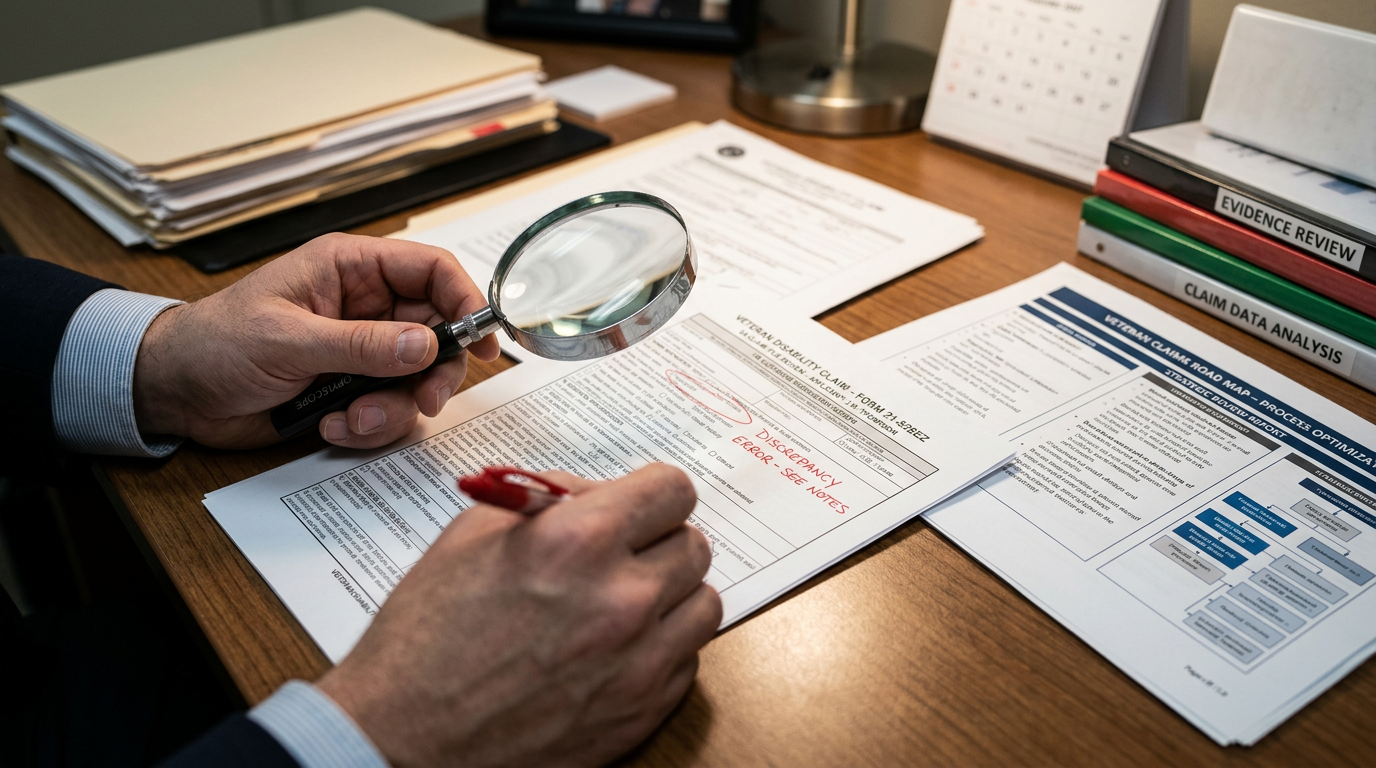
You walk out of a C&P exam knowing it went wrong, the examiner spent ten minutes with you, never reviewed the file, or wrote findings that do not match reality. That exam is not the end. The law requires the VA to base decisions on an adequate exam.

← Back to the BlogC&P Exams
The Exam Was Inadequate. Now What?
AT
Albert Thombs
Founder & VA-Accredited Claims Agent · #45147
July 21, 20261 min read1 reads
A rushed or wrong C&P exam is not the final word. An inadequate exam is a legal problem the VA has to fix.

Signs of an inadequate exam
- The examiner ignored records or your reported history
- The opinion has no rationale, just a conclusion
- The findings contradict your documented treatment
- The examiner was not qualified to opine on the condition
How we fight it
We request the exam report, document exactly where it fell short, and argue the inadequacy on appeal, often through a Higher-Level Review citing a duty-to-assist error. When the exam is the problem, the remedy is a new, adequate exam, with your effective date protected.
Official VA Video · Government Produced
The adequacy standard for C&P examinations is codified in M21-1, Part III, Subpart iv, Chapter 3 (Obtaining Medical Examinations and Medical Opinions), and the body-system-specific requirements in Chapter 4. When an examiner fails to address functional loss, skips required testing, or provides a "bare conclusion" without a rationale, the exam is legally inadequate under Barr v. Nicholson. Under Sharp v. Shulkin, an examiner who dismisses flare-up impact without a reasoned explanation has produced a deficient opinion. Under Correia v. McDonald, musculoskeletal exams must include active, passive, and weight-bearing versus non-weight-bearing testing, skip any one of those, and the exam is incomplete.

Filed under:C&P Exams