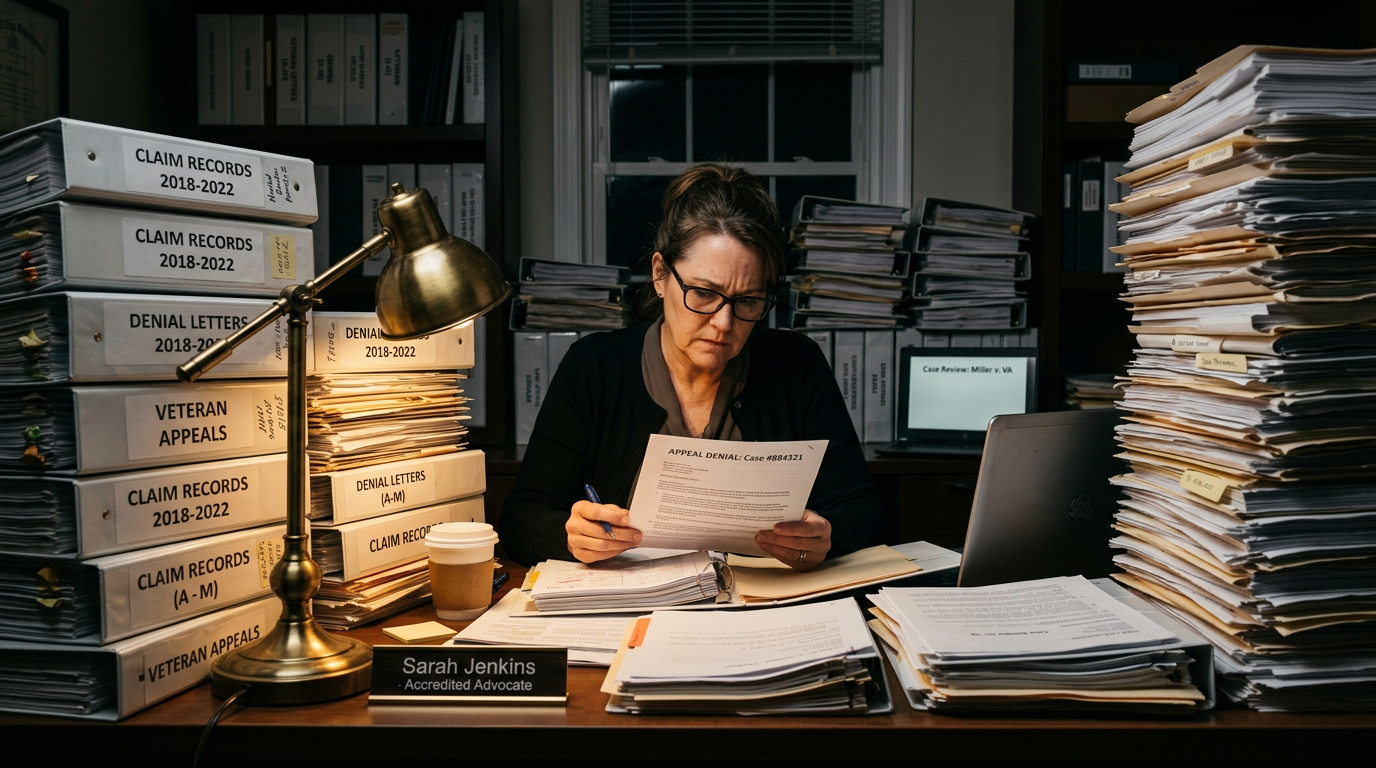
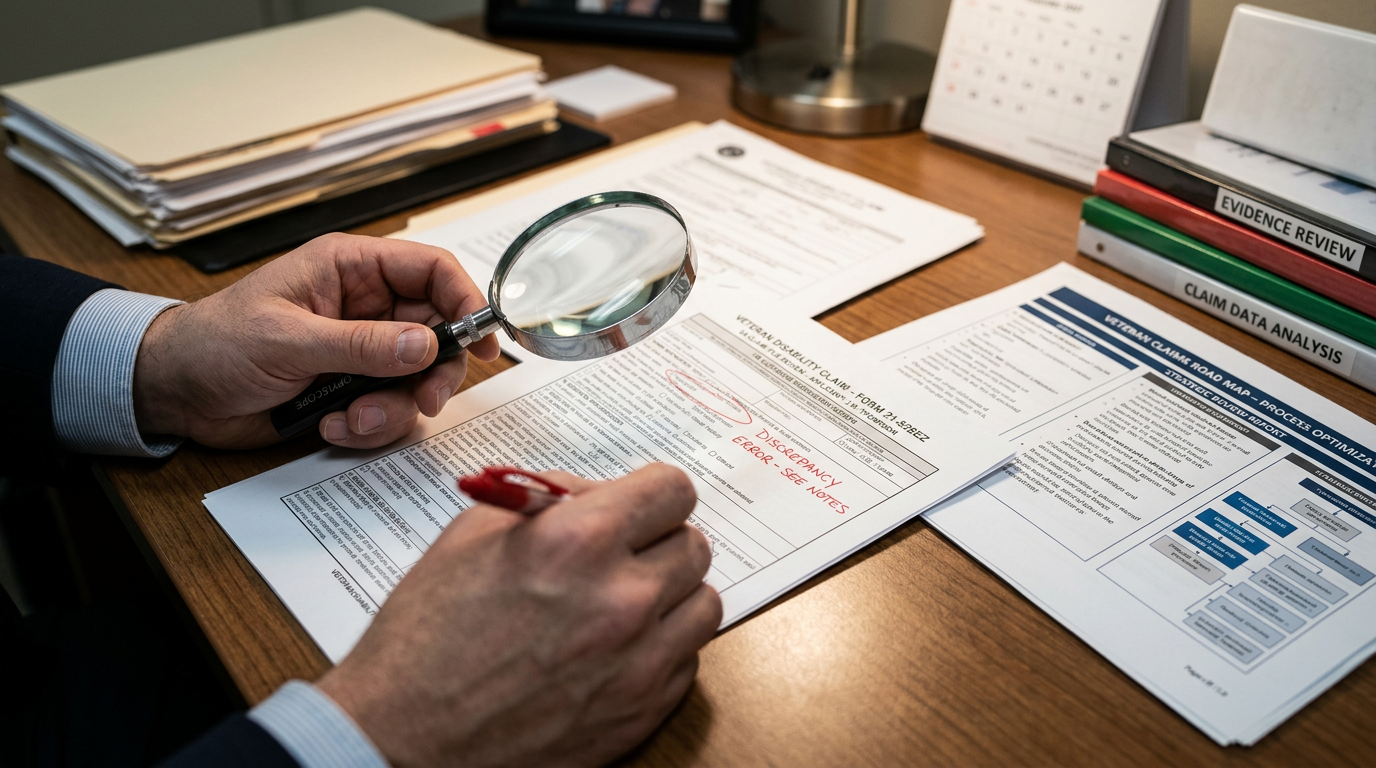
Your claims file is the entire case the VA has on you. If you have never read it, you are fighting blind.
Your claims file, the C-file, is everything the VA has on your case: service records, exam reports, rating decisions, and the evidence the rater actually relied on. If you have never requested it, you are arguing about a decision you have not fully seen.
How to get it
You can request your complete C-file from the VA. It can be large, and it can take time, but it is the single most valuable document in your fight. Everything the VA used to decide your claim is in there.
Read it like a rater
- Find the exact evidence the decision cited
- Look for favorable records the rater ignored
- Check the C&P exam for inadequacies and wrong findings
When we take a case, the C-file is where we start. It tells us precisely which gap cost you the claim, so we fill that gap instead of guessing.
The VA's obligation to develop evidence is codified in 38 CFR §3.159 and operationalized in M21-1, Part IV, Subpart i, Chapter 1 (Duty to Assist with Providing a Medical Examination or Opinion). Under this regulation, the VA must obtain federal records (service treatment records, VA medical records, Social Security records) and make reasonable efforts to obtain private records when the veteran authorizes their release. Under Colvin v. Derwinski, the VA cannot reject competent medical evidence in favor of its own unqualified judgment. Buddy statements and lay evidence carry legal weight under Jandreau v. Nicholson, lay testimony is competent to establish observable symptoms and continuity of symptomatology, even without a medical degree.