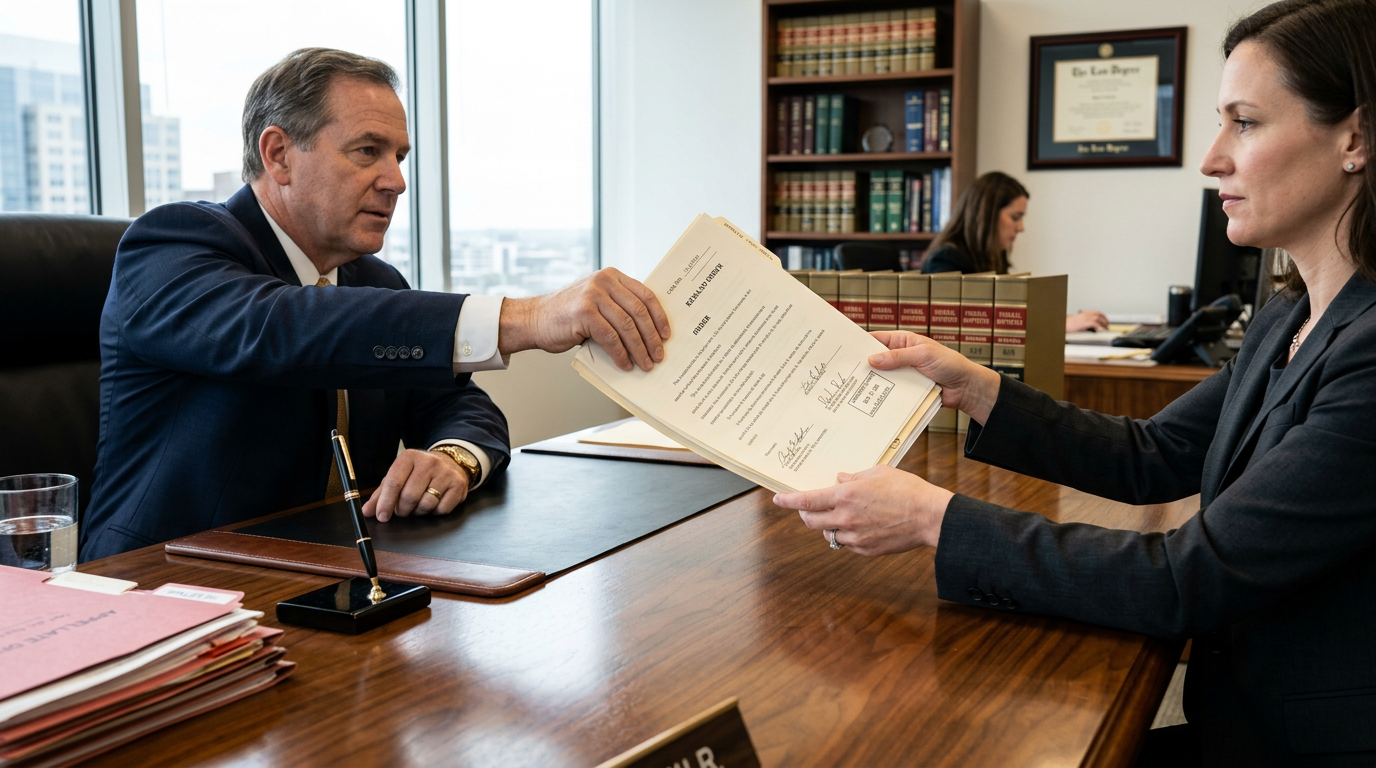
The appeal lanes come with a clock. Miss the deadline and you can lose your effective date, or the appeal entirely.
The appeals system gives you options, but it also gives you a clock. Under the Appeals Modernization Act, you generally have one year from the date of your decision to choose an appeal lane and preserve your effective date. Miss it and the consequences are real.
The three lanes and the clock
- Higher-Level Review: a senior reviewer re-examines the same evidence
- Supplemental Claim: you add new and relevant evidence
- Board Appeal: a Veterans Law Judge reviews your case
Choosing within the year keeps your original effective date intact. File after it lapses and you may keep your appeal rights only by starting over with a later date, losing back pay in the process.
Protect the date
If the deadline is close and your evidence is not ready, there are ways to preserve your rights while you build. Do not let the clock run out in silence. Act inside the year, every time.
When the VA denies a claim or assigns a low rating, the rater's decision is measured against the regulatory development procedures in M21-1, Part IV, Subpart i, Chapter 1 (Duty to Assist), and the rating guidance in Part III, Subpart iv, Chapters 4–5. Under Clemons v. Shinseki, the VA must consider every theory of entitlement reasonably raised by the evidence, not just the one the veteran named on the form. Under Gilbert v. Derwinski, when the evidence for and against a finding is in approximate balance, the VA must resolve the doubt in the veteran's favor, the benefit-of-the-doubt standard at 38 CFR §3.102 is mandatory, not discretionary. If the rating decision ignored evidence in the file, cite Colvin v. Derwinski, the VA cannot substitute its own medical judgment for competent medical evidence of record.