VA denials follow predictable patterns. Once you know which one hit your file, you know exactly how to fight back.
After reviewing thousands of denial letters, I can tell you the truth the VA will never put in writing: denials are not random. They follow three predictable patterns. Once you know which one landed on your file, you stop guessing and start building.
Pattern 1: “No nexus”
This is the most common denial. The rater concedes you have a current condition and an in-service event, but says nothing links the two. Under 38 CFR § 3.303, service connection requires that link, the nexus. The fix is rarely more complaining; it is a competent medical opinion that states the condition is “at least as likely as not” related to service, with a stated rationale.
Pattern 2: “No current disability”
The VA cannot pay for a condition it says you do not currently have. If your records are old or the C&P examiner low-balled the findings, the file looks empty. The fix is current, objective evidence, updated imaging, a current diagnosis, or a treatment record dated inside the claim window.
Pattern 3: “No in-service event”
Here the VA says there is nothing in your service records showing the injury, exposure, or stressor. Personnel records, unit histories, buddy statements, and, for toxic exposure, your locations and job duties can all rebuild that event when the medical record is silent.
Read the letter like we do
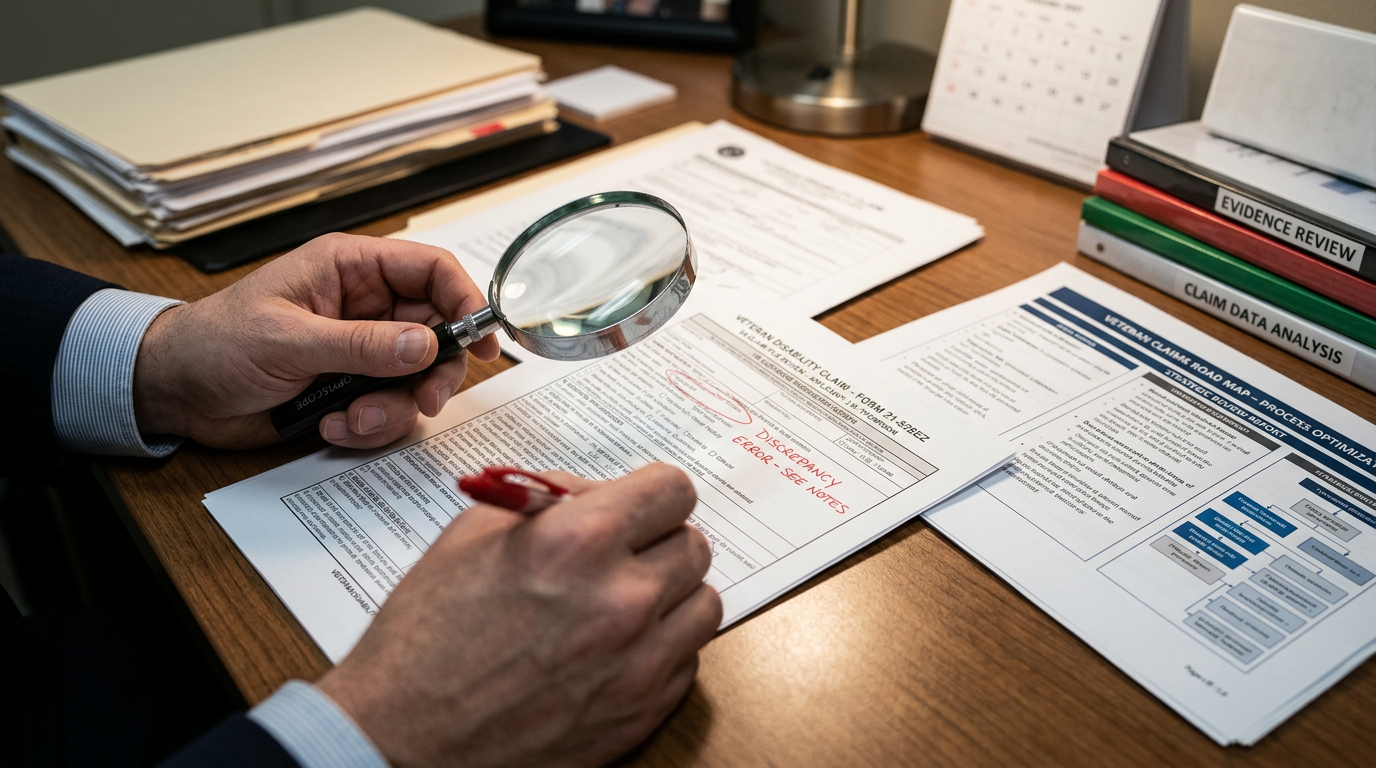
Every denial cites the exact deficiency the rater relied on. That sentence is your roadmap. We decode the letter, map it to the rating criteria in 38 CFR Part 4, and build a targeted package to fill only the gap that cost you the claim, not a scattershot pile of paper.
When the VA denies a claim or assigns a low rating, the rater's decision is measured against the regulatory development procedures in M21-1, Part IV, Subpart i, Chapter 1 (Duty to Assist), and the rating guidance in Part III, Subpart iv, Chapters 4–5. Under Clemons v. Shinseki, the VA must consider every theory of entitlement reasonably raised by the evidence, not just the one the veteran named on the form. Under Gilbert v. Derwinski, when the evidence for and against a finding is in approximate balance, the VA must resolve the doubt in the veteran's favor, the benefit-of-the-doubt standard at 38 CFR §3.102 is mandatory, not discretionary. If the rating decision ignored evidence in the file, cite Colvin v. Derwinski, the VA cannot substitute its own medical judgment for competent medical evidence of record.