
The TERA Framework · When You're Not On A List
Non-Presumptive TERA Claims
Not every toxic exposure has a presumptive list, and not every condition made the cut. That does not mean the door is closed, it means you take the other path.
A Toxic Exposure Risk Activity (TERA) is any service activity that likely exposed you to a toxic substance. Under the PACT Act, the VA must review every claim for a TERA and, where one exists, concede the exposure. From there you connect the dots with a medical opinion.
Non-Presumptive (TERA) at a Glance
These numbers show the scale of the problem, not the strength of your individual claim. The VA does not grant claims because a lot of veterans were exposed. It grants them when your file shows you were in the right place at the right time and you carry a current diagnosis. Use these figures as context, then move down the page and check your own service dates, locations, and medical records against each step.
§1168
38 U.S.C. §1168, VA must provide an exam when a TERA is conceded and a current disability exists
50%
"at least as likely as not", the legal standard the nexus opinion must meet
Any era
TERA applies to service in any period, not limited to a specific war or theater
∞
no closed list, any condition a physician can link to a conceded exposure may qualify
Qualifying Service Locations
Your service location and dates are what trigger the exposure concession. Find where your service fits below, then make sure the record proves it. The VA will not take your word for it. Your DD-214, deployment orders, unit records, or personnel file have to place you in the location during the covered dates. Your part is to pull those documents before you file. If your orders are missing or vague, buddy statements and unit histories can fill the gap, but they take time to gather, so start now.
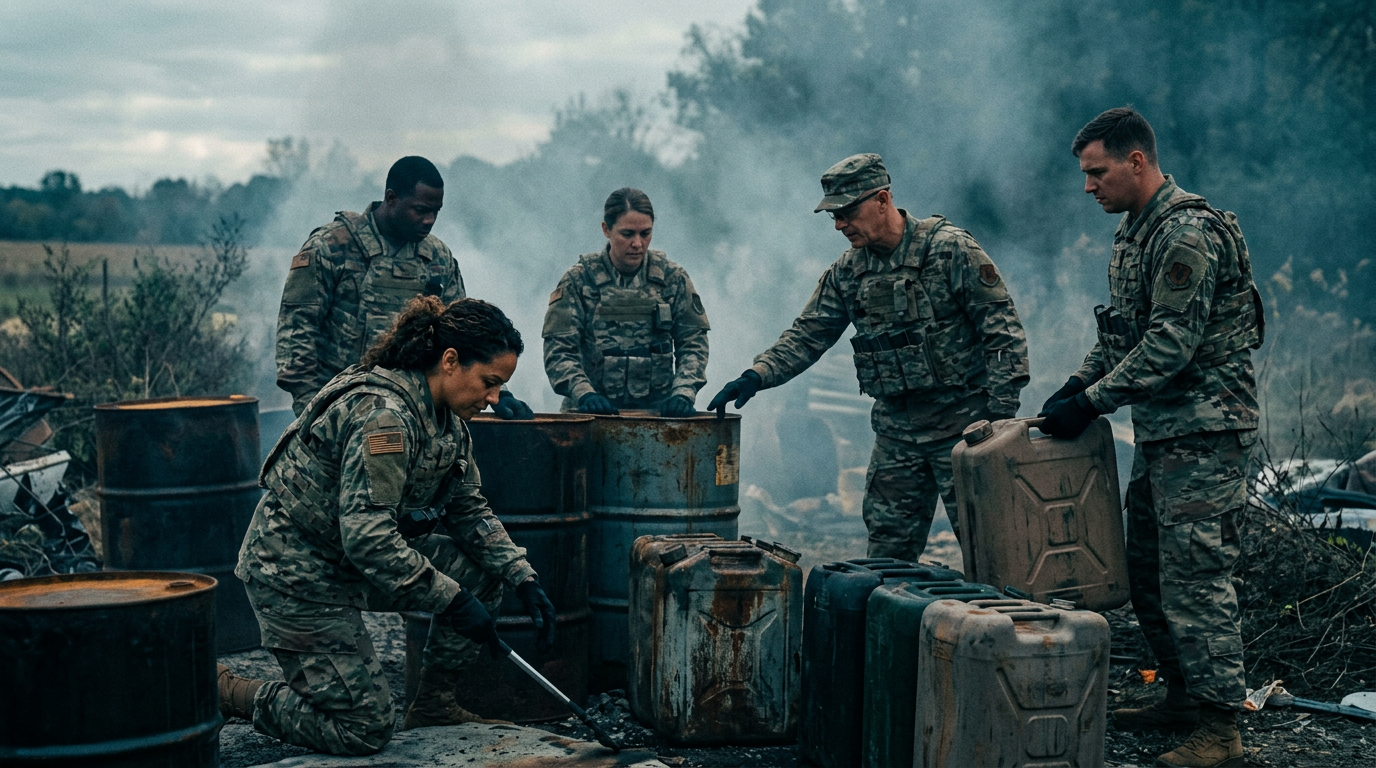
Any documented toxic-exposure activity
Burn pit proximity, airborne hazards, contaminated water, radiation, chemical or industrial solvents, fuels, pesticides, asbestos, lead, or other hazardous materials encountered in the line of duty.

Occupational exposures
Aircraft and vehicle maintenance, firefighting and AFFF foam, fuel handling, degreasers and solvents, welding fumes, paints and coatings, and depleted-uranium contact.

Base/installation contamination
Service at installations with known contamination, whether or not they appear on a presumptive list. The TERA framework evaluates the activity, not just the location.
Covered Conditions
If you carry one of these diagnoses and your service matches the locations above, you are on the shortest path to service connection. The presumption covers causation, not the diagnosis. You still need a doctor to put the condition in writing, by name, in your medical records. A note that says "breathing problems" is not the same as a diagnosis of asthma or COPD. Check your records for the exact term, and if it is missing, ask your provider to document it before you file.
The TERA pathway has no closed list. If your service involved a toxic-exposure activity and a physician can connect your condition to that exposure, the claim is viable. This is the pathway for conditions the VA has not yet added to a presumptive list.
The Evidence You Need
A clean, complete file is the difference between a grant and a denial. Here is what belongs in yours. Under 38 CFR 3.159 the VA has a duty to help you gather records, but it only goes after what you tell it exists. Your part is to identify every provider, sign the release forms, and send what you already have. A file that arrives complete gets decided faster and gives the rater less room to deny.

Proof of the activity
MOS, duty assignments, deployment records, or command records showing the toxic-exposure activity occurred during your service.

Current diagnosis
A current, documented diagnosis of the claimed condition.

Medical nexus opinion
This is the load-bearing piece. A physician states that your condition is at least as likely as not caused by the conceded exposure, with reasoning.

Supporting literature
Peer-reviewed studies tying the substance to the disease make the nexus opinion far harder to dismiss.

Industrial hygiene records
Workplace exposure monitoring, safety data sheets (SDS), and environmental assessments from your installation or unit.

Personal exposure history
A detailed personal statement describing the specific substances you worked with, how often, for how long, and what protective equipment was or was not provided.
How This Claim Is Won
The TERA path is a true nexus claim, so the medical opinion carries the weight. "At least as likely as not" (a 50% probability) is the legal standard, the doctor does not have to be certain, only to explain why the exposure is a probable cause.
The advantage the PACT Act adds is the concession of exposure. You no longer have to prove you were exposed, the VA is required to assess and concede the TERA. That narrows the fight to one question: does the medicine connect the exposure to the disease?
The nexus opinion must do more than say "may be related." It must identify the specific substance, state the "at least as likely as not" standard, explain the biological mechanism, and cite supporting literature where possible. The depth and specificity of the opinion is what separates grants from denials on this pathway.
Bottom line: an accredited records review confirms which pathway fits your file and makes the file say it out loud, before the VA decides for you.
Secondary Condition Chains
Under 38 CFR §3.310, a service-connected condition that causes or aggravates another condition makes that second condition service-connected too, each rated on its own. This is where most veterans leave money on the table. They file for the primary condition and stop. The VA will not go looking for the secondaries for you. Each one needs a current diagnosis and a medical opinion that ties it to the primary, either as the cause or as the thing that made it worse. Read the chains below and ask your doctor about every one that fits.
| Primary (Service-Connected) | Secondary It Can Cause | Rating Impact |
|---|---|---|
| PFAS / AFFF-related thyroid disease | Hypothyroidism medication side effects | Ongoing treatment and metabolic effects can support additional ratings |
| Solvent-related neurological damage | Cognitive impairment / memory loss | Neurocognitive secondaries are rated under the mental health codes |
| Any TERA-connected chronic condition | Secondary depression / anxiety | Chronic medical conditions commonly cause mental health secondaries, do not overlook these |
A records review identifies the full chain of secondaries that flow from your primary condition. See the full secondary-conditions analysis →
Rating Information
Understanding how the VA rates non-presumptive (tera) conditions helps you document the evidence that drives a higher rating. Service connection only gets you in the door. The percentage is set by the criteria in 38 CFR Part 4, and those criteria turn on specific test results, symptoms, and treatment records. If the exam misses something, the rating comes in low. Bring your own records to the exam, describe your worst days honestly, and check the decision against the criteria below.

TERA claims are rated the same as any other
Once a TERA claim is granted, the condition is rated under the same diagnostic codes as any other service-connected condition. The TERA pathway is just a different route to the same destination, service connection.

The nexus opinion is the investment
Because TERA claims require a medical opinion, the quality of that opinion is the single biggest investment. A well-written, well-cited nexus letter from a qualified physician is worth more than any other piece of evidence in a non-presumptive toxic-exposure claim.

Document ongoing treatment
Your rating is based on the current severity of the condition. Thorough documentation of treatment, medications, limitations, and functional impact directly drives the assigned rating percentage.
Exact percentages depend on the diagnostic code and severity documented in your records. These notes describe what factors drive the rating, not guaranteed outcomes.
Questions Veterans Ask
These are the questions veterans ask me most about Non-Presumptive (TERA) claims. The answers are short on purpose, so you can find yours fast. Your part is to check each one against your own service dates, locations, and diagnosis, and bring anything that does not fit to a records review.
My condition isn't on any list. Is it even worth filing?
Often, yes. The presumptive lists are a shortcut, not the only route. If your service involved a toxic-exposure activity and a doctor can link your condition to it, the TERA framework is built for exactly that situation.
What makes a nexus opinion strong enough to win?
It must state the "at least as likely as not" standard, identify the specific exposure, explain the biological mechanism, and cite supporting literature where possible. A one-line "may be related" note is not enough, the reasoning is what the VA weighs.
What about PFAS / AFFF firefighting foam?
AFFF exposure is a classic TERA. There is no broad presumptive list for PFAS conditions yet, so these are built as conceded-exposure-plus-nexus claims. The activity (firefighting, fuel-fire training) and the diagnosis are documented, and a physician ties them together.
How does the VA decide if my service had a TERA?
Under the PACT Act, the VA is required to evaluate every claim for a Toxic Exposure Risk Activity. They look at your MOS, duty assignments, deployment locations, and the specific activities you performed. If the evidence shows you were likely exposed to a toxic substance, the VA must concede the exposure.
Can I use the TERA pathway even if I also have a presumptive claim?
Yes, you can have claims running on both pathways simultaneously. A veteran might qualify for a burn-pit presumptive claim for sinusitis AND a TERA claim for a neurological condition from solvent exposure. Each condition is evaluated on its own pathway.
What if the VA denies my TERA claim?
If denied, review the denial letter carefully. The most common reasons are a weak nexus opinion or insufficient proof of the TERA activity. A stronger nexus letter, additional service records, or a Higher-Level Review can change the outcome.
Related Pathways & Services
Toxic exposure claims rarely stand alone. A presumptive grant often opens the door to secondary conditions, a higher combined rating, TDIU, or survivor benefits down the road. If you have already been denied, the appeal lane you choose matters as much as the evidence. The pages below walk through each of those next steps so you can see the whole picture before you decide what to file.