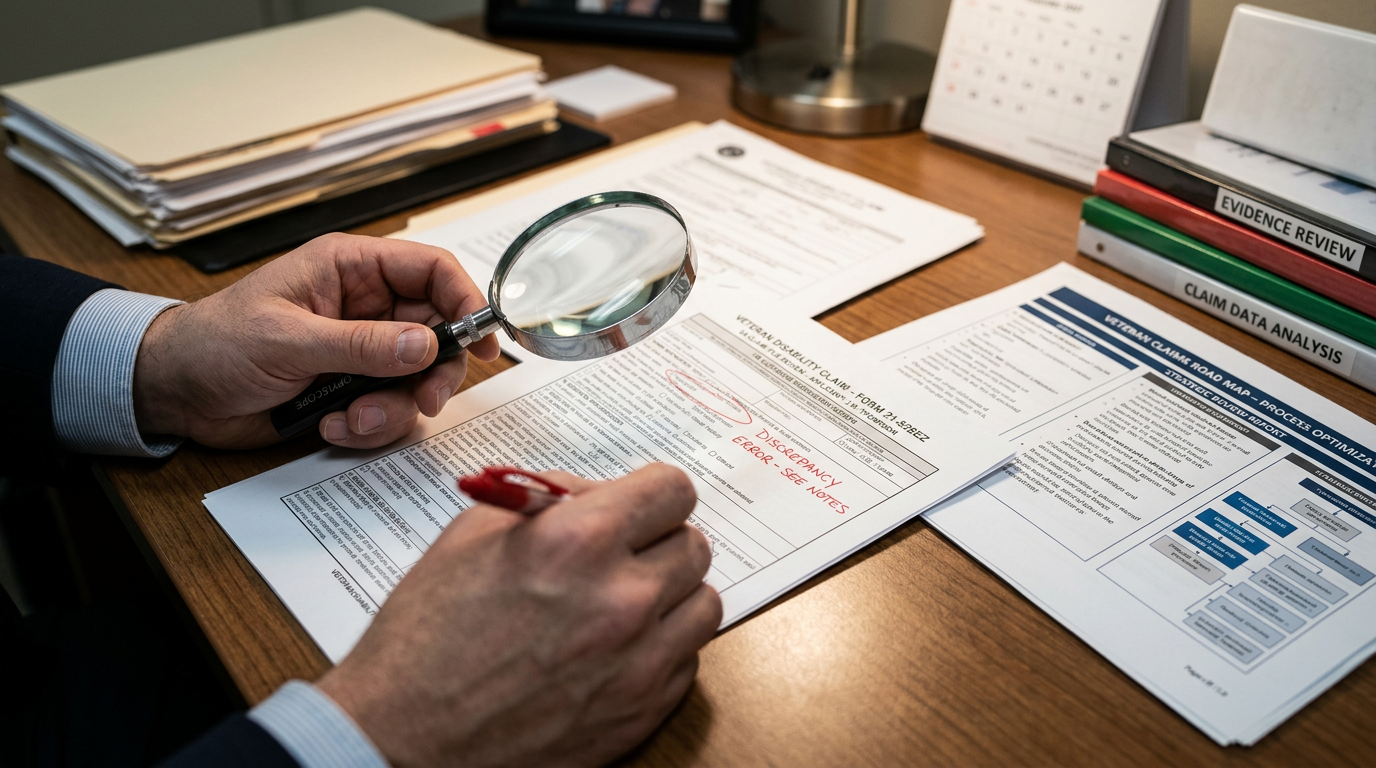
The VA has a duty to assist, but leaving your claim to that duty is a mistake. The veterans who win are the ones who hand the VA a complete file and leave nothing to chance.

← Back to the BlogEvidence & Records
Gathering Medical Evidence: Building the File Before You File
AT
Albert Thombs
Founder & VA-Accredited Claims Agent · #45147
July 21, 20261 min read2 reads
The strongest claims are won before they are submitted. Here is how to assemble the record so the VA has no room to deny.
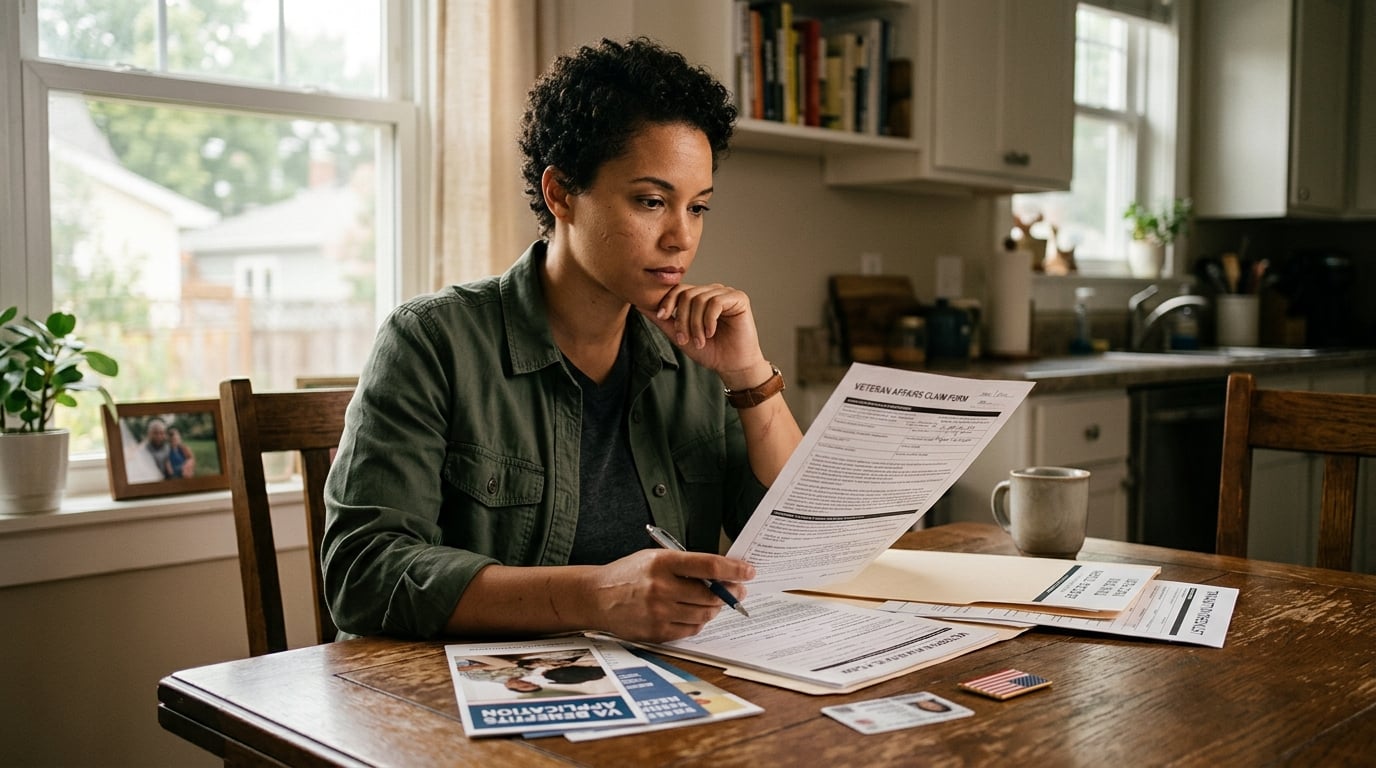
The records that matter
- Service treatment records: anything documenting the in-service event or complaint.
- Private and VA medical records: current treatment showing the ongoing condition and its severity.
- Diagnostics: imaging, sleep studies, lab work, objective proof of the current disability.
- Lay statements: yours and buddy statements filling documentary gaps.
Match evidence to the rating criteria
It is not enough to prove you have the condition, the evidence has to show the severity that matches the percentage you deserve under 38 CFR Part 4. We read the criteria first, then gather the evidence that hits each rating threshold.
Official VA Video · Government Produced
The VA's obligation to develop evidence is codified in 38 CFR §3.159 and operationalized in M21-1, Part IV, Subpart i, Chapter 1 (Duty to Assist with Providing a Medical Examination or Opinion). Under this regulation, the VA must obtain federal records (service treatment records, VA medical records, Social Security records) and make reasonable efforts to obtain private records when the veteran authorizes their release. Under Colvin v. Derwinski, the VA cannot reject competent medical evidence in favor of its own unqualified judgment. Buddy statements and lay evidence carry legal weight under Jandreau v. Nicholson, lay testimony is competent to establish observable symptoms and continuity of symptomatology, even without a medical degree.

Filed under:Evidence & Records