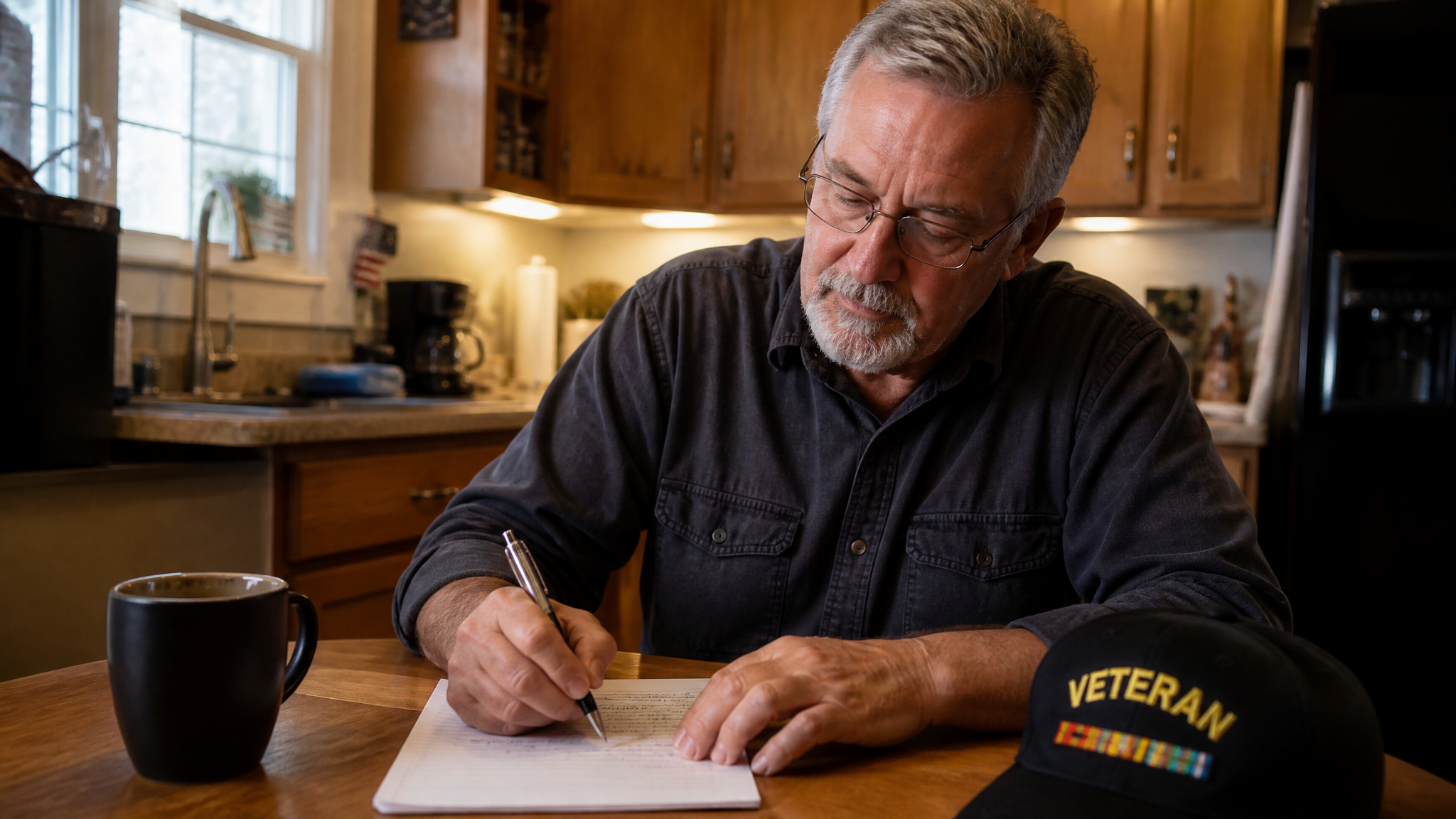
You served. The VA owes you a debt it does not volunteer to pay. Everything here is free. When you need an accredited agent in your corner, we are right here.
You do not need a police report or formal complaint to win an MST claim. The real fight is proving the trauma through markers, records, and a competent nexus opinion the VA cannot ignore.
Many veterans get denied for Military Sexual Trauma because the VA acts like no report means no proof. That is wrong. I am Albert Thombs, a VA-accredited claims agent (#45147), not a lawyer and not the VA, and I can tell you plainly: an MST claim can be won without a police report, without a command complaint, and without a criminal case.
The rule itself allows it. In PTSD claims based on personal assault, the VA must look beyond official reports and consider alternative evidence and behavior changes, often called markers. That is the battlefield in these cases.
This is general educational information, not legal or medical advice, and it does not create an agent-client relationship. Every claim turns on its own facts and the VA’s final decision.
The VA cannot demand a police report in an MST claim
For PTSD based on personal assault, including MST, the VA must consider evidence from sources other than service records. In plain English, that means the absence of a police report is not a lawful reason by itself to deny the claim.
The core issue is not, “Did you file a complaint?” The core issue is whether the total evidence shows the assault happened and whether a qualified medical opinion links your current condition to it under the at least as likely as not standard.
That matters because many survivors never reported. Some were threatened. Some were ashamed. Some knew command would bury it. Some did report informally and nothing made it into the file. The VA knows this, or at least it is supposed to.
What markers are and why they win cases
Markers are indirect signs in the record that something traumatic happened. They are often the strongest evidence in an MST claim because they show a before-and-after pattern the VA cannot honestly explain away.
Common markers include:
Sudden decline in performance after the incident
Transfer requests or efforts to get away from a person, unit, barracks, or duty location
Disciplinary problems that started after the trauma
Absenteeism, AWOL issues, or lateness with no prior pattern
Substance abuse beginning or worsening after the event
Anxiety, panic, depression, or sleep problems showing up in treatment notes
STD testing, pregnancy testing, or gynecological treatment around the relevant period
Requests for chaplain, counseling, or mental health support
Breakup of a marriage or close relationship after the trauma
Statements from friends, family, or fellow service members who noticed the change
Self-harm, eating changes, social withdrawal, or hypervigilance
No single marker has to prove the whole case. MST claims are often won by building a credible pattern from multiple small pieces that line up.
What alternative evidence the VA must consider
This is not a courtesy. Under 38 CFR §3.304(f)(5), the VA may not deny a PTSD claim based on personal assault without first telling you that evidence from outside your service records can corroborate it, and giving you the chance to send it. Transfer requests, a sudden drop in evaluations and sick call visits all count. Your part is pointing them out.
The VA is required to consider evidence outside your official service treatment records and personnel file. That includes evidence many veterans never realize matters.
Understanding evidence & records, what the VA looks for.
Useful alternative evidence can include:
Buddy statements from people who saw the change in you
Family statements describing behavior changes during or after service
Civilian counseling records
Private mental health treatment notes
Rape crisis center records
Diaries, journals, emails, letters, or text messages
Social media posts made around the time
Academic records showing a sudden drop in performance
Employment records showing instability after service
Pharmacy records or medication history
If the VA acts like only official military documentation counts, that is a red flag. In MST cases, alternative evidence is not a loophole. It is built into the rule.
How to build the record the right way
A rater reviewing an MST claim is looking for a before and an after: who you were before the event, what changed, and how that change shows up in the records that do exist. Your part is laying that timeline out so plainly that nobody has to dig for it, because a rater who has to dig usually stops digging.
Do not send the VA a pile of records and hope they connect the dots. Make the pattern obvious.
1. Write a clear personal statement
Your statement should explain what happened at a level you can tolerate, when it happened as closely as you can remember, who was involved if known, and what changed afterward. You do not need perfect dates. You do need a coherent timeline.
2. Identify your markers
Point directly to the behavior changes. Example: “Before this incident I had no counseling statements. Within three months I requested transfer, failed room inspections, and started drinking heavily.” Make the VA confront the sequence.
3. Get strong lay statements
A good buddy or family statement does not need legal language. It should describe what the person observed: mood changes, isolation, fear, drinking, panic, nightmares, or personality changes. Firsthand observations carry weight.
4. Secure a competent diagnosis and nexus opinion
Most successful MST claims need more than trauma history. They need a qualified clinician to diagnose the condition and explain why it is at least as likely as not tied to the in-service trauma. A strong opinion discusses the markers, not just your current symptoms.
5. Challenge bad C&P exams fast
If the examiner says there is “no evidence” because there was no report, that exam may be inadequate. If the examiner ignores your markers, buddy statements, or post-incident behavior changes, that is another problem. Unsupported negative opinions should be attacked directly.
Your right to a same-gender examiner matters
For many MST survivors, the Compensation and Pension exam is its own form of stress. You have the right to ask for a same-gender examiner for a sensitive exam. Make that request as early as possible and in writing if you can.
If the VA or contractor cannot accommodate it immediately, do not just assume you have no options. Document the request. If the exam setup creates severe distress or affects your ability to participate honestly, that may matter later if the exam is incomplete or unfair.
Official VA Video · Government Produced
VA Claim Exams: PsychologicalU.S. Dept. of Veterans Affairs (VBA)
Albert Thombs built a dedicated site for this issue. For a deeper dive on requesting a female examiner for a sensitive exam, visit https://womenvetclaimshelp.com/.
What to do if the VA already denied your MST claim
If you were denied, read the reasons carefully. Usually the VA denied for one of three reasons: no verified stressor, no diagnosis or nexus, or a bad exam that discounted your evidence.
Your next move depends on what is missing:
Supplemental Claim: best if you can add new and relevant evidence like buddy statements, treatment records, or an improved nexus opinion
Higher-Level Review: useful if the VA misread the file or ignored markers already in the record
Board of Veterans Appeals (BVA): often necessary when the file needs a judge-level review of credibility and inadequate development
Court of Appeals for Veterans Claims (CAVC): for legal error after a Board denial
Pick the lane based on the error, not on emotion. MST claims are evidence fights. Treat them that way.
Do not let the VA reduce this to “no report, no case”
That is not the law, and it is not how these claims are supposed to be decided. The VA must consider markers. The VA must consider alternative evidence. The VA cannot reject a claim just because trauma was never formally reported in service.
If you are dealing with PTSD from MST, or related mental health conditions tied to MST, build the case around documented behavior changes, credible statements, and a real medical opinion that addresses the record. That is how you turn a denied or weak claim into a winnable one.
For a deeper dive focused specifically on women veterans and MST evidence, Albert Thombs built a dedicated site for this at https://womenvetclaimshelp.com/.
If you are trying to understand how the VA will combine ratings or estimate potential compensation, remember that every percentage and dollar figure is only an estimate based on your individual facts and the VA’s final decision. You can run the numbers yourself at https://vabenefitscalculators.com/.
If you want, reach out for a free case review. No pressure. I will look at the denial, the evidence, and where the VA likely got it wrong.
Mental health claims are adjudicated under M21-1, Part III, Subpart iv, Chapter 4, Section H (Mental Disorders), with PTSD-specific stressor verification governed by Part IV, Subpart ii, Chapter 1, Section D. Under Mauerhan v. Principi, the symptom lists in the General Rating Formula at 38 CFR §4.130 are examples, not requirements, unlisted symptoms that show the same level of occupational and social impairment support a higher rating. Under Clemons v. Shinseki, the VA must consider all mental health diagnoses raised by the evidence, not just the one the veteran named on the application. Under Mittleider v. West, when symptoms of a service-connected condition cannot be separated from a non-service-connected condition, all symptoms must be attributed to the service-connected disability for rating purposes.
I will be straight with you. No advocate on earth can win a claim for a veteran who will not do his or her part. The VA decides on the record, and you are the only person who can build the medical side of that record. We do the legal and forensic work. You do yours. Here is what that means, every single time:
See a doctor and get every symptom written into your medical record. If it is not on paper, the VA treats it as if it never happened.
Keep a symptom journal. Dates, flare-ups, missed work, the nights you did not sleep. That is the evidence of how this condition actually runs your life.
Answer every VA letter and every request for evidence before the deadline. Silence gets claims denied.
Show up to your C&P exam and describe your worst days honestly. Do not tough it out in that room. Do not exaggerate either.
You do your job and we will do ours. That is how claims get won.
Choose Your Service
The Three Services
We offer three completely separate services, kept distinct on purpose so you know exactly what you are buying, what it costs, and how it is paid. These are not tiers of one agreement, you choose the single option that fits your situation.
Two are contingency representation with no cost up front; they differ by how hard the case is and how the fee gets paid. The third is a flat-fee forensic report for the veteran who wants to fight the claim himself.
Option 1
Standard Direct-Pay Representation
20% of back pay
No cost up front, nothing out of pocket. The VA withholds our fee and pays us directly under §14.636(h). Best for cleaner, more recent, single-issue denials, routine higher-level reviews, supplemental claims, and rating increases, carried all the way to the Board of Veterans’ Appeals.
For high-complexity cases, long claim histories, prior Board denials, CUE, complex effective-date and TDIU fights, multi-issue toxic exposure. Still no cost up front. Because the VA pays a rep only up to 20% directly, the VA sends your full retro to you and we invoice you directly for the 30%. Lawful, but never entered into lightly.
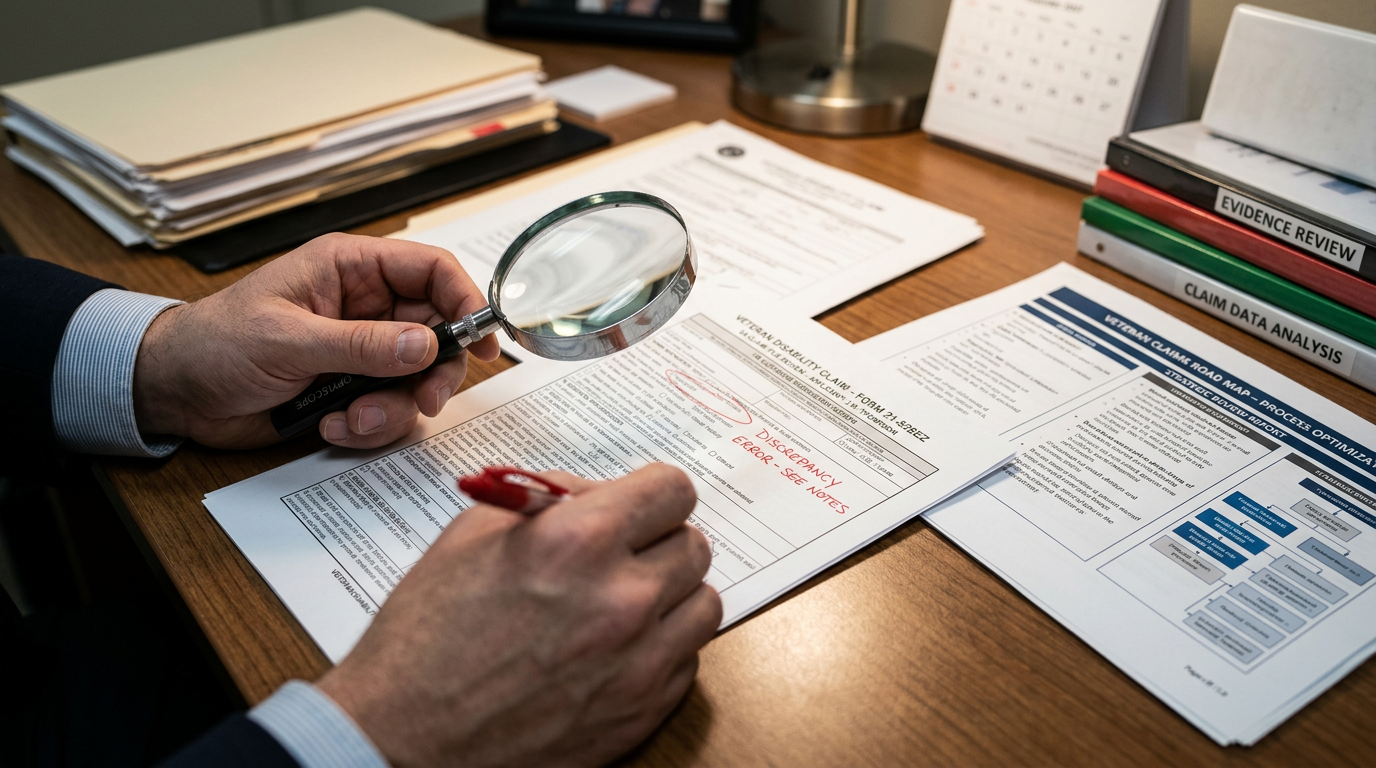
A standalone forensic file review and written road map, not representation. For the veteran with a tough, older case who wants to fight it himself and keep 100% of his back pay. We audit your file, show you every error, and hand you the plan. Available only to veterans who already have a VA decision.
The exact contingency percentage on your case is set in a written agreement by the complexity of the work, always within the maximum the law allows. Federal-court litigation, if it is ever needed, is a separate, pre-agreed arrangement.
Denied or under-rated?
Talk to a VA-accredited claims agent about your claim
Albert L. Thombs Jr. is a US Army veteran, VA-Accredited Claims Agent #45147, and 100% service-connected himself. He personally reviews every request. Fees are capped by 38 CFR §14.636, and there are no fees on representation unless you win.