You served. The VA owes you a debt it does not volunteer to pay. Everything here is free. When you need an accredited agent in your corner, we are right here.
DIC and Survivors Benefits After a Veteran’s Death
AT
Albert Thombs
Founder & VA-Accredited Claims Agent · #45147
August 24, 20267 min read2 reads
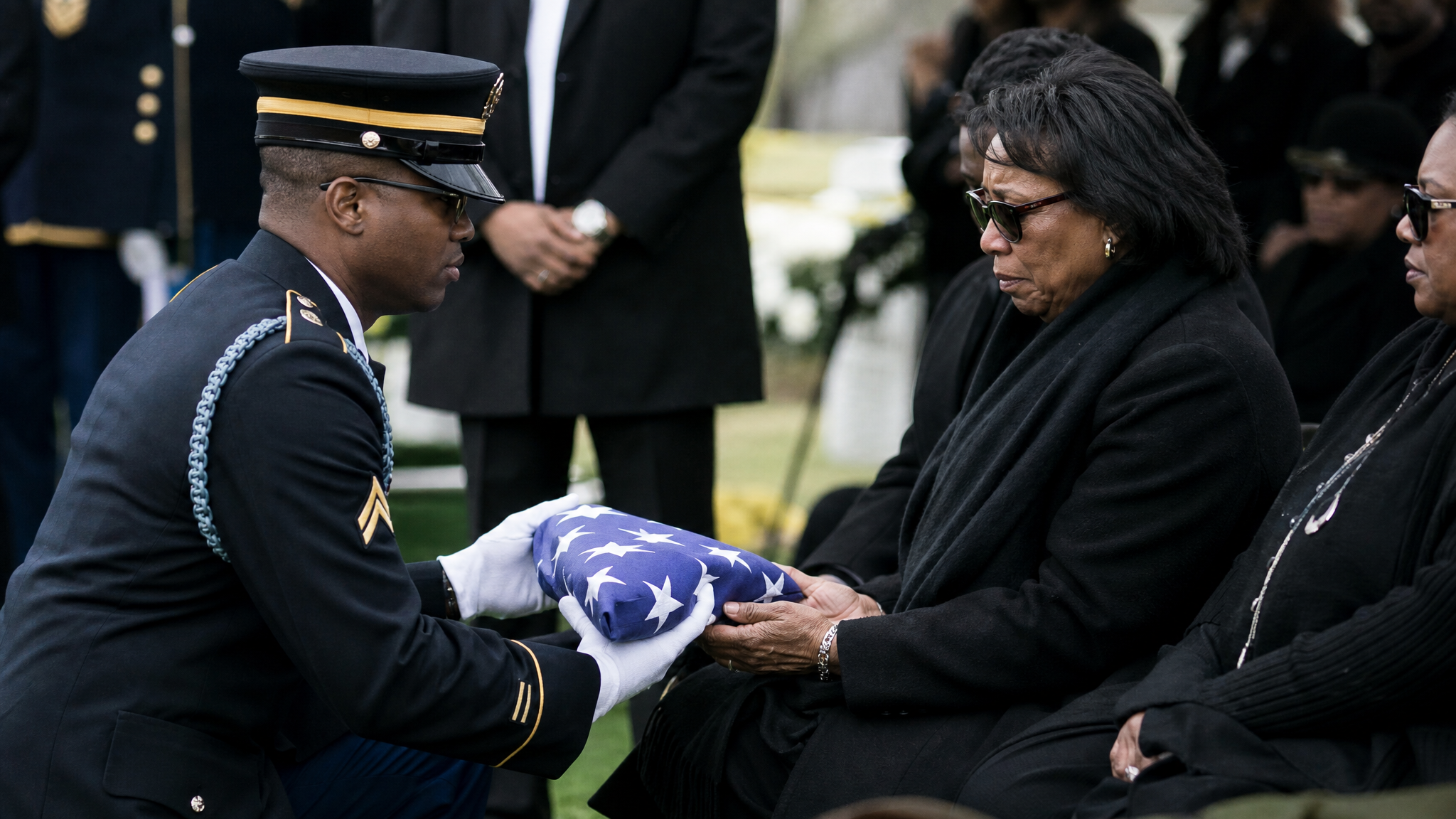
When a veteran dies, a surviving spouse or dependent may be owed DIC or other survivors benefits. Here’s how eligibility works, what evidence matters, and how to file without missing key issues.
When a veteran dies, the VA does not automatically step in and pay every benefit the family may be owed. I have seen too many surviving spouses left in the dark, told incomplete information, or pushed into filing the wrong thing. I am Albert Thombs, a VA-Accredited Claims Agent (#45147). I am not a lawyer and not the VA. This is general educational information only, not legal or medical advice, and it does not create an agent-client relationship.
If you lost a spouse who served, the first question is simple: did the veteran’s death have a service-connected link, or does the surviving spouse qualify under the long-term total-disability rule? That is where Dependency and Indemnity Compensation, usually called DIC, starts.
What DIC is
DIC is a monthly VA benefit that may be payable to an eligible surviving spouse, child, or sometimes parent after a veteran’s death. The monthly amount is an estimate only and depends on the survivor’s situation and the VA’s final decision. There can be added amounts in some cases, but never assume the VA will calculate every piece correctly without being pushed.
DIC is different from accrued benefits, burial benefits, or Survivors Pension. Those are separate programs with separate rules. A family can sometimes qualify for more than one type of survivor-related benefit, but the eligibility standards are not the same.
Albert Thombs built a dedicated site for this topic at https://theagingveteran.com/ if you want a deeper dive on DIC and related survivor programs. This article gives you the core playbook.
The two main paths to DIC for a surviving spouse
1. Service-connected cause of death
The strongest and most direct DIC path is showing that the veteran died from a service-connected condition, or that a service-connected condition substantially or materially contributed to death. In plain English, that means the service-related disability did not have to be the only cause, but it had to matter in a meaningful way.
Examples include:
The death certificate lists a service-connected cancer, heart disease, or lung disease as the immediate or underlying cause of death.
The veteran died from complications tied to a condition that should have been service connected under direct, secondary, or presumptive rules in 38 CFR Part 3.
A service-connected mental health condition contributed to circumstances surrounding death.
A service-connected disability caused immobility, infections, falls, or organ complications that contributed to death.
If the veteran was never granted service connection during life, that does not automatically end the case. A survivor can still argue that the fatal condition should have been service connected. That is where records, medical opinions, toxic exposure evidence, and the death certificate become critical.
Understanding your community, what the VA looks for.
2. The 10-year rule
The second path is the rule many families hear about but rarely get explained correctly. A surviving spouse may qualify for DIC if the veteran was rated totally disabled for a required period before death, even if the cause of death was not itself service connected.
In plain English, the most discussed version is the 10-year rule: if the veteran was continuously rated totally disabled for at least 10 years immediately before death, the surviving spouse may qualify. Total disability can include a schedular 100% rating or Total Disability based on Individual Unemployability, depending on the facts and how the VA recognizes the status.
There are other timing rules in some situations, including cases involving death within a certain period after discharge, but the 10-year rule is the one most families need to screen first.
This is where effective dates become everything. A bad effective date decision during the veteran’s lifetime can cost a surviving spouse years later. For a deeper dive on rating-protection and long-term-rating issues, visit https://theagingveteran.com/. You should also run the timeline and numbers through the tools at https://vabenefitscalculators.com/. Any payment estimate is only an estimate and depends on the VA’s final decision.
Who may qualify
The surviving spouse is usually the primary DIC claimant, but dependent children may also qualify in some cases. Eligibility can turn on marriage dates, periods of cohabitation, remarriage rules, age of children, school attendance, and dependency status. The VA often acts like these issues are straightforward. They are not.
If there was separation before death, prior marriages, remarriage after death, or questions about dependency, do not guess. Build the file carefully.
What evidence matters most
Death certificate
Get the certified death certificate and read every line. The immediate cause, underlying causes, and contributing conditions can make or break a DIC claim. If the certificate is vague or incomplete, that does not end the case, but it means you may need stronger medical evidence.
Rating history
Get the veteran’s rating decisions and code sheets if possible. You need to know:
Official VA Video · Government Produced
How VA Disability Compensation WorksU.S. Dept. of Veterans Affairs
What conditions were service connected
What ratings were assigned
Whether the veteran had a 100% schedular rating or Total Disability based on Individual Unemployability
How long the total rating was in effect
What effective dates were assigned
Medical records
Gather VA and private treatment records, terminal hospitalization records, hospice records, and any specialist opinions. If the veteran had cancer, heart disease, respiratory disease, toxic exposure history, or complications from service-connected disabilities, those records matter.
Nexus evidence
If the death was not already clearly tied to a service-connected condition, the issue becomes medical linkage. The standard is whether it is at least as likely as not that the condition causing or contributing to death was related to service or to an existing service-connected disability.
If toxic exposure may be involved, do not let the VA reduce the issue to MOS alone. Exposure analysis turns on unit, locations, duties, and whether the claim fits a presumptive path or a facts-found path. For a deeper dive, visit https://veterantoxicexposure.com/.
How to file, step by step
Get the death certificate. Review it closely before filing.
Gather the marriage and dependency documents. Marriage certificate, divorce decrees if relevant, birth certificates for dependent children, school records if applicable.
Request the veteran’s claims file or key VA decisions if you do not already have them. You need the rating timeline.
Collect treatment records. Especially records close to death and records covering the fatal condition.
Identify your DIC theory. Is this a service-connected death case, a 10-year total-disability case, or both?
File the survivor claim completely. Incomplete filing invites delay and avoidable denial.
Submit supporting statements and medical evidence early. Do not assume the VA will connect obvious dots.
Track every VA letter and deadline. If denied, the appeal lanes are Supplemental Claim, Higher-Level Review, Board of Veterans Appeals, and Court of Appeals for Veterans Claims.
Common VA mistakes in DIC cases
Ignoring a contributing cause of death because it was not listed as the immediate cause
Failing to consider secondary service connection under 38 CFR Part 3
Overlooking presumptive service connection, including some PACT Act cases
Miscalculating the total-disability period for the 10-year rule
Failing to obtain an adequate medical opinion
Treating a survivor like they must prove the impossible instead of applying the proper standard
The VA denies plenty of survivor claims not because the family is wrong, but because the file was underbuilt or the agency cut corners. Those are two different problems, and both can be fought.
Do not forget the other survivor benefits
DIC is not the only issue after a veteran dies. Some families may also need to check for accrued benefits, substitution, burial benefits, education-related benefits, or Survivors Pension. Surviving spouses may also be eligible for other programs depending on age, health, income, and caregiving needs. Albert Thombs built a dedicated site for these overlooked benefits at https://theagingveteran.com/.
Final word
If you are a surviving spouse or dependent, do not let the VA make you feel like asking questions is asking for charity. If a veteran’s death was tied to service, or if the total-disability timeline qualifies under the rule, this is a benefit that may be owed under the law. The exact outcome, rating status, and any monthly or retroactive payment are estimates only and depend on the individual facts and the VA’s final decision.
If you want help figuring out whether a denial can be challenged or whether a claim was filed the right way, reach out for a free case review. No pressure. I will tell you what I see and where the weak points are.
The regulatory authority behind toxic-exposure claims lives in M21-1, Part IV, Subpart ii, Chapter 2, Section C (Service Connection for Disabilities Resulting from Exposure to Environmental Hazards). This section governs how raters develop and adjudicate toxic-exposure claims, including burn-pit, Agent Orange, contaminated-water, and radiation claims, and cross-references the PACT Act's conceded-exposure framework under 38 U.S.C. §1168 (TERA). When a C&P examiner renders a negative nexus opinion without addressing the documented exposure pathway, that opinion is inadequate under Barr v. Nicholson, and raters are required to return it for a supplemental opinion. Veterans who receive a denial after a cursory exam should cite the specific M21-1 development procedures the rater failed to follow.
I will be straight with you. No advocate on earth can win a claim for a veteran who will not do his or her part. The VA decides on the record, and you are the only person who can build the medical side of that record. We do the legal and forensic work. You do yours. Here is what that means, every single time:
See a doctor and get every symptom written into your medical record. If it is not on paper, the VA treats it as if it never happened.
Keep a symptom journal. Dates, flare-ups, missed work, the nights you did not sleep. That is the evidence of how this condition actually runs your life.
Answer every VA letter and every request for evidence before the deadline. Silence gets claims denied.
Show up to your C&P exam and describe your worst days honestly. Do not tough it out in that room. Do not exaggerate either.
You do your job and we will do ours. That is how claims get won.
Choose Your Service
The Three Services
We offer three completely separate services, kept distinct on purpose so you know exactly what you are buying, what it costs, and how it is paid. These are not tiers of one agreement, you choose the single option that fits your situation.
Two are contingency representation with no cost up front; they differ by how hard the case is and how the fee gets paid. The third is a flat-fee forensic report for the veteran who wants to fight the claim himself.
Option 1
Standard Direct-Pay Representation
20% of back pay
No cost up front, nothing out of pocket. The VA withholds our fee and pays us directly under §14.636(h). Best for cleaner, more recent, single-issue denials, routine higher-level reviews, supplemental claims, and rating increases, carried all the way to the Board of Veterans’ Appeals.
For high-complexity cases, long claim histories, prior Board denials, CUE, complex effective-date and TDIU fights, multi-issue toxic exposure. Still no cost up front. Because the VA pays a rep only up to 20% directly, the VA sends your full retro to you and we invoice you directly for the 30%. Lawful, but never entered into lightly.
A standalone forensic file review and written road map, not representation. For the veteran with a tough, older case who wants to fight it himself and keep 100% of his back pay. We audit your file, show you every error, and hand you the plan. Available only to veterans who already have a VA decision.
The exact contingency percentage on your case is set in a written agreement by the complexity of the work, always within the maximum the law allows. Federal-court litigation, if it is ever needed, is a separate, pre-agreed arrangement.
Denied or under-rated?
Talk to a VA-accredited claims agent about your claim
Albert L. Thombs Jr. is a US Army veteran, VA-Accredited Claims Agent #45147, and 100% service-connected himself. He personally reviews every request. Fees are capped by 38 CFR §14.636, and there are no fees on representation unless you win.